

This post is part of our complete guide to Webster Technique & Pregnancy Chiropractic in Spokane, WA. Browse the guide for more in-depth information on treatments, exercises, and recovery strategies.
What Is Webster Technique?
The Webster Technique is a specific chiropractic analysis and adjustment used for pregnant patients. Its purpose is to reduce nervous system stress and balance the pelvic muscles and ligaments, which undergo significant changes during pregnancy. The primary goal is to facilitate proper pelvic function, which can create more space for the baby to move into an optimal position for birth.
Don’t wait — relief is closer than you think.
A Gentle Approach to Pelvic Balance in Pregnancy
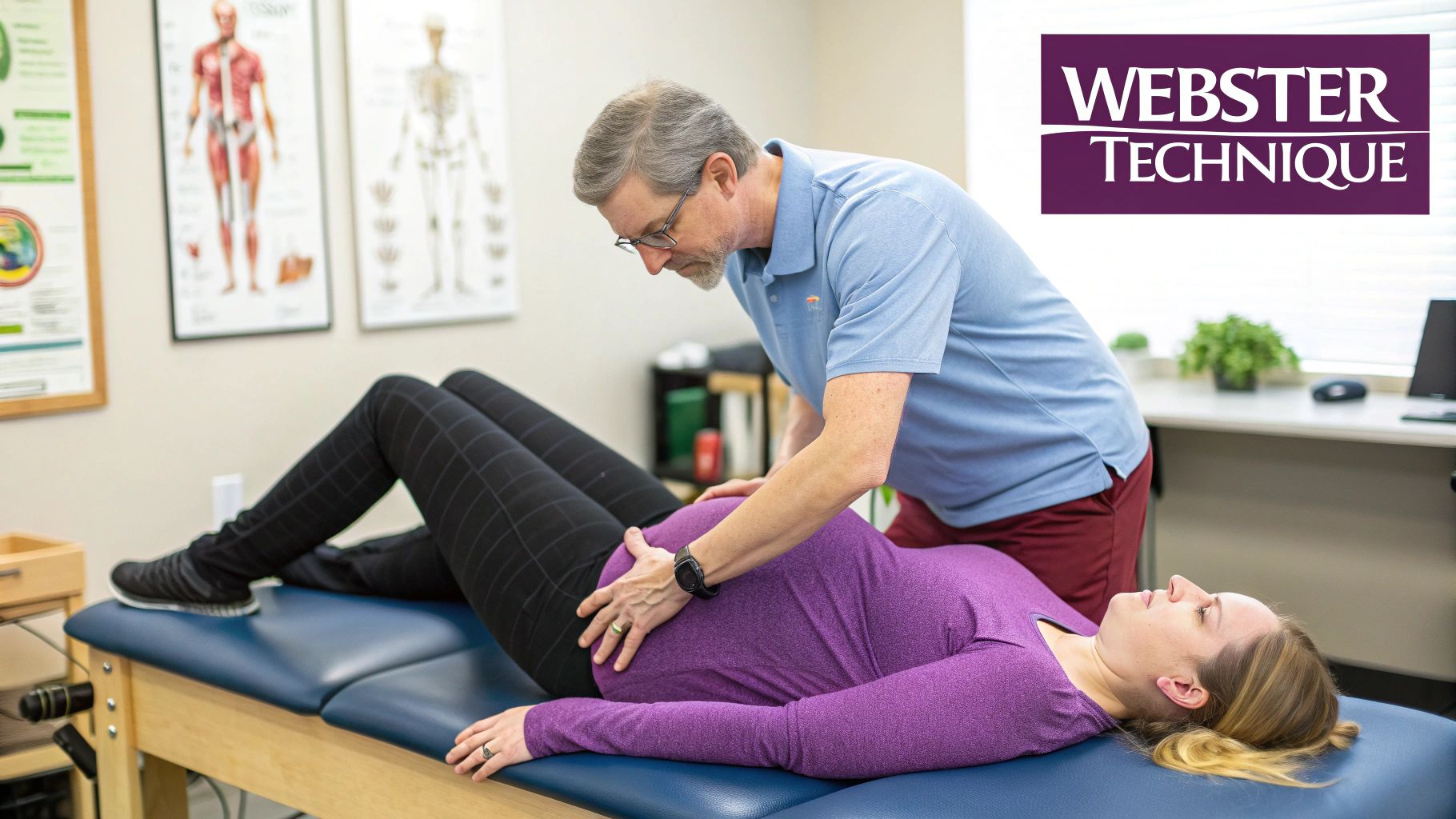
Pregnancy brings incredible changes to the body, and these shifts can sometimes lead to misalignments in the pelvis. Imagine the pelvis as a flexible basket holding the growing baby. If this basket becomes twisted or tilted, it can create tension on the uterine ligaments. This tension may restrict the baby’s movement, a condition known as intrauterine constraint.
A common misconception is that the Webster Technique is a method for turning a breech baby. This is incorrect. The technique focuses entirely on the mother’s body—specifically on restoring proper alignment and motion to her pelvis. By gently correcting these imbalances, the technique helps relieve tension in the muscles and ligaments supporting the uterus.
The Origins of the Technique
This specialized approach was developed by the late Dr. Larry Webster in the early 1980s. The inspiration came after his daughter experienced a difficult birth, which led him to observe how specific pelvic adjustments could positively impact labor by reducing intrauterine constraint. Dr. Webster went on to found the International Chiropractic Pediatric Association (ICPA), the organization that now certifies chiropractors in this method.
What Is the Technique Trying to Accomplish?
The Webster Technique is built on several key principles, all designed to support a more comfortable and functional pregnancy.
Here’s a brief look at the core components of this gentle, effective approach.
Key Components of the Webster Technique
| Component | Description |
|---|---|
| Pelvic Analysis & Adjustment | A gentle assessment and adjustment of the sacrum and sacroiliac (SI) joints to ensure they are aligned and moving correctly. |
| Soft Tissue Release | Focuses on releasing tension in key ligaments connected to the uterus, particularly the round ligaments, which often become tight. |
| Nervous System Optimization | By correcting pelvic misalignments (subluxations), the technique helps calm the nervous system, which is crucial for a healthy pregnancy. |
Ultimately, the goal is to create an ideal environment for the baby to move freely. It is a proactive approach that supports the body’s natural processes, contributing to a healthier and more comfortable pregnancy journey. By ensuring the pelvis is properly balanced, many women find relief from common discomforts.
If you’d like to understand more about how this care is applied, you can learn about our Webster Technique services.
During pregnancy, the body performs incredible feats to accommodate a growing baby. One of the most significant areas of change is the pelvis, which must adapt to carry more weight and prepare for birth. This is why pelvic balance is so critical.
The body produces a hormone called relaxin, which relaxes and loosens ligaments throughout the body, including those holding the pelvis together. While this is essential for childbirth, it also means the pelvic bones, especially the sacrum and sacroiliac (SI) joints, can shift out of place more easily. The added weight of a growing baby creates a perfect scenario for pelvic imbalance.
The Pelvis: Your Baby’s First Home
Picture the pelvis as a perfectly balanced basket holding the uterus. When it’s aligned, it provides a stable, roomy home for the baby to grow and move into the best position for birth. But what happens if that basket becomes twisted or tilted?
This creates a pulling or torsion effect on the ligaments connecting the pelvis to the uterus. The uterine ligaments, like the round ligaments, can become tight and strained, which reduces the space available for the baby to move. This condition is known as intrauterine constraint. This is not just about the mother’s comfort; it can also make it more difficult for the baby to assume the ideal head-down position for birth.
When the pelvis is out of alignment, it can initiate a chain of events—from common aches like back pain to greater challenges with the baby’s positioning. Restoring that balance is key to allowing the body to function as it is designed.
How a Tilted Pelvis Affects Your Body
A misaligned pelvis can manifest in many ways and is often the root cause of many common pregnancy complaints. Here’s how it can impact both you and your baby:
- Increased Aches and Pains: An unbalanced pelvis places uneven pressure on nerves and joints, which is a classic cause of sciatica, low back pain, and sharp pain in the front of the pelvis (pubic symphysis pain).
- Tired, Strained Muscles: The muscles around the pelvis must work harder to try and stabilize everything, leading to tightness and fatigue.
- Less Room for Baby: As mentioned, ligament tension can reduce the available space in the uterus, potentially affecting how the baby is positioned for labor.
Understanding how these imbalances occur clarifies why a gentle, specific approach is so beneficial. The Webster Technique is designed to address this exact problem. It is not about forceful cracking or twisting; it is a careful analysis and adjustment that helps restore proper motion and ease the underlying tension.
The technique’s effectiveness lies in its focus on the mother’s pelvic function. The goal is to create the best possible environment for the baby by ensuring their “basket” is balanced and stable. This gentle correction helps the body better handle the demands of pregnancy, paving the way for a healthier, more comfortable journey for both mother and child.
What to Expect During a Webster Technique Session
Wondering what happens during an appointment? Knowing the process can help you feel more relaxed. A Webster Technique session is a calm, gentle experience designed entirely around your comfort and the unique needs of your body during pregnancy.
The session begins with a careful and thorough assessment. Your practitioner will evaluate your pelvic alignment, usually while you are lying comfortably on a special chiropractic table with cushions designed to support your growing belly. A common check involves comparing your leg lengths, which is a simple way to identify any twists or imbalances in your pelvic structure.
This infographic provides a visual representation of how the Webster Technique works to restore natural pelvic balance, creating a better environment for your baby.
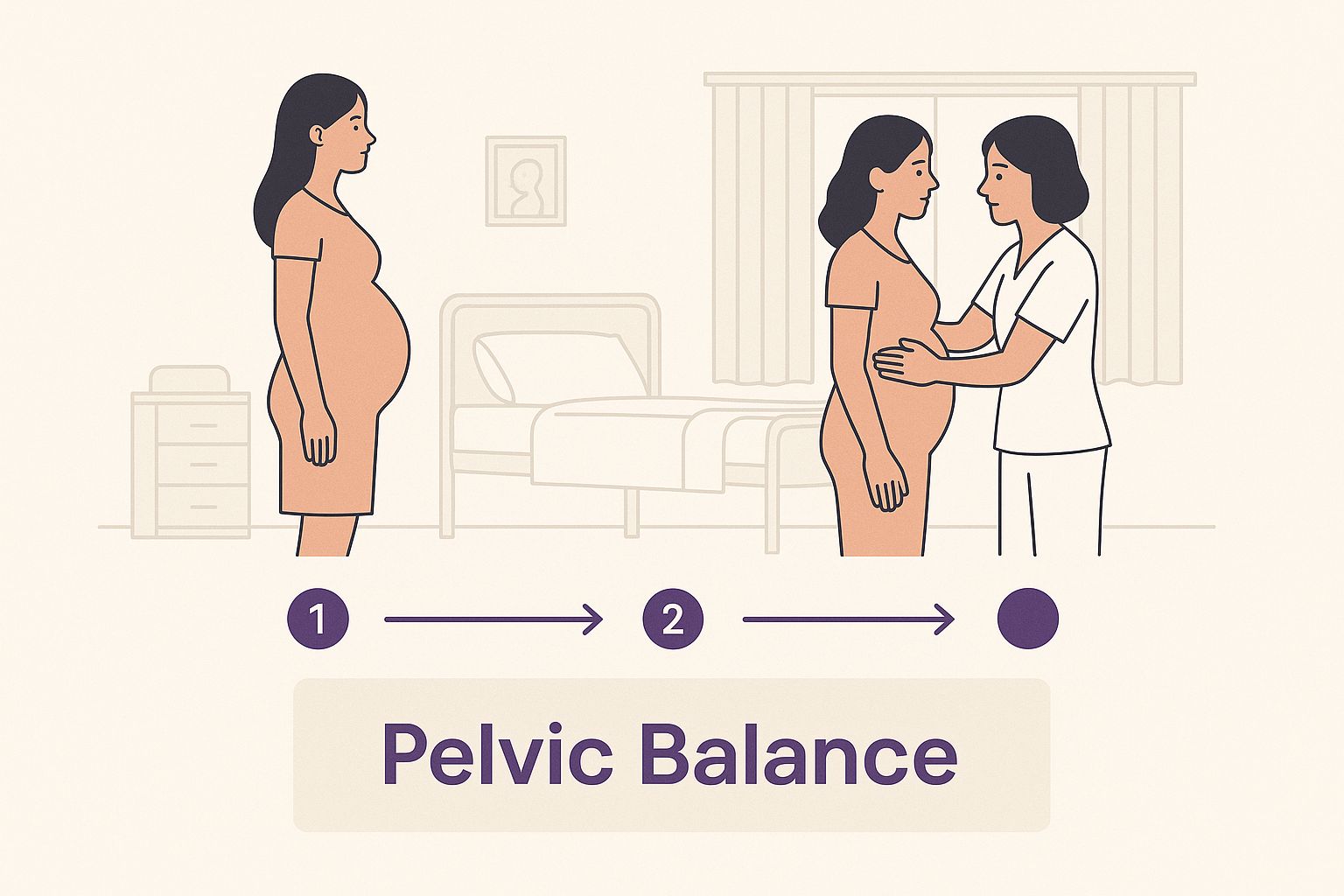
As you can see, the technique is a collaborative process. It’s all about working with your body to help it function at its best.
The Gentle Adjustment Process
Once the analysis is complete, the adjustment begins. This is not a forceful or jarring process. It is a very gentle and precise adjustment to your sacrum, the triangular bone at the base of your spine. The objective is to restore proper motion and alignment to the sacroiliac (SI) joints and relieve any tightness.
After the sacral adjustment, your practitioner will perform gentle soft tissue work. This typically involves applying light pressure to specific ligaments connected to your uterus, such as the round ligaments. The goal is to release any built-up tension, not to apply heavy force. Many women find this part of the session to be quite relaxing.
A Step-by-Step Approach
The technique is very methodical, following a clear procedure designed for both safety and effectiveness.
- It begins with the initial evaluation of your pelvic alignment.
- Next comes the precise sacral adjustment.
- Then, gentle soft tissue work is performed on ligaments like the round ligaments that directly support the uterus.
- Finally, the practitioner re-checks your balance to ensure the adjustment was effective.
These targeted steps work together to ease intrauterine constraint and address any sacroiliac joint dysfunction. You can read more about the Webster procedure if you’d like to dive into the details.
The entire session is tailored to you. There is no one-size-fits-all approach. The adjustments are modified based on your specific needs and comfort level at each stage of your pregnancy.
Throughout the session, communication is key. Your chiropractor will explain what they are doing and ensure you feel comfortable and secure every step of the way. The entire process is meant to be a supportive experience, helping your body adapt to all the amazing changes of pregnancy with greater ease.
How the Webster Technique Helps Both Mom and Baby
When pelvic balance is restored, the benefits for both mother and baby are significant. This is not just about temporary relief; it’s about addressing the root cause of many pregnancy-related aches and pains. By ensuring the pelvis is properly aligned, it can better handle the incredible changes happening in the body. For moms-to-be, this often means a much more comfortable nine months.
Properly aligning the sacrum and sacroiliac joints can make a world of difference for issues like lower back pain, sciatica, and the sharp pain some women experience in the front of their pelvis. It is well-documented that around 75% of pregnant women deal with back pain, and much of that is tied directly to pelvic imbalance. Clinical experience shows that this targeted care can be very effective, with studies reporting an 82% success rate in relieving pain and improving pelvic function.
Giving Your Baby More Room to Move
While the mother is feeling more comfortable, the baby also receives a major benefit: more space. A common misunderstanding is that the Webster Technique involves a chiropractor physically turning a breech baby. That is not what happens. The entire focus is on the mother’s pelvic alignment.
By gently releasing tension in the pelvic muscles and the key ligaments that support the uterus, the Webster Technique creates an environment where the baby has the freedom to move into the optimal head-down position on their own.
It is a subtle but important distinction. The adjustment does not force the baby into any position; it simply makes it easier for them to get into the right spot naturally.
Paving the Way for a Smoother Labor
The positive effects can extend into labor and delivery. A well-aligned pelvis functions better during labor. When everything is balanced and the baby is in a good position, it can lead to a smoother, more straightforward birth, potentially reducing the need for medical interventions. The goal is always to support the body’s natural ability to give birth.
This proactive approach can contribute to a much more positive experience for everyone involved. The philosophy for chiropractic care for pregnancy in Spokane is all about providing this kind of gentle, effective support through every trimester.
The Safety and Science Behind the Technique

When discussing any type of care during pregnancy, the primary concern is always safety.
The Webster Technique is considered very safe. It is a gentle, non-invasive approach, especially when performed by a chiropractor certified in the technique. All adjustments are specifically modified for a pregnant body, eliminating heavy pressure or awkward positioning.
The entire focus is on restoring balance, not forcing anything. It is a method that works with the body’s natural design, which is why thousands of women have found it to be a supportive and relieving part of their pregnancy journey.
A Transparent Look at the Research
From a scientific perspective, it is important to be clear about what studies show. For decades, the Webster Technique has been supported by extensive clinical experience. Chiropractors and their patients have shared countless positive case studies and success stories.
However, despite its widespread use, formal scientific research is still developing. A detailed review of the existing biomedical literature notes a lack of large-scale clinical trials specifically proving its effect on fetal positioning. This highlights the need for more formal studies to scientifically validate what many practitioners have observed for years.
Webster Technique vs. Other Interventions
It is helpful to compare the Webster Technique to other methods for breech presentation, such as an External Cephalic Version (ECV). An ECV is a medical procedure where a physician attempts to physically turn the baby by pushing on the outside of the abdomen.
The Webster Technique is completely different.
- Its Focus: The technique works on the mother’s pelvic alignment and the tension in her surrounding ligaments. It does not directly touch or move the baby.
- Its Method: It uses gentle, very specific chiropractic adjustments to the sacrum and related soft tissues.
- Its Goal: The objective is to create the best possible environment for the baby to move into the correct position on its own.
The Webster Technique is fundamentally about restoring proper function to the mother’s body. By balancing the pelvis, it removes potential roadblocks, giving the baby the room it needs to get into place naturally.
This makes it a gentle, preparatory option rather than a direct, forceful intervention.
Finding a Qualified Webster Technique Chiropractor
Finding the right chiropractor is the first step, and it’s important to find someone specifically trained in the Webster Technique.
This is a specialized skill that not every chiropractor possesses. It requires postgraduate training to master the gentle, specific analysis and adjustments needed for prenatal care. Working with a certified professional ensures you are receiving the safest and most effective treatment.
The most direct way to find a certified chiropractor is through the International Chiropractic Pediatric Association (ICPA) website. The ICPA provides the official Webster certification and maintains an updated directory to help you find a qualified practitioner in your area.
Questions to Ask Your Potential Provider
Once you have a few names, it is a good idea to ask some questions before committing. This helps you make an informed choice and find a chiropractor you feel comfortable with.
Here are a few questions to consider:
- Are you officially certified in the Webster Technique through the ICPA?
- How much experience do you have working with pregnant patients?
- What is your overall approach to prenatal chiropractic care?
Ensuring your provider is a good fit is a crucial part of your wellness journey. You can learn more about our dedicated approach and meet the chiropractors who will guide you through this process. Having a practitioner who listens and understands your needs can make a significant difference in your pregnancy experience.
Ready for a More Comfortable Pregnancy?
Now that you understand how pelvic balance can affect your pregnancy, you can take steps to find relief and prepare for your delivery. The Webster Technique offers a gentle, proactive way to help your body function optimally during this amazing time.
If you are dealing with discomfort or simply want to ensure your body is working as it should, personalized care can make all the difference. Learning more about the Webster Technique and how it can help you is a fantastic step toward a more comfortable, positive experience.
Taking care of yourself now will help you feel more prepared and relaxed as your delivery day approaches.
Our team would be happy to discuss your specific needs and how we can help. Ready to take the next step for a healthier, more comfortable pregnancy? Contact Audubon Park Chiropractic today. You can reach us at (509) 327-4049 to schedule a consultation, or feel free to walk in for treatment. We look forward to supporting you.
Ready to Feel Better?
Our Spokane chiropractors are ready to help. Walk-ins welcome — no appointment needed.

Dr. Michelle Snyder is a Spokane chiropractor with advanced training in women’s health, hormone balancing, pregnancy, and care for infants and children. She uses gentle low-force spinal adjustments alongside specialized therapies including Webster’s breech technique, allergy desensitization, cold laser therapy, EB cellular cleanse, and Methylation/genetic nutrition — offering patients a comprehensive, whole-body approach to wellness.
A Spokane resident for over 31 years, Dr. Michelle is deeply committed to her community, contributing time and resources to organizations including Meals-on-Wheels, Second Harvest, Ronald McDonald House, and the Union Gospel Mission.
📍 2909 W. Northwest Blvd, Spokane, WA 99205 | ☎ (509) 327-4049 audubonparkchiropractic.com
Further Reading: Webster
- Chiropractic for Women: Pregnancy, Postpartum, Hormonal Pain, and Why It’s Not All the Same
- Postpartum Back Pain & What’s Normal, What Isn’t, and When Chiropractic Helps
- Chiropractic for Women: Pregnancy, Postpartum, Hormonal Pain, and Why It’s Not All the Same
- How to Sleep Comfortably While Pregnant
- Easing Back Pain During Pregnancy: How Audubon Park Chiropractic Can Help
→ Complete Guide: Webster Technique & Pregnancy Chiropractic in Spokane, WA