

This post is part of our complete guide to Back Pain Treatment in Spokane, WA. Browse the guide for more in-depth information on treatments, exercises, and recovery strategies.
What is a chiropractic adjustment?
So, what is a chiropractic adjustment? In simple terms, it’s a procedure where a trained professional uses their hands or a small instrument to apply a controlled, gentle force to a specific joint, usually in your spine. The goal is to improve spinal motion and enhance your body’s physical function.
Don’t wait — relief is closer than you think.
Understanding the Foundation of Chiropractic Care

Imagine your spine as the central highway for your body’s communication system. When it’s properly aligned, your nervous system can transmit messages between your brain and every other part of your body clearly and efficiently. However, daily life—from stress and poor posture to old injuries—can cause vertebrae to shift slightly out of their ideal position.
These misalignments are often called “vertebral subluxations.” When they happen, they can put pressure on the nerves that exit the spine. This interference can disrupt the crucial brain-body communication, leading to a variety of symptoms that go beyond just pain.
The Role of an Adjustment
This is precisely where a chiropractic adjustment comes into play. It is designed to specifically correct these misalignments. By applying a controlled force, a chiropractor helps guide the vertebra back into its proper position. The benefits can be felt almost immediately:
- Restores Joint Mobility: It helps stiff or “stuck” joints move more freely.
- Reduces Nerve Irritation: By relieving pressure on nerves, it can reduce pain and improve function.
- Improves Body Function: Clearing the pathways of the nervous system allows your body’s natural healing capabilities to perform optimally.
The core principle of a chiropractic adjustment isn’t just about addressing back or neck pain. It’s about optimizing the relationship between the spine and the nervous system to support overall health and well-being.
Ultimately, the goal is to help your body heal and regulate itself naturally. By restoring proper alignment, adjustments address the root cause of an issue rather than just masking the symptoms. Understanding what a chiropractic adjustment is can be the first step toward better health and function.
The Science Behind How Adjustments Work
To truly grasp what a chiropractic adjustment is, it’s helpful to understand the powerful link between your spine and your nervous system. Your spine is more than just a structural support system; it’s the protective armor for your spinal cord.
The spinal cord acts as the main communication superhighway, connecting your brain to every cell, tissue, and organ in your body.
When a vertebra becomes slightly misaligned—a condition known as a vertebral subluxation—it can irritate or put pressure on the nerves branching out from the spinal column. This is similar to a kink in a garden hose; the flow of water is restricted. In this case, the “water” is the vital nerve energy your body needs to function correctly.
This nerve interference can disrupt signals between your brain and body, leading to issues like pain, muscle tightness, and a general feeling of being unwell.
Restoring Your Body’s Communication System
A chiropractic adjustment applies a very specific, controlled force to these misaligned joints. The purpose is to guide the joint back into its proper position, restore its natural movement, and eliminate the nerve interference.
Once the pressure is removed from the nerve, your body’s internal communication network can function without static. This allows the brain to properly control and coordinate all bodily functions, activating your innate ability to heal.
Many people are curious about the “popping” sound sometimes heard during an adjustment. We have an informative article that explains what really happens when you crack joints.
The infographic below provides a great visual representation of this process, clearly illustrating the connection between spinal alignment, nerve function, and overall health.
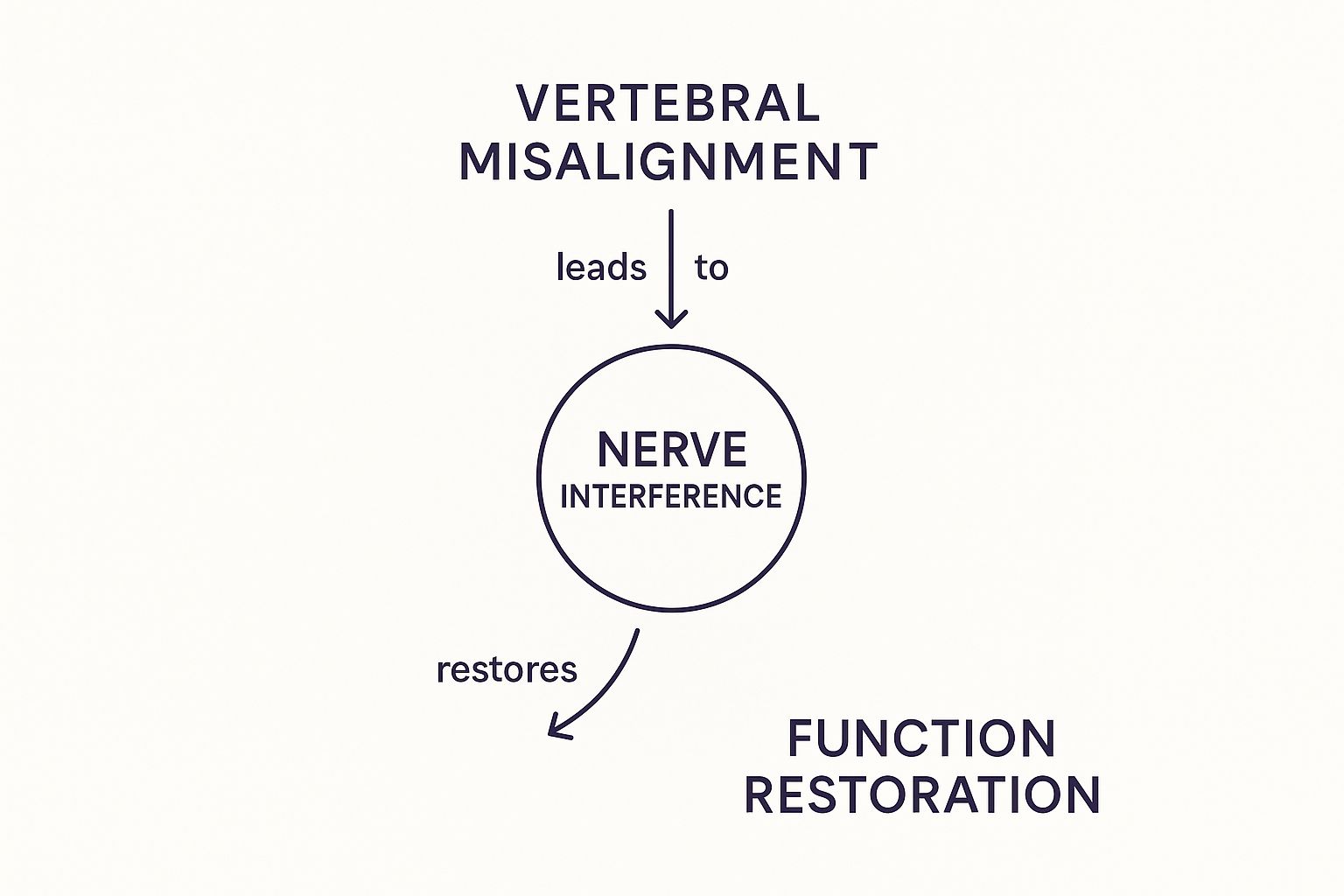
As shown, the primary goal is to restore function by removing any obstruction to your nervous system.
The Origins of Modern Chiropractic
This hands-on approach to healthcare has deep historical roots. Modern chiropractic practice began on September 18, 1895, when Daniel David Palmer performed the first adjustment on a janitor named Harvey Lillard.
According to the account, Mr. Lillard had experienced significant hearing loss years earlier. Palmer identified a misplaced vertebra in Lillard’s upper back. After a manual adjustment, Lillard’s hearing reportedly improved dramatically.
The foundational concept is simple yet powerful: a healthy, aligned spine supports a healthy nervous system, and a healthy nervous system supports a body that functions as it should.
This is why an adjustment is about more than just alleviating back pain. It’s about ensuring your body’s command center can communicate without roadblocks, paving the way for better health from the inside out.
Conditions That Chiropractic Adjustments Can Help

While the science of spinal health is compelling, most people want to know, “Can a chiropractic adjustment help me?”
The answer is often broader than one might expect. Many assume chiropractic care is solely for back pain, but a wide range of health issues can be linked to spinal misalignments that interfere with the nervous system.
By restoring proper alignment and function with an adjustment, we can address the root cause of many painful and disruptive symptoms. This approach helps the body do what it is designed to do: heal and regulate itself more effectively.
More Than Just Back and Neck Pain
Many individuals seek chiropractic care for nagging lower back pain or a stiff neck, and for good reason. These are common issues that respond very well to adjustments. Research has consistently shown that spinal manipulation is an effective treatment for acute low back pain.
While adjustments address the source of the problem, people often seek complementary relief through methods like simple tips to relieve lower back pain at home.
However, the benefits extend far beyond the back and neck. Consider these common conditions:
- Headaches and Migraines: Many tension headaches—and even some migraines—originate from nerve irritation in the upper neck. An adjustment can relieve pressure on the nerves that trigger these episodes.
- Sciatica: That sharp, radiating pain down the leg, known as sciatica, is typically caused by a compressed nerve. Adjustments can help realign the lower spine and pelvis to create more space for the sciatic nerve.
- Joint Pain: Aches in the shoulders, hips, and knees can often be connected to poor posture and improper spinal mechanics. By correcting the body’s overall alignment, we can reduce uneven wear and tear on these joints.
Common Conditions Addressed by Chiropractic Adjustments
This table provides a clearer picture of the issues we frequently address. It connects the symptom you feel with the underlying problem a chiropractic adjustment aims to resolve.
| Condition | How a Chiropractic Adjustment Can Help |
|---|---|
| Low Back Pain | Corrects misalignments in the lumbar spine, reducing nerve pressure and easing muscle strain. |
| Neck Pain | Restores proper movement in the cervical vertebrae, relieving stiffness and nerve irritation. |
| Headaches | Alleviates tension in the upper neck and at the base of the skull, a common trigger for headaches. |
| Sciatica | Decompresses the sciatic nerve root by realigning the lower spine and sacroiliac (SI) joints. |
| Poor Posture | Addresses underlying spinal imbalances that lead to slouching and forward head posture. |
| Shoulder & Hip Pain | Improves overall body biomechanics, ensuring even weight distribution to reduce stress on joints. |
The main takeaway is that your spine is central to your body’s overall function. When it’s misaligned, the effects can ripple outward, manifesting as symptoms in unexpected places.
What to Expect During Your First Chiropractic Visit

Visiting a chiropractor for the first time can feel unfamiliar, but the process is straightforward and centered around you. The initial visit is designed to get to know you, understand your health concerns, and determine the best way to help.
Your visit will begin with a thorough consultation. This is more than just paperwork; it’s a detailed conversation about your health history, current symptoms, and wellness goals. We’ll discuss past injuries, daily activities, and any specific pain you are experiencing.
The Examination Process
Following the consultation, we’ll conduct a comprehensive physical examination to pinpoint the root cause of your discomfort. This process is non-invasive and provides a clear picture of your body’s current function.
The hands-on assessment typically includes:
- Postural Analysis: We observe how you stand and sit to identify any imbalances that may be contributing to your issues.
- Range of Motion Tests: We check the mobility of your neck, back, and other joints to identify areas of restricted movement.
- Palpation: We use our hands to feel for tenderness, tightness, or misalignments in your spine and surrounding muscles.
- Orthopedic and Neurological Tests: We perform simple tests to evaluate your reflexes, muscle strength, and nerve function.
In some cases, an X-ray may be recommended. This provides a detailed blueprint of your spinal structure, allowing us to see specific issues like misaligned vertebrae or joint degeneration with precision.
Your First Chiropractic Adjustment
If we determine that an adjustment is the right course of action, we will explain the process to you. You’ll be positioned comfortably on a specialized table designed for effective treatment. Your chiropractor will then apply a controlled, precise force to the specific joint that requires correction.
Many people feel a sense of relief almost immediately. You might hear a “popping” sound, which is perfectly normal. This sound, called cavitation, is simply the release of gas bubbles from the joint fluid, similar to cracking your knuckles. It indicates that pressure is being released and movement is being restored.
The entire experience is a collaborative process. We will guide you through every step, ensuring you feel comfortable and informed from start to finish.
Understanding what a chiropractic adjustment is helps, but experiencing personalized care makes it all clear.
Common Chiropractic Adjustment Techniques
Chiropractic care is not a “one-size-fits-all” solution. A chiropractor uses a variety of specific methods, choosing the one best suited for your unique needs and comfort level.
Some techniques are very gentle, while others are more direct. The goal is always the same: to restore proper joint motion and relieve pressure on the nervous system. This ensures your treatment is safe, comfortable, and effective.
Hands-On and Instrument-Assisted Methods
Some of the most common techniques provide different experiences to suit nearly everyone.
- Diversified Technique: This is the method most people associate with a chiropractic adjustment. It involves a precise, quick, shallow thrust delivered by hand to restore movement to a “stuck” or misaligned joint.
- Activator Method: For those who prefer a gentler approach, this technique uses a small, handheld instrument called an Activator to deliver a fast, low-force impulse to a specific area. It is an excellent option for older patients, children, or anyone sensitive to manual adjustments.
- Thompson Drop-Table Technique: This method utilizes a specialized table with sections that drop a short distance when the chiropractor applies a thrust. This drop uses gravity to assist with the adjustment, making the correction feel lighter and more comfortable.
Specialized and Precise Approaches
Beyond these common methods, some techniques are known for their detailed analysis and specific focus.
The Gonstead Technique, for example, is renowned for its thorough analysis, which may include X-rays and precise measurements to pinpoint the exact source of the problem before an adjustment is performed. This level of detail ensures the adjustment is as specific and effective as possible.
The key is that your treatment can be tailored specifically for you. A skilled chiropractor will assess your condition and listen to your comfort level to determine which technique or combination of techniques will yield the best results.
Specialized methods also exist for specific needs. Expecting mothers can benefit from approaches like the Webster Technique, which is designed to support pelvic balance during pregnancy.
How to Find a Qualified Chiropractor
Choosing any healthcare provider is a significant decision. It’s important to know that every Doctor of Chiropractic (D.C.) has completed a demanding educational journey to ensure they meet high standards for safety and professionalism.
The path to becoming a licensed chiropractor begins with a bachelor’s degree, followed by a rigorous four-year doctoral program at an accredited chiropractic college. Their education covers subjects like anatomy, physiology, neurology, and diagnostic imaging. After graduation, they must pass a series of national board exams to earn their license to practice.
Ensuring High Standards of Care
Chiropractic education is overseen by official accrediting bodies to maintain consistent standards. In the United States, the Council on Chiropractic Education (CCE) is recognized by the U.S. Department of Education for ensuring that chiropractic colleges provide a comprehensive and rigorous curriculum. This oversight guarantees that every licensed chiropractor has received a solid education focused on patient safety and effective care.
This commitment to professional standards is a primary reason why chiropractic care is a trusted part of healthcare. It has grown into an industry generating an estimated $15 billion annually in the U.S. and receives federal research funding from organizations like the National Institutes of Health.
When performed by a licensed professional, chiropractic adjustments have an excellent safety record. The most important factor is ensuring your provider has the proper credentials and a genuine commitment to your well-being. For more guidance, see our article on how to choose a chiropractor that is the right fit for you.
Taking the Next Step on Your Health Journey
We’ve explored what a chiropractic adjustment is, the science behind it, the conditions it can help, and what to expect during a visit. The key takeaway is that chiropractic care is a proactive approach to supporting your body’s innate ability to heal and function optimally.
The goal is to address the root cause of the problem, not just manage symptoms. By restoring proper motion to your spine and relieving pressure on your nervous system, we help your entire body work better. This is the foundation for lasting spinal health and overall wellness.
Sometimes, the best outcomes result from a combined approach. Complementary therapies like therapeutic medical massage can enhance chiropractic care by releasing deep muscle tension and accelerating progress. A comprehensive care plan is often the most effective path to feeling your best.
Your spinal health is directly linked to your overall well-being. A healthy, aligned spine allows your nervous system to do its job: managing, healing, and coordinating every function in your body from the inside out.
Making the choice to prioritize your health is a powerful one. Whether you are dealing with a chronic issue, recovering from an injury, or simply want to improve your daily function and mobility, a personalized care plan is key.
If you are ready to improve your spinal health and see what is a chiropractic adjustment for yourself, the team at Audubon Park Chiropractic is here to support you. We invite you to experience our dedicated, hands-on care.
Call us today at (509) 327-4049 to schedule a consultation, or feel free to walk in for treatment. We look forward to helping you.
Ready to Feel Better?
Our Spokane chiropractors are ready to help. Walk-ins welcome — no appointment needed.

Dr. Michelle Snyder is a Spokane chiropractor with advanced training in women’s health, hormone balancing, pregnancy, and care for infants and children. She uses gentle low-force spinal adjustments alongside specialized therapies including Webster’s breech technique, allergy desensitization, cold laser therapy, EB cellular cleanse, and Methylation/genetic nutrition — offering patients a comprehensive, whole-body approach to wellness.
A Spokane resident for over 31 years, Dr. Michelle is deeply committed to her community, contributing time and resources to organizations including Meals-on-Wheels, Second Harvest, Ronald McDonald House, and the Union Gospel Mission.
📍 2909 W. Northwest Blvd, Spokane, WA 99205 | ☎ (509) 327-4049 audubonparkchiropractic.com
Further Reading: Back
- Back Pain, Sciatica, and Headaches: When Chiropractic Helps — And When It Doesn’t
- Chiropractic Without the Commitment: What No Long-Term Contracts Actually Means for Your Care
- What causes sciatic nerve pain: Symptoms and relief
- NW Spokane’s Neighborhood Chiropractor: Why Location, Parking, and Knowing Your Doctor Actually Matter
- Why Some People Are Afraid of the Chiropractor & And What We Do Differently