

This post is part of our complete guide to Back Pain Treatment in Spokane, WA. Browse the guide for more in-depth information on treatments, exercises, and recovery strategies.
Upper Back Pain Relief – What You Need to Know
If you’re looking for lasting upper back pain relief, the first step is understanding its source. More often than not, that persistent ache is a direct result of modern habits—slouching over a desk, craning your neck to view a phone, or carrying a heavy bag on one shoulder. The key to feeling better lies in targeted solutions that address the root causes of poor posture and muscle strain.
Don’t wait — relief is closer than you think.
Uncovering the Triggers of Upper Back Pain
That nagging, persistent ache between your shoulder blades rarely appears without reason. Upper back pain, known clinically as thoracic spine pain, is almost always a symptom of daily life and work. Unlike lower back issues that can often be tied to a specific event like improper lifting, upper back discomfort tends to be a slow-developing issue, linked to sustained postures and muscle imbalances that accumulate over time.
Consider your average day. How many hours are spent hunched over a computer? This common position leads to significant muscle fatigue and strain in the rhomboid and trapezius muscles. This forward-leaning posture, sometimes called “tech neck,” places continuous stress on the thoracic spine—the critical area that connects your neck to your lower back.
Common Culprits Behind the Pain
Typically, the causes are interconnected, creating a cycle of discomfort. For many people, the problem begins with one primary trigger that eventually snowballs into chronic pain.
- Poor Posture: Consistently slouching weakens the muscles designed to support your spine. This forces them to work much harder than intended, leading to familiar chronic strain.
- Muscle Overuse: Repetitive motions, whether from a job or a hobby, can fatigue the muscles in your upper back and shoulders.
- Joint Dysfunction: The small facet joints in the thoracic spine can become restricted or “stuck.” This limits mobility and causes a stiff, painful sensation. This discomfort can sometimes be confusing and even mimic other issues, which is why understanding the connection between back and chest pain is so important.
Upper back pain isn’t just a minor inconvenience; it’s part of a global health issue. While it may not receive as much attention as lower back pain, musculoskeletal conditions are a leading cause of disability worldwide, contributing to millions of years lived with disability.
How Daily Habits Contribute
It’s often the small, seemingly harmless habits that accumulate to cause significant pain. For instance, carrying a heavy bag on the same shoulder every day can create a major muscular imbalance, pulling the spine out of alignment over time. The same can occur from sleeping on an old, unsupportive pillow that strains your neck and upper back muscles throughout the night.
Once you start identifying these daily triggers, you can begin making small changes that yield a substantial impact. Recognizing that your desk setup or posture during your commute is part of the problem is the first and most critical step toward finding effective and sustainable upper back pain relief.
Practical Stretches for Immediate Relief
When upper back pain flares up, immediate relief is the priority. Fortunately, gentle movement is often one of the most effective ways to calm irritated muscles and restore mobility to the thoracic spine—the entire area between your neck and lower back.
A few specific stretches can make a significant difference, and they can be performed in the comfort of your home. The goal is not to force movement or push through sharp pain. Instead, think of it as patiently untangling a knot. A slow, steady, and gentle approach is most effective, especially since stiffness in this area is so common from hunching over desks and phones.
Stretches to Release Upper Back Tension
Begin slowly, listen to your body, and monitor how you feel. If you are at a desk all day, these simple movements can provide substantial relief. For more ideas specifically tailored to the 9-to-5 grind, you can check out our guide on the best stretches for office workers.
A great starting point is the Cat-Cow stretch.
- Position yourself on your hands and knees, ensuring your wrists are under your shoulders and your knees are under your hips.
- As you inhale, allow your belly to drop toward the floor and look upward, creating an arch in your back (the Cow pose).
- As you exhale, reverse the movement: round your spine toward the ceiling and tuck your chin to your chest (the Cat pose).
- Continue this fluid movement for about 10-15 repetitions, focusing on the motion between your shoulder blades.
This exercise gently mobilizes the entire spine, which is crucial for combating stiffness. Another highly effective tool is a foam roller for thoracic extensions. Simply lie back with the roller positioned across your mid-back, support your head with your hands, and gently allow your upper body to arch over it. This directly counters the slumped-forward posture.
For many people, upper back pain is a direct consequence of daily habits. It’s a cycle of poor posture leading to muscle strain, day after day. Addressing the root of those habits is the key to lasting relief.
This visual breaks down how those seemingly minor daily activities can add up to create a painful cycle.
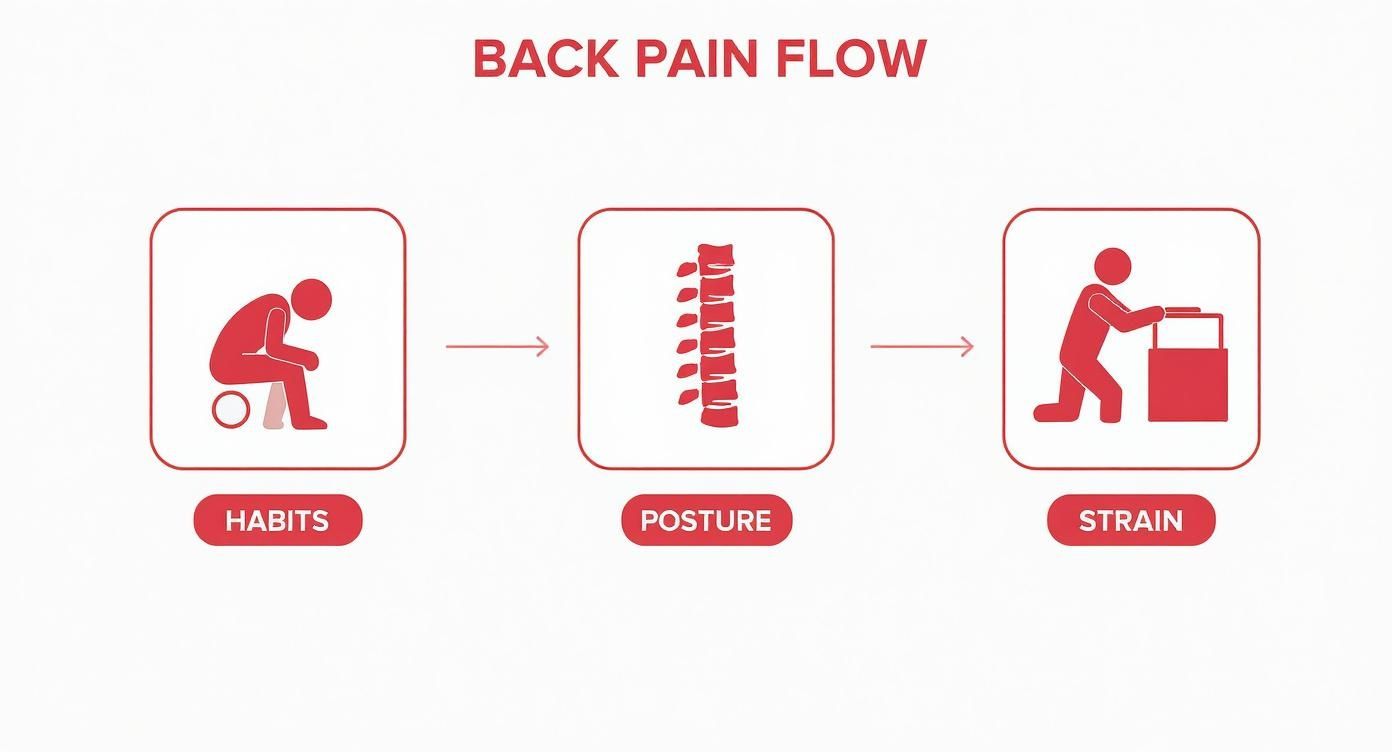
It’s a perfect illustration of how small things, like slouching at your computer, compound over time into bigger problems like chronic muscle strain.
Deciding Between Heat and Cold Therapy
When you’re in pain, should you reach for an ice pack or a heating pad? This is a common question, and the answer depends on the nature of your pain.
- Choose Cold Therapy (Ice): If the pain is sharp, recent (within the last 48 hours), or accompanied by swelling, ice is the better option. Applying an ice pack for 15-20 minutes helps constrict blood vessels, which can reduce inflammation and numb the area.
- Opt for Heat Therapy: For deep, chronic muscle aches or general stiffness, heat is more beneficial. A heating pad or warm compress increases blood flow, helping to relax tight, overworked muscles. Apply for 15-20 minutes at a time.
Creating a Pain-Proof Daily Routine
That persistent upper back pain often has a simple culprit: your daily environment. Real, lasting relief isn’t just about performing a few stretches when you feel a twinge. It involves proactively designing your day to prevent strain from occurring in the first place. By transforming the spaces where you spend the most time—your office, your car, even your bed—into back-friendly zones, you can get ahead of the problem.
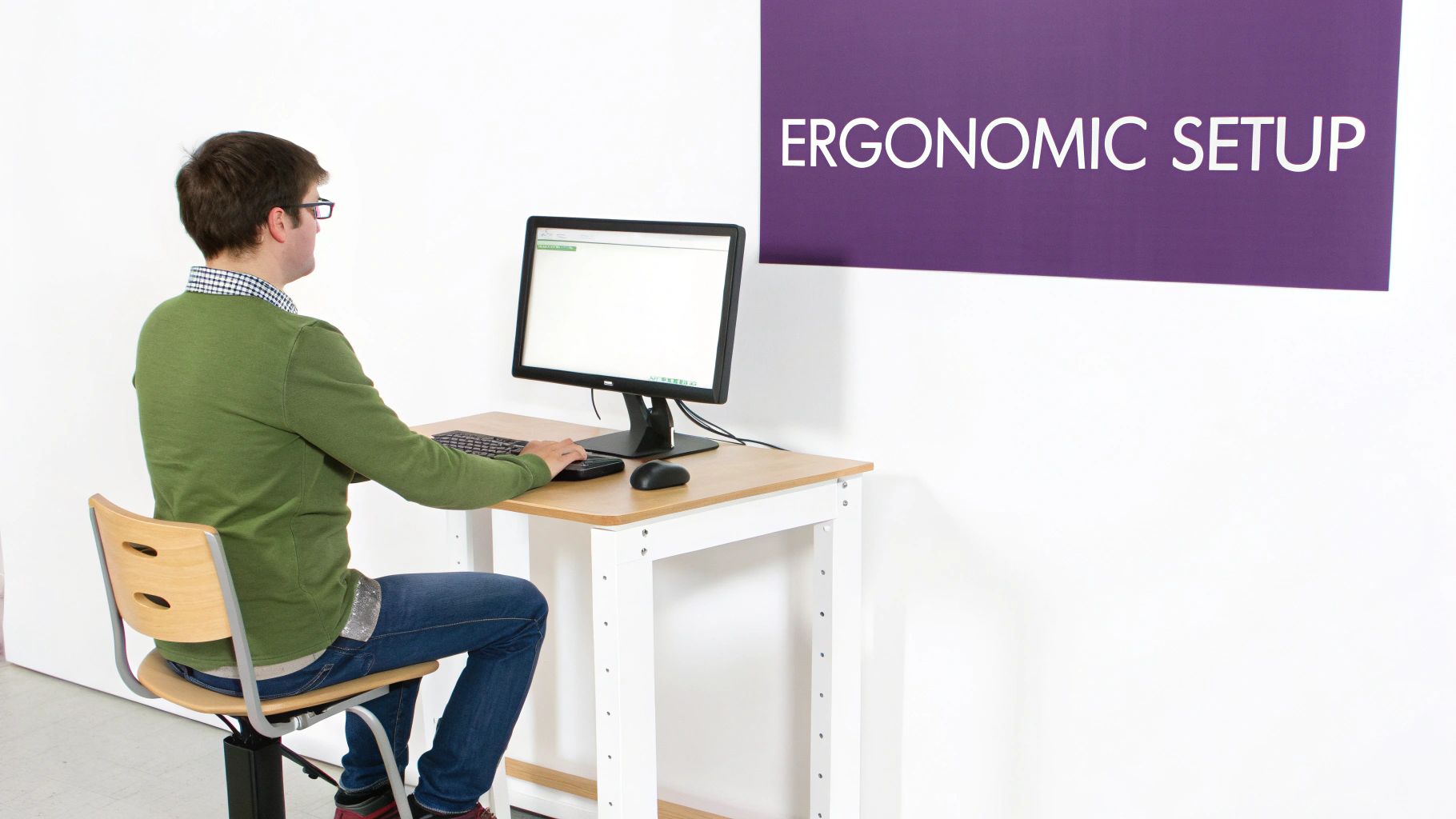
It starts with a careful look at where you spend hours on end. For most, that’s the workstation. Many people are confined to setups that practically enforce a slouched posture, placing significant stress directly on the thoracic spine. Simple ergonomic adjustments are the foundation of a pain-proof routine.
Optimizing Your Workspace for Comfort
Let’s begin with your desk, which is often ground zero for posture-related strain. The objective is to create a setup where your body can maintain a neutral, relaxed position without conscious effort.
Here’s what to check:
- Monitor Height: Position your screen so the top of it is at or just below eye level. This simple adjustment prevents you from craning your neck down or jutting your chin forward—two primary causes of “tech neck.”
- Chair Adjustments: Your feet should be flat on the floor with your knees at a comfortable 90-degree angle. Ensure your chair’s lumbar support fits into the natural curve of your lower back, providing a stable foundation for your entire spine.
- Keyboard and Mouse Placement: Keep your keyboard and mouse close enough that your elbows can remain by your sides, bent at approximately a 90-degree angle. Constantly reaching forward is a direct path to shoulder and upper back strain.
Lifestyle habits are a major piece of the upper back pain puzzle. Factors like poor posture and prolonged sitting are key targets for prevention. Making these simple ergonomic changes is a proven method for reducing pain.
Don’t forget the mental component. A truly pain-proof routine must also account for stress. Learning how to prevent burnout and break the stress cycle is a critical part of a holistic approach, as tension frequently settles right between the shoulder blades.
Quick Ergonomic Fixes for Common Activities
Your workday might be over, but the need for good posture isn’t. Here are a few simple tweaks you can make in other areas of your life.
| Activity Area | Common Problem | Ergonomic Solution |
|---|---|---|
| At a Desk | Hunching forward, craning the neck down. | Raise your monitor to eye level. Keep elbows bent at 90 degrees. Feet flat on the floor. |
| In the Car | Reaching for the wheel, slouching in the seat. | Sit close enough to the wheel to avoid rounding your shoulders. Use a small lumbar pillow. |
| While Sleeping | Waking up with a stiff neck or back. | Use a pillow that supports the neck’s natural curve. Avoid pillows that are too high or flat. |
These small adjustments, when applied consistently, can make a huge difference in your daily comfort and long-term spinal health.
Small Adjustments That Make a Big Difference
Your efforts shouldn’t end when you clock out. The same ergonomic principles apply to other parts of your life where you hold a position for an extended time.
Consider your commute. Is your car seat set up correctly? You should be able to reach the pedals without fully extending your leg and hold the steering wheel without rounding your shoulders forward. A small, inexpensive lumbar pillow can make a world of difference, even on short drives.
Sleep is another major factor. If you wake up feeling stiff and sore, your pillow is a likely culprit. It needs to support the natural curve of your neck, keeping your spine in a straight line whether you sleep on your back or your side. A pillow that’s too high or too flat can strain your upper back muscles for 8 hours straight. Making these easy changes creates a solid foundation for lasting upper back pain relief.
Building a Stronger Back to Prevent Future Pain
While stretches and ergonomic fixes offer valuable immediate relief, they are only half the solution. For true, long-term freedom from upper back pain, you need to build a strong, resilient support system for your spine.
Prevention is always the best strategy. This means strengthening the key muscles responsible for holding you upright throughout the day.
When the muscles in your upper back—specifically the rhomboids between your shoulder blades and the large trapezius muscles—are weak, they cannot properly support your posture. This forces them into a state of constant strain, which leads directly to the chronic aches and stiffness you want to eliminate. A focused strengthening routine is the key to correcting these imbalances.
Core Exercises for a Resilient Upper Back
The goal is not to become a bodybuilder. It’s about creating a simple, sustainable routine that builds functional strength, making your back better equipped to handle daily demands. Consistency is far more important than intensity.
Start by getting familiar with these foundational movements:
- Bent-Over Rows: Holding light weights (or water bottles), hinge at your hips while keeping your back straight. Pull the weights up toward your chest, squeezing your shoulder blades together at the top of the movement. This directly targets the rhomboids and lats.
- Wall Angels: Stand with your back flat against a wall, feet a few inches out. Place your arms against the wall in a “goalpost” position. Slowly slide your arms up the wall, trying to maintain contact with your elbows and wrists for as long as possible. This is an incredible exercise for activating postural muscles.
For a deeper dive into these and other powerful movements, you can explore some of the best back strengthening exercises to build a more complete routine. Remember, proper form is paramount. It is crucial for avoiding injury and maximizing the benefit of each repetition, so start slow and focus on controlled, deliberate movements.
Building strength is like creating an internal corset for your spine. When these muscles are strong and engaged, they naturally hold you in better alignment, taking pressure off your joints and ligaments without you having to constantly think about it.
Integrating Strength into Your Weekly Routine
You don’t need to spend hours at the gym to see results. Aim to incorporate these exercises 2-3 times per week on non-consecutive days to allow your muscles time to recover and grow stronger.
Even a brief 15-20 minute session can make a significant difference over time.
Think of these exercises as an investment in your future comfort. Each repetition helps build a stronger foundation, reducing the risk of future flare-ups and paving the way for lasting upper back pain relief. This proactive approach empowers you to move from simply managing pain to actively preventing it.
Knowing When to Seek Chiropractic Care
At-home stretches and ergonomic adjustments can be wonderfully effective for common upper back pain. But what happens when that nagging ache refuses to go away? It’s important to recognize when to transition from self-care to professional guidance. This is key to preventing a minor annoyance from evolving into a chronic problem.

Sometimes, persistent pain is your body’s way of signaling a deeper structural issue—one that simple stretches cannot resolve. If you’ve been consistent with self-care and the pain lingers for more than a few weeks, it’s a clear indication that a professional evaluation is needed.
Red Flags You Shouldn’t Ignore
Certain symptoms should be considered warning signs, indicating that the problem may be more than a simple muscle strain. If you experience any of the following, it’s time to get a proper evaluation to determine the true cause of your pain.
- Pain that Radiates: If pain travels from your back down into your arms or hands, it could indicate nerve compression or irritation.
- Persistent Numbness or Tingling: The “pins and needles” sensation is not something to dismiss, as it’s another sign that nerves may be involved.
- Weakness in Arms or Hands: A sudden difficulty gripping objects or a noticeable loss of strength is a significant red flag.
- Pain Following an Injury: Any upper back pain that begins after a fall, car accident, or other trauma requires a professional assessment to rule out more serious injuries.
Upper back pain isn’t just about physical discomfort; it also has a significant economic impact. Each year, Americans spend an estimated $100 billion on treatments for back pain, from doctor visits to physical therapy. Seeking help early is not only better for your health but also a crucial factor in managing these costs. You can learn more from this detailed overview of back pain costs.
How Chiropractic Care Addresses the Cause
A chiropractor does not just treat symptoms. The primary goal is to identify and correct the underlying structural or mechanical issue causing the pain. For upper back pain, this often involves addressing misalignments in the thoracic spine.
We use precise spinal adjustments to help restore proper movement to joints that have become restricted. This process does more than just relieve pain; it also eases nerve irritation and helps the spine function as it was designed to.
The care plan extends beyond the adjustment. We often develop personalized rehabilitation programs that include specific exercises and stretches. These are designed to strengthen weak postural muscles and release chronic tension. It’s a comprehensive approach: we help you feel better now while also building a stronger, more resilient back to prevent the pain from returning.
Your Path Forward to Relief
You now have the tools to understand what’s causing your upper back pain, begin managing it at home, and take steps to prevent its recurrence. The next step is to put this knowledge into action.
Sometimes, a structured plan can make all the difference. Many people have found resources like the 8 Steps to a Pain-Free Back guide helpful for outlining a clear path toward feeling better.
But what if you’ve been stretching, adjusting your desk, and strengthening your back, and the pain persists? If you’ve given these methods a consistent effort and you’re still struggling, it may be time for a personalized, hands-on approach to achieve the upper back pain relief you need.
If you are experiencing persistent upper back pain, we are here to help you take the next step. Don’t let discomfort dictate your life. Contact Audubon Park Chiropractic at (509) 327-4049 to schedule a consultation, or simply walk in for treatment. Our team is ready to help you find the source of your pain and create a dedicated plan for a healthier, more comfortable future.
Ready to Feel Better?
Our Spokane chiropractors are ready to help. Walk-ins welcome — no appointment needed.

Dr. Michelle Snyder is a Spokane chiropractor with advanced training in women’s health, hormone balancing, pregnancy, and care for infants and children. She uses gentle low-force spinal adjustments alongside specialized therapies including Webster’s breech technique, allergy desensitization, cold laser therapy, EB cellular cleanse, and Methylation/genetic nutrition — offering patients a comprehensive, whole-body approach to wellness.
A Spokane resident for over 31 years, Dr. Michelle is deeply committed to her community, contributing time and resources to organizations including Meals-on-Wheels, Second Harvest, Ronald McDonald House, and the Union Gospel Mission.
📍 2909 W. Northwest Blvd, Spokane, WA 99205 | ☎ (509) 327-4049 audubonparkchiropractic.com
Further Reading: Back
- Back Pain, Sciatica, and Headaches: When Chiropractic Helps — And When It Doesn’t
- Chiropractic Without the Commitment: What No Long-Term Contracts Actually Means for Your Care
- What causes sciatic nerve pain: Symptoms and relief
- NW Spokane’s Neighborhood Chiropractor: Why Location, Parking, and Knowing Your Doctor Actually Matter
- Why Some People Are Afraid of the Chiropractor & And What We Do Differently