

This post is part of our complete guide to Auto Accident Injury Treatment in Spokane, WA. Browse the guide for more in-depth information on treatments, exercises, and recovery strategies.
Understanding Whiplash – What You Need to Know
If you’ve recently been in an accident, you may be experiencing some common signs of whiplash, such as neck pain, stiffness, and headaches. While initial treatment often involves rest and gentle exercises, professional care, like chiropractic adjustments, is frequently necessary to restore proper neck motion and achieve lasting pain relief.
Whiplash occurs from a sudden, forceful back-and-forth movement of the neck, similar to the motion of a cracking whip. This guide provides clear, factual information to help you understand the injury, recognize its diverse symptoms, and explore effective treatment options.
Don’t wait — relief is closer than you think.
What Is Whiplash and How Does It Happen?
Whiplash is not a disease but a soft tissue injury to the neck. It’s caused by an abrupt, forceful motion that pushes your neck beyond its normal range, first backward (hyperextension) and then forward (hyperflexion). Imagine a rubber band being stretched too far, too quickly—this is analogous to what happens to the muscles and ligaments in your cervical spine.
This sudden jolt strains the complex network of muscles, ligaments, and tendons that support your neck. The impact can cause microscopic tears and inflammation within these soft tissues, which is the direct cause of the pain, stiffness, and other symptoms that often appear hours or even days after the initial event.
Common Causes of Whiplash Injuries
While rear-end car accidents are the most well-known cause, any event that snaps the head forward and backward with sufficient force can result in a whiplash injury.
- Automobile Collisions: Even low-speed fender-benders can generate enough force to cause significant neck strain.
- Contact Sports: A hard tackle in football, a check in hockey, or a sudden fall during athletic activity can easily lead to whiplash.
- Physical Assault: Being pushed or struck can create the same rapid, damaging head motion.
- Accidental Falls: A slip on ice or a tumble down stairs can jolt the neck in just the wrong way, causing injury.
Understanding the mechanism of injury is a crucial first step in accurate diagnosis. It is important to discuss the specific details of the incident with a healthcare professional.
The infographic below illustrates the mechanics of whiplash, from the initial cause to the resulting pain.
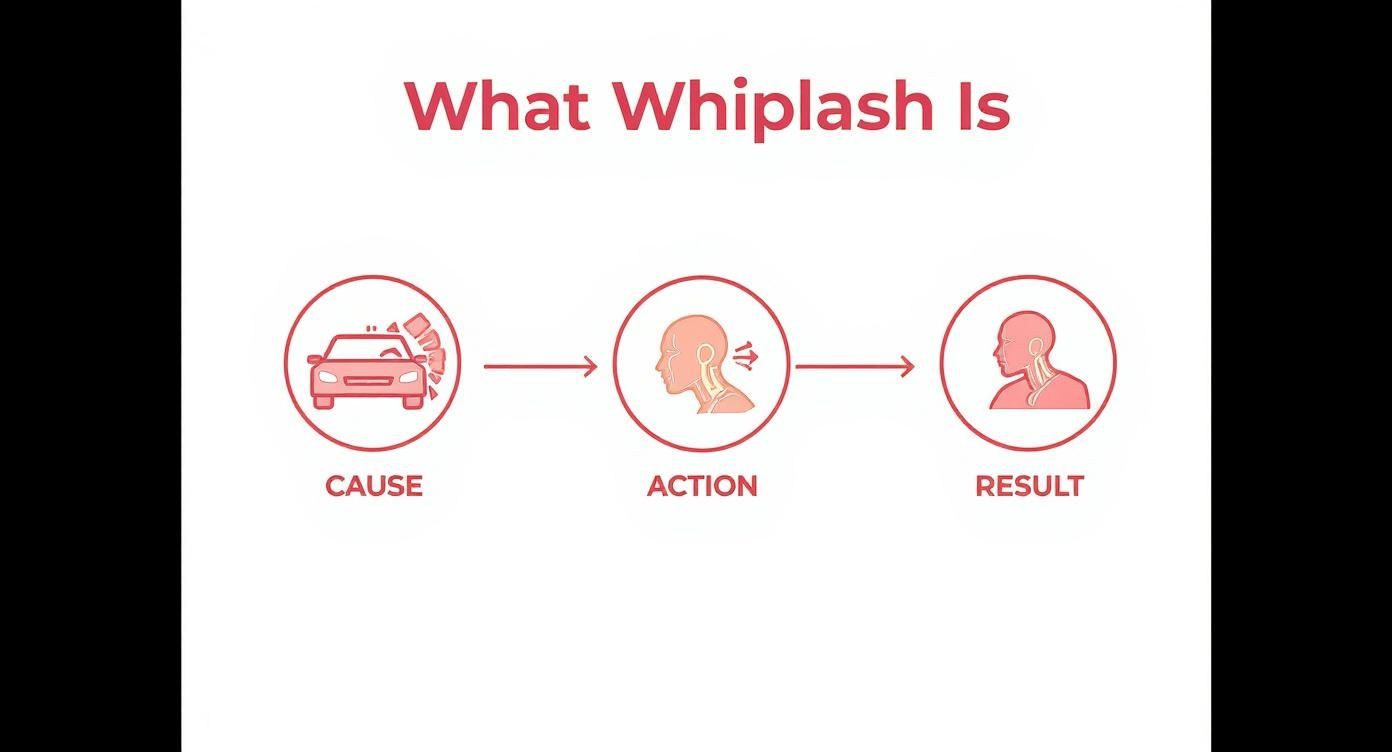
This visual helps clarify how a forceful event triggers an unnatural motion in the neck, which ultimately leads to injury and pain.
The Impact of a Seemingly Minor Injury
Whiplash is one of the most common non-fatal injuries resulting from car crashes, with over one million cases occurring annually in the United States. This statistic makes it a leading cause of both acute and chronic neck pain and disability.
In the US, whiplash-associated disorders account for more than 65% of all bodily injury claims from automobile accidents, contributing to billions in economic costs each year.
The forces involved in a whiplash event can be deceptive. A collision that leaves only minor damage to a vehicle can still transfer a significant amount of energy to the occupants, particularly to the delicate structures of the neck and spine.
Because the neck is designed for flexibility and must support the full weight of the head, it is uniquely vulnerable to this type of rapid acceleration-deceleration force. The resulting strain sets the stage for a wide array of symptoms, making targeted, professional treatment essential for a full recovery.
The Hidden and Obvious Signs of a Whiplash Injury

Immediately following an accident, the body releases a rush of adrenaline. This natural survival mechanism can temporarily mask pain, which is why many whiplash symptoms may not appear for hours or even a full day after the incident. Once the initial shock subsides, the true extent of the injury becomes apparent.
Whiplash is far more than just a sore neck. The forceful motion can strain muscles, irritate nerves, and even affect cognitive function. Recognizing this wide range of signs is the first step toward seeking appropriate care.
The Most Common Physical Pains
The physical symptoms are typically the first to emerge and can range from a persistent ache to sharp, debilitating pain.
- Neck Pain and Stiffness: This is the hallmark symptom of whiplash. It can manifest as a deep, dull ache or a sharp, shooting pain, often accompanied by a significant loss of motion that makes turning the head difficult.
- Headaches: Whiplash-related headaches commonly originate at the base of the skull and radiate toward the forehead. They are a direct result of strained muscles and nerve irritation in the upper neck.
- Shoulder and Upper Back Pain: The jarring force often radiates downward, straining the interconnected muscles and ligaments in the shoulders and between the shoulder blades.
These immediate pains are your body’s signal that an injury has occurred. Addressing them promptly is key to preventing long-term complications. Understanding neck pain after an accident is critical for a successful recovery.
Neurological and Sensory Indicators
Whiplash can disrupt the body’s complex neurological system. These symptoms can be disorienting but are a common result of the injury’s impact on the cervical spine and surrounding nerves. The cervical spine acts as a conduit for nerve signals between the brain and the rest of the body; a whiplash injury can interfere with this communication.
This disruption can lead to various issues:
- Dizziness and Vertigo: A sensation of spinning or lightheadedness, particularly with head movement.
- Tingling or Numbness: A “pins and needles” feeling or weakness that can travel into the arms, hands, and fingers (radiculopathy).
- Blurred Vision: Some individuals experience difficulty focusing their eyes or periods of blurred vision.
- Tinnitus: A persistent ringing or buzzing sound in the ears.
Cognitive and Emotional Effects
The cognitive and emotional symptoms of whiplash are often overlooked but can be just as impactful as the physical pain. The trauma of an accident, combined with persistent pain and neurological disruption, can take a significant toll on mental well-being.
These effects are real physiological consequences of the injury:
- Brain Fog: Difficulty concentrating, memory problems, or a general feeling of mental cloudiness.
- Irritability and Mood Swings: Chronic pain and physical limitations can understandably lead to frustration, anxiety, and changes in mood.
- Profound Fatigue: A deep-seated tiredness that is not relieved by rest, as the body expends significant energy on the healing process.
- Sleep Disturbances: Pain and discomfort can make it nearly impossible to find a comfortable sleeping position, often leading to insomnia or restless nights.
To provide a clear overview, here is a checklist of potential symptoms.
Whiplash Symptom Checklist: What to Watch For
The signs of whiplash are not always immediate or obvious. This table categorizes potential symptoms and their typical onset.
| Symptom Category | Common Signs to Look For | When It Typically Appears |
|---|---|---|
| Immediate Physical Pains | Neck pain/stiffness, headaches (base of skull), shoulder or upper back aches | Within the first 24-48 hours |
| Neurological & Sensory | Dizziness, vertigo, tingling/numbness in arms, blurred vision, ringing in ears (tinnitus) | Can appear within hours or days |
| Cognitive & Emotional | Brain fog, memory issues, irritability, anxiety, fatigue, trouble sleeping | Often develops over days to weeks |
| Jaw & Face-Related | Jaw pain (TMJ), difficulty chewing, facial muscle tightness | May develop after the initial days |
If you recognize any of these symptoms following an accident, seeking a professional evaluation is the most effective way to get an accurate diagnosis and begin the path to recovery.
How a Whiplash Injury Is Professionally Diagnosed

Seeking medical care after an accident can be stressful, especially when you are in pain. Knowing what to expect during the diagnostic process can help. Diagnosing whiplash is a methodical process designed to identify the source of your pain and rule out more severe injuries.
The evaluation is a detailed investigation that combines your account of the incident with a careful, hands-on physical examination. This thorough approach forms the foundation of an effective treatment plan by ensuring the correct problem is identified and addressed.
The Initial Consultation and Health History
Every diagnostic process begins with a conversation. During this consultation, it is important to share all the details of your experience, as even minor points can be relevant. The discussion will likely cover:
- The accident itself: How did it happen? From which direction did the impact occur?
- Your symptoms: When did the pain begin? Was it immediate, or did it develop hours or days later?
- The type of pain: Is it a constant, dull ache or a sharp, shooting pain? Does it radiate into your shoulders or down your arms?
- Your medical history: Have you had previous neck or back injuries?
Your narrative provides crucial clues that help connect the physics of the event to your current symptoms, guiding the subsequent physical exam.
The Physical and Neurological Examination
Following the consultation, a hands-on assessment is performed to locate the source of the pain and evaluate the extent of the soft tissue damage.
A key component of this exam is assessing your neck’s range of motion. A provider will gently guide you to move your head forward, backward, and side-to-side to determine the degree of limitation caused by stiffness or pain. Professionals may use specific range of motion measurement tools to establish an objective baseline and monitor progress over time.
Next is palpation, a technique involving carefully feeling the muscles and tissues in your neck, shoulders, and upper back. This allows the provider to identify specific areas of tenderness, muscle tightness, and inflammation. Simple neurological checks, such as testing reflexes and muscle strength, are also performed to ensure nerve function has not been compromised.
When Imaging Tests Are Necessary
In most cases, whiplash can be diagnosed without advanced imaging. However, if there is any reason to suspect a more serious injury, such as a fracture or significant disc damage, an X-ray or MRI may be recommended.
It is a common misconception that whiplash itself is visible on an X-ray. These imaging tools are primarily used to rule out other conditions, like fractures, dislocations, or severe degenerative changes.
A clear X-ray is often good news, as it confirms that the issue lies within the soft tissues—the muscles and ligaments. This allows for a confident progression to a treatment plan focused on healing these structures. This step-by-step diagnostic approach ensures accuracy, which is the most critical first step toward recovery.
Effective Treatment Strategies for Whiplash Recovery
The traditional advice of prolonged rest and immobilization for whiplash is now considered outdated. Modern recovery protocols emphasize active, guided healing. The objective is to gently restore movement, improve function, and reduce pain, empowering you to take an active role in your healing process.
The clinical approach to whiplash has evolved significantly. Current guidelines strongly encourage a return to normal activities as soon as it is tolerable. Studies consistently show that patients who maintain their usual activities tend to experience better outcomes. For individuals with mild to moderate symptoms, this approach can shorten recovery time and reduce the need for extensive interventions.
Foundational At-Home Care
Immediately following the injury, initial care at home can be very effective. The primary goal is to manage the initial inflammation and pain. These simple steps can provide significant relief in the first 24-48 hours.
- Ice Therapy: Apply an ice pack to your neck for 15-20 minutes at a time. This helps constrict blood vessels, which is effective for reducing swelling and numbing acute pain.
- Heat Therapy: After the first 24-48 hours, switching to moist heat can be beneficial. Heat helps relax tight, sore muscles and increases blood flow to the injured tissues, promoting healing.
While these home remedies can provide temporary relief, they are best viewed as the first step in a comprehensive, professionally guided recovery plan.
The Central Role of Chiropractic Care
Professional, hands-on care is often essential for addressing the root cause of whiplash pain—the biomechanical issues created by the injury. Chiropractic care offers a non-invasive approach that focuses on restoring the proper function of the spine and surrounding tissues. This method builds a foundation for lasting relief and helps prevent the development of chronic pain.
Healthcare providers often create structured treatment plans to guide a patient’s recovery journey, and chiropractic care is a key component of many such plans.
A primary goal of a chiropractor is to correct spinal misalignments, or subluxations, that can result from the forceful impact of a whiplash injury. Restoring proper alignment is crucial for optimal nerve function and the body’s natural healing process.
This professional care typically involves several key components, each playing a vital role in recovery.
Key Chiropractic Treatment Techniques
A knowledgeable chiropractor utilizes a combination of techniques, tailoring the treatment specifically to your injury and symptoms rather than using a one-size-fits-all approach.
1. Spinal Adjustments
Also known as spinal manipulation, this is a core component of chiropractic care. It involves applying a controlled, gentle force to specific joints in the cervical spine that have become restricted or misaligned. These adjustments are designed to:
- Restore normal joint movement and function.
- Relieve pressure on irritated nerves.
- Reduce pain and alleviate muscle spasms.
2. Soft Tissue Therapies
Whiplash affects not just the joints but also the muscles, ligaments, and tendons of the neck. Soft tissue therapy is therefore crucial. Techniques such as therapeutic massage, myofascial release, and trigger point therapy are used to address deep muscle tension, break down scar tissue, and improve circulation to the injured areas.
3. Rehabilitative Exercises
As pain subsides and mobility improves, the focus shifts to strengthening the neck. Your chiropractor will guide you through specific exercises designed to stabilize the cervical spine and rebuild muscle support. These are not generic workouts but targeted movements essential for long-term recovery and prevention of re-injury.
This combination of spinal adjustments, soft tissue work, and active rehabilitation provides a clear and effective roadmap for recovery, helping you move beyond the pain and return to your daily life.
Your Role in Long-Term Recovery and Pain Prevention

Your recovery journey continues outside the provider’s office. The actions you take between appointments are as crucial as the treatment itself. By taking an active role in your healing, you can effectively manage lingering symptoms, build strength, and prevent the injury from becoming a chronic issue.
Think of professional care as the engine driving your recovery, while your daily habits are the fuel that keeps it running. Factors like your posture, workspace ergonomics, and gentle home exercises play a significant part. Partnering in your own care can dramatically improve outcomes and reduce the risk of future pain.
Setting Up an Ergonomic Workspace
For many people, hours spent at a desk can continually aggravate an injured neck. Fortunately, a few simple adjustments can transform a workspace from a source of strain into a supportive environment for healing.
The primary goal is to maintain a neutral spine, where your ears are aligned directly over your shoulders.
- Monitor Height: Position your computer screen so the top of it is at or slightly below eye level. This prevents you from tilting your head up or hunching down throughout the day.
- Chair Support: Use a chair that supports the natural curve of your lower back. If your chair lacks this feature, a small pillow or rolled-up towel can provide effective lumbar support.
- Arm Position: Keep your elbows bent at a comfortable 90-degree angle, with your wrists straight while typing. This reduces tension in the shoulders and neck.
These minor changes decrease the daily micro-stresses that can re-aggravate injured neck tissues and are a critical part of managing whiplash symptoms.
Mastering Your Posture in Daily Life
Good posture is about maintaining mindful body alignment throughout the day. Slouching places continuous, low-grade stress on the cervical spine, which can significantly slow whiplash recovery.
Think of your head as a bowling ball balanced on your spine. For every inch your head juts forward, it adds approximately 10 pounds of extra weight for your neck muscles to support.
Correcting this common “forward head posture” is vital.
- When standing: Draw your shoulders back and down, keep your chest open, and gently tuck your chin.
- When sitting: Ensure your back is supported against the chair with your feet flat on the floor. Avoid crossing your legs for extended periods.
- When driving: Adjust your headrest so it is close to the back of your head, supporting its natural alignment and preventing it from tilting forward.
By consciously practicing better posture, you strengthen the muscles that support your neck, improving stability and making pain flare-ups less likely.
Supportive Stretches and Gentle Movement
While your provider will guide you through specific exercises, incorporating gentle stretches at home can help maintain flexibility and ease muscle tension. Always consult your chiropractor before starting any new exercises.
Here are a few simple stretches that can support your recovery:
- Chin Tucks: While sitting or standing straight, gently draw your chin toward your chest, as if making a “double chin.” Hold for five seconds and repeat 10 times. This exercise activates the deep neck flexor muscles.
- Corner Stretch: Stand in the corner of a room with your forearms on each wall. Gently lean forward until you feel a comfortable stretch across your chest. This helps counteract a slumped-forward posture.
- Shoulder Blade Squeeze: In a seated or standing position, gently squeeze your shoulder blades together as if holding a pencil between them. Hold for five seconds, release, and repeat 10-15 times to strengthen the upper back muscles that support your neck.
These movements should always feel gentle. If you experience any sharp pain, stop immediately. They are intended to complement your professional whiplash treatment, not replace it. By taking charge of your workspace, posture, and home exercises, you become an essential member of your own recovery team.
Whiplash FAQs
Here are answers to some of the most common questions people have about whiplash and its recovery.
How Long Does Whiplash Recovery Take?
Recovery time for whiplash varies significantly from person to person. Many individuals with a mild case feel substantially better within a few weeks, particularly with proper care. However, for more moderate to severe injuries, it is not uncommon for symptoms to persist for several months.
Factors influencing recovery include the severity of the impact, your overall health prior to the accident, and how quickly you begin treatment. Early diagnosis and adherence to a consistent treatment plan are the most effective strategies for a faster, more complete recovery.
Can I Still Work if I Have a Whiplash Injury?
Whether you can work depends on the severity of your symptoms and the nature of your job. If you have a desk job, you may be able to return to work with ergonomic modifications, such as using a supportive chair and taking frequent breaks to stand and stretch.
For physically demanding jobs, you will likely need to take time off or request modified, lighter duties. It is crucial to follow the guidance of your healthcare provider. They can assess your specific situation and recommend work restrictions that will not worsen the injury.
The goal is not to “tough it out” but to create an environment that promotes healing. Pushing through significant pain can slow your recovery and may lead to chronic issues.
Is Ice or Heat Better for Whiplash Pain?
The best choice depends on the timing of the injury. For the first 24 to 48 hours, ice is generally recommended. Applying an ice pack for 15-20 minutes at a time helps constrict blood vessels, reducing swelling, inflammation, and acute pain.
After this initial phase, you can switch to moist heat. Heat helps relax tight and spasming muscles and increases blood flow to the area, which aids the healing process. Many people find that alternating between ice and heat provides the most effective relief. It is always best to consult with a professional to determine the appropriate approach for your stage of healing.
Don’t let whiplash symptoms control your life. The most effective way to address the pain and start healing is to get a professional evaluation and a treatment plan designed specifically for you.
If you are experiencing any signs of whiplash, take the first step toward relief. The team at Audubon Park Chiropractic is here to help you understand your injury and create a personalized plan for your recovery. Contact us today at (509) 327-4049 or simply walk in for an evaluation. Let us help you get back to feeling your best.
Ready to Feel Better?
Our Spokane chiropractors are ready to help. Walk-ins welcome — no appointment needed.

Dr. Michelle Snyder is a Spokane chiropractor with advanced training in women’s health, hormone balancing, pregnancy, and care for infants and children. She uses gentle low-force spinal adjustments alongside specialized therapies including Webster’s breech technique, allergy desensitization, cold laser therapy, EB cellular cleanse, and Methylation/genetic nutrition — offering patients a comprehensive, whole-body approach to wellness.
A Spokane resident for over 31 years, Dr. Michelle is deeply committed to her community, contributing time and resources to organizations including Meals-on-Wheels, Second Harvest, Ronald McDonald House, and the Union Gospel Mission.
📍 2909 W. Northwest Blvd, Spokane, WA 99205 | ☎ (509) 327-4049 audubonparkchiropractic.com
Further Reading: Accidents
- How to Treat Whiplash at Home: A Practical Guide
- Why You Need a Chiropractor After a Car Accident
- Your Guide to Auto Accident Injury Treatment
- What to Do After a Car Accident Injury: A Step-by-Step Guide
- Neck Pain After an Accident: A Guide to Causes, Symptoms, and Effective Relief
→ Complete Guide: Auto Accident Injury Treatment in Spokane, WA