

This post is part of our complete guide to Auto Accident Injury Treatment in Spokane, WA. Browse the guide for more in-depth information on treatments, exercises, and recovery strategies.
Understanding Neck Pain After an Accident
A car accident’s sudden jolt often causes the head to snap forward and then backward violently. This whip-like motion is the mechanism behind whiplash, a primary cause of the intense pain and stiffness that can develop hours or even days after a collision. Understanding the underlying injuries and symptoms is the first step toward effective recovery.
Don’t wait — relief is closer than you think.
Why Your Neck Hurts After an Accident

Even a seemingly minor collision can exert significant force on the body. The muscles and ligaments in the neck, similar to rubber bands, can tear when stretched too far, too quickly. A seatbelt secures the torso, but the head and neck remain vulnerable, absorbing the full shock of the impact.
This abrupt, forceful movement creates microscopic tears in these soft tissues. In response, the body initiates its natural healing process: inflammation. This physiological response is why an individual might feel fine immediately after an accident but wake up the next morning with severe pain and an inability to turn their head.
The Delayed Onset of Pain
The delayed appearance of pain is a common and normal physiological response. Immediately following a traumatic event, the body releases a surge of adrenaline. This “fight or flight” hormone effectively masks pain signals, allowing an individual to cope with the stressful situation. As the shock subsides and adrenaline levels return to normal, the reality of the injury—inflammation, muscle spasms, and stiffness—becomes apparent.
A delayed reaction does not diminish the severity or validity of the injury; it is a standard aspect of how the body processes trauma.
Neck pain is a significant global health issue. For instance, a 2017 global analysis reported an incidence rate of neck pain at approximately 806.6 per 100,000 people. You can find more details about these global neck pain statistics online.
The neck is an incredibly complex structure of bones, discs, muscles, and nerves. The intense force from an accident disrupts this delicate system, triggering a cascade of symptoms that can significantly impact daily life.
Understanding the Initial Damage
The pain experienced after an accident typically stems from a few core types of tissue damage:
- Muscle Strain: The muscles are stretched beyond their normal capacity, resulting in soreness, stiffness, and micro-tears in the muscle fibers.
- Ligament Sprain: The tough, fibrous bands that connect the neck bones (vertebrae) are torn or damaged by the excessive force.
- Joint Irritation: The small facet joints, which provide the neck with its range of motion, become swollen and inflamed due to the impact.
Identifying the source of the pain is the critical first step toward a successful recovery. The discomfort is not psychosomatic; it is a genuine physical injury that requires proper medical attention and care.
Decoding the Symptoms of a Neck Injury

Following the trauma of an accident, the body communicates distress through various symptoms. Learning to interpret these signals is essential for healing. A general complaint of “soreness” is often insufficient for an accurate diagnosis; the specific qualities of the pain—sharp, dull, radiating—can point to distinct injuries involving muscles, nerves, or joints.
Being specific about your symptoms helps a healthcare professional pinpoint the root cause more efficiently, much like describing a car’s “high-pitched squeal when turning left” is more useful to a mechanic than just saying it’s “making a noise.”
Moving Beyond General Soreness
The discomfort resulting from neck pain after an accident is rarely a single sensation. It typically manifests in distinct ways, each providing valuable clues about the underlying injury.
Common types of pain and their likely causes include:
- Sharp, Stabbing Pain: This intense, localized pain often indicates an injury to a specific structure, such as a facet joint or a ligament. It may flare up with specific movements, like a quick turn of the head.
- Dull, Persistent Ache: A constant, throbbing pain is characteristic of muscle strain. When muscle fibers sustain micro-tears, they become inflamed, creating a deep, nagging discomfort.
- Radiating Pain: Pain that travels from the neck into the shoulders, arms, or hands is often a sign of nerve involvement. This may be caused by a pinched nerve or a bulging disc compressing a nerve root in the cervical spine.
This is a widespread health problem. In 2019 alone, an estimated 222.7 million people worldwide were affected by neck pain, with a significant portion resulting from accidents. This contributed to approximately 22.1 million Years Lived with Disability (YLDs), underscoring its profound impact on quality of life. You can find more details on the global impact of traumatic neck pain on frontiersin.org.
To better understand your symptoms, the following table connects common post-accident symptoms to their probable causes.
Common Symptoms After a Neck Injury and What They Mean
| Symptom | What It Feels Like | Potential Cause |
|---|---|---|
| Sharp, Localized Pain | A stabbing or pinching sensation in one specific spot, often worse with movement. | Joint sprain, ligament tear, or facet joint injury. |
| Dull, Deep Ache | A constant, throbbing pain that feels widespread across the neck or shoulders. | Muscle strain or whiplash-associated soft tissue damage. |
| Radiating Numbness or Tingling | “Pins and needles” or a burning sensation traveling down the arm, hand, or fingers. | Nerve compression or irritation, possibly from a herniated disc. |
| Stiffness and Limited Motion | Feeling like your neck is “locked” or unable to turn fully in one or more directions. | Muscle guarding, inflammation, and joint restriction. |
| Headaches at the Base of the Skull | Pain that starts in the upper neck and radiates up the back of the head. | Cervicogenic headaches, caused by irritation in the upper cervical joints. |
| Dizziness or Brain Fog | A sense of unsteadiness, lightheadedness, or difficulty concentrating. | Injury to the upper neck joints affecting balance signals to the brain. |
Recognizing these patterns enables more effective communication with a chiropractor or physician, facilitating a faster and more accurate diagnosis.
More Than Just Pain
A neck injury’s effects are often not confined to the neck. The cervical spine is the primary conduit between the brain and the rest of the body, so damage to this area can have far-reaching consequences.
An injury to the neck is an injury to the body’s command center. The resulting symptoms can disrupt everything from your balance and focus to your ability to get a good night’s sleep.
You may notice issues that seem unrelated at first:
- Persistent Headaches: Often originating at the base of the skull and radiating up the back of the head, these are known as cervicogenic headaches. They are a direct result of irritation in the neck’s joints and muscles.
- Dizziness or Brain Fog: Injury to the delicate structures in the upper neck can disrupt signals the brain uses for balance and spatial orientation. This can lead to feelings of unsteadiness or cognitive impairment.
- Stiffness and Reduced Mobility: The sensation of being unable to turn your head is a classic sign of inflammation. The body instinctively tightens the muscles around the injury site to create a natural brace and prevent further damage.
By understanding these signals, you become an active participant in your recovery. You can provide a healthcare professional with a clear, detailed account of your symptoms, which is crucial for obtaining a precise diagnosis and an effective treatment plan.
Common Injuries Causing Post-Accident Neck Pain
The violent forces in an accident can inflict considerable damage on the delicate structures of the neck. While the primary symptom may be generalized “neck pain,” identifying the specific injured tissues is crucial for developing an effective recovery plan. The neck is a sophisticated mechanical structure, and a sudden jolt can damage any of its interconnected components.
The most frequent diagnosis for neck pain after an accident is whiplash. However, “whiplash” is not a single injury but an umbrella term for a range of conditions known as Whiplash-Associated Disorders (WAD). These occur when the head’s rapid back-and-forth movement overstretches, and sometimes tears, the muscles and ligaments supporting the cervical spine.
The image below outlines a typical diagnostic process used by medical professionals to evaluate a neck injury following a collision.
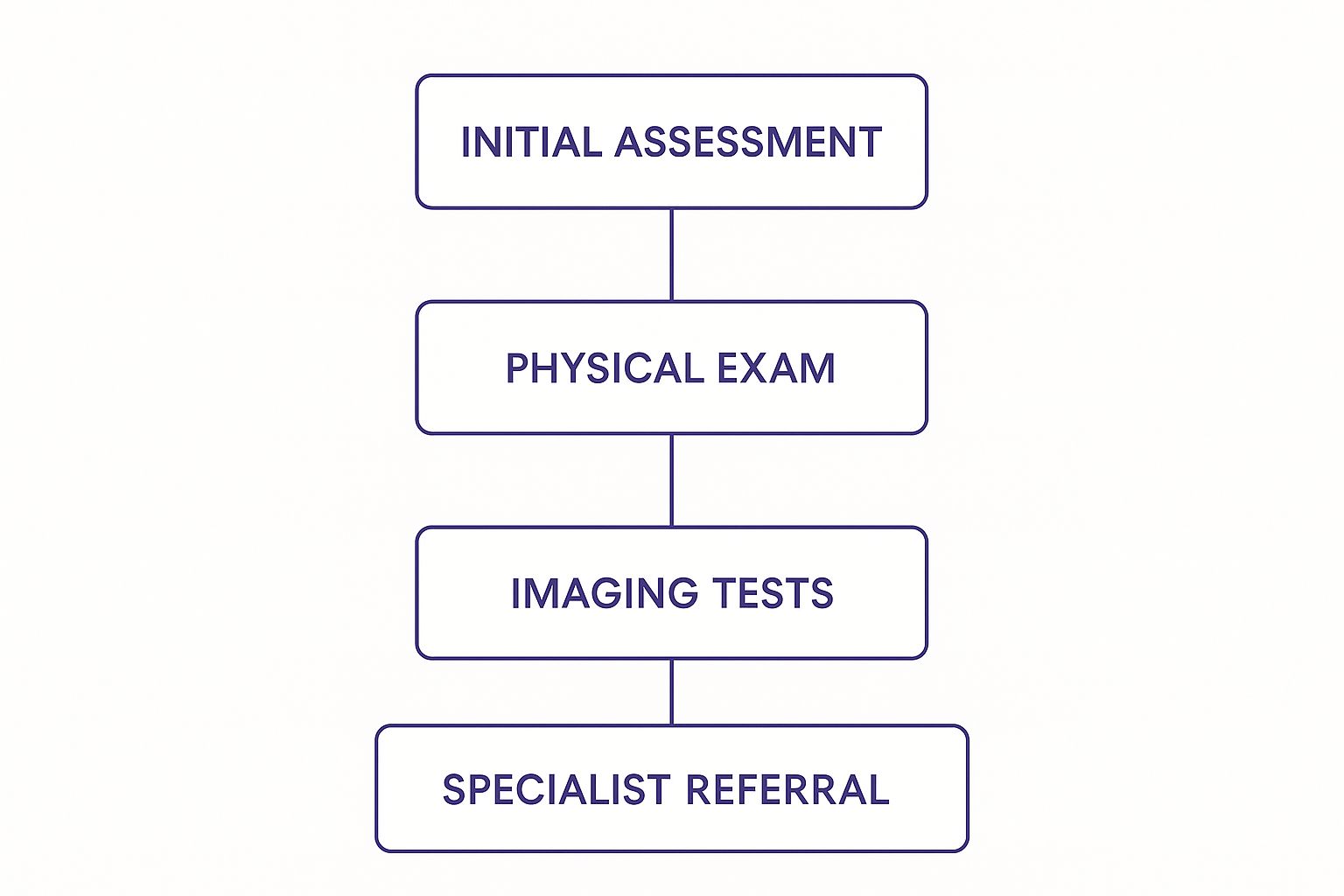
As illustrated, a thorough diagnosis begins with a physical examination and often includes imaging tests to visualize the underlying structures and confirm the extent of the damage.
Beyond General Whiplash Damage
While whiplash is a broad term, the forces of a crash can cause specific structural problems, each affecting a different part of the neck’s anatomy.
- Cervical Strains and Sprains: These terms are often used interchangeably but refer to different injuries. A strain involves the overstretching or tearing of a muscle or its tendon. A sprain is an injury to a ligament—the tough connective tissue that joins bones. Both cause significant pain, stiffness, and muscle spasms.
- Herniated or Bulging Discs: Positioned between each cervical vertebra are soft, gel-filled discs that function as shock absorbers. The impact of an accident can cause a disc to bulge beyond its normal boundary or rupture (herniate), allowing its inner gel-like material to leak out. This material can then press on spinal nerves, causing radiating pain, numbness, or tingling down an arm.
The forces in an accident can compromise the very structures designed to protect your spinal cord. Injuries like herniated discs and facet joint damage go beyond simple muscle soreness and often require targeted care to resolve.
Damage to Joints and Nerves
The spine is a complex system of bones, discs, tiny joints, and sensitive nerves, all of which are vulnerable to damage in a collision.
A facet joint injury is a common yet frequently overlooked problem. Facet joints are the small joints on the back of the vertebrae that facilitate movement, allowing the neck to bend and twist. An accident can easily inflame these joints, causing sharp, localized pain that worsens with head rotation or extension.
Furthermore, inflammation and tissue displacement from other injuries can lead to a pinched nerve (cervical radiculopathy). When a nerve root is compressed by bone, disc material, or swollen muscle, it can trigger characteristic sharp, shooting pains or a “pins and needles” sensation in the shoulders or arms. The consequences of whiplash can sometimes include unexpected symptoms, a topic we explore in our article on whether whiplash is a cause of tinnitus.
Your Roadmap to Effective Neck Pain Relief

Navigating the recovery process for neck pain after an accident can feel overwhelming. However, a clear path forward exists, beginning with immediate steps you can take to manage inflammation and prevent the injury from worsening.
The first 48 to 72 hours are a critical window. During this period, the body’s inflammatory response is at its peak. Applying an ice pack for 15-20 minutes at a time can significantly reduce swelling and numb the sharp, initial pain. Rest is also important, but this does not mean complete immobility. Gentle movement can prevent stiffness from setting in; therefore, avoid total inactivity unless specifically instructed by a doctor.
Building Your Professional Treatment Plan
While initial self-care is beneficial, a comprehensive recovery typically requires a team of healthcare professionals. Assembling a support team, with each expert contributing their specialized skills, is essential for restoring your neck’s function.
There is no single solution for post-accident neck pain. The most effective approach involves a multi-faceted strategy combining different therapies tailored to your specific injury. This is why obtaining a professional diagnosis is the crucial next step.
Key components of a robust recovery plan include:
- Chiropractic Care: Chiropractors specialize in spinal mechanics. They use gentle adjustments to restore proper motion and alignment to the neck’s joints. This can alleviate pressure on pinched nerves, reduce stiffness, and significantly improve range of motion.
- Physical Therapy: While chiropractic care focuses on joint alignment, physical therapy targets the surrounding muscles. A physical therapist prescribes specific exercises to rebuild strength and stability, creating a natural support system to protect the neck from re-injury.
- Medical Interventions: For severe pain and inflammation, a medical doctor may recommend non-steroidal anti-inflammatory drugs (NSAIDs) or prescribe muscle relaxants to control severe spasms. These medications act as a temporary measure to manage symptoms, making it possible to engage in hands-on therapies.
Integrating Complementary Therapies
In addition to these core treatments, other therapies can accelerate healing and provide substantial pain relief. These work synergistically with your primary treatment plan to address soft tissue damage and improve overall well-being.
Massage therapy, for example, directly targets tight, knotted muscles, improving circulation and releasing tension. Some individuals also find acupuncture effective for modulating chronic pain signals by stimulating specific points on the body.
The need for effective treatment plans is growing. Projections indicate that the global burden of neck pain will increase, with one forecast estimating a 32.5% rise in cases between 2020 and 2050. This means nearly 269 million people could be affected, highlighting the critical importance of seeking proper care.
Crafting a Personalized Strategy
The most successful outcomes are achieved when these approaches are integrated. For instance, a chiropractor may perform an adjustment to restore joint mobility, followed by a physical therapy session to strengthen the supporting muscles, thereby reinforcing the benefits of the adjustment.
The goal is not just to reduce pain, but to restore function. A multi-faceted approach ensures you are addressing the injury from every angle—from joint alignment and muscle strength to inflammation control.
Ultimately, your roadmap to relief is unique to your situation. It begins with immediate self-care, progresses to a professional diagnosis, and evolves into a personalized treatment plan that may include chiropractic adjustments, targeted exercises, and other supportive therapies. For residents in our area, our guide on what to do for neck pain in Audubon Park offers additional local resources. By taking an active, informed role in your recovery, you can navigate from pain and limitation back to lasting health.
When You Should See a Doctor for Neck Pain
It is common to downplay pain after an accident, hoping it will resolve on its own. One might rationalize, “It was just a minor fender-bender,” but even low-speed impacts can generate forces sufficient to cause significant injury. The adrenaline released immediately after the event can effectively mask serious symptoms for hours or even days.
The decision of when to seek medical help for neck pain after an accident should not be taken lightly. While minor stiffness may improve with time, certain symptoms are critical warning signs from your body. Ignoring these red flags can allow a treatable injury to progress into a chronic, long-term problem.
Red Flag Symptoms Demanding Immediate Attention
If you experience any of the following symptoms, seek immediate medical attention from a doctor or an emergency room. These signs may indicate serious conditions such as a herniated disc, nerve damage, or a vertebral fracture that requires urgent care.
- Severe and Worsening Pain: Pain that is intense, unremitting, or progressively worsening is a major red flag.
- Radiating Numbness or Weakness: A tell-tale sign of nerve compression is tingling, numbness, or weakness that travels from the neck down into the shoulders, arms, or hands.
- Loss of Coordination: Difficulty with balance, clumsiness while walking, or trouble with fine motor skills like buttoning a shirt can indicate a serious neurological issue.
- A Persistent, Severe Headache: A headache that does not respond to over-the-counter medication, especially when accompanied by dizziness or nausea, requires immediate evaluation.
Never assume that a lack of immediate, severe pain means you are uninjured. The delayed onset of symptoms is a well-documented phenomenon after accidents, making a professional evaluation a wise decision even if you feel “fine” at first.
Choosing the Right Professional for Your Injury
Knowing which healthcare professional to see is as important as knowing when to go. The appropriate choice depends on the severity of your symptoms.
Guideline for Seeking Medical Care
| Symptom Severity | Recommended Action |
|---|---|
| Life-Threatening Symptoms (e.g., loss of consciousness, inability to move, severe head trauma) | Go to the Emergency Room immediately. Do not wait. |
| Severe & Concerning Symptoms (e.g., radiating numbness, intense headache, worsening pain) | See your Primary Care Doctor or visit an Urgent Care clinic as soon as possible. |
| Lingering Stiffness & Aches (e.g., persistent pain, reduced range of motion, muscle soreness) | Schedule an appointment with a Chiropractor or your primary doctor. |
For the most severe, life-threatening symptoms, the emergency room is always the appropriate destination. For concerning pain that is not a medical emergency, your primary care doctor is an excellent starting point for a thorough evaluation and potential specialist referrals.
However, for issues related to spinal mechanics—such as joint mobility, alignment, and soft tissue damage—a chiropractor is a specialized expert. They focus on diagnosing and treating the musculoskeletal injuries that commonly result from accidents. To learn more about specific treatment options, read our guide on how chiropractic care helps neck pain in Spokane.
Making a timely and informed decision about seeking care is the most critical step you can take on your road to recovery.
Your Questions About Post-Accident Neck Pain, Answered
Following an accident, it is normal to have numerous questions. The uncertainty can be as distressing as the physical pain. Obtaining clear, factual answers can help you feel more in control of your recovery. Here are answers to some of the most common questions about neck pain after an accident.
How long does neck pain usually last?
The duration of neck pain depends on the cause and severity of the issue. Minor muscle strains may improve significantly within a few weeks, especially with proper chiropractic care. More serious conditions—like whiplash or herniated discs—may take several months to heal. Recovery speed can also vary based on your age, general health, and how quickly you seek professional care.
Can neck pain become a chronic problem?
Yes, if left untreated or improperly managed, neck pain can become chronic—lasting longer than three to six months. The key to preventing long-term issues is early, accurate diagnosis and treatment. At Audubon Park Chiropractic & Wellness, we focus on correcting the underlying cause, not just masking symptoms with medication.
When can I go back to normal activities?
Returning to work, exercise, and hobbies too soon can delay healing or cause re-injury. Your chiropractor will guide you through a gradual return based on three principles:
Listen to your body: If it hurts, stop.
Start gently: Light movement and range-of-motion exercises come first.
Progress slowly: As strength returns, you can increase intensity under professional supervision.
Should I wear a neck brace or collar?
In the past, cervical collars were commonly used, but today’s best practices have shifted. While a neck brace may provide short-term support right after a significant injury, long-term use can actually weaken your muscles and slow recovery. At Audubon Park Chiropractic & Wellness, we emphasize active rehabilitation and movement. Always follow your chiropractor’s advice for using supportive devices.
Ready to Feel Better?
Our Spokane chiropractors are ready to help. Walk-ins welcome — no appointment needed.

Dr. Michelle Snyder is a Spokane chiropractor with advanced training in women’s health, hormone balancing, pregnancy, and care for infants and children. She uses gentle low-force spinal adjustments alongside specialized therapies including Webster’s breech technique, allergy desensitization, cold laser therapy, EB cellular cleanse, and Methylation/genetic nutrition — offering patients a comprehensive, whole-body approach to wellness.
A Spokane resident for over 31 years, Dr. Michelle is deeply committed to her community, contributing time and resources to organizations including Meals-on-Wheels, Second Harvest, Ronald McDonald House, and the Union Gospel Mission.
📍 2909 W. Northwest Blvd, Spokane, WA 99205 | ☎ (509) 327-4049 audubonparkchiropractic.com
Further Reading: Accidents
- How to Treat Whiplash at Home: A Practical Guide
- Understanding Whiplash: A Comprehensive Guide to Symptoms and Treatment
- Why You Need a Chiropractor After a Car Accident
- Your Guide to Auto Accident Injury Treatment
- What to Do After a Car Accident Injury: A Step-by-Step Guide
→ Complete Guide: Auto Accident Injury Treatment in Spokane, WA