

This post is part of our complete guide to Back Pain Treatment in Spokane, WA. Browse the guide for more in-depth information on treatments, exercises, and recovery strategies.
When you’re dealing with a pinched nerve, the immediate goal is to relieve the pressure causing the pain. This often starts with simple, actionable steps like rest, improving your posture, and performing specific exercises. Applying ice or heat can also provide significant comfort. However, when the pain persists, professional care is often the next step. Treatments such as chiropractic adjustments and spinal decompression are designed to address the root cause of the problem, offering a path to real, lasting relief.
Recognizing the Signs of a Pinched Nerve

Before you can effectively treat a pinched nerve, you need to understand what it is. A pinched nerve, medically known as nerve compression, occurs when excessive pressure is applied to a nerve by surrounding tissues, such as bones, cartilage, muscles, or tendons. This pressure disrupts the nerve’s function, leading to a variety of symptoms that can range from mildly annoying to debilitating.
The sensation isn’t always a dull ache. It often manifests as a sharp, shooting, or burning pain that appears suddenly. However, the signals can be more subtle and vary depending on which nerve is compressed and where it’s located in the body.
Common Symptoms to Watch For
Your body has clear ways of signaling when something is wrong. For a pinched nerve, the classic signs include:
- Numbness or a diminished sensation in the affected area.
- A “pins and needles” feeling, technically called paresthesia.
- Noticeable muscle weakness or twitching in an arm or leg.
- The frustrating sensation that your hand or foot has “fallen asleep.”
These symptoms might become more pronounced during certain activities. For example, sitting for extended periods can exacerbate the issue, and sometimes symptoms worsen during sleep. Waking up with a numb hand is a common indicator of nerve compression in the wrist or neck.
How Symptoms Vary By Location
The location of your symptoms provides crucial clues about the source of the problem. A pinched nerve in your lower back, for instance, frequently irritates the sciatic nerve. This can cause pain to radiate down your leg, a condition widely known as sciatica. Conversely, if the compression is in your cervical spine (the neck), you’re more likely to experience pain, tingling, and weakness that travels down your arm and into your hand.
To help you identify the potential source, here is a breakdown of common pinched nerve locations and their associated symptoms.
Common Pinched Nerve Locations and Symptoms
| Affected Area | Common Symptoms | Potential Cause |
|---|---|---|
| Cervical Spine (Neck) | Pain, numbness, or tingling that radiates from the neck down the arm and into the hand/fingers. | Herniated disc, bone spurs, poor posture (e.g., “text neck”). |
| Thoracic Spine (Mid-Back) | Sharp, radiating pain around the rib cage, often mistaken for a heart or lung issue. | Herniated disc from an injury, degenerative disc disease. |
| Lumbar Spine (Low Back) | Sharp pain, numbness, or weakness traveling down the leg (sciatica). | Herniated disc, spinal stenosis, piriformis syndrome. |
| Wrist (Carpal Tunnel) | Numbness, tingling, and weakness in the thumb, index, and middle fingers. Difficulty gripping. | Repetitive hand movements, swelling from injury or medical conditions. |
| Elbow (Cubital Tunnel) | Numbness and tingling in the ring and little fingers (“funny bone” feeling). | Leaning on the elbow for long periods, injury. |
While this table offers a general guide, a professional diagnosis is essential for certainty.
A classic example is carpal tunnel syndrome. The median nerve is compressed at the wrist, resulting in numbness and tingling in the thumb, index, and middle fingers. Everyday tasks like buttoning a shirt or holding a coffee cup can become challenging.
Learning to interpret these signals is the first step toward seeking the right help. When you can describe your symptoms and their location clearly, it facilitates a more effective conversation with your healthcare provider, putting you on a faster path to recovery.
Don’t wait — relief is closer than you think.
Finding Immediate Relief at Home
When the sharp, burning, or tingling pain of a pinched nerve strikes, your first instinct is to find a way to make it stop. Fortunately, you can begin managing the discomfort immediately from home. These initial steps are focused on calming the irritated nerve and giving your body the opportunity to begin healing.
The most important initial action is strategic rest. This doesn’t mean complete inactivity. It means immediately ceasing any activity that triggers or worsens the pain. If a certain sitting position or lifting motion causes that zing of pain down your leg, stop. Giving the affected area a break is crucial for reducing inflammation.
Using Temperature Therapy Correctly
Temperature therapy is a reliable and accessible tool for at-home care. It provides a powerful combination against both inflammation and muscle tension.
- Ice First: For the first 24 to 72 hours, an ice pack is your most effective tool. Wrap it in a thin towel (never apply ice directly to the skin) and place it on the sore area for 15-20 minutes at a time. This helps constrict blood vessels, which is excellent for reducing swelling and numbing the initial sharp pain.
- Then Heat: After a few days, once the acute inflammation has subsided, you can introduce heat. A heating pad or warm compress helps relax tight, spasming muscles that may be contributing to the nerve compression. This increases blood flow to the area, eases stiffness, and provides comfort.
Used correctly, this simple cycle can significantly improve your comfort level.
Making Small Adjustments for Big Relief
Your daily habits and workspace ergonomics can either help or hinder your recovery from a pinched nerve. Making a few conscious adjustments can take a surprising amount of pressure off the affected nerve.
If you work at a desk, evaluate your setup. Is your computer monitor at eye level? A screen that is too low or too high forces your neck into an awkward posture, a common cause of pinched nerves. Ensure your chair provides adequate lumbar support, or place a rolled-up towel behind your lower back. These simple ergonomic changes help maintain a neutral spine and can provide immense relief.
The standard approach for a pinched nerve almost always begins with these conservative, non-surgical methods. Rest is the first line of defense; it’s essential to stop aggravating the nerve. Many individuals find significant relief from these at-home strategies, often combined with over-the-counter anti-inflammatory medications. These steps are foundational and should be tried before considering more invasive treatments. You can learn more about standard diagnostic and treatment protocols from the Mayo Clinic.
How Chiropractic Care and Decompression Can Help

When rest and home remedies don’t provide sufficient relief, it’s often a sign of an underlying structural issue that requires professional attention. This is where chiropractic care becomes a valuable option. Instead of merely managing symptoms, chiropractic focuses on correcting the source of the nerve compression.
The primary goal is to address specific misalignments—known as subluxations—that are putting pressure on nerves. This is achieved through gentle, precise adjustments. By applying a controlled, specific force to a joint, a chiropractor can guide it back into its proper position and restore its natural range of motion. This is not about “cracking your back”; it’s a targeted technique designed to create space, allowing the nerve to function without being compressed by bone or a bulging disc.
For instance, sciatica, the shooting pain down the leg, often originates from a misaligned vertebra in the lower back. A specific adjustment can shift that vertebra just enough to relieve pressure on the sciatic nerve, often resulting in an immediate and noticeable difference. We explore this common issue in more detail in our guide on https://audubonparkchiropractic.com/chiropractic-treatment-for-sciatica/.
What Is Spinal Decompression?
In addition to hands-on adjustments, another powerful tool is non-surgical spinal decompression. This therapy is highly effective for relieving pressure on spinal discs, a very common cause of nerve compression.
The process involves lying on a specially designed, computer-controlled table. The table then gently and rhythmically stretches the spine, creating a vacuum effect (negative pressure) within the targeted disc.
This gentle pulling action is the key. It helps retract the bulging or herniated material of a disc, pulling it back into place and away from the nerve it’s been irritating. Simultaneously, this process encourages the flow of water, oxygen, and nutrients into the disc, which stimulates the body’s natural healing process.
Is Decompression Therapy Right for You?
Spinal decompression is an excellent option for many people, especially those dealing with persistent sciatica, bulging discs, or degenerative disc disease. It has become a highly effective non-surgical treatment for pinched nerves.
Clinical observations suggest a success rate of around 80% for suitable patients, with very minimal risks. A typical treatment plan lasts approximately 4 to 6 weeks, though many people begin to feel relief much sooner.
The therapy itself is comfortable, and most patients find it relaxing. Each session is programmed to address your specific condition, making the treatment both safe and effective. If you’ve been caught in a cycle of nerve pain and other methods haven’t provided lasting relief, chiropractic adjustments combined with spinal decompression could be the direct path to finally resolving the root cause of the problem.
Gentle Stretches and Exercises for Nerve Pain
When you’re experiencing the acute pain of a pinched nerve, the thought of moving might seem counterintuitive. However, the right kind of gentle movement is often one of the most beneficial things you can do to find relief.
Complete immobility can actually worsen the situation by leading to muscle stiffness and weakness, which can prolong the problem. The key is to introduce motion that creates space, improves circulation to the injured area, and supports the healing process.
It is crucial to start slowly and listen to your body. These stretches are not meant to be pushed through sharp pain—that is a major red flag. If any movement causes your symptoms to flare up, ease off immediately. The goal is to gently mobilize the tissues surrounding the nerve and build strength in the supporting muscles.
Stretches for Common Trouble Spots
Depending on the location of your pain, certain movements can offer more targeted relief. Here are a few recommended stretches for common problem areas.
- For the Neck (Cervical Spine): A simple chin tuck can be very effective. Sit or stand up straight, keeping your gaze level. Slowly draw your chin straight back, as if you’re making a double chin. You should feel a gentle stretch in the back of your neck. Hold for 5 seconds, relax, and repeat 5-10 times.
- For the Lower Back (Lumbar Spine): The knee-to-chest stretch is a classic for good reason. Lie on your back with your knees bent and feet flat on the floor. Gently bring one knee toward your chest until you feel a comfortable stretch in your lower back and hip. Hold for 20-30 seconds before switching to the other leg.
- For the Wrists (Carpal Tunnel): Try a wrist extensor stretch. Extend one arm in front of you with your palm facing down. Use your other hand to gently press down on the back of your outstretched hand, bending the wrist until you feel a good stretch along the top of your forearm. Hold for about 20 seconds, then repeat on the other side.
If your nerve pain is known to be caused by a disc issue, more specific exercises may be necessary. Our guide on the best exercises for a herniated disc details movements designed specifically for that condition.
Remember, consistency is more important than intensity. Performing these gentle stretches daily is far more effective than pushing yourself too hard once or twice a week. It’s a process of gradually coaxing your body back to health, not forcing it.
While movement is important, sometimes the initial pain is too severe. In such cases, over-the-counter anti-inflammatory medications can help reduce the pain enough to make stretching possible.
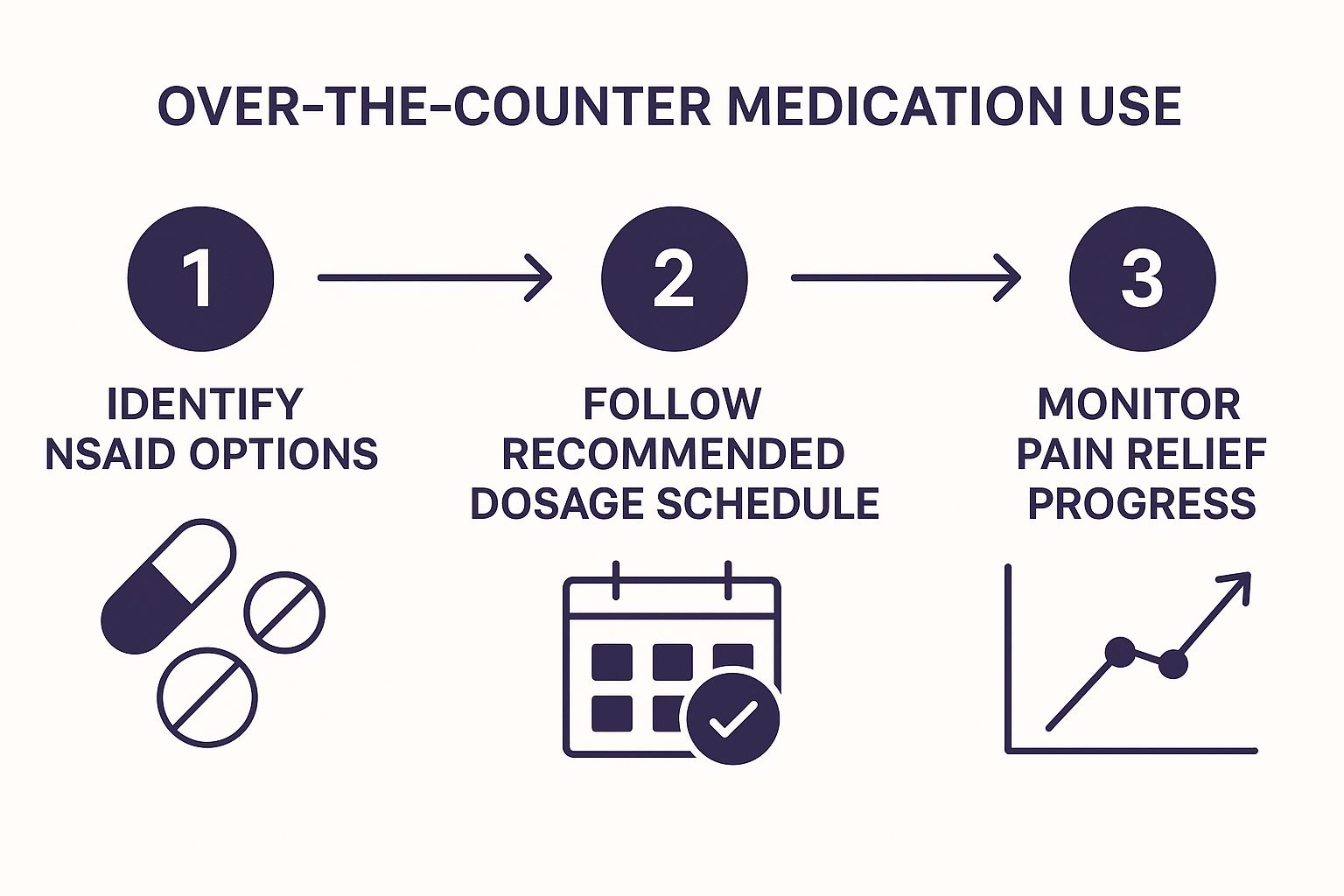
As you can see, a methodical approach—finding the right medication for you, adhering to the recommended dosage, and paying attention to your body’s response—is the safest way to manage the early, acute symptoms.
Knowing When You Need Further Medical Attention
While most pinched nerves improve with chiropractic care and home remedies, it is crucial to recognize when your body is signaling a more serious problem. Think of these signals as an early warning system. Ignoring certain red flags can lead to more severe issues, including permanent nerve damage.
So, when is it time to seek further medical care? If you have been consistent with stretches and professional treatments for several weeks without improvement, that is a significant sign. It is an even greater concern if the pain is progressively worsening, spreading, or becoming more intense despite your efforts.
Recognizing Critical Warning Signs
Beyond persistent pain, there are specific symptoms that warrant immediate medical attention. These are not issues to “wait and see” about.
Pay close attention to any changes in your muscle function or sensation. Is the numbness spreading or becoming more profound? Are you suddenly experiencing significant muscle weakness, such as difficulty gripping a coffee cup or noticing your foot “drags” when you walk? These symptoms suggest the nerve is under severe pressure. For example, any neck pain after an accident that leads to increasing arm weakness requires immediate evaluation.
The most urgent red flag is any loss of bowel or bladder control. This can indicate a rare but very serious condition called cauda equina syndrome, which is a medical emergency that requires immediate intervention to prevent permanent paralysis.
Exploring Other Medical Treatments
If your symptoms require a closer look, your doctor has other tools available. These are typically considered when conservative care has not provided enough relief or when symptoms are too severe to ignore.
- Corticosteroid Injections: These are powerful anti-inflammatory drugs injected directly around the irritated nerve. The goal is to rapidly reduce swelling and inflammation, which can provide substantial pain relief and give the nerve the space it needs to begin healing.
- Surgery: Surgery is considered in only a small percentage of cases. It is reserved for situations where nerve compression is severe and causing major functional problems. Procedures like a discectomy (removing the part of a herniated disc that’s pressing on the nerve) are designed to physically remove the source of the pressure.
The field of neuropathy treatment is constantly evolving. Modern medicine is moving beyond just managing symptoms toward more restorative options. Researchers are continuously exploring new drugs, less invasive surgical techniques, and regenerative therapies aimed at repairing nerve damage.
Your Path to Relief Starts Here
Finding freedom from nerve pain is achievable with the right approach. The most successful path often combines consistent at-home care with professional treatment that targets the underlying cause. Simply masking the pain is not a long-term solution.
If you are tired of the constant pain, numbness, or tingling from a pinched nerve, it’s time to take a definitive step toward recovery. Lasting relief comes from actively addressing the cause of the nerve compression, not just hoping the symptoms will disappear.
Don’t settle for a life limited by nerve pain. True healing begins when you address the structural problem causing the compression, allowing your body to function as it was meant to.
The team at Audubon Park Chiropractic is ready to develop a personalized plan that gets to the root of your discomfort. We will work with you to understand exactly what is happening and guide you through a treatment process aimed at genuine, sustainable results.
Don’t wait for the pain to worsen or become a chronic issue. The sooner you address it, the better your chances are for a full recovery. We are here to help you get back to feeling your best and enjoying life without limitations.
Your Questions About Pinched Nerves, Answered
When you’re dealing with the sharp, radiating pain of a pinched nerve, questions are natural. Getting clear, reliable answers is the first step toward relief. Let’s address some of the most common ones.
How Long Does a Pinched Nerve Take to Heal?
The timeline for healing a pinched nerve varies. A minor case caused by something simple, like sleeping in an awkward position, might resolve in a few days to a couple of weeks with rest and gentle stretching.
However, if the nerve is being compressed by a more significant issue like a herniated disc or spinal stenosis (narrowing of the spinal canal), the recovery period will be longer. These conditions can take several months to improve and almost always require professional intervention to address the root cause and achieve lasting relief.
Can a Pinched Nerve Just Go Away on Its Own?
Sometimes, yes. If the pressure is mild and caused by temporary inflammation or a minor posture issue, the body can often resolve it once the aggravating factor is removed.
However, it is important not to wait indefinitely. If the pain persists for more than a week or two, or if it begins to worsen, it’s a sign that there’s a structural problem that is unlikely to fix itself. Ignoring it could lead to more significant problems in the future.
What’s the Difference Between a Chiropractic Adjustment and Decompression?
Both are effective tools for relieving nerve pressure, but they work in different ways:
- A chiropractic adjustment is a precise, hands-on technique. A quick, controlled force is applied to a specific joint that is misaligned or restricted. The goal is to instantly restore its normal motion, which can immediately free up a compressed nerve.
- Spinal decompression is a more passive, gentle stretching of the spine performed on a specialized table. This process creates a slight vacuum effect within your discs, which can help retract bulging material back into place and away from the nerve root. It is particularly effective for disc-related nerve compression.
You don’t have to let nerve pain control your life. Take back control of your health and well-being. The team at Audubon Park Chiropractic is here to identify the precise cause of your pain and create an effective plan to resolve it.
Call us today at (509) 327-4049 to schedule your appointment, or walk into our Spokane clinic for a consultation. Your path to relief starts now.
Ready to Feel Better?
Our Spokane chiropractors are ready to help. Walk-ins welcome — no appointment needed.

Dr. Michelle Snyder is a Spokane chiropractor with advanced training in women’s health, hormone balancing, pregnancy, and care for infants and children. She uses gentle low-force spinal adjustments alongside specialized therapies including Webster’s breech technique, allergy desensitization, cold laser therapy, EB cellular cleanse, and Methylation/genetic nutrition — offering patients a comprehensive, whole-body approach to wellness.
A Spokane resident for over 31 years, Dr. Michelle is deeply committed to her community, contributing time and resources to organizations including Meals-on-Wheels, Second Harvest, Ronald McDonald House, and the Union Gospel Mission.
📍 2909 W. Northwest Blvd, Spokane, WA 99205 | ☎ (509) 327-4049 audubonparkchiropractic.com
Further Reading: Back
- Back Pain, Sciatica, and Headaches: When Chiropractic Helps — And When It Doesn’t
- Chiropractic Without the Commitment: What No Long-Term Contracts Actually Means for Your Care
- What causes sciatic nerve pain: Symptoms and relief
- NW Spokane’s Neighborhood Chiropractor: Why Location, Parking, and Knowing Your Doctor Actually Matter
- Why Some People Are Afraid of the Chiropractor & And What We Do Differently