

This post is part of our complete guide to Wellness Care at Audubon Park Chiropractic. Browse the guide for more in-depth information on treatments, exercises, and recovery strategies.
Achieving lasting relief for tight hip flexors involves more than just a few random stretches. It requires a consistent practice of gentle movements designed to lengthen these muscles without causing additional strain. The most effective approach pairs this mindful stretching with strengthening the opposing muscles, such as your glutes and core. This combination helps restore your body’s natural balance and addresses the root cause of the stiffness.
Why Your Hip Flexors Feel So Tight
If you experience persistent hip tightness, you are not alone. A primary cause is a common daily activity: sitting.
When you sit at a desk or in a car for extended periods, your hip flexor muscles remain in a shortened, contracted state. Over time, your body adapts to this position, causing the muscles to feel perpetually stiff and resistant when you stand or move.
This chronic shortening can lead to a cascade of issues. Tight hip flexors can pull your pelvis forward, creating an anterior pelvic tilt. This posture often contributes to lower back pain. It is common for individuals to mistake their hip tightness for a back problem. Understanding the connection between the two is crucial. Our guide on hip and back problems can help clarify whether your discomfort originates in your hips or your back.
The Impact of Daily Habits
Sitting is not the sole cause of tight hip flexors. Repetitive motions from activities like running or cycling can also lead to overuse and stiffness, particularly if a proper cool-down is neglected.
Obtaining lasting relief requires a two-pronged strategy:
- Mindful Stretching: Consistently performing targeted stretches to gently encourage the shortened muscles to lengthen.
- Targeted Strengthening: Building strength in opposing muscle groups, especially the glutes and core, to create better stability around the pelvis.
A controlled study found that participants in a daily hip flexor stretching program experienced significant gains in flexibility. Interestingly, this improvement was not primarily due to a physical change in the muscle itself but rather an increased tolerance to the sensation of the stretch. You can explore the full research on hip flexor stretching for more details.
This highlights the importance of consistency. The process involves teaching your body to relax into the stretch over time.
To help you build a consistent routine, here is an overview of the stretches we will cover.
Effective Hip Flexor Stretches Overview
This table summarizes the key stretches discussed in this guide, their main benefits, and the recommended hold times for optimal results.
| Stretch Name | Primary Benefit | Recommended Hold Time |
|---|---|---|
| Kneeling Hip Flexor Stretch | Isolates the psoas and iliacus muscles directly | 30-60 seconds per side |
| Standing Lunge Stretch | Engages stabilizing muscles for a dynamic stretch | 30-45 seconds per side |
| Pigeon Pose | Targets deeper hip rotators and the piriformis | 45-90 seconds per side |
| Couch Stretch | Provides an intense stretch for the quads and hip flexors | 30-60 seconds per side |
Incorporating these stretches into your regular routine is an effective way to find lasting relief from hip tightness.
Now, let’s explore how to perform these stretches correctly. Proper technique is essential for targeting the right muscles without placing undue strain on your lower back. The goal is to create a gentle, sustained tension that signals to the muscle that it is safe to lengthen and release.
This is particularly important in modern life, where many of us spend hours sitting. This prolonged flexion keeps our hips in a shortened position.
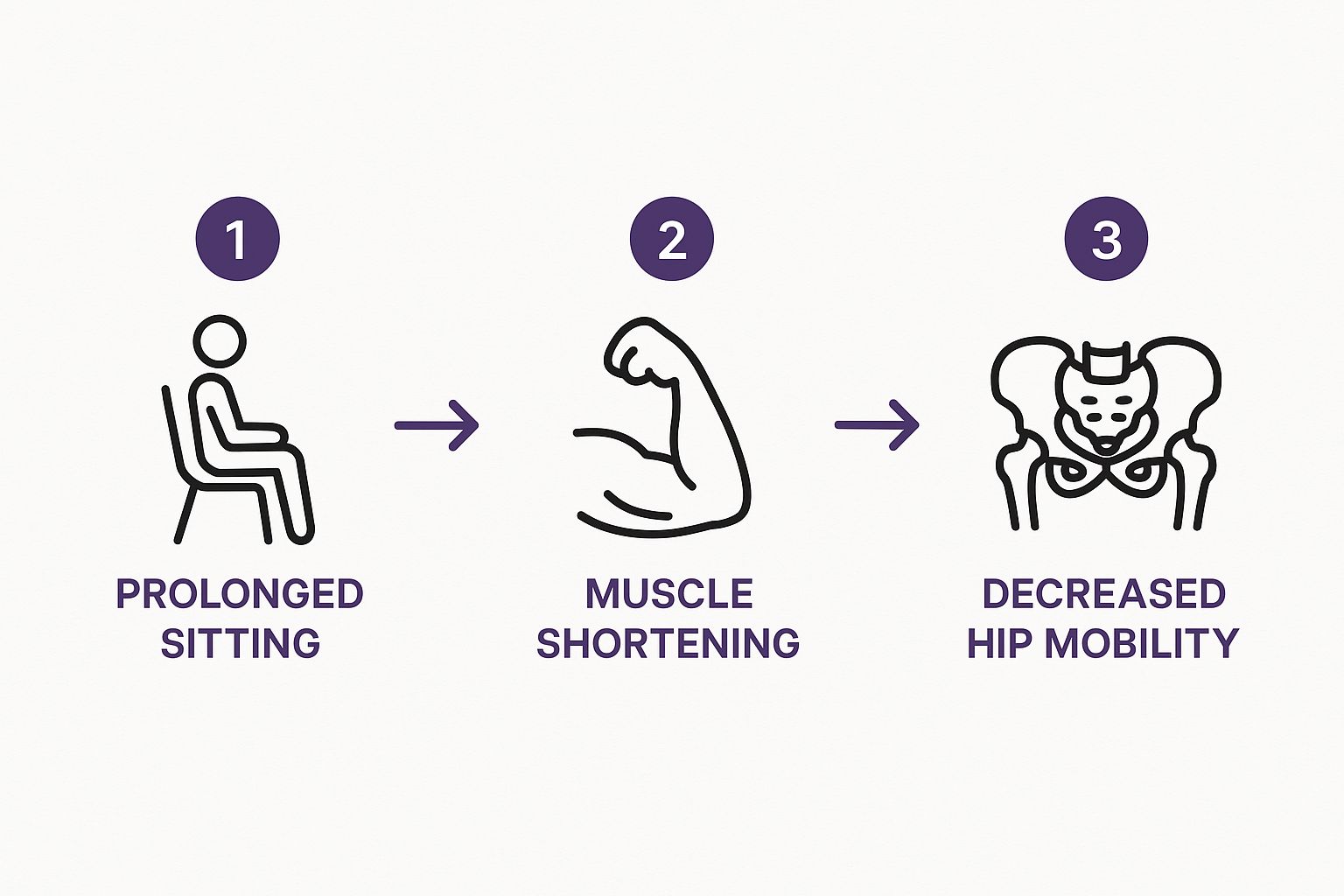
As illustrated, there is a direct link between our daily habits and hip tightness. Learning a few targeted stretches is a crucial step in breaking this cycle.
Kneeling Hip Flexor Stretch with a Pelvic Tilt
The kneeling lunge is one of the most recognized hip flexor stretches, but it is often performed incorrectly by arching the lower back. The key to unlocking this stretch and effectively targeting the hip flexor is to incorporate a posterior pelvic tilt.
Here is how to perform it correctly:
- Begin in a kneeling lunge position, with one knee on the ground and the other foot flat on the floor in front of you. Your front leg should form a 90-degree angle.
- Before lunging forward, gently tuck your tailbone. Imagine you are trying to flatten the curve in your lower back. You should feel an immediate stretch at the front of your hip on the kneeling side.
- While maintaining this tuck, gently shift your weight forward. Do not allow your back to arch.
This small adjustment makes a significant difference, isolating the hip flexors and protecting your spine.
A clinical trial confirmed that adding this posterior pelvic tilt was significantly more effective than the standard version of the stretch. It resulted in a mean reduction of 4.85 Newton-meters in reactive hip flexor force. This provides strong evidence that proper pelvic alignment is essential. You can review the findings on pelvic tilt stretching techniques to see the impact of this modification.
The 90/90 Stretch
This stretch is excellent for targeting the deeper hip rotator muscles, which often contribute to overall hip tightness. It promotes both internal and external hip rotation, which are essential for healthy hip function.
Here is a step-by-step guide:
- Start by sitting on the floor.
- Position your front leg so your shin is parallel to your body, with the knee bent at a 90-degree angle.
- Position your back leg out to the side, also with a 90-degree bend at the knee. Your back shin should be parallel to the side of your body.
- Keeping your spine straight, gently lean forward over your front shin. You will feel this stretch deep in the glute and hip of the front leg.
Hold this position and breathe deeply. Remember to perform the stretch on both sides.
Don’t wait — relief is closer than you think.
How Long Should You Actually Hold a Stretch?
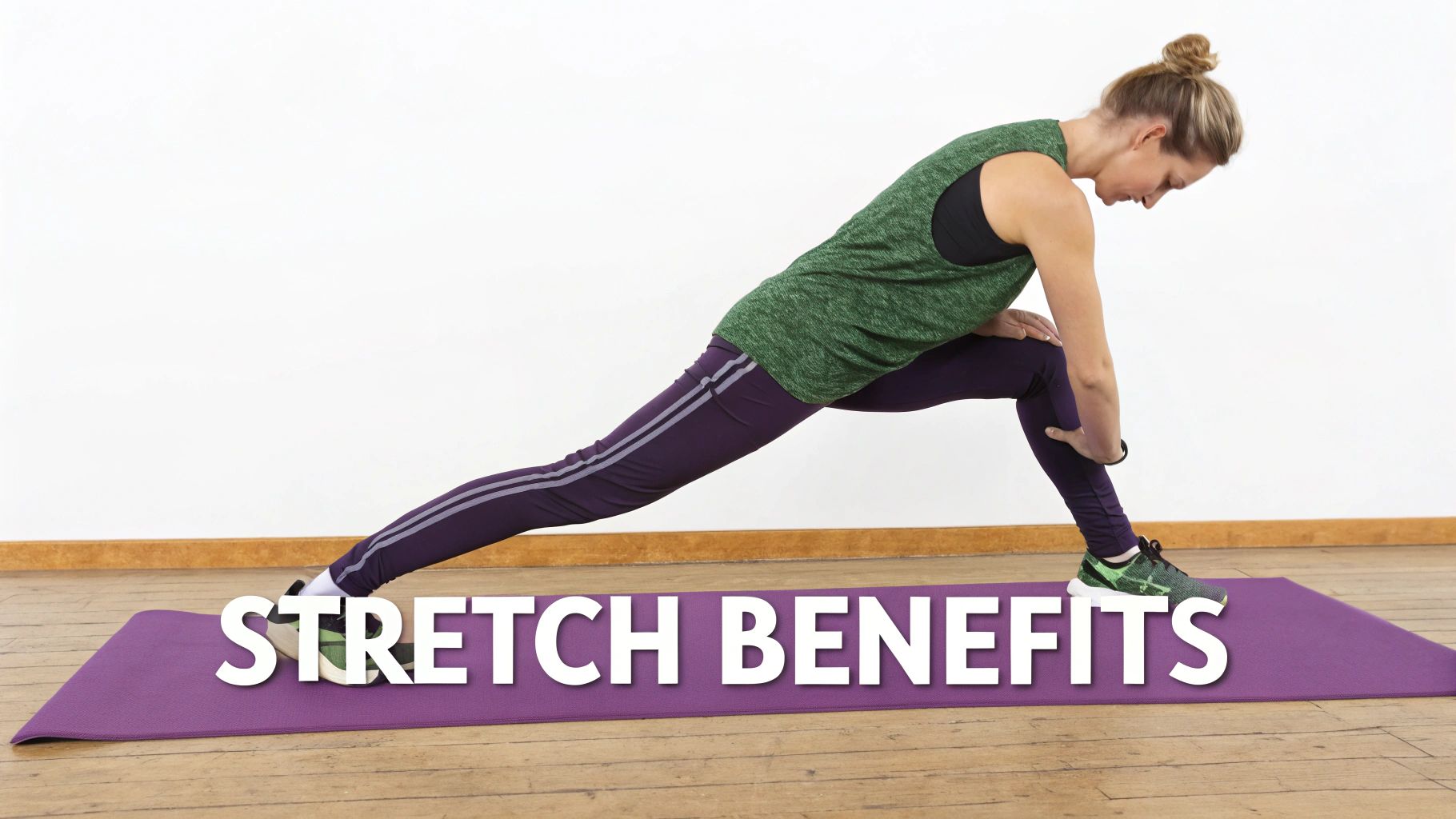
Once you have mastered the form of your hip flexor stretch, the next question is how long to hold it for lasting results. The duration of your stretch is as critical as your technique.
A brief five-second hold is insufficient to signal your muscles to lengthen. To release chronic tightness and improve flexibility, you must give the muscle tissue adequate time to adapt and relax.
Finding the Sweet Spot for Static Stretches
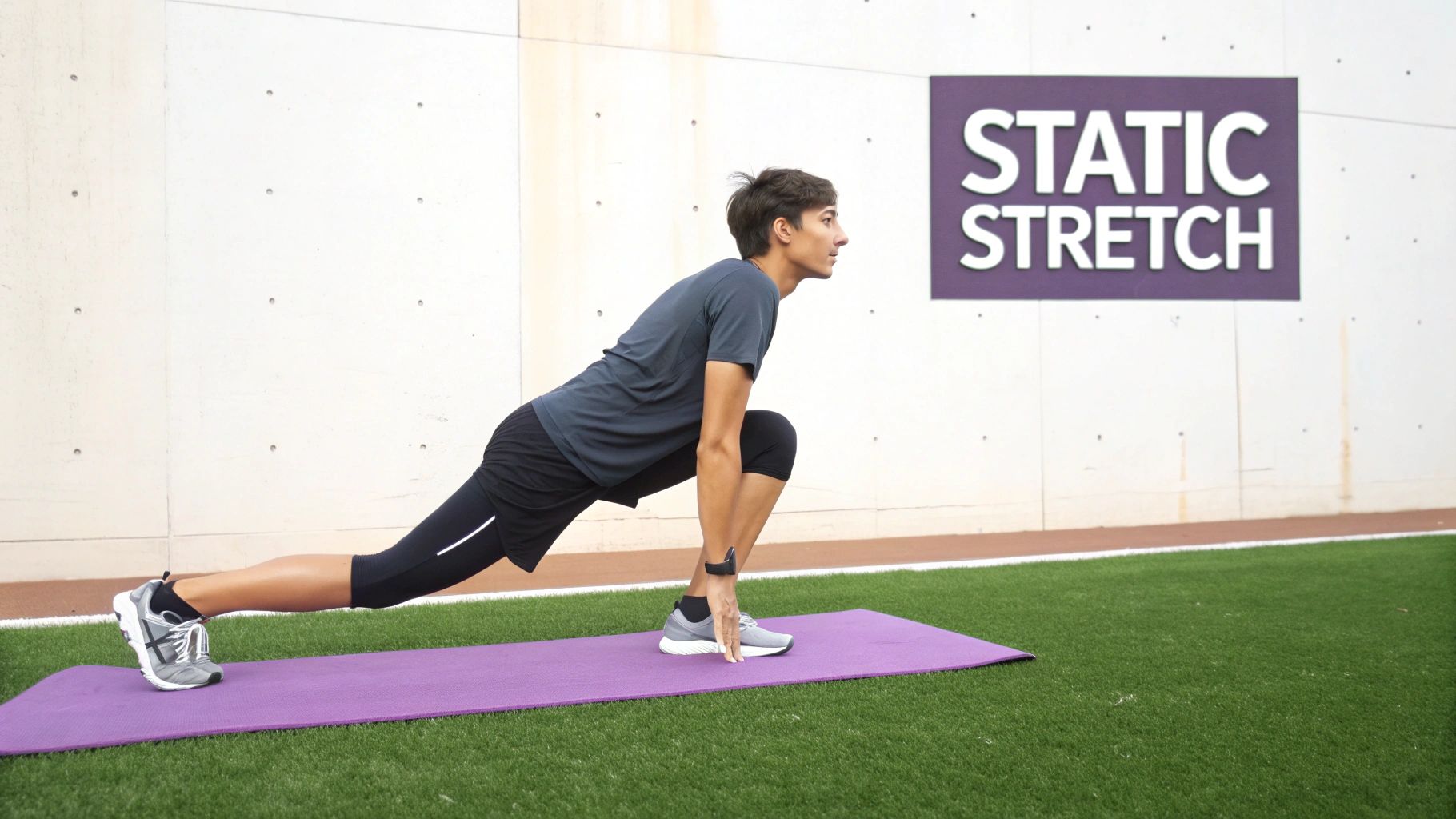
For most static stretches, where you hold a single position, the optimal duration is between 30 to 60 seconds. This time frame allows the sensory receptors in your muscles, specifically the Golgi tendon organ, to signal the muscle to relax and lengthen.
Consider these guidelines:
- Holds under 30 seconds: These may provide temporary relief but rarely lead to lasting changes in muscle length.
- Holds over 60 seconds: While beneficial, the returns for general flexibility goals begin to diminish beyond this point.
A 2021 meta-analysis established a direct link between stretch duration and its effects. While holds up to 120 seconds showed benefits, stretching for more than 270 seconds (4.5 minutes) was found to slightly decrease muscle performance. You can review the full study on stretch duration and its impact for complete details.
This research supports the long-held observation that there is a productive window for stretching that benefits, rather than hinders, your body’s performance.
Dynamic vs. Static Stretching: When to Use Each
It is also important to understand when to use different types of stretching. Static stretching, as we have discussed, is ideal for your cool-down. After a workout, your muscles are warm and more receptive to lengthening.
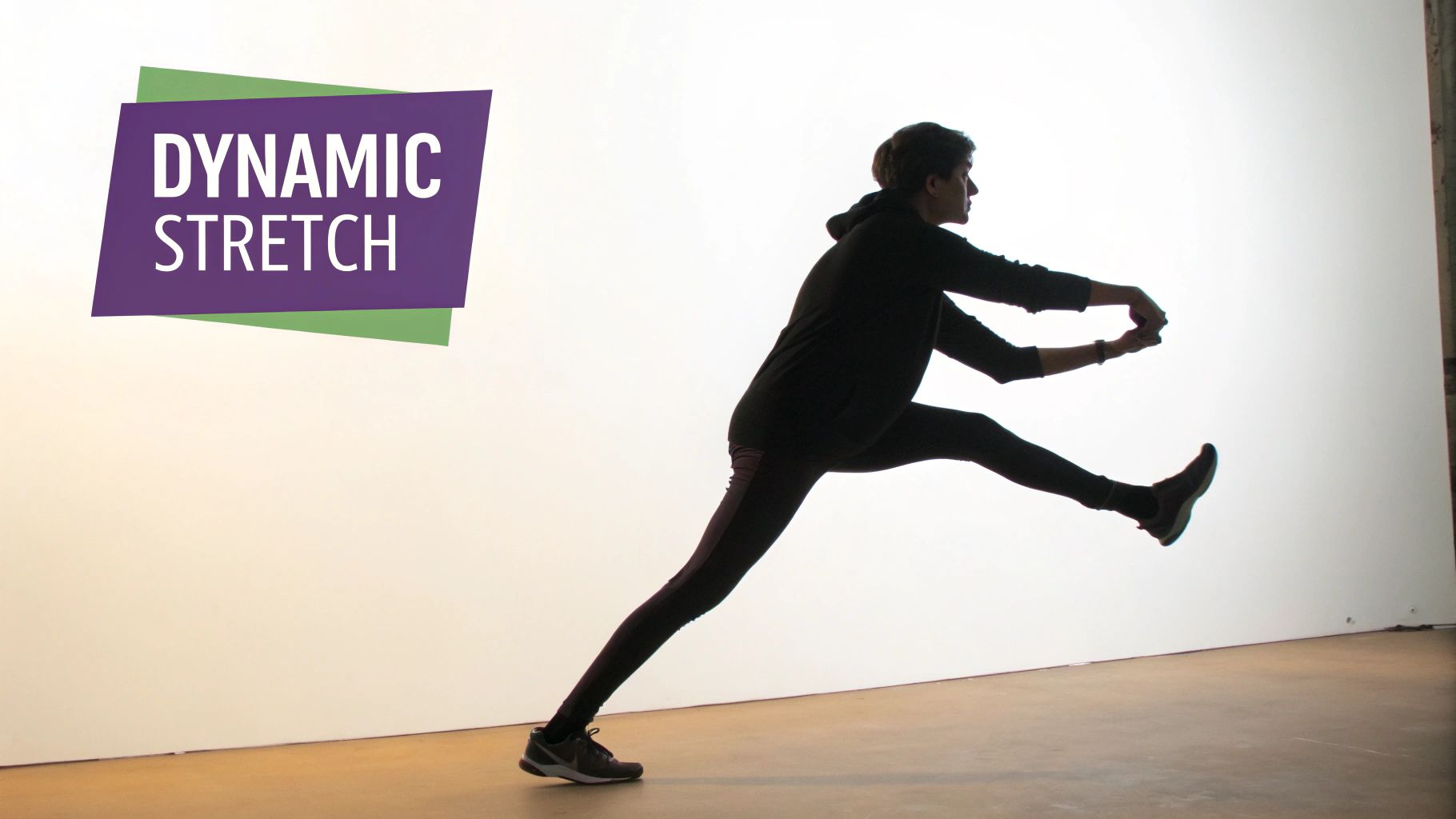
In contrast, dynamic stretching involves active movements that take your joints through their full range of motion, such as leg swings or walking lunges. This is the best way to warm up, as it increases blood flow and prepares your body for activity without temporarily reducing muscle power.
Therefore, reserve your static holds for after your workout for a safer and more effective approach.
Common Hip Stretching Mistakes and How to Fix Them
Knowing which stretches to perform for your hip flexors is only part of the solution. The way you perform them is where many people make mistakes, and these details can determine the effectiveness of your routine. Even with good intentions, common errors can render your efforts ineffective or, worse, lead to strain.
The most frequent mistake is arching the lower back, particularly during a lunge. This often occurs when individuals try to force the stretch by pushing too far, too soon. Instead of isolating the hip flexor, this arched posture shifts tension to the lumbar spine, defeating the purpose of the stretch and potentially worsening low back pain.
Arching the Back
The solution is to use a posterior pelvic tilt. Before you lunge forward, gently tuck your tailbone, as if trying to flatten the curve in your lower back. This small adjustment engages your core and directs the stretch to the front of your hip. Then, you can gently shift your weight forward.
Another common mistake is holding your breath. When you feel tension, it is a natural instinct to tense up and stop breathing. However, this sends a stress signal to your nervous system, causing your muscles to resist lengthening.
The key is to breathe deeply and slowly into the stretch. Conscious breathing is a powerful tool for calming your nervous system, which allows your muscles to relax and release. Think of each exhale as an opportunity to sink deeper into the stretch.
Pushing Into Pain
Finally, many people believe that a stretch must be painful to be effective. This is a misconception. A productive stretch should feel like a gentle, pulling tension, never a sharp or pinching sensation. Sharp pain is your body’s signal that you are pushing a muscle beyond its limit, which can lead to injury.
Making a few simple corrections can transform your stretching routine:
- Always Warm-Up: Never stretch cold muscles. A few minutes of light walking or dynamic movements like leg swings will increase blood flow and prepare your muscles.
- Listen to Your Body: If you feel any sharp pain, back off immediately. The goal is sustainable tension, not pain.
- Form Over Depth: A shallower stretch with correct form is far more beneficial than a deep stretch with poor posture.
Building a Consistent Hip Mobility Routine
For lasting relief from tight hip flexors, consistency is more important than intensity. An occasional, lengthy stretching session is less effective than making mobility a daily habit.
The goal is to integrate small, manageable mobility movements into your existing daily routine. You do not need to overhaul your schedule. Instead, focus on creating “micro-routines” that fit your lifestyle. These small, repeated efforts accumulate over time, leading to significant improvements in flexibility and comfort.
Sample Micro-Routines
Here are a few simple ways to incorporate hip mobility into your day:
- Morning Wake-Up (3 minutes): Before getting out of bed, gently pull each knee to your chest for about 30 seconds. Follow this with a few gentle pelvic tilts to mobilize your spine and hips.
- Desk Break (2 minutes): If you work at a desk, set a reminder to stand up every hour. Perform a simple standing lunge stretch, holding for 30 seconds on each side, to counteract the effects of sitting.
- Post-Workout Cool-Down (5 minutes): After a workout, your muscles are warm and more receptive to stretching. Dedicate five minutes to a kneeling hip flexor stretch and a 90/90 stretch.
Remember, a significant time commitment is not necessary. Consistently integrating short, targeted movements is the most practical way to relieve stiffness and improve your hip health.
Keep in mind that tight hips are often linked to other issues. Learning how to strengthen your lower back can also help build a more resilient core and pelvic region.
When Stretching Just Isn’t Cutting It
While a consistent and mindful stretching routine is an excellent tool for tight hip flexors, there are times when it is not sufficient to resolve the underlying problem. If you have been stretching diligently but the discomfort persists or worsens, it is a clear sign that a deeper issue may be present.
Self-care is valuable, but it has its limits. Recognizing these limits is key to avoiding further injury and achieving lasting relief.
Sometimes, chronic tightness is a symptom of a deeper structural issue, such as a misaligned pelvis or problems in your lower back, which can place constant strain on your hip flexors. In such cases, stretching may only address the symptom, not the source of the tension.
Red Flags to Watch For
It is important to listen to your body and know when to seek professional help. Certain sensations should not be ignored, as they often indicate a problem that simple stretches cannot resolve.
- Sharp, Pinching Pain: A proper stretch should feel like a gentle pull, not a sharp or stabbing pain. Sharp pain could indicate a joint issue or impingement.
- Numbness or Tingling: Sensations of numbness, tingling, or shooting pain down your leg are significant red flags for nerve involvement. You can learn more about how this is addressed by reading about chiropractic treatment for sciatica.
- Lack of Improvement: If you have been stretching consistently for weeks with no improvement, it strongly suggests that the root cause is not simply tight muscles.
When your efforts to stretch tight hip flexors do not bring relief, it is often because the stretches cannot correct an underlying imbalance in the spine or pelvis. A personalized evaluation can identify these root causes and provide a targeted treatment plan.
If any of these symptoms sound familiar, a professional assessment is the most logical next step to get the answers you need and start moving comfortably again.
If you are struggling with persistent hip pain that isn’t improving with stretching, it may be time for a professional assessment. The team at Audubon Park Chiropractic can help identify the underlying cause of your discomfort and create a plan for relief. Don’t let hip tightness hold you back. Call us today at (509) 327-4049 or walk in for a consultation.
Ready to Feel Better?
Our Spokane chiropractors are ready to help. Walk-ins welcome — no appointment needed.

Dr. Michelle Snyder is a Spokane chiropractor with advanced training in women’s health, hormone balancing, pregnancy, and care for infants and children. She uses gentle low-force spinal adjustments alongside specialized therapies including Webster’s breech technique, allergy desensitization, cold laser therapy, EB cellular cleanse, and Methylation/genetic nutrition — offering patients a comprehensive, whole-body approach to wellness.
A Spokane resident for over 31 years, Dr. Michelle is deeply committed to her community, contributing time and resources to organizations including Meals-on-Wheels, Second Harvest, Ronald McDonald House, and the Union Gospel Mission.
📍 2909 W. Northwest Blvd, Spokane, WA 99205 | ☎ (509) 327-4049 audubonparkchiropractic.com
Further Reading: Healthy Living
- Natural Remedies for Muscle Spasms: What Actually Works
- The Anti-Inflammatory Foods List: Foods That Calm Pain and Foods That Fuel It
- Herniated & Bulging Disc: The Exercises That Help (and the Ones to Skip)
- What Actually Happens at Your First Chiropractic Visit & And What to Expect in the First Few Weeks
- Pricing, Insurance and What Chiropractic Actually Costs at Audubon Park
→ Complete Guide: Wellness Care at Audubon Park Chiropractic