

This post is part of our complete guide to Back Pain Treatment in Spokane, WA. Browse the guide for more in-depth information on treatments, exercises, and recovery strategies.
Understanding how to strengthen your lower back begins with recognizing where genuine strength originates. It’s not about brute force; true spinal resilience is built upon a strong, supportive core. The most effective method combines strength and resistance training with specific coordination and stabilization exercises. This strategy directly targets the deep muscles that protect your spine, creating a solid foundation for pain-free movement.
Why a Strong Lower Back is Your Best Defense Against Pain
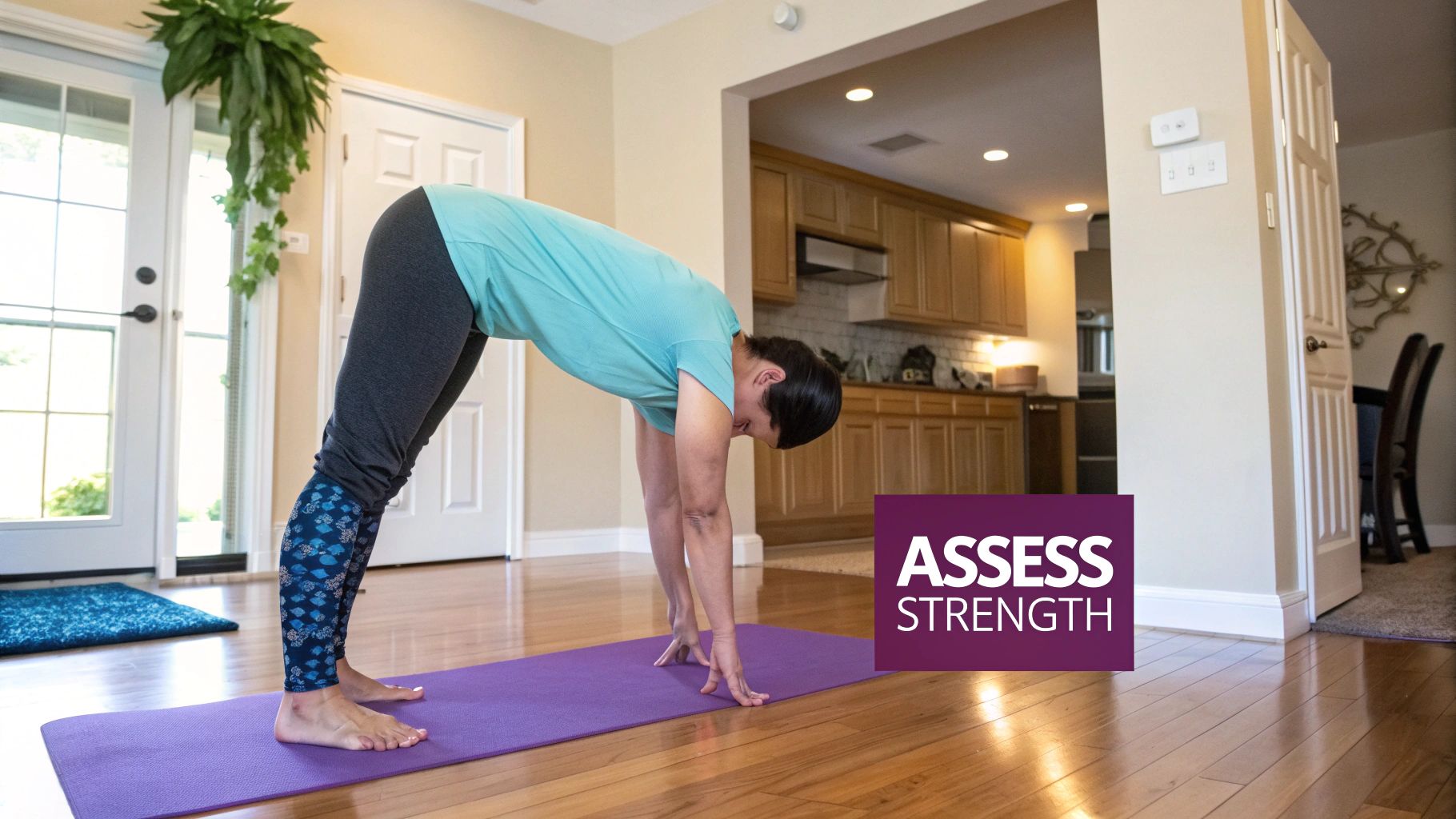
Before diving into exercises, it’s essential to understand the ‘why’ behind them. Your lower back—the lumbar region—is not an isolated muscle group. It serves as the structural foundation for nearly every activity, from walking to lifting groceries.
This foundation is supported by a deep core system, which includes crucial stabilizing muscles like the transverse abdominis and the multifidus. A useful way to visualize these muscles is as a natural corset for your spine, providing stability and absorbing shock with every movement.
The Problem with Weak Stabilizers
When these core muscles are weak, your spine loses its primary support system. This weakness often stems from modern habits, particularly prolonged sitting and poor posture. Slouching over a desk for hours can effectively deactivate these critical muscles, forcing larger, less suitable muscles to compensate. You can learn more about how poor posture causes problems in our detailed guide on the topic.
This imbalance is a common cause of chronic aches, stiffness, and an increased risk of injury. Building a strong lower back is less about visible abdominal muscles and more about reinforcing this internal support system from the ground up.
The objective is to cultivate a resilient back that supports you through daily life, enabling you to sit, stand, and move without persistent discomfort. This guide is designed to help you build that support system with targeted, actionable exercises.
Building Resilience Through Targeted Exercise
Performing a few random back exercises is unlikely to yield significant results. A focused program must target the specific stabilizing muscles that protect your spine. This approach is supported by extensive research. For instance, a major analysis of 45 different trials confirmed that combining strength training with stabilization exercises significantly reduces chronic low back pain.
This guide provides a clear path forward, moving beyond generic advice. We will demonstrate precisely how to activate and strengthen these deep core muscles, creating a durable back that will serve you well for years to come.
Don’t wait — relief is closer than you think.
Mastering Foundational Core Stability Exercises
When considering how to build a stronger lower back, many people imagine heavy lifting or countless crunches. However, real, lasting strength originates from something more fundamental: core stability.
We are focusing on the deep muscles that encircle your spine like a protective corset. Learning how to activate these muscles is the key to building a truly resilient back. We will walk through several key exercises designed to engage this deep support system, emphasizing precise form and controlled breathing to ensure you build strength correctly from the start.
Before you begin, it is always advisable to prepare your muscles with gentle mobility work. A simple warm-up sequence can significantly increase blood flow and flexibility.
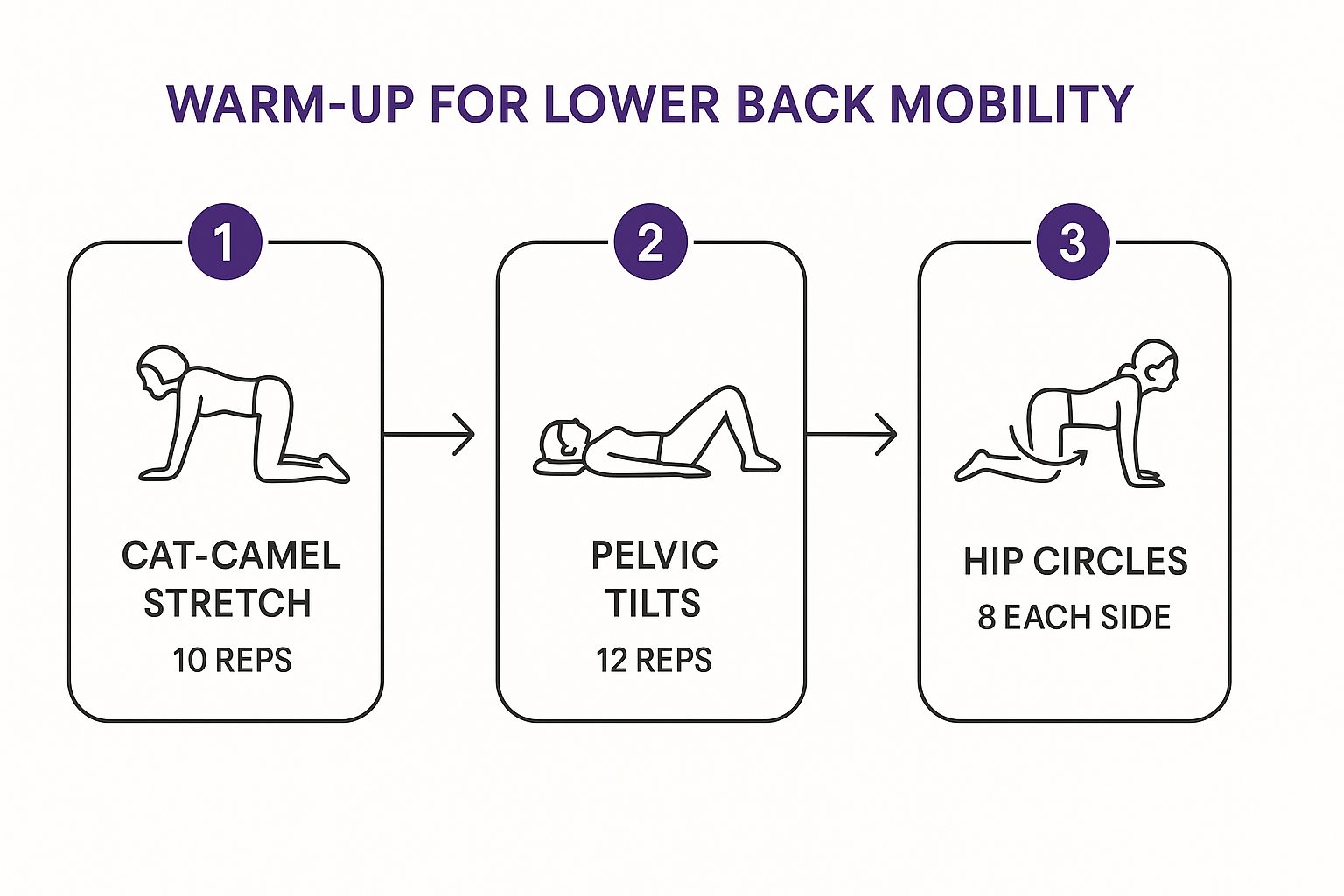
Following a simple flow like this helps awaken the muscles around your spine, preparing them for the work ahead.
The Bird-Dog for Balance and Control
The Bird-Dog is a cornerstone exercise for back health because it teaches your core to resist rotation—a common mechanism of injury. It directly targets the small, crucial muscles that stabilize your lumbar spine while improving your balance and coordination.
Here’s how to perform it correctly:
- Start on all fours, with your hands directly under your shoulders and your knees directly under your hips.
- Maintain a flat back, as if balancing a glass of water on it.
- Slowly and with full control, extend your right arm straight forward while simultaneously extending your left leg straight back.
- Focus on creating a long, straight line from your fingertips to your heel. Avoid arching your back.
- Hold this extended position for 3-5 seconds, concentrating on keeping your hips square to the floor and your core engaged.
- Return to the starting position with the same deliberate control. Repeat on the other side. A good starting point is 8-10 reps per side.
A common mistake is rushing the movement or kicking the leg up too high, which causes the lower back to arch and disengages the core. The goal is length and stability, not height.
Glute Bridges to Activate Your Posterior Chain
Weak glutes are a significant contributor to lower back pain. When your glutes are not functioning optimally, your lower back muscles are forced to overcompensate, leading to strain and soreness. Glute bridges are effective because they activate your glutes and hamstrings, relieving pressure on your lumbar spine.
By strengthening your glutes, you build a stronger support system for your entire lower body. This helps stabilize the pelvis and reduces stress on the lower back during daily activities like walking or climbing stairs.
Here’s how to perform a glute bridge:
- Lie on your back with your knees bent and your feet flat on the floor, about hip-width apart. Rest your arms by your sides.
- Brace your core and squeeze your glutes as you lift your hips off the floor.
- Aim to create a straight line from your shoulders to your knees. Do not over-extend and arch your back at the top.
- Pause briefly at the top, then slowly lower your hips back down. Start with 10-15 repetitions.
The Dead Bug for Deep Core Engagement
The Dead Bug exercise is highly effective for targeting the transverse abdominis—your deepest abdominal muscle, which acts as the body’s natural weightlifting belt. This exercise trains you to maintain spinal stability while your arms and legs are in motion.
To perform the Dead Bug, lie on your back with your arms reaching toward the ceiling. Bring your legs up so your knees are bent at a 90-degree angle, directly over your hips.
Slowly lower your right arm and your left leg toward the floor simultaneously, stopping just before they touch the ground. Exhale as you lower, and keep your lower back gently pressed into the floor. Return to the starting position and repeat with the opposite arm and leg. That is one repetition. Aim for 8-12 reps per side.
Here is a summary of these foundational movements.
Foundational Core Stability Exercises
This table outlines the foundational exercises, highlighting their targets and starting recommendations.
| Exercise | Primary Muscle Target | Starting Recommendation |
|---|---|---|
| Bird-Dog | Core Stabilizers, Glutes, Erector Spinae | 8-10 reps per side |
| Glute Bridge | Glutes, Hamstrings, Core | 10-15 reps |
| Dead Bug | Transverse Abdominis, Obliques | 8-12 reps per side |
Mastering these foundational movements is the most critical step you can take to build a strong, healthy back for the long term.
Building Functional Strength for Real-World Activities
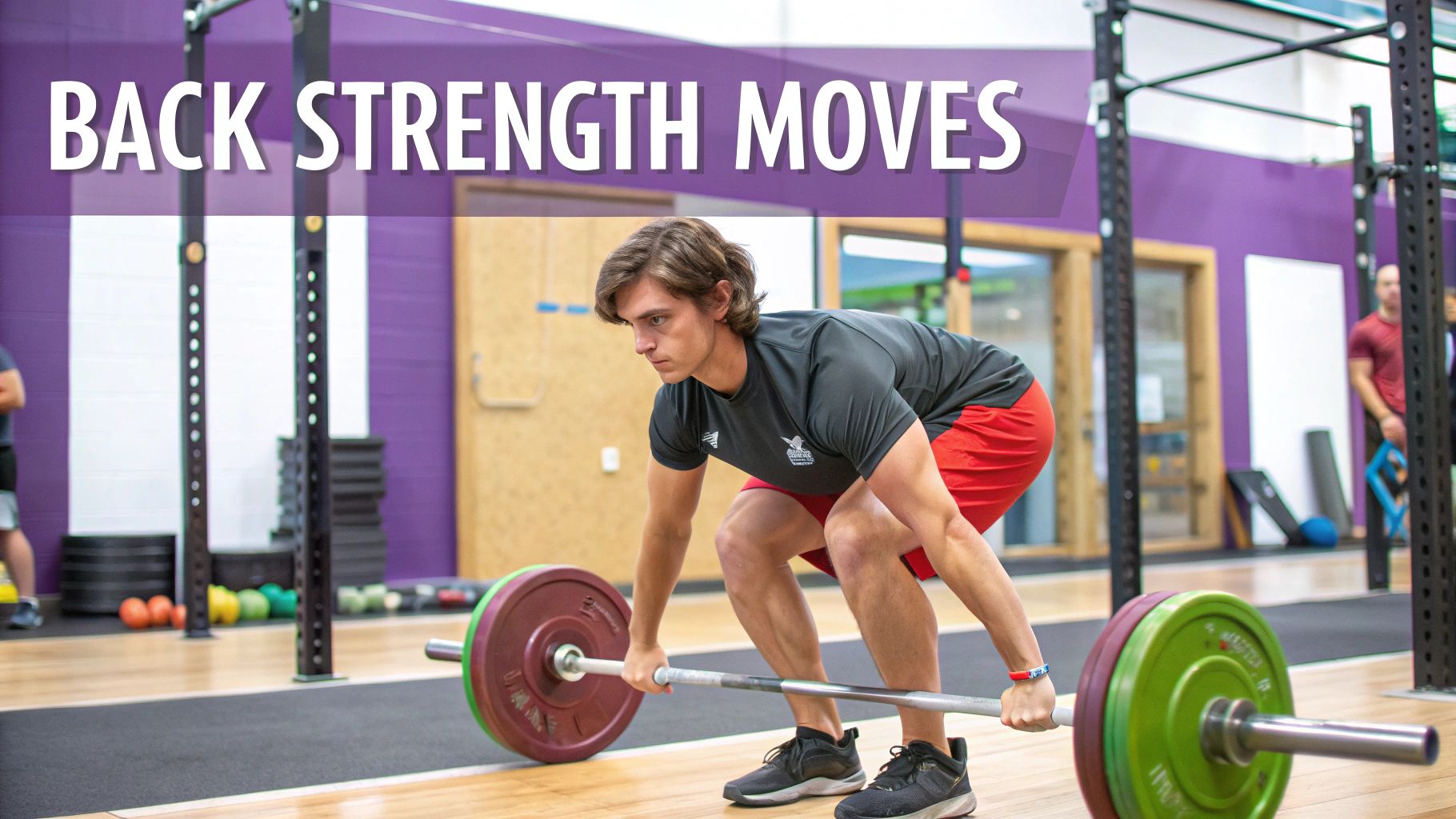
Once you have established a solid foundation of core stability, the next step is to translate that control into functional strength—teaching your muscles to work together in the patterns you use daily.
This is where you build practical resilience. The goal is to move with confidence, whether lifting a heavy box or simply getting out of a chair. Functional exercises are highly effective because they mimic these real-life movements.
By practicing these patterns in a controlled manner, you program your body to automatically engage the correct muscles when it matters most. This integration is key to building a back that is not just strong, but resilient for years to come.
Perfecting the Bodyweight Squat
The bodyweight squat is a fundamental human movement, yet many people perform it in a way that places unnecessary strain on the lower back. Learning to squat correctly is about more than building leg strength; it teaches you how to lift safely.
Mastering the squat trains your body to hinge at the hips and drive with your powerful glute and leg muscles, rather than rounding your lumbar spine.
Here’s how to refine your form:
- Stand with your feet slightly wider than your hips, with your toes pointing straight ahead or slightly outward.
- Keep your chest up and your gaze forward. Initiate the movement by hinging at your hips and sending them backward, as if sitting in a chair.
- Lower yourself until your thighs are approximately parallel to the floor. Ensure your knees track in line with your feet and do not cave inward.
- Drive powerfully through your heels to return to a standing position, squeezing your glutes at the top.
Prioritize form over everything else. Aim for 10-12 controlled repetitions.
Enhancing Spinal Mobility with Cat-Cow
While strength is crucial, so is mobility. The Cat-Cow stretch is a gentle, effective movement that improves spinal flexibility and releases tension. It encourages blood flow to the muscles supporting your vertebrae and helps you develop an awareness of a neutral spine position.
This simple exercise can act as a reset for your spine, especially after prolonged sitting. It is highly effective for easing stiffness and promoting better posture.
Here is the breakdown for the Cat-Cow stretch:
- Begin on your hands and knees in a tabletop position.
- As you inhale, allow your belly to drop toward the floor, arching your back and looking up toward the ceiling (the “Cow” position).
- As you exhale, round your spine up toward the ceiling, tucking your chin to your chest (the “Cat” position).
- Flow smoothly between these two positions for 8-12 rounds, letting your breath guide the pace.
This movement is ideal for a warm-up or cool-down. Exploring different movement patterns can also offer relief; for instance, learning how to walk backwards to help back pain in Audubon Park can engage muscles in a novel way.
Building Endurance with the Plank
A discussion of core strength would be incomplete without the plank. This isometric exercise challenges your entire core—abs, obliques, and lower back muscles—to work together to maintain a stable, neutral spine. The endurance built through planking directly translates to improved posture and support throughout the day.
If you are new to the plank, start by holding the position on your elbows and knees, focusing on maintaining a straight line from your head to your knees. As you gain strength, you can progress to performing the plank on your toes.
Try holding for 20-30 seconds at a time. The key is to keep your core braced and prevent your hips from sagging.
Creating a Sustainable Weekly Strengthening Routine

Knowing the right exercises is only half the battle; the true key to lasting relief from back pain is consistency. The goal is to create a routine that fits into your life, transforming short-term fixes into long-term habits for a resilient back.
This is not about pushing yourself to the limit every day. It’s about finding a balanced rhythm of work and recovery that prevents burnout and allows your muscles time to heal and strengthen. This is how you build true, lasting strength.
A Simple Weekly Framework That Works
For most individuals, three strengthening sessions per week on non-consecutive days is an effective schedule. This provides your body with approximately 48 hours to recover between workouts, which is vital for muscle adaptation and preventing overuse injuries.
Here is a sample schedule:
- Monday: Strengthening Session (20-25 minutes)
- Tuesday: Active Recovery (e.g., light walking, gentle stretching)
- Wednesday: Strengthening Session (20-25 minutes)
- Thursday: Active Recovery or a full rest day
- Friday: Strengthening Session (20-25 minutes)
- Saturday & Sunday: Rest or light activity like a weekend walk
If your schedule is demanding, consider breaking up your workout into two 10-minute micro-sessions. You could perform core stability exercises in the morning and functional strength moves in the evening.
The Skill of Listening to Your Body
One of the most important principles is to learn to listen to your body. Some days you will feel strong and ready, while on other days you may feel sore or tired. This is normal.
True progress is not just about lifting more weight or holding a plank longer. It is about developing the self-awareness to know when to push forward and when to ease off and rest.
Learning to distinguish between good muscle soreness (a sign of a productive workout) and sharp, radiating pain (a warning sign) is critical. Never push through sharp pain. On days you feel particularly fatigued, substituting your strength workout with a gentle mobility session, like Cat-Cow stretches, is a wise choice.
This consistent, mindful approach yields significant results. Research shows that structured exercise programs make a substantial difference. In one study, 64% of patients on an exercise plan saw significant improvement on a disability scale after one year, compared to just 35% in the non-exercise group. You can read more about these findings on lower back exercise programs.
Ultimately, the best routine is one you can stick with. Start small, be consistent, and do not get discouraged if you miss a day. Building a stronger back is a long-term process.
When Is It Time to See a Professional?
Working to build a stronger, more resilient back is commendable, but it is also crucial to recognize the limits of self-care. Certain symptoms are red flags that indicate it’s time for a professional diagnosis.
Strengthening your lower back also involves knowing when to seek help. If you have been consistent with your exercises and the pain persists—or worsens—an underlying issue may be present.
Know the Red Flag Symptoms
Pay attention to your body’s signals. If you experience any of the following, seek professional care promptly:
- Pain shooting down your leg: Often referred to as sciatica, this can indicate nerve compression.
- Numbness, tingling, or weakness: These sensations in your legs or feet are serious warning signs.
- Pain that began after a fall or accident: Pain resulting from a specific injury should be evaluated by a professional.
- Loss of bowel or bladder control: This constitutes a medical emergency and requires immediate attention.
Even without severe symptoms, professional guidance can be beneficial. Research confirms that exercise is effective. One major review showed it can lower pain intensity by an average of 15.2 points on standard scales. The key to achieving these results is performing the right exercises for your specific condition. You can discover more about these exercise treatment findings here.
A chiropractor can help diagnose the underlying cause of your pain and create a personalized treatment plan that goes beyond general advice, addressing the root of the problem for more effective, lasting relief.
For example, your discomfort may stem from a specific issue like a herniated disc, which requires a particular set of movements. You can learn more by reading our guide on the best exercises for a herniated disc.
Common Questions About Strengthening Your Lower Back
When starting a new routine to strengthen your lower back, it is normal to have questions. Clear answers can help you stay on track and ensure you are progressing safely.
How Long Until I Feel Results From These Exercises?
You may notice improved muscle engagement and better posture within the first few weeks. However, significant changes in strength and a noticeable reduction in chronic pain typically take 4 to 8 weeks of consistent effort. Lasting change is a gradual process, with the most meaningful improvements often appearing around the six-month mark.
Is It Safe to Exercise With Existing Back Pain?
For mild, general achiness, gentle movements like the Cat-Cow stretch can be beneficial by increasing blood flow and reducing stiffness. However, the primary rule is to listen to your body. Never push through sharp, shooting, or worsening pain. If an exercise causes this type of pain, stop immediately. For severe pain, pain radiating down your leg, or pain from a recent injury, it is essential to get a professional diagnosis before starting any new routine.
There is a significant difference between the fatigue of a working muscle and the sharp signal of pain. Learning to distinguish between them is a crucial skill for safely strengthening your back.
What Exercises Should I Absolutely Avoid?
Certain movements can place excessive stress on the spinal discs, especially with heavy weights or improper form. When the goal is to build a resilient lower back, it is wise to avoid:
- Traditional Sit-Ups: These can flex the spine in a way that puts significant pressure on the lumbar discs.
- Double Leg Lifts: Lifting both legs while lying on your back can easily cause the lower back to over-arch, straining the muscles.
- Heavy Deadlifts (with poor form): While a well-executed deadlift is an excellent strength builder, improper form is a common cause of serious injury.
Focus on the foundational exercises in this guide, which are selected to build core stability and control without placing your spine at risk.
How Often Should I Perform These Routines?
For back health, consistency is more important than intensity. Aim to perform these strengthening sessions 2-3 times per week, with a day of rest in between. This allows your muscles time to recover and adapt, which is when strengthening occurs. Each session only needs to be 15-20 minutes long. Regular, controlled workouts yield better and safer results than infrequent, high-intensity sessions.
Don’t let back pain control your life. If you’re ready to find a lasting solution and get back to the activities you love, we’re here to help. Contact Audubon Park Chiropractic today to schedule your evaluation. You can reach us at (509) 327-4049, or simply walk in for treatment. Your journey to a stronger, pain-free back starts now.
Ready to Feel Better?
Our Spokane chiropractors are ready to help. Walk-ins welcome — no appointment needed.

Dr. Michelle Snyder is a Spokane chiropractor with advanced training in women’s health, hormone balancing, pregnancy, and care for infants and children. She uses gentle low-force spinal adjustments alongside specialized therapies including Webster’s breech technique, allergy desensitization, cold laser therapy, EB cellular cleanse, and Methylation/genetic nutrition — offering patients a comprehensive, whole-body approach to wellness.
A Spokane resident for over 31 years, Dr. Michelle is deeply committed to her community, contributing time and resources to organizations including Meals-on-Wheels, Second Harvest, Ronald McDonald House, and the Union Gospel Mission.
📍 2909 W. Northwest Blvd, Spokane, WA 99205 | ☎ (509) 327-4049 audubonparkchiropractic.com
Further Reading: Back
- Back Pain, Sciatica, and Headaches: When Chiropractic Helps — And When It Doesn’t
- Chiropractic Without the Commitment: What No Long-Term Contracts Actually Means for Your Care
- What causes sciatic nerve pain: Symptoms and relief
- NW Spokane’s Neighborhood Chiropractor: Why Location, Parking, and Knowing Your Doctor Actually Matter
- Why Some People Are Afraid of the Chiropractor & And What We Do Differently