

This post is part of our complete guide to Neck Pain Treatment in Spokane, WA. Browse the guide for more in-depth information on treatments, exercises, and recovery strategies.
Waking up with a stiff, aching neck is more than a minor annoyance—it’s a frustrating cycle that can derail your entire day. The discomfort you feel in the morning often originates from how you sleep at night, creating a vicious loop where pain disrupts your sleep, and poor sleep intensifies the pain.
The goal isn’t to repeat generic advice. It’s about implementing practical, effective changes to your sleep setup and nightly habits to find significant, lasting relief.
The Cycle of Neck Pain and Poor Sleep
If this scenario sounds familiar, you are not alone. Neck pain is incredibly common, affecting millions of people.
Recent data indicates that at any given moment, nearly 27 out of every 1,000 adults are dealing with neck pain. Globally, this represents a staggering 222.7 million people.
This isn’t just a statistic; it’s a clear signal that we need better, more effective strategies for managing this type of pain.
Small Adjustments, Big Impact
You might be surprised by how much difference a few small tweaks to your sleeping habits can make. We’re talking about tangible improvements in both your pain levels and the quality of your sleep.
The infographic below illustrates what’s possible when you start optimizing your sleep environment.
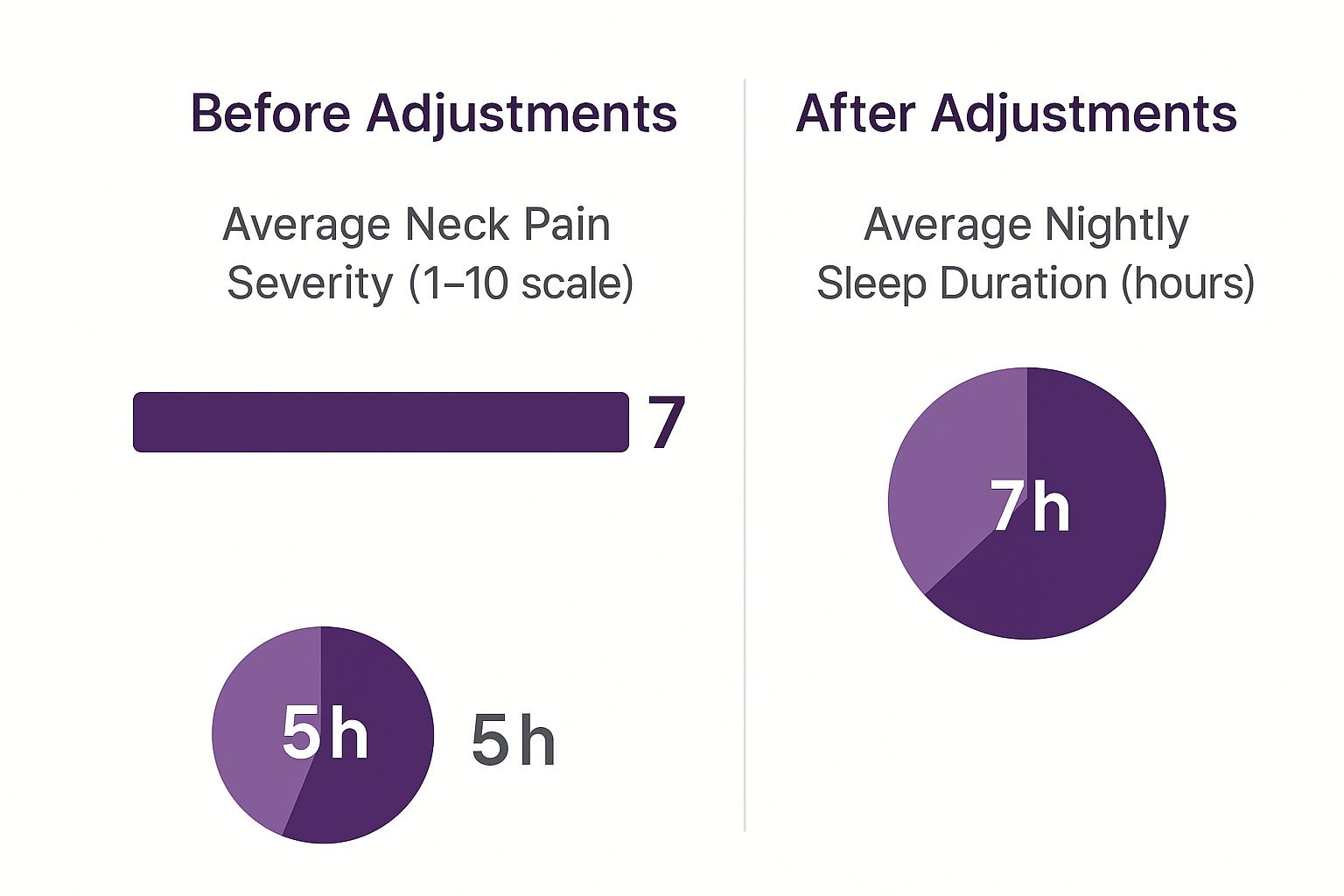
As you can see, a few targeted changes can significantly lower pain levels while adding hours of restorative sleep to your night. This guide is designed to provide a clear path to achieving similar results.
To truly break this cycle, you must consider your overall sleep quality. Sometimes, the solution goes beyond just your pillow. For instance, you might find benefits from tools like blue light glasses for improved rest and sleep quality, which help regulate your body’s natural sleep-wake cycle.
We’ll walk through how to find the right sleeping position for your body, choose a pillow that provides proper support, and build simple routines that help soothe tension before you even lay down.
The Best and Worst Sleeping Positions for Your Neck

The way you position your body for seven or eight hours every night has a massive impact on your spinal health. Simply put, if your neck is held in an awkward, strained position, pain is almost inevitable.
Identifying which postures help and which ones hurt is your first real step toward waking up feeling refreshed instead of stiff. Let’s break down the positions that keep your spine aligned and the one that is a notorious cause of chronic neck pain.
Sleeping On Your Back: The Gold Standard
Chiropractors and physical therapists often call this the best position for a reason. Sleeping on your back allows your head, neck, and spine to rest in a neutral, natural alignment.
This posture distributes your body weight evenly, which prevents unnatural curves from forming and relieves stress on your neck muscles. However, just lying on your back isn’t enough—you have to do it correctly.
- Use a supportive, thinner pillow. Your goal is to cradle the natural curve of your neck without propping your head up too high. A large, fluffy pillow will likely do more harm than good.
- Place a small pillow under your knees. This simple trick is a game-changer. It helps maintain the natural curve of your lower back, taking pressure off your entire spine and indirectly helping your neck stay relaxed.
Side Sleeping: A Strong Runner-Up
Side sleeping is another excellent choice for managing neck pain, but it requires proper technique. When done correctly, this position keeps the spine elongated and straight. The wrong pillow, however, can quickly negate all the benefits.
The primary goal here is to keep your head perfectly in line with the center of your body, not dipping down or pushed up.
- Choose a thicker, firmer pillow. You need a pillow substantial enough to fill the space between your ear and the mattress. This prevents your head from tilting downward and straining your neck all night.
- Tuck a pillow between your knees. This is non-negotiable for side sleepers. It aligns your hips, pelvis, and spine by preventing your top leg from twisting your lower back out of position.
The Pain-Sleep Connection is Real
It’s critical to understand that pain and sleep are deeply connected. The link between poor sleep quality and neck pain is well-documented, with solid evidence showing these two issues feed off each other. One study found that over 37% of adults experience neck pain, and a significant number of them also report sleep problems. Poor sleep makes pain feel worse, and pain makes it harder to sleep. It’s a frustrating cycle.
The Position to Avoid: Stomach Sleeping
While it may feel comfortable for some, sleeping on your stomach is widely considered the absolute worst position for your neck. It forces you to turn your head to one side for hours, holding your cervical spine in a stressful, rotated position.
This sustained twisting can lead to strained ligaments and muscles. The result? You wake up with stiffness, pain, and a noticeable crick in your neck.
It also flattens the natural curve of your spine, which can create or worsen lower back pain. If you are a stomach sleeper, switching to your side or back is one of the single most effective changes you can make to find lasting relief.
Poor posture during the day—often called “tech neck”—can also make you more vulnerable to pain from a bad sleeping position at night. For more on this, you should check out our guide on how to fix forward head posture.
Comparing Sleeping Positions for Neck Health
To make it easier to see the differences, here’s a quick comparison of the common sleeping positions and their impact on your neck.
| Position | Impact on Neck Alignment | Recommendation for Neck Pain Sufferers |
|---|---|---|
| Back Sleeping | Excellent. Maintains a neutral spine, minimizing stress on the neck and back. | Highly Recommended. Use a thin, cervical pillow for support and another small pillow under the knees. |
| Side Sleeping | Good (with proper support). Keeps the spine elongated, but requires the right pillow to prevent head tilt. | Recommended. Use a thicker, firmer pillow to fill the gap between your ear and shoulder. Place a pillow between your knees. |
| Stomach Sleeping | Poor. Forces the head and neck into a prolonged, twisted position, straining muscles and ligaments. | Avoid. This position is a leading cause of neck stiffness and pain. Work on transitioning to your side or back. |
Ultimately, the best position is one that keeps your spine in a straight, neutral line from your head to your hips. For most people dealing with neck pain, that means sleeping on their back or their side with the right support system in place.
Don’t wait — relief is closer than you think.
How to Choose a Pillow That Actually Helps
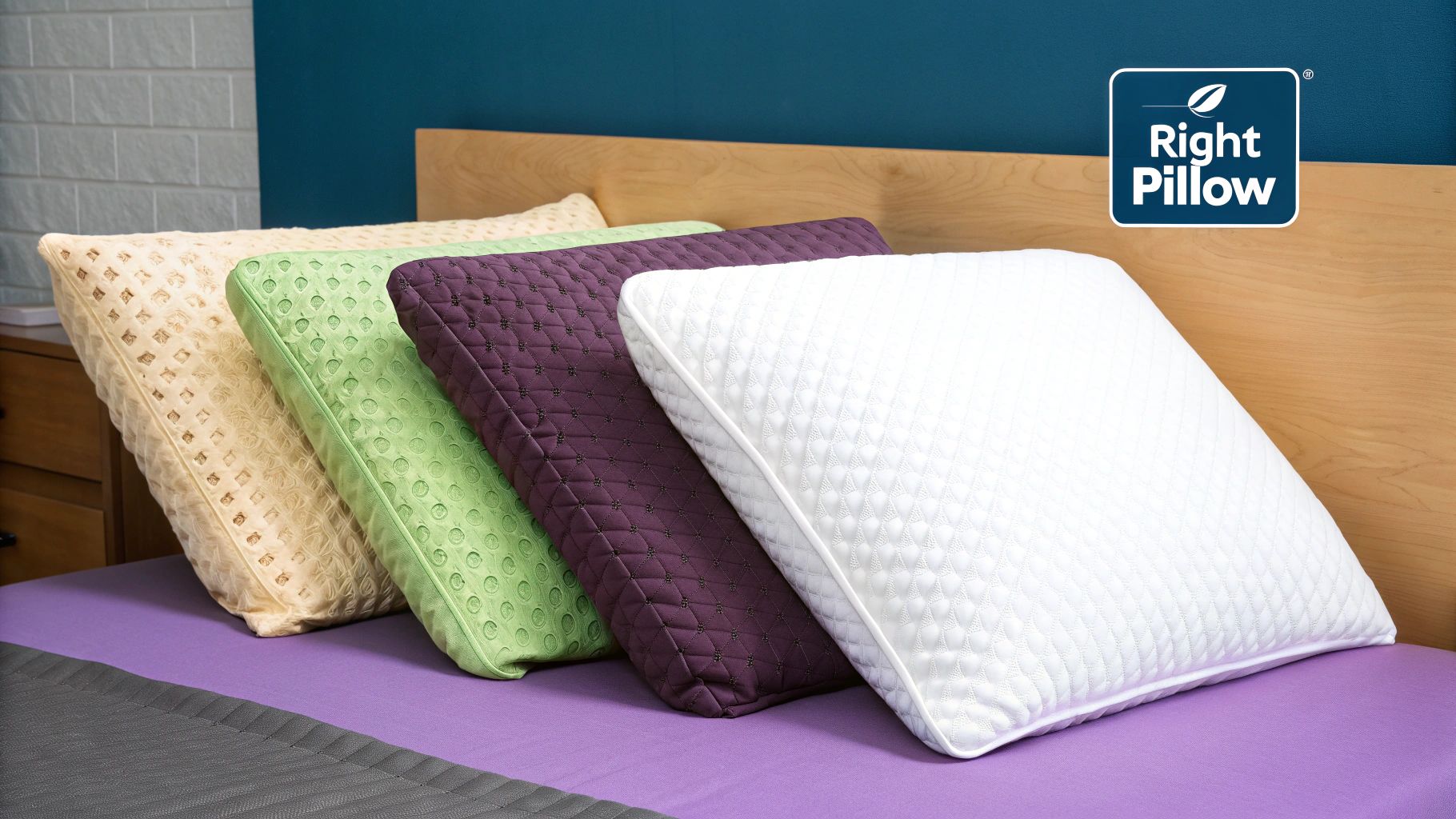
Your pillow is more than just a soft spot for your head; it’s a critical piece of equipment for your spinal health. The right pillow keeps you in proper posture all night long, while the wrong one can be the very reason you’re dealing with neck pain.
Finding the perfect match comes down to two factors: loft (the pillow’s height) and its firmness. These must be matched directly to your sleeping position. Why? Because the goal is to keep your head and neck in a straight, neutral line with the rest of your spine.
When everything is aligned, your neck muscles can finally relax and recover overnight. An improper pillow forces those muscles to remain tense, leading to that all-too-familiar morning stiffness and pain.
Matching Pillow Loft to Your Sleep Position
Think of your pillow as the support that fills the gap between your head and the mattress. That gap changes dramatically depending on whether you’re on your back or your side.
- For Side Sleepers: You need a thicker, firmer pillow. When you’re on your side, there’s a significant space between your ear and the bed. A substantial pillow fills that space, holding your head up so it doesn’t droop and strain your neck.
- For Back Sleepers: Go for a thinner pillow. The idea is to gently cradle the natural curve of your neck, not to prop your head up too high. If you find your chin is being pushed toward your chest, it’s a sign your pillow is too thick and is actively working against you.
The right pillow should feel almost as if it’s not there. It’s a seamless support that holds your head in a natural position without creating awkward angles. If you’re constantly bunching, folding, or flattening your pillow to get comfortable, it’s a clear sign it isn’t the right fit.
Exploring Pillow Materials for Neck Support
Once you’ve determined the height you need, you can look at the pillow’s material. Each material offers a different feel and brings its own benefits, especially for those struggling with neck pain.
Memory Foam
This material is popular because it contours perfectly to the unique shape of your head and neck. That customized support is fantastic for relieving pressure points. A common complaint is that some types can retain heat during the night.
Latex
Latex pillows provide a more responsive, buoyant support that is generally firmer than memory foam. They are also naturally hypoallergenic and sleep much cooler, which is a significant advantage for many people. They are durable but tend to be more expensive.
Cervical Pillows
Also known as orthopedic pillows, these are specifically designed with a dip in the middle for your head and a raised, contoured edge to support the natural curve of your neck. These are often a game-changer for back sleepers and can work well for some side sleepers. They are a direct and effective way to address alignment issues.
Ultimately, the best pillow is one that keeps you comfortable and, most importantly, aligned. Don’t be afraid to experiment. A small investment in the right pillow can provide countless pain-free mornings and the restorative sleep you’ve been missing.
Your Pre-Sleep Routine to Soothe Neck Muscles

The last hour before you get into bed is a powerful window of opportunity. It’s your best chance to address nighttime neck pain by releasing the tension that has built up throughout the day. A simple, soothing pre-sleep routine can make a world of difference in how you feel in the morning.
This isn’t about a complicated workout. It’s about gentle, mindful actions that calm both your muscles and your mind, setting the stage for a more comfortable and restorative night.
Gentle Heat Therapy for Relaxation
One of the best first steps is applying gentle heat. A warm compress, a heating pad on a low setting, or even a hot shower for just 10-15 minutes can work wonders.
Heat increases blood flow to tight muscles, helping them relax and easing away stiffness. It’s a clear signal to your body that it’s time to wind down, making it much easier to find a comfortable position in bed.
Think of this routine as a “cool-down” for your neck after a long day. Just as you would stretch after a workout, these steps help your neck muscles transition from a state of tension to one of rest, preventing stiffness and pain from settling in overnight.
Mindful Stretches to Release Tension
After the muscles are warm, a few slow and careful stretches can bring significant relief. The key here is to be gentle—never push into pain.
- Ear-to-Shoulder Tilt: Sit up straight and slowly tilt your right ear toward your right shoulder. Hold for 15-20 seconds to feel a gentle stretch along the left side of your neck. Repeat on the other side.
- Gentle Chin Tucks: While sitting or standing tall, gently tuck your chin toward your chest, but keep your shoulders from rounding forward. This targets the muscles at the back of your neck. Hold for just a few seconds and release.
These simple movements help lengthen tight muscles and improve your flexibility over time. For a deeper dive into these kinds of exercises, check out our guide on active range of motion exercises.
Power Down Your Devices
A major contributor to neck pain is “tech neck”—the constant strain from looking down at phones, tablets, and laptops. This posture puts a tremendous amount of stress on the cervical spine.
Try to make it a firm rule: all devices get put away at least one hour before bed. This gives your neck a much-needed break from that forward-leaning position, allowing the muscles to relax into a more neutral state before you lie down. As a bonus, it also improves your sleep quality by reducing blue light exposure.
For more ideas on creating a peaceful pre-sleep environment, you can explore how using candles for sleeping to enhance your bedtime rituals might help promote deeper rest.
When Your Neck Pain Needs Professional Attention
Trying to find the right pillow and sleeping position is a great first step, but sometimes, neck pain is your body’s way of signaling a deeper issue that home remedies cannot fix.
Knowing when to seek professional help is key to stopping a nagging problem from becoming a chronic one. If you’ve tried these strategies and are still waking up sore, it’s time to listen to your body.
Recognizing the Warning Signs
Some symptoms are more than just a minor ache and should not be ignored. If you’re experiencing any of the following, it’s a clear sign you need to address the root of the problem with a healthcare professional.
- The pain is severe or persistent: If your neck pain is intense or has been present for more than a week despite your efforts, it’s time for a professional opinion.
- Pain that travels: Discomfort that radiates from your neck down into your shoulders, arms, or hands is often a red flag for nerve compression.
- Numbness, tingling, or weakness: A “pins and needles” sensation is a serious signal that warrants immediate attention.
- Headaches or dizziness: Neck problems are a very common cause of tension headaches and can even make you feel unsteady or dizzy.
Ignoring persistent neck pain can trap you in a frustrating cycle of poor sleep and worsening discomfort. The goal of professional care is to break that cycle by diagnosing the specific cause—whether it’s a spinal misalignment, muscle strain, or disc issue—and creating a real plan for lasting relief.
How a Chiropractor Can Help
A chiropractor can offer a path to recovery that goes beyond masking symptoms with pain medication. Through a careful examination, the source of your pain can be pinpointed. Most often, treatment involves gentle, precise spinal adjustments to restore proper motion and alignment to the joints in your neck.
This approach helps take the pressure off irritated nerves and allows tight, tense muscles to finally relax. The focus is on correcting the underlying structural issue causing the pain, which naturally helps you sleep better and wake up feeling refreshed. You can learn more about how chiropractic care specifically helps neck pain in Spokane right here on our blog.
The global impact of neck pain is massive. By 2019, the United States had one of the highest rates in the world, with 958 cases per 100,000 people. The fact that disability from neck pain saw almost no improvement between 1990 and 2019 suggests that self-management at home is not working for many people. You can read the full research about neck pain’s impact to see the global trends.
If you are tired of waking up in pain, professional guidance can provide the answers and relief you’ve been looking for.
Answering Your Questions About Sleeping with Neck Pain
Even with the best strategies, questions are bound to arise when you’re trying to get some sleep with a sore neck. Clear, straightforward answers can be the final piece of the puzzle, helping you fine-tune your approach for a comfortable, restorative night.
Let’s go through some of the most common questions people have when struggling with this issue.
Can Sleeping Without a Pillow Help My Neck Pain?
For most people, sleeping without a pillow is not recommended as a long-term solution. While some stomach sleepers might feel temporary relief, this usually swaps one problem for another by creating other alignment issues.
For back or side sleepers, going pillow-less is a poor choice. It forces your head to drop into an unnatural position, putting direct strain on your neck muscles. A much better strategy is to find the right pillow for your specific position. This might mean a very thin one for back sleepers or a more substantial, supportive one for side sleepers—whatever it takes to keep your head and spine in that crucial neutral line.
How Can I Tell If My Pillow Is the Problem?
A big clue is waking up consistently with neck pain or stiffness that seems to ease as the day goes on. This is one of the clearest signs that your sleep setup is actively working against you.
Other tell-tale signs include:
- Frequent morning headaches: Neck misalignment is a classic trigger for tension headaches.
- You’re always adjusting it: If you’re constantly bunching, folding, or fluffing your pillow to get comfortable, it’s not providing the support you need.
- It’s old and worn out: If your pillow is flat, lumpy, or has lost its shape, it has also lost its ability to support you properly.
When you lie down, your head and neck should be aligned with the rest of your spine—not tilted up or down. If you can feel a noticeable angle, it’s time to find a new pillow.
What Is the Fastest Way to Get Relief Tonight?
If you’re looking for quick relief before bed, try a simple two-step combination of gentle heat and light stretching.
A warm compress or a hot shower for 15 minutes can work wonders to relax tight neck and shoulder muscles. Follow that with some slow, gentle stretches, like tilting your head from side to side and carefully tucking your chin. When you get into bed, be mindful of your posture, ensuring your head is supported in that neutral position.
Should I Use Ice or Heat for Neck Pain Before Bed?
When you’re dealing with general muscle tightness and stiffness that keeps you up at night, heat is usually your best friend. Heat boosts blood flow to the area, which helps soothe and relax sore, overworked muscles, preparing your body for rest.
Ice, on the other hand, is best for acute injuries with obvious inflammation and swelling, typically within the first 48 hours. For pre-sleep comfort and muscle relaxation, a warm compress is the way to go.
If you’ve tried these adjustments and still find yourself wrestling with persistent neck pain, it’s a strong signal that a deeper issue needs a professional look.
Stop Letting Neck Pain Control Your Nights
If you’ve tried all the tips and are tired of neck pain dictating your sleep, it may be time for a more direct approach. While the strategies in this guide are excellent for managing and preventing pain, a stubborn problem often requires a hands-on solution to address the root cause.
Waking up feeling refreshed should be your normal, not a rare occurrence. Don’t spend another night hoping the pain will magically disappear by morning.
For an effective treatment plan tailored to you, contact Audubon Park Chiropractic. Call us today at (509) 327-4049 or simply walk in for a consultation and start your journey toward pain-free sleep.
Ready to Feel Better?
Our Spokane chiropractors are ready to help. Walk-ins welcome — no appointment needed.

Dr. Michelle Snyder is a Spokane chiropractor with advanced training in women’s health, hormone balancing, pregnancy, and care for infants and children. She uses gentle low-force spinal adjustments alongside specialized therapies including Webster’s breech technique, allergy desensitization, cold laser therapy, EB cellular cleanse, and Methylation/genetic nutrition — offering patients a comprehensive, whole-body approach to wellness.
A Spokane resident for over 31 years, Dr. Michelle is deeply committed to her community, contributing time and resources to organizations including Meals-on-Wheels, Second Harvest, Ronald McDonald House, and the Union Gospel Mission.
📍 2909 W. Northwest Blvd, Spokane, WA 99205 | ☎ (509) 327-4049 audubonparkchiropractic.com
Further Reading: Neck
- How to fix rounded shoulders: A Practical Guide
- Chiro Treatment for Vertigo to Find Balance
- Chiropractic for Seniors & Managing Back Pain, Arthritis and Age-Related Stiffness Safely
- Gentle Chiropractic for Nervous Patients & Options that Don’t Involve Cracking
- What to Do if You Wake Up with Neck or Back Pain