

This post is part of our complete guide to Back Pain Treatment in Spokane, WA. Browse the guide for more in-depth information on treatments, exercises, and recovery strategies.
Trying to find a comfortable sleep position while pregnant can feel like an impossible task. However, once you understand the changes happening in your body, you can begin to discover effective solutions for more restful nights.
The primary challenges are hormonal shifts that disrupt your natural sleep cycle and the physical discomfort from a growing belly, back pain, and heartburn. By addressing these root causes, you can significantly improve your quality of sleep.
Why Restful Sleep During Pregnancy Is So Hard to Find
If a good night’s sleep feels like a distant memory, you are not alone. Pregnancy is a time of profound transformation, and many of these changes directly interfere with your ability to rest. From the first trimester to the last, your body is working overtime, creating a perfect storm for sleep disruptions.
This is an incredibly common experience. A comprehensive meta-analysis involving over 47 million pregnant women revealed that nearly 44% struggle with insomnia symptoms. Interestingly, these challenges vary by location, with 53.6% of women in Europe reporting issues, compared to 41.0% in North America.
The Cycle of Discomfort
In the early stages of pregnancy, hormonal fluctuations are a major factor. Surges in progesterone can cause daytime sleepiness but often lead to fragmented, poor-quality sleep at night. As your pregnancy progresses, physical discomforts become more prominent, creating a frustrating cycle.
This flow chart illustrates how hormones and physical discomfort combine to disrupt sleep.
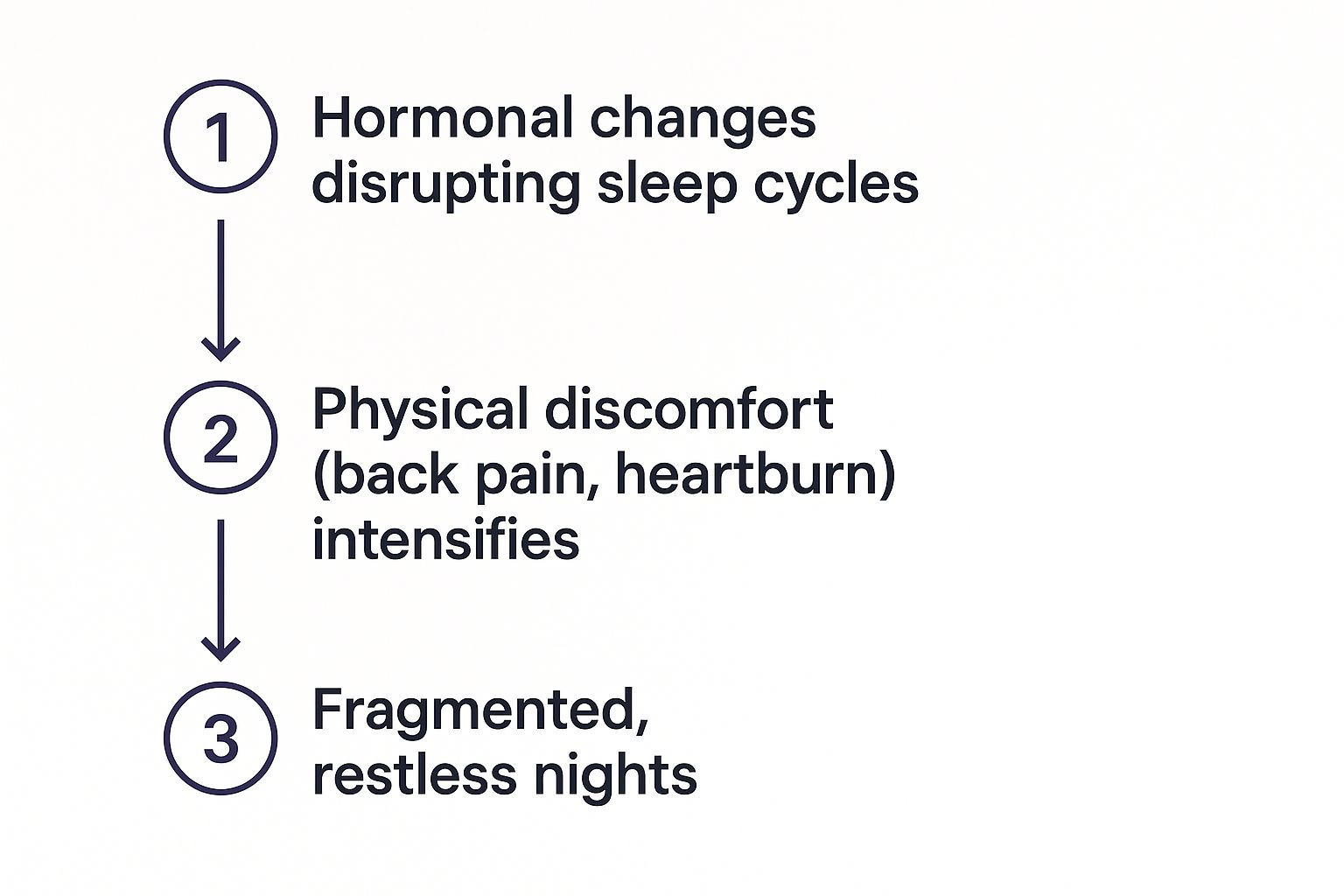
As you can see, it’s a domino effect. Hormonal shifts initiate the process, leading to physical aches, which ultimately result in poor-quality sleep.
Common Sleep Disruptors in Pregnancy
Several specific issues consistently affect my pregnant patients. Understanding them is the first step toward finding relief.
- Aches and Pains: The extra weight and shift in your center of gravity place significant strain on your back, hips, and pelvis. This musculoskeletal stress often worsens when you lie down. Finding ways of easing pregnancy back pain is crucial for your overall comfort and sleep.
- Heartburn and Indigestion: Pregnancy hormones relax the valve between your stomach and esophagus. This allows stomach acid to travel back up, a problem that is often more severe when you are lying flat.
- Frequent Urination: As your uterus expands, it puts increasing pressure on your bladder. This results in more frequent trips to the bathroom throughout the night.
The challenge isn’t just about feeling tired; it’s about managing a cascade of physical changes that directly interfere with your body’s ability to rest and recover. Tackling these issues individually can lead to significant improvements in sleep.
Don’t wait — relief is closer than you think.
Mastering the Best Pregnancy Sleep Positions
Finding a sleep position that is genuinely comfortable can feel like a major victory during pregnancy. As your body changes, familiar positions may suddenly feel wrong or may no longer be recommended. The goal is to establish a new normal that supports both you and your growing baby.
Most doctors and chiropractors recommend the “Sleep on Side” (SOS) method. This is not an arbitrary suggestion; it is based on your body’s physiology during pregnancy. Sleeping on your side promotes optimal circulation, ensuring a steady supply of blood and nutrients to the placenta.

Why the Left Side Is Often Preferred
You have likely heard the advice to sleep on your left side. There is a sound reason for this recommendation. Your liver is located on your right side, so lying on the left prevents your growing uterus from putting pressure on this vital organ. It also relieves pressure on the inferior vena cava (IVC), a major vein that carries blood from your lower body back to your heart.
Key Takeaway: Sleeping on your left side helps maximize blood flow to your heart, kidneys, and uterus, which means more oxygen and nutrients for your baby. While left is best, do not worry if you wake up on your right side—switching sides for comfort is perfectly fine.
Of course, knowing this and implementing it are two different things, especially if you have been a back or stomach sleeper your whole life. Making the switch requires a bit of strategy and plenty of pillows.
Training Your Body to Sleep on Its Side
Adjusting to side-sleeping does not happen overnight. The key is to make the position so comfortable and supported that your body is not tempted to roll onto its back. This is where building a strategic pillow arrangement becomes essential.
A few well-placed pillows can make a significant difference. Here’s a common recommendation for creating your sleep sanctuary:
- Between Your Knees: A firm pillow placed between your bent knees helps align your hips, pelvis, and spine, which can relieve a great deal of pressure on your lower back.
- Under Your Belly: A small wedge pillow or a rolled-up blanket tucked under your belly can provide enough support to alleviate the pulling sensation on your back and abdomen.
- Behind Your Back: A long body pillow or a firm pillow propped behind you acts as a barrier. It provides a physical reminder that helps prevent you from rolling over in your sleep.
This setup not only provides support but also creates a cozy, secure feeling that can help you relax into the new position. For former stomach sleepers, it can even replicate some of the gentle pressure on your front that you are used to.
A Quick Guide to Pregnancy Sleep Positions
Let’s review the most common positions, their benefits and drawbacks, and how to adapt them for your needs. Every body is different, so the goal is to find what feels best while prioritizing safety.
| Position | Benefits | Challenges and Solutions |
|---|---|---|
| Left-Side Sleeping | Maximizes blood flow to the baby, kidneys, and uterus. Reduces pressure on your liver. | Can feel unnatural at first. Solution: Use a comprehensive pillow setup—between your knees, under your belly, and behind your back for complete support. |
| Right-Side Sleeping | A good alternative to the left side for variety and relieving pressure points. | Can place some pressure on the liver and slightly compress the vena cava. Solution: It’s acceptable for short durations, but try to favor your left side. |
| Back Sleeping | Many find it comfortable, especially in early pregnancy. | Places the full weight of the uterus on the vena cava, which can reduce blood flow. Solution: If you must, use a wedge pillow to keep your upper body elevated at a 45-degree angle. |
| Stomach Sleeping | Comfortable for some in the first trimester. | Becomes physically impossible and unsafe as your belly grows. Solution: Transition to side-sleeping early with a U-shaped or C-shaped body pillow. |
Ultimately, the best position is one that is safe, supportive, and allows you to get the rest you need. Do not hesitate to experiment with different pillow configurations until you find your perfect combination.
Creating a Sleep Sanctuary for You and Your Baby
Transforming your bedroom into a “sleep sanctuary” may sound like a lot of work, but when you are pregnant, your environment can either support or hinder your ability to get quality rest. The main objective is to create a space that signals to your body that it is time to shut down and recharge.
This involves more than just tidying up. It is about controlling elements like light, temperature, and sound to set the stage for deep, uninterrupted sleep. You might be surprised by how a few small, intentional adjustments can turn a night of tossing and turning into one that feels truly restorative.

The Role of Pregnancy Pillows
Pregnancy pillows are not merely a luxury; they are functional tools for better sleep. Many people struggle with aches and pains that can be alleviated with the right support. These pillows are specifically designed to address the unique physical strains of pregnancy, easing the pressure that builds up in your back, hips, and growing belly.
The right pillow for you depends on where you are experiencing the most discomfort:
- C-Shaped Pillows: These are excellent for comprehensive body support. You can tuck one end between your knees to align your hips while the other end supports your back, helping to maintain spinal alignment and prevent you from rolling over.
- U-Shaped Pillows: If you are a restless sleeper who frequently changes sides, this pillow may be ideal. It supports your front and back simultaneously, creating a cozy “nest” that holds your entire body in a comfortable position.
- Wedge Pillows: Do not underestimate these smaller pillows. They are incredibly versatile. You can slide one under your belly for lift, place it behind your back to help you stay on your side, or use it to prop up your head to help with heartburn.
Fine-Tuning Your Sleep Environment
Beyond pillows, the small details in your bedroom can make a significant difference. Your body is extra sensitive during pregnancy, so a controlled environment is key.
Start with the temperature. A cooler room, between 60-67°F (15-19°C), is generally optimal for sleep.
Your body’s core temperature needs to drop slightly to signal that it is time for bed. Keeping your room cool facilitates this natural process, leading to deeper and more sustained rest.
Next, manage light and sound. Blackout curtains are a worthwhile investment because even a small amount of light can interfere with your body’s melatonin production. For sound, a white noise machine or even a simple fan can be effective in masking sudden noises that might disrupt your sleep.
Remember, the quality of your sleep is crucial not just for you, but for your baby’s development as well. Studies have indicated a link between mothers getting less than seven hours of sleep and potential developmental delays in their children. In addition to creating a peaceful environment, consider how your diet can impact inflammation and discomfort. Our guide on the best anti-inflammatory foods offers helpful tips.
Your Daily Routine and Its Impact on Nightly Rest
Good sleep does not just happen when your head hits the pillow—it is the result of the choices you make throughout the day. Your eating, movement, and relaxation habits directly influence how well you rest at night. One of the most effective strategies is to create a consistent, calming routine to signal to your body that it is time to wind down.
Think of your body’s internal clock, or circadian rhythm, as being programmed by habit. During pregnancy, hormonal shifts and physical changes can easily disrupt this internal clock. A predictable daily schedule helps to recalibrate it, making it much easier to fall asleep and stay asleep.
Building a Sleep-Friendly Evening Routine
The last hour or two before bed is a critical transition period. It is your time to move from the activity of the day to a state of rest. A calming bedtime ritual can be highly beneficial for both your mind and body, especially when pregnancy has you feeling overwhelmed.
This routine does not need to be complicated or time-consuming. Consistency is the key.
- Gentle Movement: A few simple, pregnancy-safe stretches can release tension in your hips, back, and shoulders. Consider cat-cow poses or gentle side bends to create space and ease muscle tightness.
- Warm Bath or Shower: Soaking in a warm bath (not too hot) about 90 minutes before bed can be very effective. The subsequent drop in your body temperature is a natural trigger for sleepiness.
- Mindful Relaxation: Even just five minutes of quiet meditation or deep breathing can calm a racing mind. Focus on inhaling slowly through your nose and exhaling through your mouth, letting go of the day’s worries with each breath.
A consistent bedtime routine serves as a cue to your body that the day is over. It helps lower stress hormones like cortisol and promotes relaxation, making it physically and mentally easier to fall asleep.
Smart Eating and Drinking Habits for Better Sleep
What and when you eat can have a significant impact on your sleep quality, especially when heartburn and frequent bathroom trips are part of your nightly experience. A few strategic adjustments can help minimize these common disruptions.
It is advisable to finish your last large meal two to three hours before you plan to go to sleep. This gives your body ample time for digestion, reducing the likelihood of acid reflux when you lie down.
Similarly, while staying hydrated is essential, you may want to reduce your fluid intake in the evening. Drink plenty of water throughout the day, but try to limit how much you drink in the 1-2 hours before bed to minimize middle-of-the-night bathroom visits. It is also wise to avoid caffeine and spicy or greasy foods later in the day, as they are common triggers for indigestion and restlessness.
How Chiropractic Care Can Alleviate Pregnancy Discomfort
Sometimes, even with all the pillows and positioning strategies, deep physical pain can be the primary obstacle to sleep. When an aching back or sharp hip pain persists, it is often a sign that you need to address the underlying cause.
Prenatal chiropractic care is a safe, gentle, and non-invasive approach to managing the musculoskeletal strains of pregnancy. It focuses on addressing the source of the discomfort that can make sleep feel impossible.
As your baby grows, your center of gravity shifts forward. This natural process places new stress on your spine and pelvis, often leading to misalignments. These misalignments are frequently the root cause of common issues like low back pain, sciatica, and pelvic girdle pain.

Gentle Adjustments for Better Rest
A chiropractor with experience in prenatal care understands how to work with your changing body. We use modified techniques specifically designed for pregnancy. The goal is to restore proper alignment to your spine and pelvis.
Realigning the spine and pelvis can take pressure off nerves and help overworked muscles relax. When your body is not fighting against gravity and misalignment, finding and maintaining a comfortable sleeping position becomes much easier. Many of our patients report feeling relief soon after an adjustment. This is not just about feeling better during the day—a well-aligned body is better prepared for deep, restorative sleep.
The Webster Technique for Pelvic Balance
One of the most effective tools in prenatal chiropractic is the Webster Technique. This is a specific approach that focuses on the sacrum (the large bone at the base of your spine) to restore balance to the entire pelvis.
An unbalanced pelvis can cause several problems that disrupt rest, including:
- Intense low back pain that makes lying down difficult.
- Sharp, shooting sciatic nerve pain down your leg.
- A general feeling of instability and discomfort in your hips.
By gently correcting these imbalances, the Webster Technique eases tension in the surrounding muscles and ligaments. You can learn more about how it works and supports a more comfortable pregnancy here: https://audubonparkchiropractic.com/what-is-webster-technique/. A balanced pelvis not only reduces your pain but also creates optimal space for your baby to grow.
Addressing the underlying structural stress on your body can be a game-changer for sleep. When pain is no longer the loudest signal your body is sending, you can finally relax into the deep rest you and your baby need.
Getting that rest is critical. A large survey of 3,675 pregnant women found that poor sleep was associated with a higher risk of anemia, blood sugar issues, and even C-sections. This is not just about feeling tired; it is a crucial component of a healthy pregnancy.
Of course, your sleeping surface also matters. A supportive mattress works in conjunction with chiropractic care to maintain proper alignment throughout the night. Taking the time for finding the best mattress for back pain can make a significant difference.
Your Questions About Pregnancy Sleep Answered
Trying to get comfortable in bed during pregnancy can raise many questions. It is completely normal to wonder if what you are experiencing is typical or if there is a solution you are missing. Here are some clear, straightforward answers to common concerns.
Sometimes, simply understanding the “why” behind these sleep struggles is the first step toward finding what works for you.
Is It Really That Bad to Sleep on My Back in the Third Trimester?
It is best to avoid it when possible. The primary concern is that the weight of your growing uterus can compress the vena cava, a major vein that returns blood to your heart. This pressure can potentially reduce blood flow for both you and your baby.
However, do not panic if you wake up on your back. It happens to nearly everyone.
When you notice it, simply and gently roll back onto your side. A helpful trick is to place a firm pillow or a wedge behind your back before you fall asleep. It acts as a bumper and can physically prevent you from rolling all the way over.
What Can I Do About Restless Legs at Night?
Restless Leg Syndrome (RLS) can be very frustrating. The overwhelming urge to move your legs often strikes just as you are trying to relax for the night.
Here are a few strategies that may help:
- Gentle Calf Stretches: Take a few moments to perform slow, gentle stretches for your calf muscles right before getting into bed.
- A Warm Bath: Soaking in a warm (but not hot) bath can be soothing for your muscles and may help calm the jumpy sensations.
- Nutrient Check: It is worth discussing your iron and magnesium levels with your doctor. A deficiency in either nutrient can sometimes contribute to RLS.
Also, try to avoid caffeine in the afternoon and evening, as it can worsen RLS symptoms for many women.
How Can I Stop Waking Up to Use the Bathroom So Often?
Staying hydrated is crucial during pregnancy, but the constant nighttime trips to the bathroom can be exhausting. The solution is not to drink less overall, but to time your fluid intake more strategically.
The key is to consume most of your water and other fluids earlier in the day. Try to significantly reduce your intake in the last two hours before bed. This allows your body to process the fluids before you go to sleep.
Another tip: when you use the bathroom, lean forward slightly. This simple adjustment can help you empty your bladder more completely, which may grant you more uninterrupted sleep time.
While focusing on pregnancy-specific sleep challenges, remember that many general strategies for better sleep are still very helpful and can support your efforts.
If persistent pain and discomfort are the real barriers to getting the sleep you need, professional support can make a significant difference. Don’t just endure the discomfort. The team at Audubon Park Chiropractic is dedicated to helping expectant mothers find relief through safe, gentle prenatal care.
Take the first step towards more comfortable nights. Call us at (509) 327-4049 to schedule an appointment or simply walk in for a consultation. We are here to help you on your journey to a more restful pregnancy.
Ready to Feel Better?
Our Spokane chiropractors are ready to help. Walk-ins welcome — no appointment needed.

Dr. Michelle Snyder is a Spokane chiropractor with advanced training in women’s health, hormone balancing, pregnancy, and care for infants and children. She uses gentle low-force spinal adjustments alongside specialized therapies including Webster’s breech technique, allergy desensitization, cold laser therapy, EB cellular cleanse, and Methylation/genetic nutrition — offering patients a comprehensive, whole-body approach to wellness.
A Spokane resident for over 31 years, Dr. Michelle is deeply committed to her community, contributing time and resources to organizations including Meals-on-Wheels, Second Harvest, Ronald McDonald House, and the Union Gospel Mission.
📍 2909 W. Northwest Blvd, Spokane, WA 99205 | ☎ (509) 327-4049 audubonparkchiropractic.com
Further Reading: Back
- Back Pain, Sciatica, and Headaches: When Chiropractic Helps — And When It Doesn’t
- Chiropractic Without the Commitment: What No Long-Term Contracts Actually Means for Your Care
- What causes sciatic nerve pain: Symptoms and relief
- NW Spokane’s Neighborhood Chiropractor: Why Location, Parking, and Knowing Your Doctor Actually Matter
- Why Some People Are Afraid of the Chiropractor & And What We Do Differently