

This post is part of our complete guide to Headache Treatment in Spokane, WA. Browse the guide for more in-depth information on treatments, exercises, and recovery strategies.
When a dull, persistent pressure begins to wrap around your head, a tension headache is likely setting in. This sensation can be disruptive, but you don’t have to simply endure it. Taking prompt action can often prevent it from worsening.
You are not alone in this experience. Tension headaches are a primary reason people report feeling unwell, affecting an estimated 961 million individuals in 2021. The prevalence of this condition is increasing, with a global rise of about 38% since 1990. You can read more about the global impact of tension headaches on Nature.com.
This guide provides practical first-aid strategies for addressing tension headache pain as soon as it begins.
Your Guide to Immediate Tension Headache Relief
The most effective way to manage a tension headache is to respond quickly. Instead of attempting to push through the discomfort, consider these established methods for rapid relief.
- Try Cold or Heat: Applying a cold gel pack to your forehead, temples, or the back of your neck can create a numbing effect that helps dull pain signals. Alternatively, a warm compress or a hot shower can help relax the tight neck and shoulder muscles that often trigger these headaches.
- Focus on Your Breathing: When you feel a headache starting, pause and take several slow, deep breaths. A simple and effective technique is to inhale through your nose for a count of four, hold the breath for four, and then exhale slowly through your mouth for a count of six. This practice can help calm your nervous system and reduce muscle tension.
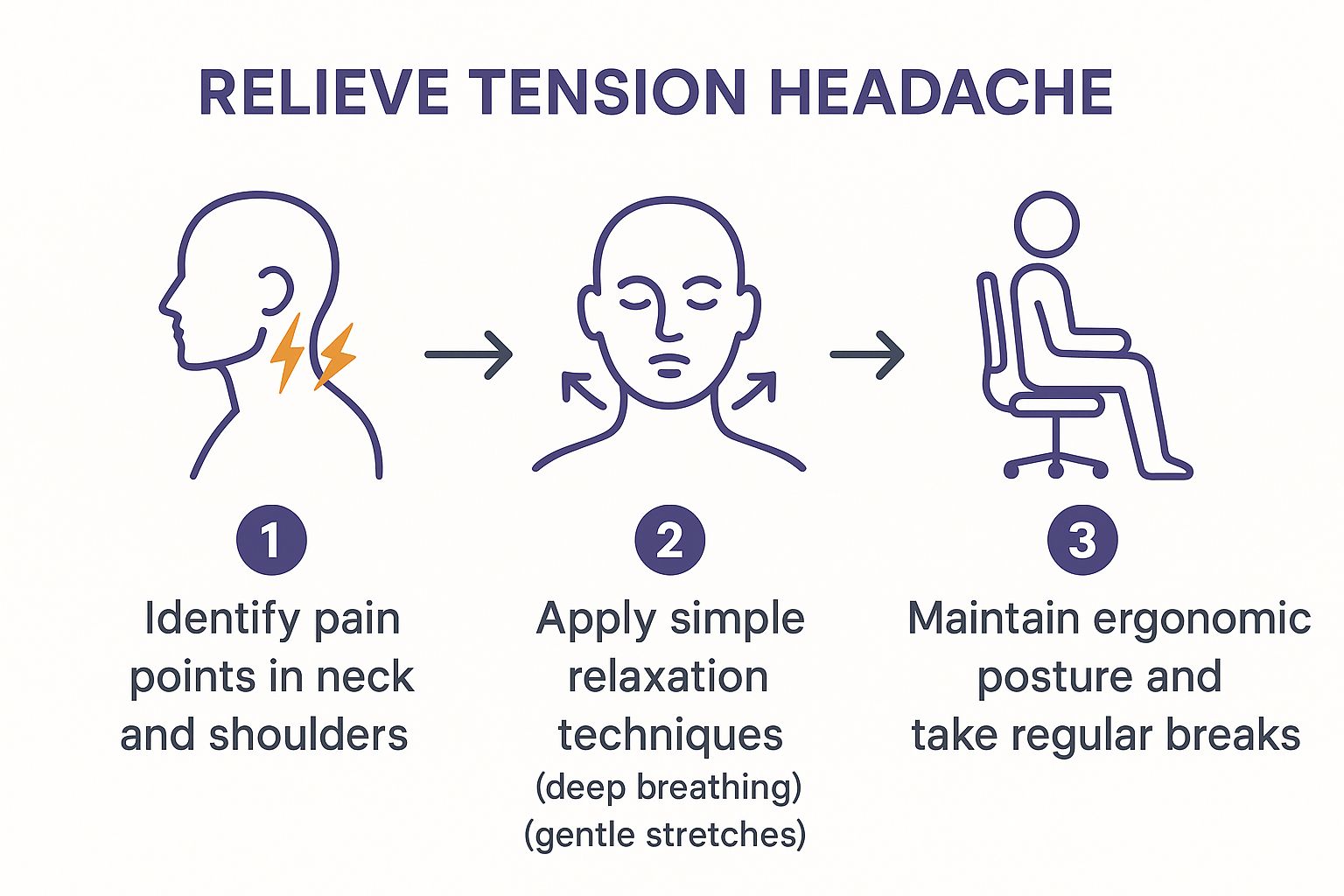
As the image suggests, finding relief begins with being attentive to your body’s signals. From there, you can implement simple, immediate changes to improve your well-being.
Quick Actions for Tension Headache Relief
When a headache strikes, having a list of effective tactics is essential. Here are some highly recommended methods for fast relief that you can implement immediately.
| Technique | How It Helps | Practical Tip |
|---|---|---|
| Cold Compress | Narrows blood vessels and dulls the sensation of pain. | Wrap an ice pack or a bag of frozen vegetables in a thin towel and apply it to your forehead or temples for 15 minutes. |
| Warm Compress | Relaxes tense muscles in the neck and shoulders, a common trigger. | Use a heating pad on a low setting or a warm, damp towel on the back of your neck. A warm shower can also be effective. |
| Mindful Breathing | Calms the nervous system and reduces the body’s stress response. | Practice the 4-4-6 breathing exercise mentioned above for one to two minutes to feel a noticeable difference. |
| Gentle Neck Stretches | Loosens tight muscles that can pull on the base of the skull. | Slowly tilt your head to one side, holding for 20-30 seconds. Repeat on the other side. Do not force the stretch. |
These simple actions can significantly improve how you feel, often providing relief without the need for medication. Try them the next time you feel that familiar tension building.
Gentle Stretches to Melt Away Neck Tension

Many of us are familiar with the sensation. A tension headache often originates not in the head, but as a subtle tightness in the neck and shoulders, frequently resulting from prolonged periods spent hunched over a desk or phone.
By proactively addressing this muscular strain with simple, gentle stretches, you can often prevent a headache from fully developing. The objective is to gently encourage your muscles to relax, not to force them.
Simple Movements for Neck Relief
You don’t need to dedicate a lot of time to make a significant impact. Integrating a few targeted stretches into your daily routine can provide substantial relief. Here are a couple of go-to movements for individuals dealing with headache-triggering neck tension.
- Chin Tucks: This is an excellent countermeasure to “tech neck.” While sitting or standing tall and looking straight ahead, gently draw your chin backward, as if creating a double chin. You should feel a pleasant stretch at the base of your skull. Hold this position for 5 seconds and aim to repeat it 5-10 times.
- Ear-to-Shoulder Stretch: To target the tight muscles along the side of your neck, gently tilt your right ear toward your right shoulder. Stop when you feel a light stretch on the left side. It is important to avoid raising your shoulder to meet your ear. Hold for 20-30 seconds, then slowly repeat on the opposite side.
The guiding principle for any stretch is to never push into pain. You are seeking a comfortable pull, not a sharp sensation. Ease into each movement to allow muscle fibers to release safely and gradually.
Releasing Upper Back and Shoulder Strain
This persistent tension rarely remains confined to the neck; it often extends into the upper back and shoulders. Adding a simple shoulder squeeze can help release this entire area.
From a seated or standing position with a straight back, squeeze your shoulder blades together as if you are trying to hold a pencil between them. Hold this contraction for about 5 seconds, then release. Performing this exercise a few times throughout the day is an effective way to reset your posture.
For a more detailed look at this topic, you can learn more about how neck exercises help alleviate headache pain in our related article.
Don’t wait — relief is closer than you think.
Proactive Lifestyle Habits to Prevent Headaches
While having immediate relief strategies is valuable, the most effective approach to managing tension headaches is prevention. This often involves making small, consistent adjustments to your daily life. Over time, these modifications can significantly reduce the frequency and severity of your headaches.
Many headache triggers are embedded in modern lifestyles. As we have become more sedentary, stressed, and attached to screens, tension headaches have become more prevalent. Research from Frontiers in Pain Research supports this connection. By carefully examining these habits, you can build a strong defense against recurring pain.
Create an Ergonomic Workspace
If you spend your days at a desk, your workstation could be a primary contributor to neck and shoulder tension. Poor posture is one of the most direct causes of the muscle strain that leads to headaches.
Making a few adjustments to your setup can be transformative:
- Monitor Height: Your screen should be positioned so the top is at or slightly below eye level. This prevents you from constantly looking up or slumping down.
- Chair Support: A supportive chair is essential. Ensure it supports the natural curve of your lower back and allows your feet to rest flat on the floor.
- Keyboard Position: Avoid over-reaching for your keyboard and mouse. Keep them close to allow your shoulders and upper back to remain relaxed.
Mastering these fundamentals is crucial. For a deeper dive, explore our guide on how posture can cause problems and what you can do about it.
Prioritize Hydration and Sleep
While they may seem simple, two of the most powerful and often overlooked tools for headache prevention are water and sleep. Dehydration can cause brain tissue to shrink slightly, pulling it away from the skull and triggering pain receptors.
A helpful tip is to sip water throughout the day rather than drinking a large amount at once. If you notice headaches tend to occur in the afternoon, dehydration may be a contributing factor.
Sleep is equally vital. A consistent sleep schedule helps regulate your body’s internal clock. Aim to go to bed and wake up around the same time each day, even on weekends. This habit can significantly reduce headache frequency by preventing fatigue and maintaining hormonal balance. These foundational changes are key to long-term headache management.
Finding Lasting Relief with Chiropractic Care
When stretches and lifestyle modifications are not enough, it may indicate that the issue lies deeper than simple muscle tightness. This is where chiropractic care can be beneficial. Instead of only addressing the symptoms, this approach aims to identify and treat the root cause of chronic tension headaches.
Frequently, persistent headaches are linked to minor misalignments in the vertebrae of the neck. These shifts, known as subluxations, can place pressure on nerves and trigger the constant muscle tension experienced as a headache. This is a common and frustrating cycle for many. In fact, tension-type headaches are a significant cause of disability globally, with the highest impact on individuals between 35-39 years old. You can read more about these findings from the Global Burden of Disease Study.
What to Expect from a Chiropractic Visit
When a patient presents with a headache, the focus is on restoring proper movement and alignment to the spine. Gentle, specific adjustments are used to correct vertebral misalignments. This process relieves pressure on irritated nerves, allowing the tight muscles in the neck and upper back to relax.
Soft tissue therapies may also be used to complement the adjustments. This can include targeted massage to break up stubborn knots and improve blood flow to the area, which helps accelerate healing and reduce pain and stiffness.
The objective is not only to resolve the current headache but also to restore overall spinal health, making you more resilient to future headache triggers.
This comprehensive approach is designed to provide sustainable, long-term relief. For a closer look at how it works, see our guide on how a Spokane chiropractor can help with your headaches. Lasting comfort comes from addressing the source of the problem.
Your Top Questions About Tension Headaches
Even with a plan for managing your headaches, some questions may remain. Understanding the specifics of tension headaches is a key part of managing them effectively. Here are answers to a few common questions.
Having this information can help you feel more in control when symptoms arise and recognize when it is time to seek professional guidance.
How Can I Tell a Tension Headache from a Migraine?
The primary distinction lies in the type of pain and associated symptoms. A tension headache typically involves a dull, aching sensation or a feeling of constant pressure on both sides of the head. It is often described as feeling like a tight band is wrapped around the forehead. The pain is usually mild to moderate but not debilitating.
A migraine is a more severe neurological event. It often presents as a severe, throbbing pain, typically localized to one side of the head. Migraines are also accompanied by other symptoms not seen with tension headaches, such as:
- Nausea and sometimes vomiting
- Extreme sensitivity to light, sounds, or smells
- Visual disturbances like seeing spots or flashing lights (known as an “aura”)
Are Over-The-Counter Pain Relievers a Good Long-Term Fix?
While over-the-counter medications like ibuprofen or acetaminophen can provide temporary relief, relying on them too frequently can lead to complications. If you find yourself using them more than twice a week, you may be at risk for developing medication overuse headaches.
This is a rebound phenomenon where the pain returns as the medication wears off, creating a cycle of dependency and recurring pain. Ultimately, these medications mask the symptoms without addressing the underlying cause, whether it’s muscle tension, stress, or a spinal misalignment. For sustainable relief, it is essential to focus on correcting the root problem.
How Quickly Can Chiropractic Care Help My Headaches?
Many patients experience some degree of relief after their first adjustment. When misalignments in the spine are gently corrected, it can immediately reduce pressure on irritated nerves and help calm tense muscles. This is often enough to produce a noticeable improvement right away.
However, achieving long-term results is a process. While initial relief is encouraging, a series of treatments over several weeks is typically needed to fully correct the underlying issue, strengthen supporting muscles, and help your body become more resilient to headache triggers. Consistent care is what delivers the most significant and lasting benefits.
If you are tired of tension headaches controlling your life, professional care can make a difference. Don’t accept persistent head pain as a normal part of life. For many, the missing piece is addressing underlying structural issues that create chronic muscle tension.
Lasting relief begins when you move beyond managing symptoms and start correcting the source of the problem. If you’re ready to end the cycle of pain and frustration, we are here to help build a treatment plan tailored to your specific needs.
Contact Audubon Park Chiropractic today at (509) 327-4049 to schedule an appointment, or simply walk in for a consultation. Your journey to lasting relief can start now.
Ready to Feel Better?
Our Spokane chiropractors are ready to help. Walk-ins welcome — no appointment needed.

Dr. Michelle Snyder is a Spokane chiropractor with advanced training in women’s health, hormone balancing, pregnancy, and care for infants and children. She uses gentle low-force spinal adjustments alongside specialized therapies including Webster’s breech technique, allergy desensitization, cold laser therapy, EB cellular cleanse, and Methylation/genetic nutrition — offering patients a comprehensive, whole-body approach to wellness.
A Spokane resident for over 31 years, Dr. Michelle is deeply committed to her community, contributing time and resources to organizations including Meals-on-Wheels, Second Harvest, Ronald McDonald House, and the Union Gospel Mission.
📍 2909 W. Northwest Blvd, Spokane, WA 99205 | ☎ (509) 327-4049 audubonparkchiropractic.com