

This post is part of our complete guide to Wellness Care at Audubon Park Chiropractic. Browse the guide for more in-depth information on treatments, exercises, and recovery strategies.
Staying active is a key component of a healthy lifestyle, but an unexpected injury can quickly disrupt your progress. The most effective strategy for long-term athletic participation isn’t solely about pushing your limits—it’s about developing a body that is resilient enough to handle the demands you place on it.
This requires a shift to a proactive mindset. The focus should be on intelligent, consistent preparation rather than just raw intensity.
One of the most valuable skills any athlete can develop is the ability to listen to their body. Pushing through sharp pain is a direct path to injury, whereas acknowledging fatigue can be the most strategic decision you make. Prevention begins with this fundamental self-awareness.
Building a Resilient Foundation for Injury Prevention
To effectively prevent sports injuries, it’s helpful to focus on four foundational pillars. Each one plays a distinct and critical role in maintaining your health and optimizing your performance.
A simple way to understand these core areas is through the following breakdown.
The Four Pillars of Injury Prevention
This table summarizes the essential components of a comprehensive sports injury prevention strategy, providing a clear framework for athletes at all levels.
| Pillar | Key Focus | Practical Example |
|---|---|---|
| Intelligent Warm-Ups | Preparing muscles and joints for activity. | Dynamic stretches like leg swings and arm circles before a run. |
| Balanced Conditioning | Correcting imbalances and supporting joints. | Adding strength training and yoga to a cyclist’s routine. |
| Strategic Recovery | Allowing the body to repair and strengthen. | Prioritizing 7-9 hours of sleep and using a foam roller. |
| Proper Nutrition | Fueling performance and providing building blocks for repair. | Eating a mix of protein and carbs within an hour after a workout. |
Consistently focusing on these four areas is your most effective defense against being sidelined.
The image below illustrates how impactful these simple strategies can be, summarizing key data on the significant reduction in injury risk.
As shown, simple habits like warming up and building strength can dramatically lower your chances of getting hurt. While not complicated, this approach demands consistency.
The Importance of a Proactive Approach
Injuries are not exclusive to professional athletes; they are a significant issue for younger athletes as well. Johns Hopkins Medicine reports that over 3.5 million children under the age of 14 suffer sports-related injuries each year in the United States alone. This staggering number highlights the crucial need for a proactive approach starting from a young age.
A proactive mindset involves consistently working to identify and address weaknesses, imbalances, and poor movement patterns before they lead to pain or a significant problem, rather than waiting for an injury to occur.
This could be as simple as foam rolling tight muscles or ensuring your footwear provides adequate support. A solid foundation is fundamental, and issues often begin with the feet. This is why we frequently discuss with patients why you might need more than one pair of custom orthotics to support various activities.
Ultimately, prevention is an ongoing process of preparing your body for success.
Don’t wait — relief is closer than you think.
Mastering Your Warm-Up and Cool-Down
Jumping straight into intense activity without a proper warm-up is one of the quickest ways to sustain an injury. An effective warm-up is not an optional step; it is a non-negotiable signal to your body that it is time to perform.
The primary goal of a warm-up is to gradually increase your heart rate and improve circulation. This process loosens your joints and, critically, increases blood flow to your muscles. Warm muscles are more pliable and better able to absorb shock, making them far less susceptible to tears and strains. This simple preparation is fundamental to preventing sports injuries.

Ditch Old-School Stretching for Dynamic Warm-Ups
The practice of holding static stretches before activity is outdated. Modern sports science emphasizes dynamic warm-ups—active movements that mimic the activity you are about to perform.
This approach is more effective because it prepares your body for the specific demands of your sport. You are activating the exact muscle groups and rehearsing the movement patterns you will be using, which not only enhances performance but also significantly reduces your injury risk.
- For Soccer Players: Instead of a simple hamstring stretch, try dynamic leg swings (both forward-and-back and side-to-side). This movement prepares your hips and legs for the explosive actions of kicking and sprinting.
- For Swimmers: Controlled arm circles, both forward and backward, are ideal. They warm the shoulder girdle and improve your range of motion for every stroke.
- For Weightlifters: Before lifting, perform bodyweight squats and lunges. These activate the glutes, quads, and core, priming your body for heavier lifts like squats and deadlifts.
The Critical Role of the Cool-Down
Just as a warm-up is essential, so is a cool-down. Stopping abruptly after intense exercise can cause blood to pool in your legs, potentially leading to dizziness. A structured cool-down is your first step toward recovery.
The purpose of a cool-down is not merely to catch your breath. It is an active process that helps your body clear metabolic waste from your muscles, reduce soreness, and gradually return your heart rate and breathing to normal.
A simple yet effective method is to follow your main workout with 5-10 minutes of light cardio, such as a slow jog or a walk. This allows your system to transition smoothly back to a resting state.
Once your heart rate has lowered, that is the appropriate time for static stretching. Holding stretches for 20-30 seconds at this stage helps improve long-term flexibility and aids in the muscle repair process.
The scope of sports injuries is significant, with an estimated 8.6 million occurring annually worldwide. The risk varies by activity; for example, contact sports like American football show a high rate of 35.9 injuries per 1,000 athlete exposures. These statistics underscore why fundamental practices like proper warm-ups and cool-downs are so vital. If you’re interested, you can explore more detailed sports injury statistics to understand the risks associated with different activities.
Balancing Strength, Flexibility, and Technique
A strong, mobile body is a resilient body. When it comes to preventing injuries, the key is to balance the critical triangle of strength, flexibility, and technique. Neglecting any one of these elements creates a weak link, which is often where breakdowns occur.
Many common injuries stem from predictable muscle imbalances. A classic example is a runner with weak glutes and tight hip flexors, who is often a prime candidate for nagging knee pain because other muscles are forced to overcompensate. Similarly, a weightlifter with a weak core and poor shoulder mobility frequently deals with persistent back or shoulder issues.
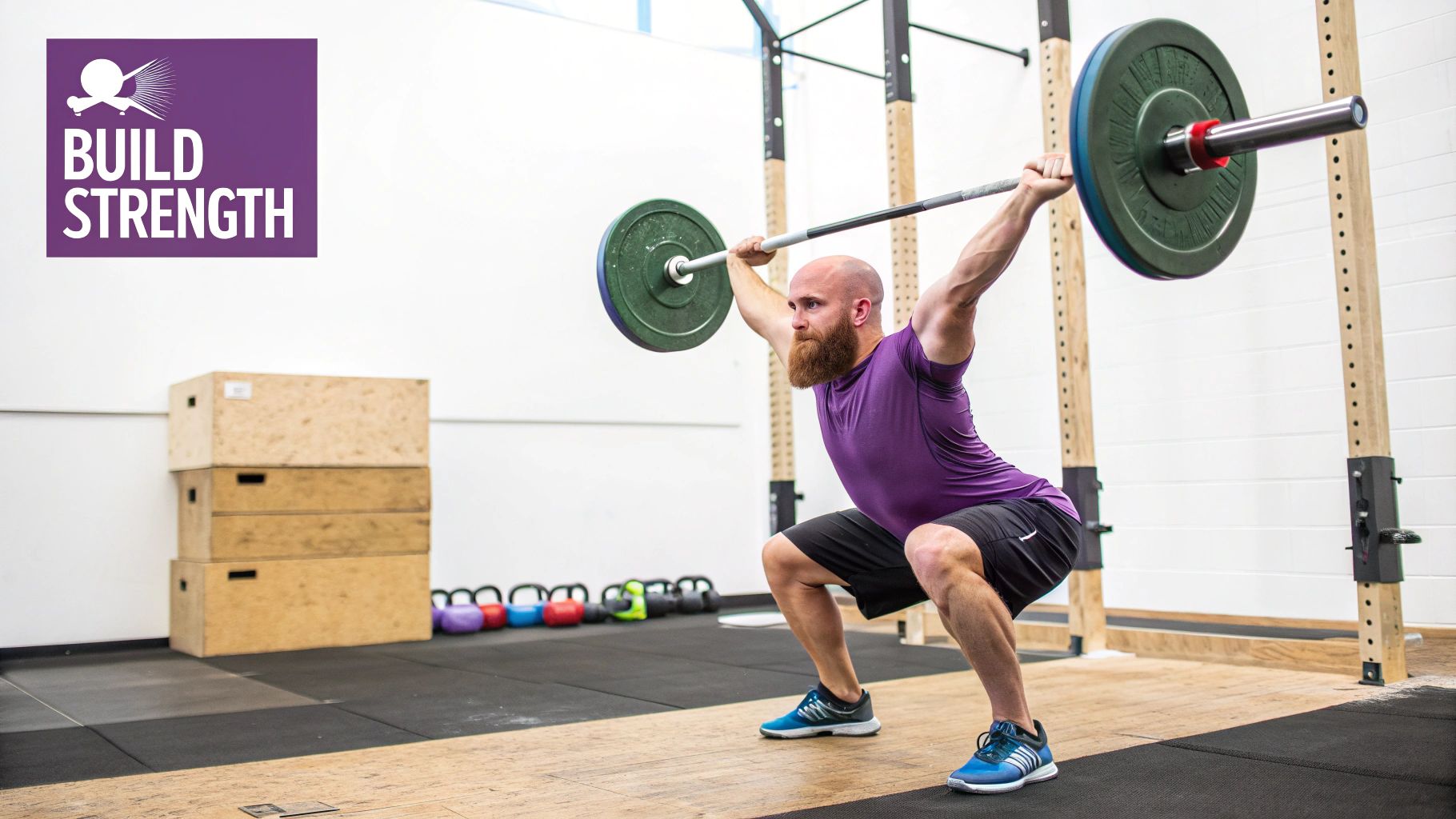
Build Strength That Matters
Focus on functional strength training, which builds stability where it counts. The goal is to perform exercises that mimic the actual movements of your sport, teaching different muscle groups to work together for better coordination and control.
- For court sports (basketball, tennis): You need side-to-side stability. Incorporate lateral lunges and box jumps to build explosive power and protect your knees and ankles during sudden changes in direction.
- For rotational sports (golf, baseball): A strong, rotating core is essential. Add exercises like medicine ball throws and cable wood chops to build rotational power and reduce stress on your lower back. You can learn more about building that foundation in our guide on how to strengthen your lower back.
Enhance Your Range of Motion
Flexibility is not just about being able to touch your toes; it’s about your joints moving through their full, intended range of motion without restriction. Tight muscles cannot lengthen properly, which places extra strain on connecting tendons and ligaments.
Think of it this way: a stiff, old rubber band snaps under pressure, while a pliable one stretches. Your muscles function similarly. Consistent stretching, foam rolling, and mobility drills keep your tissues healthy and adaptable, making strains and tears far less likely.
A full, unrestricted range of motion is one of the best defenses against common muscle and tendon injuries. It ensures that force is distributed correctly across your joints and tissues, rather than being concentrated in one vulnerable area.
Perfecting Your Form
Technique is the final, crucial piece. Even the strongest, most flexible individual can get injured if their form is poor, as it creates repetitive, harmful stress. Proper mechanics are the difference between efficient movement and a breakdown waiting to happen.
Small errors repeated over time—whether in a running gait, lifting form, or golf swing—can lead to major injuries. Poor squat form can damage knees, and an incorrect running stride can lead to shin splints.
A great way to check your form is to record your movements on your phone and compare them to examples from a qualified coach. An even better option is to invest in a session with a trainer. A trained eye can spot subtle issues you might miss, offering simple corrections that can dramatically reduce your injury risk and boost performance.
Fueling for Performance and Recovery
Your nutrition and hydration have a massive impact on performance, endurance, and your body’s ability to recover. Proper fueling is not a secret reserved for elite athletes; it is a core principle for anyone who wants to stay active and avoid injuries.
Think of food as the high-quality building material your body needs to remain strong. If you skimp on these materials, the structure weakens.
Your body relies on three key macronutrients. Each has a specific job, and neglecting any of them can lead to fatigue and, eventually, injury.
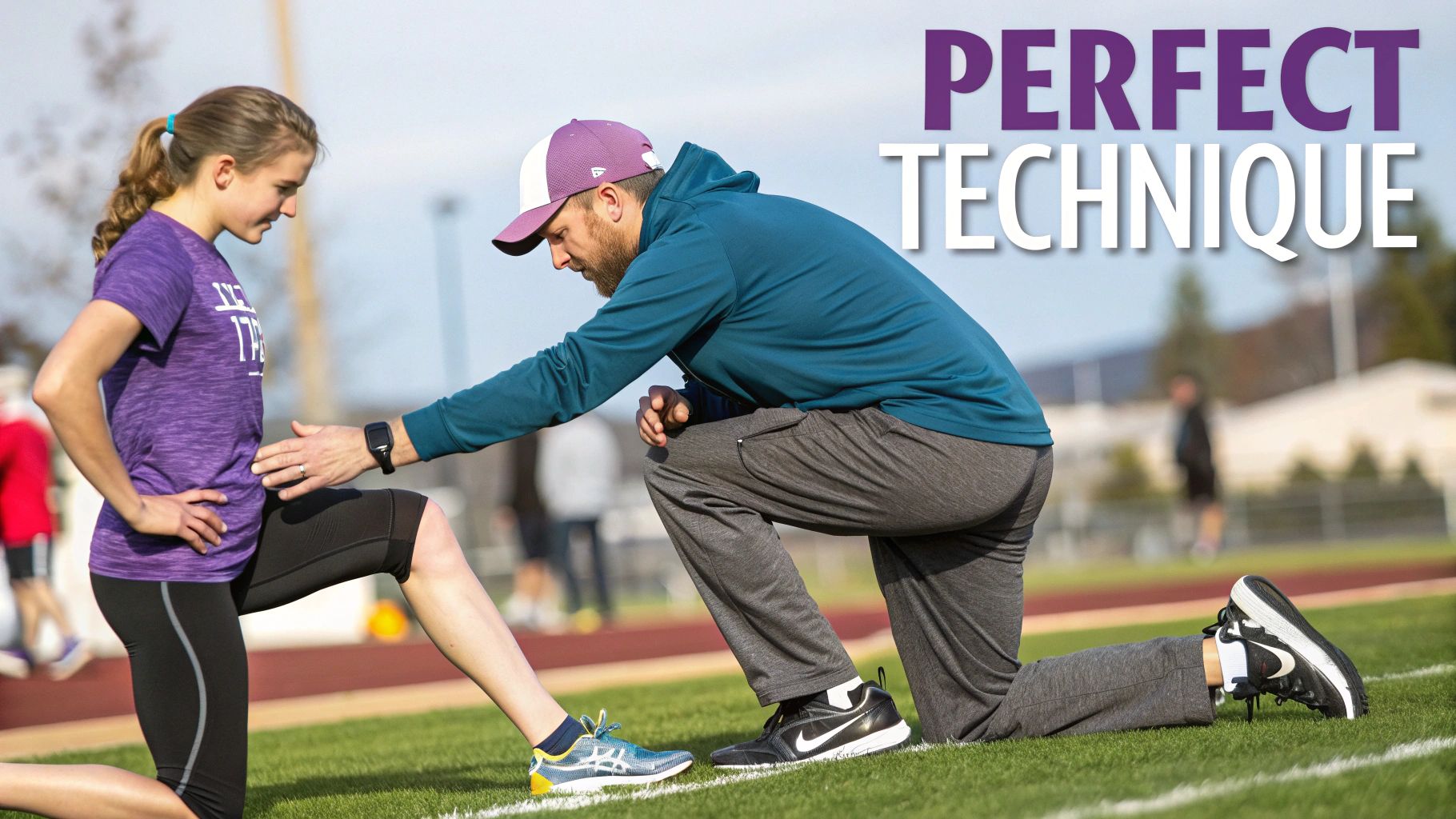
The Building Blocks of Injury Prevention
Understanding what your body needs and when is key. This is about giving your muscles the right fuel at the right time, not about following complicated diets.
- Carbohydrates for Energy: Carbs are your body’s primary fuel source. They break down into glucose, which is stored in your muscles and liver for energy. When these stores run low, you’ll experience fatigue quickly.
- Protein for Muscle Repair: Exercise creates tiny micro-tears in your muscle fibers. This is a normal part of building strength. Protein provides the amino acids your body uses to repair these tears and rebuild the muscle stronger.
- Healthy Fats for Inflammation Control: Healthy fats are vital for absorbing key vitamins and, crucially, for managing inflammation, a natural part of the healing process.
Timing is critical. For instance, eating a banana about an hour before activity provides a quick-access energy source. Afterward, a meal with a good mix of protein and carbs within an hour or two is ideal for kickstarting the muscle repair process and reducing soreness.
Don’t Underestimate Hydration
This is one of the simplest yet most overlooked ways to prevent injuries. Even mild dehydration can significantly impair performance and increase your risk of muscle cramps, strains, and heat-related illnesses.
When you exercise, you lose a significant amount of water through sweat.
Dehydration thickens your blood, forcing your heart to work harder to circulate it. This results in reduced blood flow to your muscles, compromising their function and making them more susceptible to injury.
The old advice holds true: don’t wait until you’re thirsty to drink. Thirst is a sign that you are already dehydrated. A good rule of thumb is to check the color of your urine. Pale yellow is a good indicator of hydration; anything darker means you need to drink more water. If you are sweating a lot, remember to also replace electrolytes like sodium and potassium.
The Power of Rest, Recovery, and Chiropractic Care
True athletic progress is forged not only during training but also during the crucial hours of recovery. Pushing your body makes you stronger, but without adequate rest, you are breaking your body down rather than building resilience.
Your body sends clear signals when it needs a break. Persistent fatigue, a dip in performance, lingering muscle soreness, and difficulty sleeping are all classic signs of overtraining. Ignoring these warnings is a direct path to injury, as a fatigued body has slower reaction times and less stable mechanics.
The Role of Active Recovery and Sleep
Recovery is more than just resting on the couch. Active recovery—low-intensity activities—is an essential tool. These techniques boost circulation, help clear metabolic waste, and reduce stiffness and soreness.
- Foam Rolling: This self-massage technique helps release tight knots in muscles and fascia, improving mobility and easing soreness.
- Gentle Stretching: After your muscles are warm from light activity, static stretching can enhance flexibility and help lengthen tissues that have tightened.
- Light Movement: A casual walk, a slow bike ride, or a few easy laps in a pool keeps your body moving without adding stress, which supports the repair process.
However, the single most powerful recovery tool is sleep. During deep sleep, your body releases growth hormone, which is vital for repairing muscle tissue and coming back stronger. Aiming for 7-9 hours of quality sleep per night is non-negotiable for serious injury prevention.
Chiropractic Care as Proactive Prevention
While rest and recovery are your body’s natural repair mechanisms, chiropractic care is a proactive strategy to ensure your body functions optimally. It focuses on identifying and correcting biomechanical imbalances before they cause pain or an injury.
Chiropractic adjustments are focused on restoring proper joint motion and alignment. When your joints move correctly, your nervous system can communicate efficiently with your muscles, resulting in improved coordination, balance, and power.
This hands-on approach to biomechanics is gaining significant traction. The global sports medicine market, currently valued between USD 6.3 to 7.3 billion, is projected to nearly double in the next decade. This growth reflects a greater understanding of the importance of proactive prevention and rehabilitation. You can read more about the growth of the sports medicine industry and its impact on athlete care.
Regular chiropractic treatments help ensure your body moves efficiently, distributing forces evenly instead of concentrating stress on vulnerable areas. By addressing these underlying issues, you become far less susceptible to common injuries. You can learn more about the specific Audubon Park Chiropractic treatments we offer to help you stay in the game.
Take Proactive Steps to Stay in the Game
Knowing how to prevent injuries is the first step; applying that knowledge is what keeps you on the field, court, or trail. It’s time to build a smart, personalized plan that works for your sport, your body, and your lifestyle.
Prioritizing your health is the most important investment you can make to stay active for years to come. Don’t wait for a minor issue to become a major problem. That little twinge you feel today can easily turn into a sidelining injury tomorrow if ignored. Being proactive always beats being reactive.
Building Your Personal Injury Prevention Plan
Creating a sustainable plan involves weaving simple, intelligent habits into your existing routine. This is how you build a resilient foundation.
Your plan should be adaptable, changing as your training or goals shift. Here are a few key components to start with:
- Schedule Your Recovery: Plan rest days and active recovery sessions on your calendar just as you would a workout.
- Find Your Weak Links: Identify areas of tightness or instability. Spend 10-15 minutes, a few times a week, on exercises that directly target these spots.
- Listen and Log It: Keep a simple training journal. Note how you feel before, during, and after workouts to identify patterns of fatigue or minor pain before they escalate.
When to Get a Professional Opinion
Even with the best plan, sometimes you need a professional perspective. If you are dealing with persistent pain, a recurring old injury, or have hit a performance plateau, it is a clear signal to seek help.
Prioritizing your health is the best investment you can make in your athletic future. A proactive approach gets to the root of potential problems, building a body that’s not just high-performing, but also durable.
A professional can provide a personalized assessment to identify biomechanical imbalances and create a targeted care plan. This guidance can address underlying issues and help you achieve peak, pain-free performance.
If you are ready to build a more resilient foundation, our team at Audubon Park Chiropractic is here to help. For a personalized assessment and a care plan designed to fit your specific needs, get in touch with us today. Don’t wait for an injury to dictate your activity level. Call us at (509) 327-4049 or walk in for treatment.
Ready to Feel Better?
Our Spokane chiropractors are ready to help. Walk-ins welcome — no appointment needed.

Dr. Michelle Snyder is a Spokane chiropractor with advanced training in women’s health, hormone balancing, pregnancy, and care for infants and children. She uses gentle low-force spinal adjustments alongside specialized therapies including Webster’s breech technique, allergy desensitization, cold laser therapy, EB cellular cleanse, and Methylation/genetic nutrition — offering patients a comprehensive, whole-body approach to wellness.
A Spokane resident for over 31 years, Dr. Michelle is deeply committed to her community, contributing time and resources to organizations including Meals-on-Wheels, Second Harvest, Ronald McDonald House, and the Union Gospel Mission.
📍 2909 W. Northwest Blvd, Spokane, WA 99205 | ☎ (509) 327-4049 audubonparkchiropractic.com
Further Reading: Healthy Living
- Natural Remedies for Muscle Spasms: What Actually Works
- The Anti-Inflammatory Foods List: Foods That Calm Pain and Foods That Fuel It
- Herniated & Bulging Disc: The Exercises That Help (and the Ones to Skip)
- What Actually Happens at Your First Chiropractic Visit & And What to Expect in the First Few Weeks
- Pricing, Insurance and What Chiropractic Actually Costs at Audubon Park
→ Complete Guide: Wellness Care at Audubon Park Chiropractic