

This post is part of our complete guide to Back Pain Treatment in Spokane, WA. Browse the guide for more in-depth information on treatments, exercises, and recovery strategies.
When sciatica flares up, the sharp, radiating pain down your leg can be debilitating. Fortunately, effective management is possible, and it often begins with simple, at-home strategies designed to alleviate pressure on the irritated sciatic nerve. These initial steps are crucial for controlling acute pain, paving the way for long-term healing and recovery.
Understanding these foundational techniques empowers you to take control during a flare-up and begin the journey toward lasting relief.
Finding Immediate Sciatica Relief At Home

During a sciatica flare-up, the primary goal is to find a position that minimizes discomfort. This involves identifying a posture that provides the compressed sciatic nerve with space to decompress. Many people find relief by lying on their back with a pillow placed under their knees, which helps to flatten the lower back and reduce pressure on the lumbar spine. Another effective position is lying on the non-painful side with a pillow between the knees to maintain proper hip and pelvic alignment, thereby reducing strain on the lower back.
The Role of Temperature Therapy
Once you have found a comfortable position, applying temperature therapy can provide significant relief. The choice between cold and heat depends on the timing of the flare-up.
- Cold Therapy (First 48-72 Hours): In the initial stages, inflammation is a primary contributor to pain. Applying an ice pack or a bag of frozen vegetables wrapped in a towel to the affected area for 15-20 minutes can help constrict blood vessels, reduce inflammation, and numb the sharp pain.
- Heat Therapy (After 72 Hours): After the initial inflammatory phase, switching to heat can be beneficial. A heating pad or warm compress helps to relax tight muscles that may be compressing the nerve and increases blood flow to the area, which promotes healing.
Some individuals find that alternating between cold and heat therapy offers the best results. It is important to listen to your body and determine which method provides the most comfort.
You’re not alone in this. Sciatica is a very common condition. Research indicates that between 10% and 40% of individuals will experience it in their lifetime, with peak incidence occurring around the age of 40. The annual incidence rate is between 1% and 5% of the population. You can explore the full study on sciatica prevalence for a comprehensive overview.
For moments when you need immediate relief to manage daily activities, several go-to strategies can be employed.
Here’s a clear summary of what you can do right now.
At-Home Sciatica Pain Relief Techniques
| Technique | How It Helps | Best Practice |
|---|---|---|
| Supportive Positioning | Reduces direct pressure on the sciatic nerve by aligning the spine. | Lie on your back with a pillow under your knees, or on your side with a pillow between your knees. |
| Ice Pack | Narrows blood vessels to reduce inflammation and numb sharp pain. | Apply for 15-20 minutes at a time during the first 48-72 hours of a flare-up. |
| Heating Pad | Relaxes tight muscles and increases blood flow to promote healing. | Use for 15-20 minutes at a time after the initial inflammatory phase has passed. |
| Gentle Movement | Prevents stiffness and keeps blood flowing to the affected area. | Avoid prolonged sitting; take short, gentle walks if your pain allows. |
These techniques serve as your first line of defense in managing a painful flare-up and facilitating your return to normal activities.
Over-the-Counter Options
When pain is particularly intense, nonsteroidal anti-inflammatory drugs (NSAIDs) such as ibuprofen can be effective. They work by targeting the inflammation that is irritating the sciatic nerve, addressing a root cause of the pain. It is essential to follow the dosage instructions on the packaging. These medications are intended for short-term use to manage acute pain, not as a long-term solution. Once the pain is manageable, the focus can shift to more sustainable strategies like targeted exercises and lifestyle adjustments.
Don’t wait — relief is closer than you think.
Targeted Stretches for Sciatic Nerve Pain
When a sciatica flare-up begins, the natural inclination may be to remain still. While short-term rest can be helpful, gentle movement is a powerful tool for achieving long-term relief. Targeted stretching can help release tension in the muscles surrounding the sciatic nerve, improve flexibility in the lower back and hips, and enhance blood flow to promote healing. The key is to move slowly and attentively, avoiding any movements that cause sharp pain.
Foundational Stretches for Sciatic Nerve Relief
Starting with simple, foundational movements is the safest approach. These stretches are designed to create space in the lumbar spine and release muscular tension along the sciatic nerve pathway, preparing the body for recovery without exacerbating the condition.
- Single Knee-to-Chest Stretch: Lie on your back with both knees bent and feet flat on the floor. Gently pull one knee toward your chest, holding for 20-30 seconds to feel a mild stretch in your lower back and gluteal muscles. Release and repeat with the other leg.
- Pelvic Tilt: While lying on your back with knees bent, engage your abdominal muscles to gently press your lower back flat against the floor, tilting your pelvis slightly upward. Hold for a few seconds, then release. This subtle movement is excellent for activating the core muscles that support the spine.
These initial stretches establish a safe and effective foundation for managing sciatica through movement.
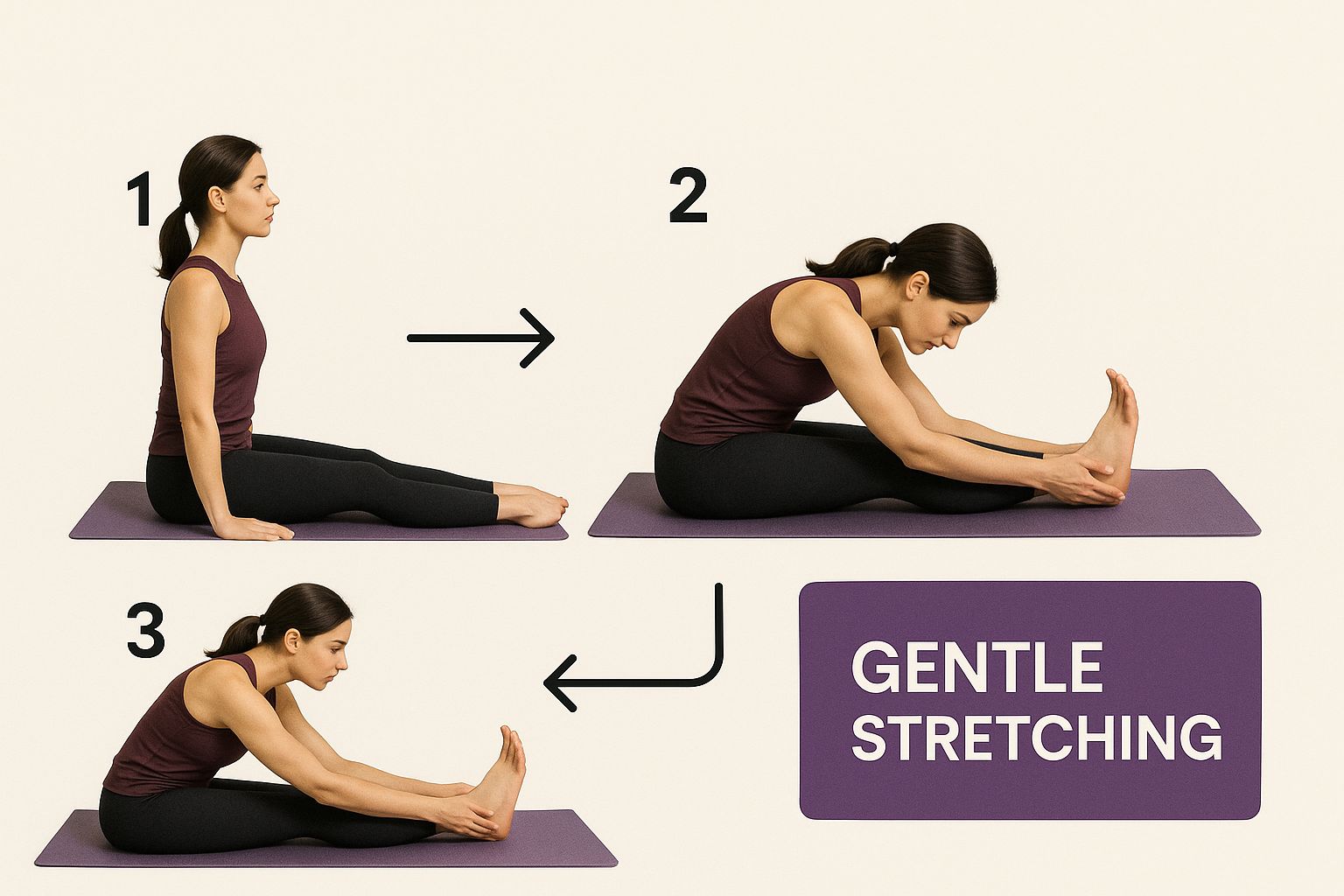
Observing proper form, as shown in this gentle hamstring stretch, ensures that you are targeting the correct muscles without placing undue strain on your back.
Progressing to Deeper Stretches
Once you can perform the basic stretches without pain, you can progress to deeper movements. The piriformis muscle, located deep in the buttock, is a common contributor to sciatica, as it can press directly on the sciatic nerve when tight.
A valuable progression is the seated piriformis stretch. Sit in a chair and cross the ankle of the affected leg over the opposite knee, creating a “figure four” shape. While maintaining a straight back, gently lean forward until you feel a stretch deep in your buttock. Hold this position for 30 seconds.
If sciatica is caused by a spinal condition like a herniated disc, specific movements are required for proper healing. For more detailed routines, you can learn more in our post on the best exercises for a herniated disc.
Consistency is more important than intensity. Performing these gentle stretches daily will gradually improve flexibility, reduce muscle tension, and provide lasting relief from sciatic nerve pain.
Lifestyle Adjustments to Prevent Sciatica Flare-Ups
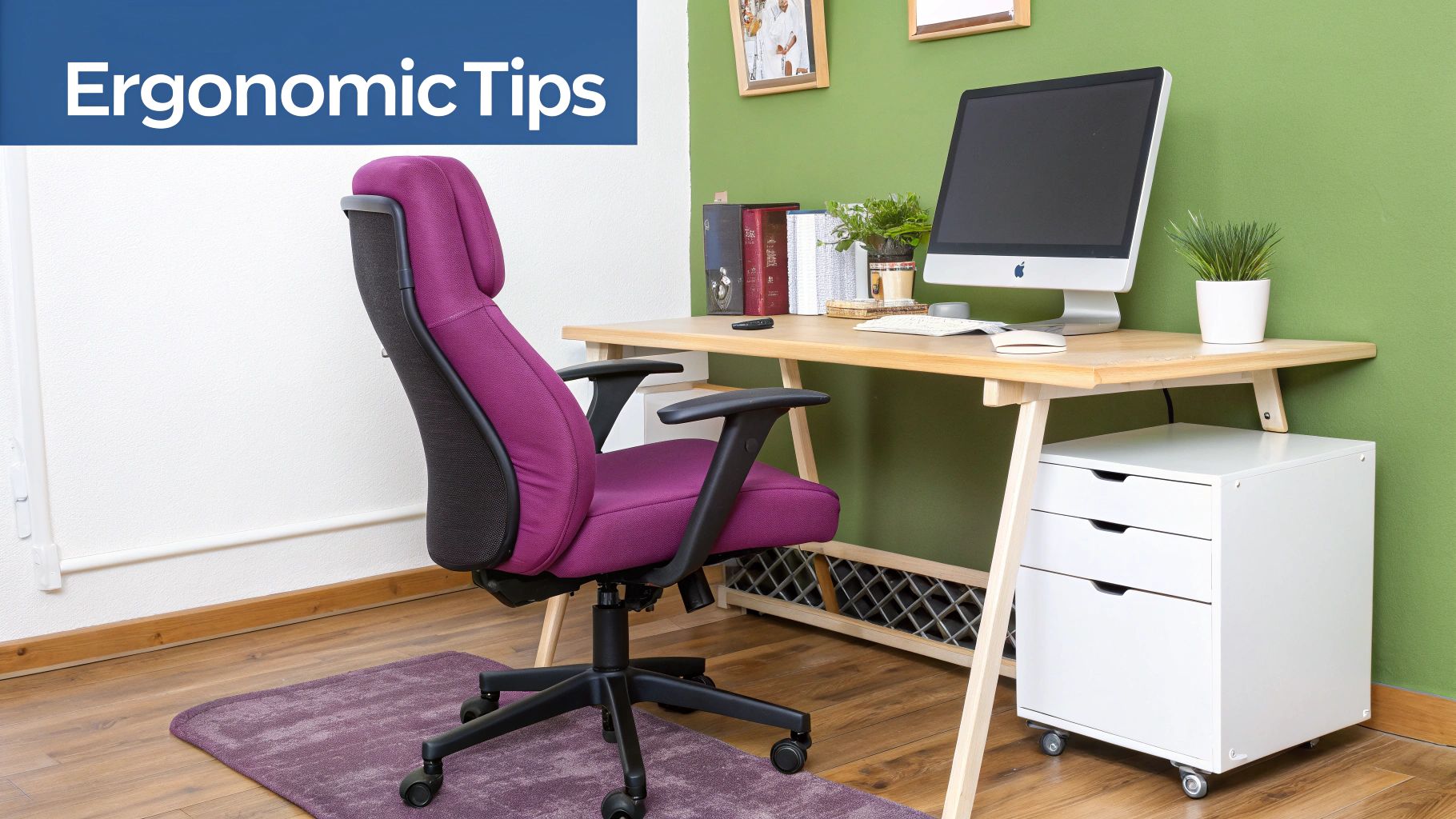
A reactive approach to sciatica is not a sustainable long-term strategy. The ultimate goal is to adopt a lifestyle that supports spinal health and prevents future flare-ups. This is achieved through small, consistent changes in daily routines that collectively reduce stress on the lower back and sciatic nerve. Prevention begins with an assessment of your daily activities, particularly your work environment.
Cultivating Mindful Posture and Ergonomics
An ergonomic workspace is essential for spine health. Ensure your chair provides lumbar support, your feet rest flat on the floor, and your monitor is at eye level to prevent slouching. Since prolonged sitting is a known trigger, make it a habit to stand, stretch, and walk for a few minutes every 30 minutes.
Good posture extends beyond the desk. When standing, distribute your weight evenly on both feet and avoid locking your knees. Your sleeping position also matters; sleeping on your back with a pillow under your knees or on your side with a pillow between them helps maintain a neutral spine. These habits can be supplemented with exercises from our guide on how to strengthen your lower back.
The Impact of Diet and Footwear
Diet can influence nerve pain. An anti-inflammatory diet rich in leafy greens, fatty fish, nuts, and berries can help reduce systemic inflammation that may aggravate the sciatic nerve. Conversely, processed foods, excessive sugar, and unhealthy fats can increase inflammation.
While low back pain affects up to 70% of the population at some point, sciatica represents a specific subset, accounting for 5% to 10% of these cases. Disc-related issues are a common cause, affecting 2.2% of people annually. These statistics highlight the importance of targeted preventative strategies.
Finally, your footwear serves as your body’s foundation. Unsupportive shoes can cause misalignment, transferring stress up to the lower back. Choose shoes with good arch support and cushioning to absorb shock, especially if you spend a lot of time on your feet. These practical, daily choices are your best defense against sciatica.
When You Need Professional Chiropractic Care
https://www.youtube.com/embed/fWJjCu6c8Gg
While at-home strategies are a valuable starting point for managing sciatica, self-care may not always be sufficient for achieving lasting relief. If the pain becomes persistent or interferes with daily life, it is a clear indication that more targeted support is needed. The underlying issue may be related to spinal alignment and function. Ignoring persistent symptoms can allow minor problems to escalate, making it important to recognize when professional intervention is necessary.
Recognizing Red Flag Symptoms
Certain symptoms signal potentially serious nerve compression that requires professional evaluation. Seek professional help if you experience any of the following:
- Persistent Pain: The pain has not improved after several weeks of at-home care.
- Worsening Numbness or Tingling: The “pins and needles” sensation in your leg or foot is becoming more intense, frequent, or widespread.
- Significant Leg Weakness: You experience difficulty lifting your foot or a feeling that your leg might give out, indicating significant nerve interference.
- Pain That Disrupts Sleep: The discomfort consistently awakens you at night, preventing your body from getting the restorative rest it needs to heal.
These signs suggest that the root cause of your sciatica requires a specific diagnosis and a hands-on treatment plan.
The demand for effective solutions is growing. The global market for sciatica treatment is projected to increase from USD 15.56 billion in 2025 to USD 24.63 billion by 2030, with North America accounting for nearly 40% of this market. You can discover more insights about the sciatica treatment market to understand the prevalence of this condition.
How Chiropractic Adjustments Can Help
Chiropractic care addresses the structural source of many sciatica cases: spinal misalignments. When vertebrae in the lower back are out of position, they can place direct pressure on the sciatic nerve root, triggering radiating pain. A chiropractor’s primary objective is to identify and correct these misalignments, known as subluxations, to restore proper joint motion and relieve nerve pressure.
Through precise, gentle spinal adjustments, a chiropractor can guide vertebrae back into their proper alignment. This can provide immediate relief from sciatic nerve compression. A series of treatments helps to reduce inflammation, restore mobility, and support the body’s natural healing processes. This approach focuses on correcting the mechanical issue causing the pain, rather than just masking symptoms. For more information on this method, see our guide to chiropractic treatment for sciatica.
Taking Your Life Back From Sciatica
Regaining control from sciatica is an active process. This guide provides a clear roadmap for managing nerve pain, from immediate relief strategies to preventative exercises and lifestyle changes. You now have the tools to manage flare-ups and build a foundation for long-term spinal health. The next step is to apply this knowledge consistently. Making gentle stretches part of your daily routine and being mindful of your posture will lead to significant, lasting relief over time.
Taking Action for Relief That Lasts
Every individual’s recovery journey is unique, and sometimes, professional guidance is needed to pinpoint the exact cause of your pain and develop a tailored treatment plan. This is especially true if you have tried at-home methods without success.
The most important thing to remember about managing sciatica is that you don’t have to go it alone. A personalized approach that gets to the root cause of your nerve compression is often the key to unlocking real, sustainable relief and getting you back to doing the things you love.
Moving forward requires a commitment to your health and finding the right support. By combining the strategies you’ve learned here with dedicated, professional care, you can shift from merely managing pain to building a more resilient, comfortable, and active life.
A Few Common Questions About Sciatica
Navigating sciatica often brings up many questions. Understanding the specifics of your condition is a key part of recovery. Here are answers to some of the most common inquiries.
How Long Will This Sciatica Pain Last?
The duration of sciatica pain depends on whether it is an acute flare-up or a chronic issue.
- Acute Sciatica: This is the most common form, with pain typically lasting from a few days to a few weeks. With proper self-care and professional guidance, most people experience significant improvement within four to six weeks.
- Chronic Sciatica: If pain persists for more than three months, it is considered chronic. This often indicates an underlying issue, such as a herniated disc or spinal stenosis, that requires a specific treatment plan.
While acute episodes often resolve with time, persistent pain signals the need for a professional evaluation.
Why Does Sitting Make My Sciatica So Much Worse?
For many people with sciatica, prolonged sitting is a major pain trigger. When seated, significant pressure is placed on the discs in the lower back, which can compress the sciatic nerve root. Slouching exacerbates this pressure. Furthermore, sitting can cause the hip flexors and hamstring muscles to tighten, pulling on the pelvis and further irritating the nerve. This is why standing and moving every 20-30 minutes is so crucial.
The quickest way to get some relief from a flare-up is often a combination of finding a comfortable, supported position (like lying down with a pillow under your knees) and using cold therapy to reduce inflammation. However, these are just for immediate comfort.
What’s the Fastest Way to Get Some Relief?
For immediate relief from a sciatica flare-up, a combination of ice packs, finding a comfortable resting position, and using over-the-counter anti-inflammatory medication is often effective. These methods help to calm the initial inflammation and reduce pressure on the nerve.
However, true, lasting relief comes from a consistent, long-term approach. This includes a combination of specific stretches to improve flexibility, strengthening exercises for the core and back, and lifestyle modifications to prevent future flare-ups. The fastest path to wellness involves addressing the root cause of the problem, not just alleviating the symptoms.
Don’t let sciatica control your life any longer. If you’re ready for a personalized plan that addresses the source of your pain, we are here to guide you. Take the first step toward lasting relief. Contact Audubon Park Chiropractic today at (509) 327-4049 to schedule a consultation, or feel free to walk in for treatment. Let’s create a tailored plan to help you get back to living your life to the fullest.
Ready to Feel Better?
Our Spokane chiropractors are ready to help. Walk-ins welcome — no appointment needed.

Dr. Michelle Snyder is a Spokane chiropractor with advanced training in women’s health, hormone balancing, pregnancy, and care for infants and children. She uses gentle low-force spinal adjustments alongside specialized therapies including Webster’s breech technique, allergy desensitization, cold laser therapy, EB cellular cleanse, and Methylation/genetic nutrition — offering patients a comprehensive, whole-body approach to wellness.
A Spokane resident for over 31 years, Dr. Michelle is deeply committed to her community, contributing time and resources to organizations including Meals-on-Wheels, Second Harvest, Ronald McDonald House, and the Union Gospel Mission.
📍 2909 W. Northwest Blvd, Spokane, WA 99205 | ☎ (509) 327-4049 audubonparkchiropractic.com
Further Reading: Back
- Back Pain, Sciatica, and Headaches: When Chiropractic Helps — And When It Doesn’t
- Chiropractic Without the Commitment: What No Long-Term Contracts Actually Means for Your Care
- What causes sciatic nerve pain: Symptoms and relief
- NW Spokane’s Neighborhood Chiropractor: Why Location, Parking, and Knowing Your Doctor Actually Matter
- Why Some People Are Afraid of the Chiropractor & And What We Do Differently