

This post is part of our complete guide to Wellness Care at Audubon Park Chiropractic. Browse the guide for more in-depth information on treatments, exercises, and recovery strategies.
When you’re dealing with chronic pain, you quickly learn it’s not just a physical problem. It’s a daily battle that weaves its way into every part of your life. A real, lasting solution has to go beyond just chasing the pain; it requires a comprehensive approach that includes professional care alongside daily habits like targeted movement, anti-inflammatory nutrition, and stress management.
Living with Chronic Pain Is a Daily Battle

If you’re one of the millions living with chronic pain, you know it’s so much more than a physical feeling. It’s a constant companion that can hijack your mood, derail your work, and put a real strain on your relationships. Just acknowledging that this is a shared struggle—that you’re not alone in this—is a powerful first step toward taking back control.
The thing about pain is that it’s deeply personal. Acute pain is your body’s alarm system after an injury, and it usually quiets down as you heal. Chronic pain is different. It’s the alarm that just won’t shut off, sticking around for months, sometimes years, long after the initial injury has healed. Sometimes, it shows up for no clear reason at all. This difference is everything because it completely changes how we need to approach relief.
The Growing Challenge of Persistent Pain
Unfortunately, this isn’t a rare problem. It’s becoming more and more common. In the years following the COVID-19 pandemic, we’ve seen a sharp rise in the number of people struggling with persistent pain. Back in 2019, about 20% of U.S. adults were dealing with chronic pain. By 2023, that number had jumped to over 24%, which means about 10 million more people are in pain.
At the same time, high-impact chronic pain—the kind that’s severe enough to really limit your daily life—is also on the rise, now affecting more than 21 million Americans. You can learn more about these post-pandemic pain trends and their impact.
This surge in numbers really underscores just how badly we need effective, sustainable ways to manage pain. For so many, it becomes a frustrating cycle:
- Physical Limitations: Simple things like taking a walk, sitting at a desk, or picking up groceries can feel like climbing a mountain. This often leads to doing less and less.
- Emotional Toll: Being in pain all the time is exhausting. It’s no surprise that it often brings on feelings of anxiety, depression, and isolation.
- Social Impact: It can get tough to keep up with friends, enjoy hobbies, or even participate in family events, which can leave you feeling disconnected from the people you care about.
Chronic pain isn’t just a symptom; it’s a condition that reshapes your entire life. True management means looking at the whole person—your body, your mind, and your daily environment—not just focusing on the spot that hurts.
Snapshot of Chronic Pain Prevalence
To put the scale of this issue into perspective, here’s a quick look at some key statistics. These numbers highlight just how many people are navigating the same challenges every single day.
| Statistic | Data Point |
|---|---|
| U.S. Adults with Pain | 24% of the adult population reported chronic pain in 2023. |
| Increase Post-Pandemic | An increase of approximately 10 million people since 2019. |
| High-Impact Pain | Over 21 million Americans face pain that limits daily life. |
These figures aren’t just numbers; they represent millions of individual stories and struggles. It’s a clear call for better, more holistic approaches to pain relief.
Building a Foundation for Lasting Relief
To truly get a handle on chronic pain, we have to shift our thinking. Instead of just trying to mask the symptoms, we need to address the root causes. This means taking a proactive approach that combines professional guidance with practical, everyday habits you can build on. It’s all about building resilience and giving your body the tools it needs to heal and function better.
I often tell my patients to think of pain management as a marathon, not a sprint. Small, consistent efforts in different areas of your life really do add up over time and can lead to significant, lasting change.
By bringing together smart strategies for movement, nutrition, and lifestyle adjustments, you can create a powerful, personalized plan for feeling better. This guide is here to walk you through those components with real-world advice and steps you can actually take. You don’t have to figure this all out on your own.
Don’t wait — relief is closer than you think.
Getting to the Source of Your Pain with Chiropractic Care

When you’re dealing with chronic pain, it’s easy to focus only on where it hurts. But true, lasting relief isn’t about chasing symptoms—it’s about finding and fixing the root cause. This is where chiropractic care truly shines.
Instead of just masking the pain, we look at your body’s entire structure, zeroing in on the spine and its vital connection to your nervous system. Think of your nervous system as the master controller for every single function in your body, from moving your legs to signaling pain.
At its core, the principle is simple: your body is designed to heal itself. But when your spine is out of alignment, that natural ability gets blocked. It’s like having a traffic jam on a major highway; messages from your brain can’t get through efficiently, leading to dysfunction and, you guessed it, chronic pain.
Restoring Your Body’s Communication Lines
Those “traffic jams” in your spine are what we call vertebral subluxations. They’re subtle misalignments in your vertebrae that can pinch or irritate the delicate nerves branching out from your spinal cord. This nerve interference throws a wrench into the communication between your brain and your body.
A chiropractic adjustment is simply a precise, gentle force applied to a specific joint to correct these misalignments. The goal is to clear the roadblock, restore proper movement, and take the pressure off your nervous system.
Here’s what happens during an adjustment:
- Better Joint Mobility: We help unlock joints that have become stiff or “stuck,” which immediately improves your range of motion.
- Less Nerve Irritation: By realigning the spine, we relieve the pressure on nearby nerves, often leading to a noticeable reduction in pain signals.
- Relaxed Muscles: Adjustments can help ease the muscle tension and spasms that almost always come along with chronic spinal problems.
This isn’t just a temporary patch. By restoring your body’s alignment and function, we’re helping its internal communication network operate the way it was designed to. We’re empowering your body to manage pain on its own.
Chiropractic care doesn’t just treat the pain—it restores your body’s ability to heal and function at its best. It’s a foundational step toward managing chronic pain for good.
What to Expect on Your First Visit
If you’re new to chiropractic, the process is straightforward and all about you. We’ll start with a detailed conversation about your health history, what kind of pain you’re experiencing, and what your goals are. From there, a physical exam helps us pinpoint areas of restricted movement and spinal misalignment.
Using that information, we’ll create a care plan just for you. This will almost certainly include spinal adjustments, but we might also bring in other therapies to support your recovery.
For example, a condition like sciatica, which causes that awful pain down the leg, often responds beautifully to a combination of adjustments and targeted therapies. You can learn more about our approach in our guide to chiropractic treatment for sciatica.
Therapies That Work Hand-in-Hand with Adjustments
To speed up healing and provide more comprehensive relief, we often integrate other non-invasive therapies into your care plan. These methods work alongside adjustments to tackle your pain from multiple angles.
Some of the therapies we use include:
- Cold Laser Therapy: This uses low-level light to kickstart cellular repair, calm inflammation, and reduce pain—all without any heat or discomfort.
- Therapeutic Exercises: We’ll show you specific stretches and strengthening exercises to do at home. These are crucial for stabilizing your spine, improving your posture, and keeping the pain from coming back.
- Soft Tissue Work: Techniques like massage are fantastic for relaxing those chronically tight muscles that can pull your spine right back out of alignment.
This combined approach makes sure we’re addressing both the joints and the muscles that support them. It helps create a stronger, more resilient body, which is exactly what you need to finally break the cycle of chronic pain.
Using Nutrition to Fight Inflammation and Pain

While chiropractic adjustments get your body aligned from the outside, the food you eat is quietly working to manage pain from the inside out. What’s on your plate can either add fuel to the fires of inflammation or help put them out. This makes nutrition one of the most powerful, everyday tools in your arsenal for managing chronic pain.
Think of chronic inflammation as your body’s defense system stuck in overdrive. It’s a key driver behind so many persistent pain conditions, leading to constant irritation, swelling, and sensitivity. The good news? You can directly influence this process by choosing foods that help calm everything down.
The scale of chronic pain is massive. It affects roughly 20% of adults across the globe, making it a huge public health issue. Here in the United States, that’s nearly 50 million adults. Of those, about 19.6 million are dealing with high-impact chronic pain that severely gets in the way of their daily lives.
Foods That Calm Inflammation
Think of your diet as a way to arm your body with the nutrients it needs to start healing. An anti-inflammatory eating plan isn’t about harsh restrictions; it’s about adding more of the good stuff. The goal is to fill your meals with colorful, whole foods.
A fantastic place to begin is with foods high in omega-3 fatty acids, which are famous for their anti-inflammatory punch. This includes fatty fish like salmon, mackerel, and sardines. If fish isn’t your thing, walnuts, chia seeds, and flaxseeds are excellent plant-based options.
Other key players you’ll want on your team include:
- Leafy Greens: Spinach, kale, and collards are loaded with antioxidants that fight cellular stress.
- Berries: Blueberries, strawberries, and raspberries contain powerful compounds called anthocyanins that have strong anti-inflammatory effects.
- Spices: Turmeric contains curcumin, a seriously potent anti-inflammatory compound. Pro tip: pair it with black pepper to dramatically boost how much your body absorbs.
- Healthy Fats: Avocados and good old olive oil are full of monounsaturated fats that help dial down inflammation.
When you start building your meals around these types of foods, you’re giving your body a steady supply of what it needs to reduce pain and sensitivity.
Every meal is an opportunity to reduce inflammation. By consistently choosing nutrient-dense, whole foods, you are actively participating in your own healing process.
Foods That Can Worsen Pain
Just as some foods can help, others can make things a lot worse. Highly processed foods, sugary drinks, and refined carbs are notorious for triggering or worsening inflammation, which can make your pain feel much more intense.
These pro-inflammatory foods often cause a spike in blood sugar, which kicks off an inflammatory response throughout your body. Simply becoming more mindful of these ingredients can make a noticeable difference in your pain levels.
Common culprits to keep an eye on and limit include:
- Sugar and High-Fructose Corn Syrup: Hiding in sodas, candies, and tons of processed snacks.
- Refined Carbohydrates: Think white bread, most pasta, and pastries.
- Trans Fats: Often found in fried foods, margarine, and packaged baked goods.
Making a few simple swaps—like choosing whole-grain bread over white or grabbing fruit instead of a cookie—can significantly lower your body’s inflammatory load. The food-pain connection is especially clear with conditions like migraines. You can learn more about a nutritious approach to helping migraine pain in our other article.
The Surprising Role of Hydration
It’s so simple, we often forget about it: hydration. Your joints are cushioned by synovial fluid, which is mostly water. When you’re dehydrated, this fluid can thin out, increasing friction and pain between your joints.
Staying well-hydrated helps keep your cartilage soft and your joints properly lubricated. It’s also crucial for flushing out waste products and inflammatory toxins from your system. Make a point to drink water consistently throughout the day, not just when you feel thirsty.
Finding the Right Movement for Your Body
When you’re in constant pain, the last thing you probably want to do is exercise. It feels completely backward, right? Why move a body that’s already sending you nothing but pain signals? But here’s the thing: the right kind of movement is one of the most powerful tools you have for managing chronic pain. It’s time to stop thinking of exercise as a trigger and start seeing it as medicine.
The trick is to find activities that support your body instead of straining it. By starting slow and sticking to low-impact exercises, you can gently build strength, improve your flexibility, and get your body to release endorphins—its own natural pain relievers. This is how you break that vicious cycle where pain leads to staying still, and staying still just makes the pain worse.
Why Gentle Movement Is So Powerful
Being inactive is one of the worst things for chronic pain. When you stop moving, your muscles get weaker, your joints stiffen up, and your pain often intensifies. It’s a downward spiral that feels impossible to escape. But introducing gentle movement can start to reverse that process.
Low-impact exercises are specifically designed to minimize stress on your joints while still giving you all the benefits of a workout. They’re the perfect way to get started and build confidence in your body again.
Here are a few fantastic low-impact options:
- Swimming or Water Aerobics: The water’s buoyancy is a game-changer. It supports your body weight, taking all that pressure off sore joints in your back, hips, and knees. You can build strength and get your heart rate up with almost zero impact.
- Tai Chi: This ancient practice is all about slow, flowing movements combined with deep breathing. It’s incredible for improving balance, flexibility, and just becoming more aware of your body, all while calming your nervous system.
- Walking: Never underestimate the power of a simple walk. It’s easy to do, incredibly effective, and a great way to ease back into being active. Start small with short, manageable distances and gradually add more time or pick up the pace when you feel ready.
The goal isn’t to push through searing pain. It’s about finding that sweet spot where you’re challenging your body just enough to build resilience without causing a flare-up. You have to listen to your body—consistency over intensity is the key.
Low-Impact Exercises for Chronic Pain Management
To help you choose, here’s a quick look at some of the best gentle exercises and what they’re good for.
| Exercise Type | Primary Benefit | Best For |
|---|---|---|
| Walking | Improves cardiovascular health and stamina | General stiffness, low back pain, arthritis, fibromyalgia |
| Swimming | Full-body workout with zero impact on joints | Severe joint pain (especially knees, hips), arthritis, back pain |
| Tai Chi | Enhances balance, flexibility, and mind-body connection | Fibromyalgia, balance issues, chronic stress, general pain |
| Yoga (Gentle) | Increases flexibility and reduces muscle tension | Back pain, neck pain, stress-related pain, improving range of motion |
| Stationary Cycling | Builds leg strength and cardio with low joint stress | Knee or hip pain (when walking is difficult), maintaining cardio fitness |
Remember, this isn’t a one-size-fits-all situation. The best exercise for you is the one you enjoy enough to do consistently and that doesn’t aggravate your condition.
Customizing Movement for Your Condition
Of course, not every exercise works for every type of pain. The smartest approach is one that’s tailored specifically to you. Take low back pain, for example. It’s a massive contributor to chronic pain all over the world. One study showed that in 2021, there were roughly 452.8 million cases of low back pain in working-age people globally—a figure that has shot up by over 52% since 1990. And it’s not slowing down; projections show that number could hit over 581 million by 2050. This just proves how critical targeted movement is.
With that in mind, let’s look at a few examples:
- For Low Back Pain: Strengthening your core is everything. Simple movements like gentle pelvic tilts, bridges, and bird-dog poses help stabilize the muscles that support your spine, taking the pressure off your lower back. For more great ideas, check out our guide on the best back strengthening exercises.
- For Arthritis: The main goal here is to maintain your joints’ range of motion. Gentle stretching and exercises that take your joints through their full, comfortable range can keep stiffness at bay and reduce pain. Water-based exercises are especially great for this.
- For Fibromyalgia: A mix of gentle aerobic exercise (like walking or cycling) and stretching can help with widespread pain and fatigue. It’s so important to start slow and avoid doing too much, which can easily trigger your symptoms.
Strengthening Your Mind-Body Connection
Movement isn’t just physical. It’s also a powerful tool for your mental health. Living with chronic pain takes a huge emotional toll, and mindfulness practices can help you get back a sense of control.
This infographic shows just how effective different mindfulness techniques can be at calming the nervous system and reducing pain.
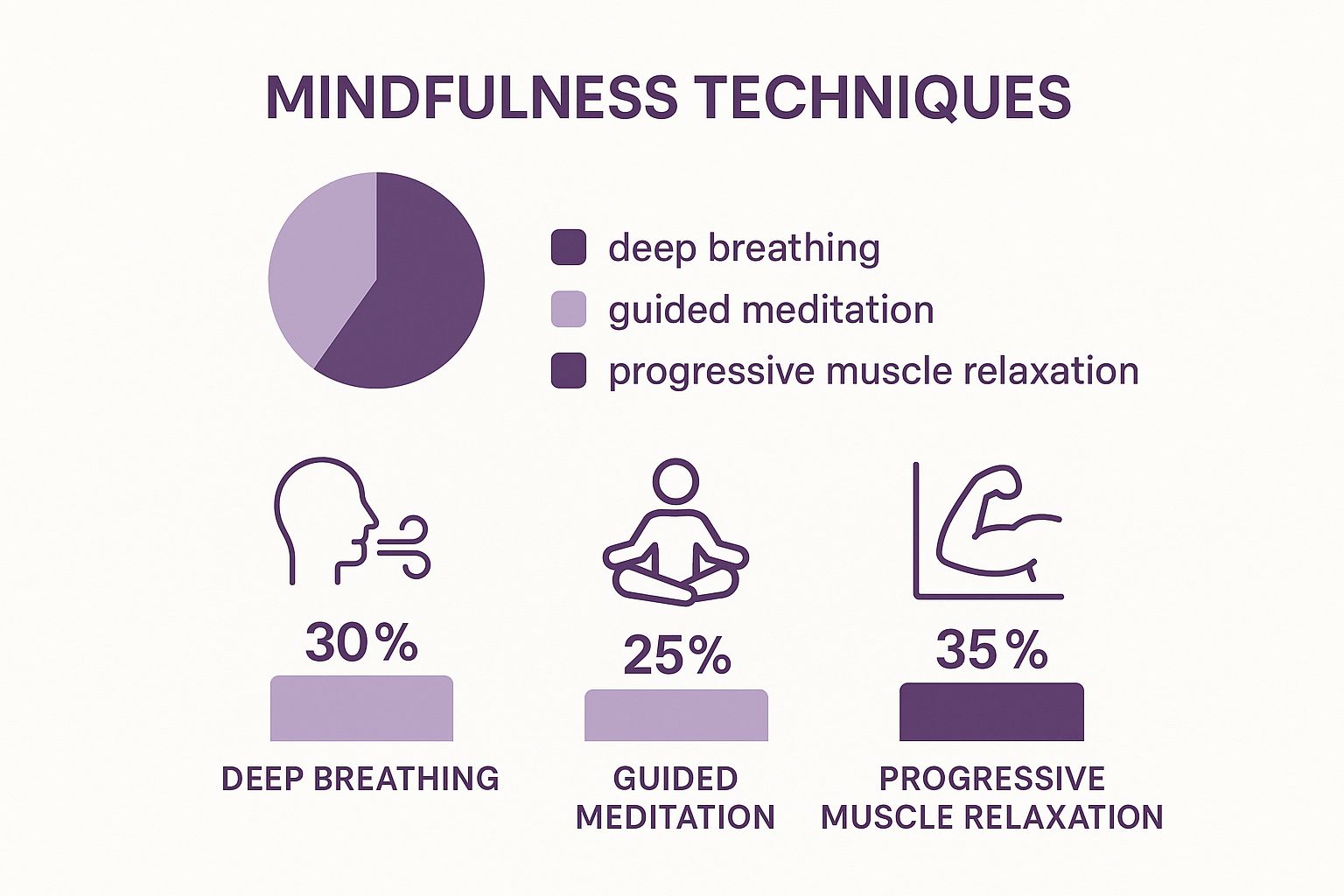
As you can see, a simple practice like progressive muscle relaxation—where you tense and then relax different muscle groups—can reduce perceived pain by an average of 35%. Adding these techniques to your daily routine can literally change how your brain processes pain signals.
Small Lifestyle Changes That Deliver Big Relief
While treatments like chiropractic adjustments and specific exercises are the foundation of recovery, it’s the small, consistent habits you build into your everyday life that really make relief last. Lasting pain management isn’t just about what happens during your appointment; it’s about the choices you make from morning to night.
These little changes work together to lower your body’s overall stress load, calm your nervous system, and stop the flare-ups that can set you back. By zeroing in on sleep, stress, and your environment, you create a solid foundation for healing.
The Critical Link Between Sleep and Pain
Poor sleep and chronic pain are stuck in a terrible loop. Pain makes it hard to get to sleep and stay asleep, and a lack of deep, restorative sleep makes you feel pain much more intensely the next day. Breaking this cycle is one of the most powerful things you can do.
When you’re asleep, your body isn’t just offline—it’s actively repairing muscle tissue, regulating the hormones that control inflammation, and calming your stress response. Cutting corners on sleep robs your body of this essential healing time.
Think of quality sleep as your body’s most powerful, non-negotiable recovery tool. Making it a priority isn’t a luxury; it’s a fundamental part of any real pain management strategy.
To get your sleep back on track, try building a few simple but effective habits:
- Stick to a Schedule: Go to bed and wake up around the same time every day, even on weekends. This gets your body’s internal clock on your side, making it easier to fall asleep naturally.
- Fix Your Sleep Space: Your bedroom should be dark, quiet, and cool. Blackout curtains, a white noise machine, or even earplugs can make a world of difference.
- Create a Wind-Down Routine: An hour before bed, shut off the screens and do something calming. Read a book, take a warm bath, or listen to some gentle music to tell your brain it’s time to rest.
Calm Your Nervous System by Managing Stress
Stress is a major pain amplifier. When you’re stressed out, your body floods with hormones like cortisol, which ramps up inflammation and makes your nervous system extra sensitive. It’s like turning the volume dial on your pain all the way up.
Learning how to manage that stress can directly dial down your pain levels. Things like mindfulness and deep breathing aren’t just mental tricks; they have a real, physical effect on your body, shifting you out of that constant “fight or flight” mode.
One of the easiest and most effective methods is diaphragmatic breathing, also known as belly breathing.
- Get comfortable, either sitting or lying down.
- Put one hand on your chest and the other on your stomach.
- Breathe in slowly through your nose for a count of four. You should feel your stomach rise while the hand on your chest stays pretty still.
- Hold it for a second, then breathe out slowly through your mouth for a count of six, feeling your stomach fall.
- Try this for 5-10 minutes a day. It’s a great way to hit the reset button on your nervous system.
This simple practice helps lower your heart rate, eases muscle tension, and quiets down the overactive pain signals being sent to your brain.
Set Up Your Environment to Prevent Pain
Your daily surroundings can either add to your pain or help prevent it. Poor ergonomics—basically, how you interact with your desk and home—can put a constant, low-grade strain on your body that leads to aches and flare-ups.
A few tweaks can prevent a lot of unnecessary aggravation. If you work at a desk, take a look at your setup.
| Ergonomic Checkpoint | How to Adjust for Pain Prevention |
|---|---|
| Monitor Height | The top of your screen should be at or just below eye level. This keeps your neck in a relaxed, neutral position. |
| Chair Support | Your chair should support the natural curve of your lower back. If it doesn’t, grab a lumbar pillow. |
| Keyboard and Mouse | Keep them close enough so your elbows are bent at a 90-degree angle, with your wrists straight and not tensed up. |
| Feet Position | Your feet should be flat on the floor or on a footrest, with your knees at about a 90-degree angle. |
These ideas go beyond the office, too. Think about how you lift heavy things (always with your legs, not your back!), the shoes you wear (supportive footwear is key), and even how you sleep (use pillows to support your neck and keep your spine aligned).
By thoughtfully adjusting these small, everyday details, you take the constant strain off your body, giving it a much better chance to heal and stay pain-free.
Taking the Next Step Toward Lasting Pain Relief
Dealing with chronic pain isn’t a one-and-done deal; it’s more like a journey. The goal is to build a smart, personalized strategy that blends professional care with your own daily choices—what you eat, how you move, and the little habits you build.
Every single positive step you take, no matter how small it feels, adds up. It all contributes to your overall well-being and, most importantly, helps you get back in the driver’s seat. You really do have the power to influence your own health and completely change your relationship with pain.
The path to relief is paved with consistent, supportive actions that treat your body as a whole. It’s all about arming yourself with the right tools and guidance to move forward with real confidence.
If you’re ready to put a plan together that’s actually built for you and get the support you deserve, our team at Audubon Park Chiropractic is here to help. We’re committed to guiding you through the whole process, from figuring out the root cause of your pain to developing simple, sustainable habits for long-term relief.
Don’t put off feeling better for another day. Your journey to a more comfortable, active life can start right now.
Common Questions We Hear About Chronic Pain
When you’re dealing with chronic pain, you’re bound to have questions. Getting good, clear answers is a huge step toward feeling in control and finding relief. Here are some of the most common things people ask us when they’re just starting out on this journey.
Everyone’s path is a little different, of course, but these answers should give you a solid idea of what to expect.
How Soon Will I See Results from Chiropractic Care?
This is a big one, and the honest answer is: it depends. Some of our patients feel a real difference after just a couple of visits. For others, especially if the condition has been around for a long time, it’s more of a gradual improvement over a few weeks.
During your first visit, we’ll talk through a realistic timeline based on your specific situation. The most important thing is consistency. Each adjustment builds on the one before it, helping to gently guide your body back to where it needs to be.
Is It Okay to Exercise When My Pain Is Flaring Up?
Yes, but you have to be smart about it. The key is to choose the right kind of movement. When you’re in the middle of a flare-up, we’re talking about very gentle activities. Think slow, mindful stretching or even just walking in a pool, which takes all the pressure off your joints.
Trying to “push through” intense pain is usually a bad idea and can set you back. It’s always best to work with a professional who can show you exercises that are safe for your condition and current pain level. That way, you’re helping your body heal, not making it worse.
Can My Diet Really Help Pain That Isn’t in My Stomach?
Absolutely. Systemic inflammation is a major player in so many types of chronic pain, including achy joints and sore muscles that seem totally unrelated to what you eat. An anti-inflammatory diet works by lowering this background inflammation all over your body.
When you eat more whole foods packed with antioxidants and healthy fats, you’re giving your body the raw materials it needs to calm down pain sensitivity and heal from the inside out.
What’s the Single Most Important First Step to Take?
While every piece of the puzzle matters, if I had to pick just one, it would be prioritizing quality sleep. So many people find this makes the biggest difference right away. Your body does the vast majority of its repair work while you’re sleeping.
When you don’t get enough deep, restorative sleep, your pain sensitivity can go through the roof, and your recovery slows way down. Nailing down a solid sleep routine creates a strong foundation that makes everything else—from exercise to chiropractic care—work so much better.
You don’t have to figure all this out on your own. If you’re ready to build a plan that’s right for you and get back to living your life, our team is here to help you. Contact Audubon Park Chiropractic at (509) 327-4049 or walk in for treatment. Your path to feeling better can start today.
Ready to Feel Better?
Our Spokane chiropractors are ready to help. Walk-ins welcome — no appointment needed.

Dr. Michelle Snyder is a Spokane chiropractor with advanced training in women’s health, hormone balancing, pregnancy, and care for infants and children. She uses gentle low-force spinal adjustments alongside specialized therapies including Webster’s breech technique, allergy desensitization, cold laser therapy, EB cellular cleanse, and Methylation/genetic nutrition — offering patients a comprehensive, whole-body approach to wellness.
A Spokane resident for over 31 years, Dr. Michelle is deeply committed to her community, contributing time and resources to organizations including Meals-on-Wheels, Second Harvest, Ronald McDonald House, and the Union Gospel Mission.
📍 2909 W. Northwest Blvd, Spokane, WA 99205 | ☎ (509) 327-4049 audubonparkchiropractic.com
Further Reading: Healthy Living
- Natural Remedies for Muscle Spasms: What Actually Works
- The Anti-Inflammatory Foods List: Foods That Calm Pain and Foods That Fuel It
- Herniated & Bulging Disc: The Exercises That Help (and the Ones to Skip)
- What Actually Happens at Your First Chiropractic Visit & And What to Expect in the First Few Weeks
- Pricing, Insurance and What Chiropractic Actually Costs at Audubon Park
→ Complete Guide: Wellness Care at Audubon Park Chiropractic