

This post is part of our complete guide to Neck Pain Treatment in Spokane, WA. Browse the guide for more in-depth information on treatments, exercises, and recovery strategies.
To effectively fix rounded shoulders, the approach must address the root cause: the muscle imbalance driving the posture. This involves a two-part strategy: stretching the tight muscles in your chest and, simultaneously, strengthening the weak muscles in your upper back. This foundational method is the most reliable way to restore proper posture.
Understanding the Real Causes of Rounded Shoulders
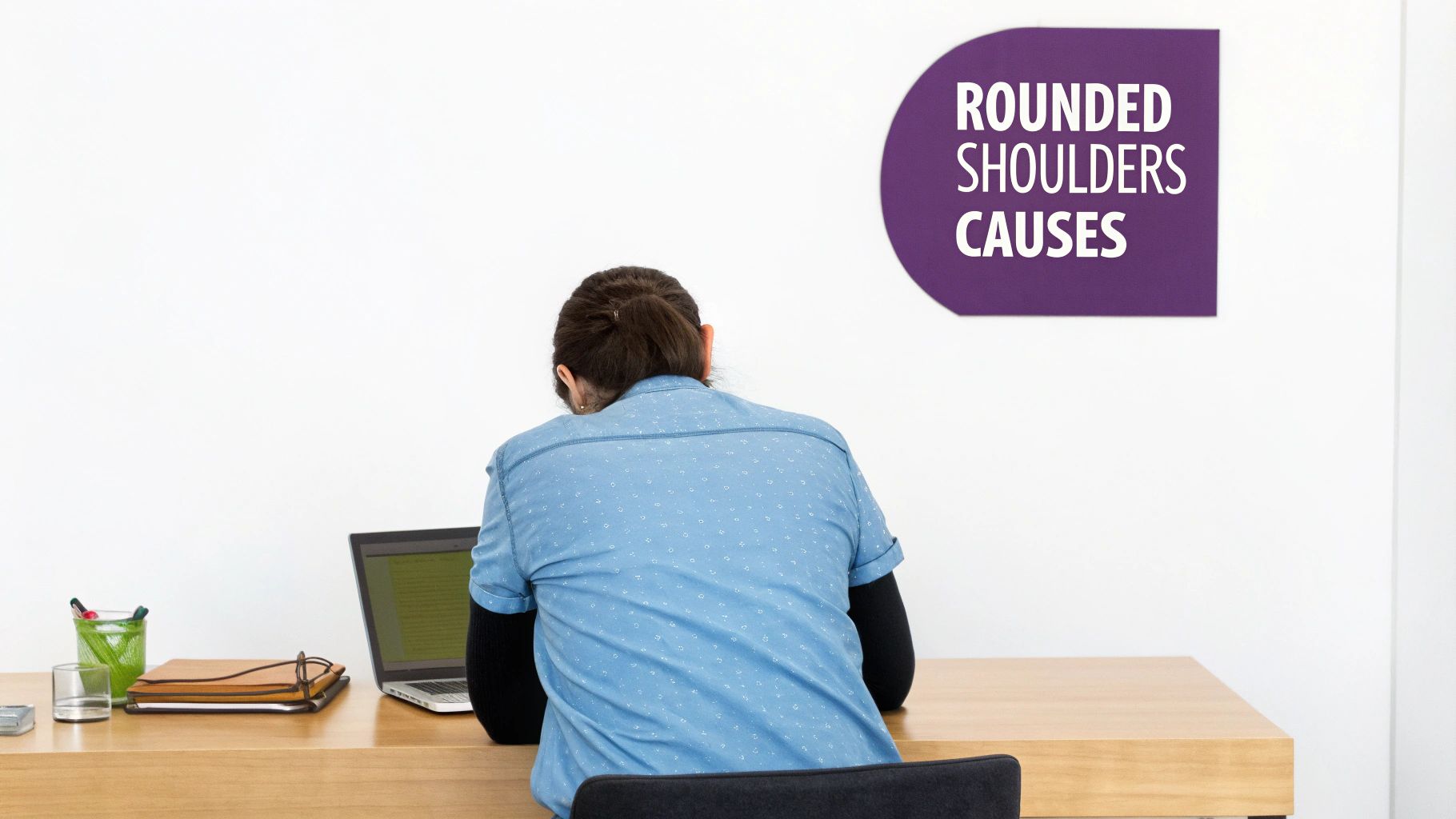
Rounded shoulders develop gradually, often resulting from daily habits and postures. Activities like leaning over a computer, looking down at a smartphone, or even long periods of driving encourage a forward slump.
This persistent forward-hunching posture creates a muscular imbalance. The chest muscles, particularly the pectorals, become tight and shortened from being in a constantly contracted state. Conversely, the muscles in the upper back, such as the rhomboids and trapezius, become elongated and weak from disuse.
The Muscle Imbalance Explained
Imagine your shoulder joint is at the center of a tug-of-war. The tight pectoral muscles are continuously pulling your shoulders forward and inward. At the same time, the weakened back muscles lack the strength to counteract this pull and maintain proper alignment. This precise imbalance is what leads to the characteristic slouched, rounded appearance.
This issue isn't limited to sedentary individuals. Many active people develop rounded shoulders, often due to imbalanced workout routines. A common example is focusing heavily on chest exercises like the bench press while neglecting back-strengthening movements like rows. This pattern of over-training the chest and under-training the back accelerates the very muscle imbalance that compromises posture.
This is why the simple instruction to "sit up straight" offers only temporary relief. You're fighting against tight, ingrained muscle patterns and a weak support system. A targeted approach combining both stretching and strengthening is essential for achieving lasting results.
Common Habits That Contribute
Identifying the daily habits that contribute to the problem is a crucial step toward correction. Becoming mindful of these triggers allows you to make conscious changes. The most common culprits include:
- Prolonged Desk Work: Hunching over a keyboard for extended periods is a leading cause.
- Excessive Screen Time: Constantly craning your neck to view a phone or tablet places significant strain on your neck and encourages your shoulders to roll forward.
- Driving: Long commutes often involve a slouched position with arms extended forward, which tightens the chest muscles.
- Sleeping Position: Sleeping habits also play a role. Curling into a tight fetal position can keep chest muscles in a contracted state for hours.
Understanding the cause is the first step. By pinpointing these triggers in your daily life, you can better apply the correct exercises and lifestyle adjustments to permanently fix your rounded shoulders.
Don’t wait — relief is closer than you think.
A Simple At-Home Posture Assessment
Before beginning exercises, it's helpful to confirm that rounded shoulders are indeed the issue. A self-assessment provides a clear baseline to track your progress.
You don't need special equipment to evaluate your posture. Here are two quick checks you can perform right now to understand your current alignment. This starting point will help you measure your improvement over time.
The Wall Test
This is a classic and highly effective method for assessing posture.
- Find a flat wall and stand with your back against it.
- Position your heels approximately six inches away from the wall.
- Relax and let your body settle into its natural stance without consciously trying to correct it.
In an ideal alignment, three key points of your body should make contact with the wall:
- The back of your head
- Your shoulder blades
- Your glutes
If you notice a significant gap behind your shoulder blades, or if they don't touch the wall, it's a strong indication that your shoulders are being pulled forward. This test clearly demonstrates the effects of tight chest muscles and weak back muscles—the classic formula for rounded shoulders.
The Hand Position Test
This is another simple yet revealing check.
- Stand up straight and let your arms hang naturally by your sides.
- Relax completely and don't overthink the position.
Now, observe the orientation of your hands:
- Healthy Posture: Your thumbs should point mostly forward, with your palms facing your thighs.
- Rounded Shoulders: If your knuckles point forward and your palms face backward, this is a clear sign of internal shoulder rotation.
This inward rotation is a key component of the slumped, rounded posture you're aiming to correct.
When your shoulders slump forward, they naturally rotate inward, which alters the resting position of your entire arm. It's a subtle but powerful indicator of your overall alignment.
Posture Assessment Quick Reference
This table provides a simple comparison of the signs of healthy posture versus rounded shoulders based on these at-home tests.
| Posture Indicator | Sign of Healthy Posture | Sign of Rounded Shoulders |
|---|---|---|
| The Wall Test | Head, shoulder blades, and glutes touch the wall comfortably. | Shoulder blades lift off the wall, creating a noticeable gap. |
| The Hand Position Test | Thumbs point forward; palms face inward toward the thighs. | Knuckles point forward; palms face backward. |
These assessments are about gathering information, not judgment. Knowing your starting point allows you to approach the corrective exercises with a clear objective: restoring your body to a healthy and comfortable alignment.
The Widespread Impact of Modern Posture Problems
If you have rounded shoulders, you are not alone. This condition has become an exceedingly common side effect of modern lifestyles. From office workers hunched over desks to students poring over textbooks, the forward slump is a pervasive issue.
Statistics highlight the prevalence of this problem. Research indicates that rounded shoulder posture is widespread, with some studies showing that approximately 73% of workers aged 20 to 50 exhibit a right rounded shoulder, while 66% show a left rounded shoulder.
This is not a minor postural quirk but a significant trend driven by sedentary habits and prolonged screen time. One study focusing on office workers revealed that 78.3% displayed signs of rounded shoulders, often accompanied by forward head posture. You can explore more details in recent postural health research.
Beyond the Slump
A forward-slumped posture is more than an aesthetic concern. When your body is consistently out of its natural alignment, it places significant stress on muscles, joints, and even internal organs. This can lead to a cascade of health issues that may not seem related at first.
Consider the broader consequences:
- Persistent Pain: Chronic poor posture is a major contributor to neck, shoulder, and upper back pain. It creates stubborn muscle knots and joint stress that can become a daily struggle.
- Decreased Lung Capacity: When your shoulders roll forward, your chest cavity is compressed. This physically restricts your ability to breathe deeply, potentially reducing lung capacity and oxygen intake.
- Impact on Mood: A well-documented link exists between body language and mood. Maintaining a slumped, closed-off posture can contribute to feelings of low confidence or a subdued mood.
Understanding this widespread impact underscores the importance of correcting your posture. Your individual experience is part of a much larger trend.
The infographic below illustrates the difference between a healthy stance and one with rounded shoulders during a simple wall test.
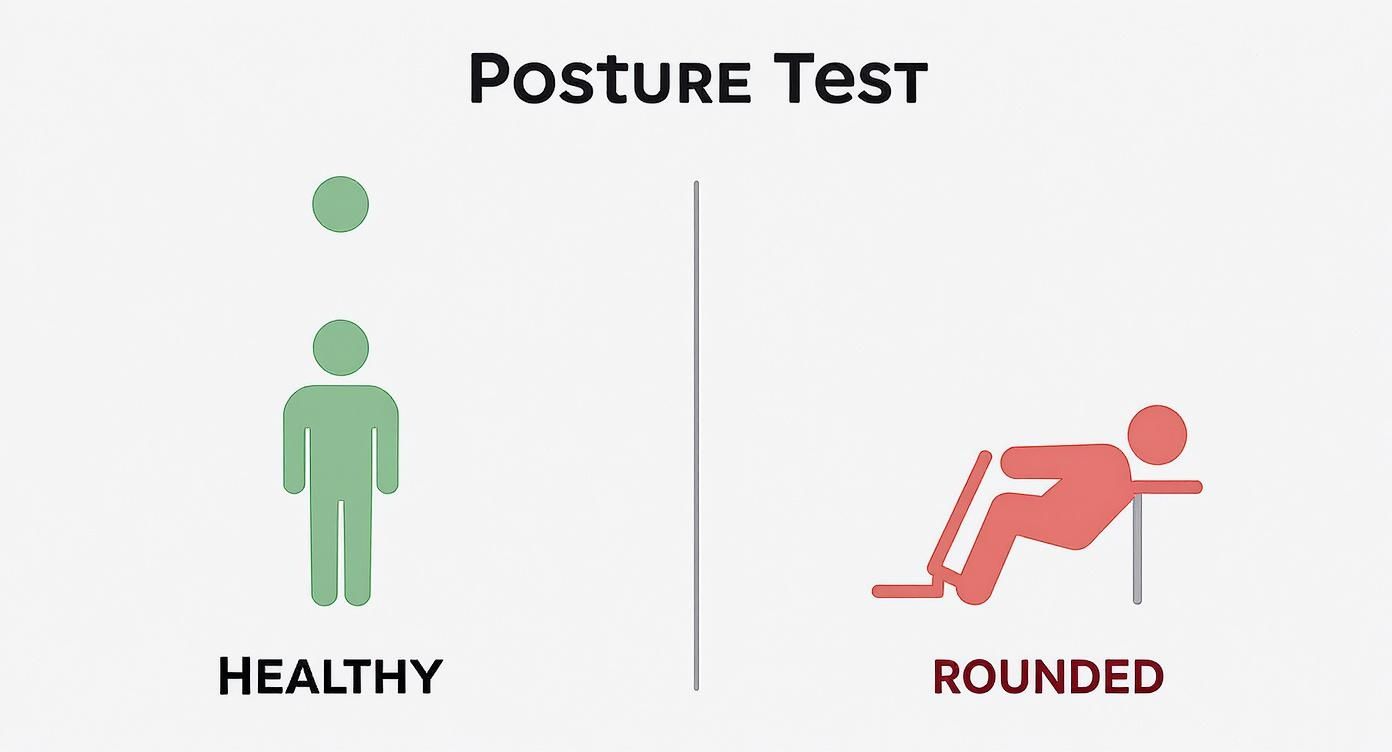
This visual clearly shows how rounded shoulders create that noticeable gap, pulling the upper body out of proper alignment. Recognizing how common this is reinforces why learning how to fix rounded shoulders is a valuable investment in your long-term health.
Strengthening Exercises For Better Shoulder Alignment
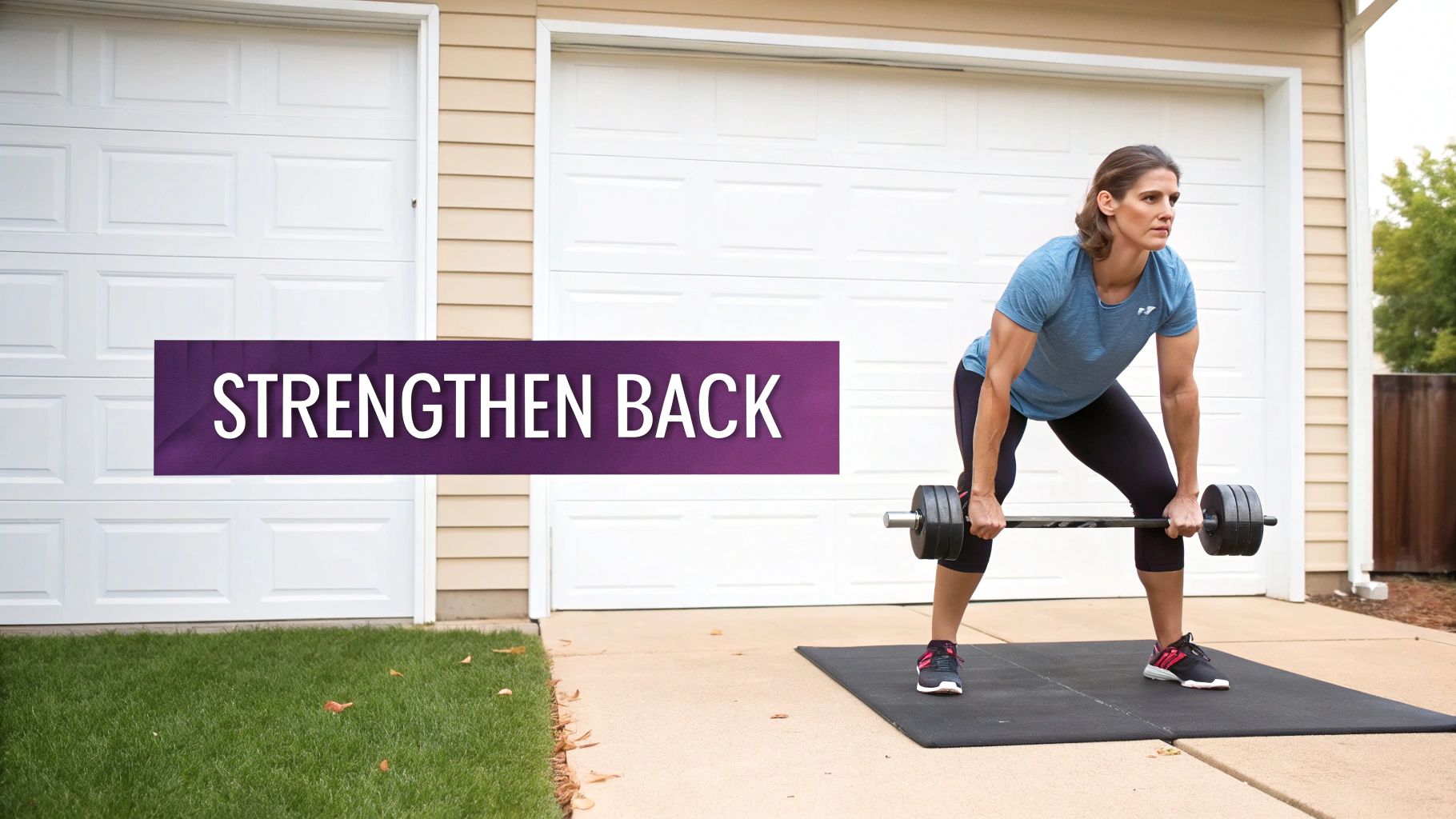
Now that we've identified the muscles causing the forward slump, it's time to take action. Lasting posture correction is achieved by strengthening the weak, overstretched muscles in your upper back. These movements are specifically designed to activate the muscles responsible for pulling your shoulders back into a healthy, natural alignment.
The goal is not to lift heavy weights but to re-establish the mind-muscle connection and build functional strength that supports you throughout the day. Each repetition helps counteract the forward pull from tight chest muscles, creating a more balanced and stable upper body.
Foundational Movements For Posture Correction
To begin, we'll focus on key exercises that target the rhomboids, the lower and middle trapezius, and the serratus anterior. These are the primary muscles that become weak and overstretched from prolonged slouching.
Think of these exercises as building the foundation of your body's support system. Consistent practice builds the strength needed to hold your shoulders back effortlessly. The aim is to make good posture your body's new default setting.
Here are a few essential exercises to incorporate into your routine:
- Band Pull-Aparts: This move is excellent for the rhomboids and rear deltoids. Stand with your feet shoulder-width apart, holding a resistance band in front of you with both hands. Keeping your arms straight, pull the band apart by squeezing your shoulder blades together.
- Scapular Wall Slides: Stand with your back flat against a wall, feet about six inches from the base. Place your arms against the wall in a "goalpost" position, with elbows bent at a 90-degree angle. Slowly slide your arms up the wall, keeping your wrists and elbows in contact, then slide them back down.
- Rows (with bands or weights): Rows are crucial for building upper back strength. You can anchor a resistance band to a door or use light dumbbells. Initiate the movement by squeezing your shoulder blades together before you begin to bend your elbows.
The key to these movements is control, not speed. Focus on feeling the target muscles contract with every repetition. This intentional activation is what rebuilds strength and retrains your posture.
Building An Effective Routine
When correcting posture, consistency is more important than intensity. Aim to perform these exercises at least three to four times per week. You are not just building muscle; you are forging new neuromuscular patterns that your body will begin to adopt automatically.
To achieve real, lasting progress, it's important to build an effective workout plan that systematically addresses these muscle imbalances. Remember, balance is key. By strengthening your back while stretching your chest, you create the equilibrium your body needs for proper shoulder alignment. This dual approach is the most reliable path to fixing rounded shoulders permanently.
Stretches to Release Chest and Shoulder Tightness

Strengthening your back is only half the equation. If you neglect to release the tight, shortened muscles in your chest, you'll be in a constant tug-of-war with your own body. These chest muscles will continue to pull you forward into a slouch.
Targeted stretching is essential to counteract this. By consistently working to lengthen your pectoral muscles, you create the flexibility needed for your shoulders to settle back into their natural position. This allows your back-strengthening efforts to be truly effective.
Essential Stretches for Releasing Tightness
The primary goal is to gently open up the front of your body, creating a counterbalance to the hours spent hunched forward.
Two of the most effective methods are the Doorway Stretch and thoracic extensions using a foam roller. These directly target the muscles responsible for pulling you into a forward slump.
Here are the key stretches to get you started:
- Doorway Stretch: Stand in an open doorway. Place your forearms on the frame with your elbows slightly below shoulder height. Step one foot forward until you feel a comfortable stretch across your chest. Hold for 20-30 seconds while breathing deeply and slowly.
- Thoracic Extension with a Foam Roller: Lie down with a foam roller positioned horizontally across your upper back. Bend your knees, keep your feet flat on the floor, and support your head with your hands. Gently extend your spine over the roller, moving slowly to address tight spots in your mid-to-upper back.
Remember, a stretch should feel like a gentle pull, not a sharp pain. Ease into each stretch and listen to your body's signals.
Making Your Stretches Count
When it comes to stretching, consistency is more important than intensity. Daily stretching is far more effective than an intense session once a week.
If you sit for most of the day, integrating these movements into your routine can be transformative. Beyond specific stretches, consider general relaxation techniques. Chronic muscle tightness is a major contributor to rounded shoulders. Exploring the benefits of infrared saunas for relaxation and muscle tension can be a great way to complement your stretching routine and help your muscles release tension.
How Chiropractic Care Can Accelerate Your Progress
While exercises and stretches are fundamental for correcting rounded shoulders, sometimes they are not enough to achieve full correction. If you've been consistent with your routine but have hit a plateau, underlying structural issues may be the reason.
This is where chiropractic care can be highly beneficial.
A detailed chiropractic assessment goes beyond observing your posture. It allows a practitioner to identify specific spinal misalignments, particularly in the thoracic spine (mid-back), that may be physically locking your shoulders in a forward-slumped position.
Think of it this way: trying to fix rounded shoulders without addressing spinal alignment is like trying to straighten a picture in a crooked frame. The picture will never hang correctly until the frame itself is fixed.
Addressing the Root Structural Cause
Chiropractors use specific, targeted techniques to restore proper alignment and mobility. This creates a stable foundation that makes your corrective exercises much more effective. Once your spine and shoulder joints are properly aligned, the muscles you are strengthening can function correctly.
Here’s how this approach helps:
- Spinal Adjustments: Gentle adjustments can correct misalignments in your neck and mid-back, leading to an immediate improvement in your body's overall structure.
- Soft Tissue Therapy: Techniques such as massage or myofascial release can address deep, stubborn knots in your chest muscles, providing a level of release that stretching alone often cannot achieve.
- Increased Mobility: By restoring proper joint movement, chiropractic care improves your range of motion, making it easier to perform corrective exercises with good form.
In short, chiropractic care helps reset your body's structural baseline. This enhances the effectiveness of your strengthening and stretching efforts, leading to faster and more sustainable results in your journey to fix rounded shoulders.
This is a widespread issue. Studies indicate that rounded shoulders affect 66% to 78% of people in various demographics. For certain professions, such as academic dental staff, this figure can be as high as 85.5%.
The good news is that neuromuscular integration—a core principle of chiropractic—has shown great promise in correcting these underlying muscle imbalances. You can explore the research on these postural rehabilitation methods at ScientificArchives.com.
If your progress has stalled or you are experiencing persistent pain, seeking chiropractic care for poor posture could be the missing piece of your recovery plan.
Your Questions About Rounded Shoulders, Answered
As you begin the process of correcting rounded shoulders, questions are likely to arise. Understanding what to expect can help you stay motivated and confident in your progress. Here are straightforward answers to the most common questions.
How Long Does It Really Take to See a Difference?
The timeline for seeing results varies from person to person. The two biggest factors are the severity of your posture and your consistency with a corrective routine.
For minor cases, you may begin to feel and see small improvements within a few weeks of daily effort. However, if you have had poor posture for years, it may take several months of dedicated work to retrain your muscles and establish a new "normal" position. The key is consistency over intensity. Working with a professional to develop a personalized plan can often accelerate this process safely.
Are Posture Corrector Braces a Good Idea?
Posture braces can serve as a helpful tool but are not a permanent solution. Think of a brace as a temporary guide—it physically retracts your shoulders, providing a tangible reminder of what proper alignment feels like.
The downside is that over-reliance on a brace can cause your own support muscles to become weaker, as the device is doing the work for them. It is best used as a training aid for short periods, such as while working at a desk, and must be combined with a comprehensive strengthening and stretching program. The ultimate goal is to build your own muscular support, not to depend on an external device.
Is It Possible to Completely Get Rid of Rounded Shoulders?
Yes, for most individuals, it is absolutely possible to significantly improve or even fully correct rounded shoulders. Lasting success, however, requires a multifaceted approach. You need to combine strengthening exercises and chest stretches with practical, real-world adjustments to your workspace and daily habits.
The final, crucial component is mindfulness. You must actively pay attention to your posture throughout the day—while walking, standing, and sitting. This comprehensive strategy offers the best chance for a full and permanent correction.
Does My Sleeping Position Make My Shoulders Worse?
Yes, it certainly can. Spending eight hours a night curled in a tight fetal position reinforces the forward-slumped posture you are working to correct during the day.
The best sleeping positions for shoulder health are either on your back with a low pillow to maintain a neutral spine or on your side. If you are a side sleeper, placing a pillow between your knees can help align your hips, and hugging another pillow can prevent your top shoulder from collapsing forward and inward as you sleep.
Feeling uncertain about how to begin your journey to better posture? You don't have to navigate it alone. The team at Audubon Park Chiropractic can provide a clear assessment and a personalized treatment plan to help you stand taller and feel better. Take the first step towards lasting relief today. Contact Audubon Park Chiropractic by calling (509) 327-4049 or simply walk in for a consultation.
Ready to Feel Better?
Our Spokane chiropractors are ready to help. Walk-ins welcome — no appointment needed.

Dr. Michelle Snyder is a Spokane chiropractor with advanced training in women’s health, hormone balancing, pregnancy, and care for infants and children. She uses gentle low-force spinal adjustments alongside specialized therapies including Webster’s breech technique, allergy desensitization, cold laser therapy, EB cellular cleanse, and Methylation/genetic nutrition — offering patients a comprehensive, whole-body approach to wellness.
A Spokane resident for over 31 years, Dr. Michelle is deeply committed to her community, contributing time and resources to organizations including Meals-on-Wheels, Second Harvest, Ronald McDonald House, and the Union Gospel Mission.
📍 2909 W. Northwest Blvd, Spokane, WA 99205 | ☎ (509) 327-4049 audubonparkchiropractic.com
Further Reading: Neck