

This post is part of our complete guide to Wellness Care at Audubon Park Chiropractic. Browse the guide for more in-depth information on treatments, exercises, and recovery strategies.
Selecting the right chiropractor is a critical step toward improving your health, and the process can be straightforward. The most effective approach is to focus on a few key areas to create a reliable list of potential candidates. This guide will walk you through the process, from a broad search to a carefully chosen shortlist. So let’s figure out how to choose a chiropractor.
Starting Your Search for the Right Chiropractor
Your primary care doctor or physical therapist is an excellent starting point. As professionals you already trust, they often collaborate with chiropractors and can refer you to someone with a strong reputation in the medical community. This is particularly valuable if you are managing a specific injury or a chronic condition that benefits from a coordinated care approach.
Building Your Initial List
After securing a referral or two, it’s time to expand your search. Online directories and professional association websites are valuable resources. By searching the directories of national and state chiropractic associations, you can ensure that any practitioner you consider has met the necessary educational and ethical standards.
Here are a few dependable sources for finding qualified chiropractors:
- Your Primary Care Physician: They understand your medical history and can recommend a chiropractor whose methods will align with your overall treatment plan.
- Friends and Family: A personal recommendation can offer insight into a chiropractor’s communication style and office environment. However, always verify their credentials independently.
- Professional Association Websites: Organizations like the American Chiropractic Association (ACA) provide online directories of their members, ensuring they adhere to high professional standards.
To simplify the process, this infographic outlines three clear steps.
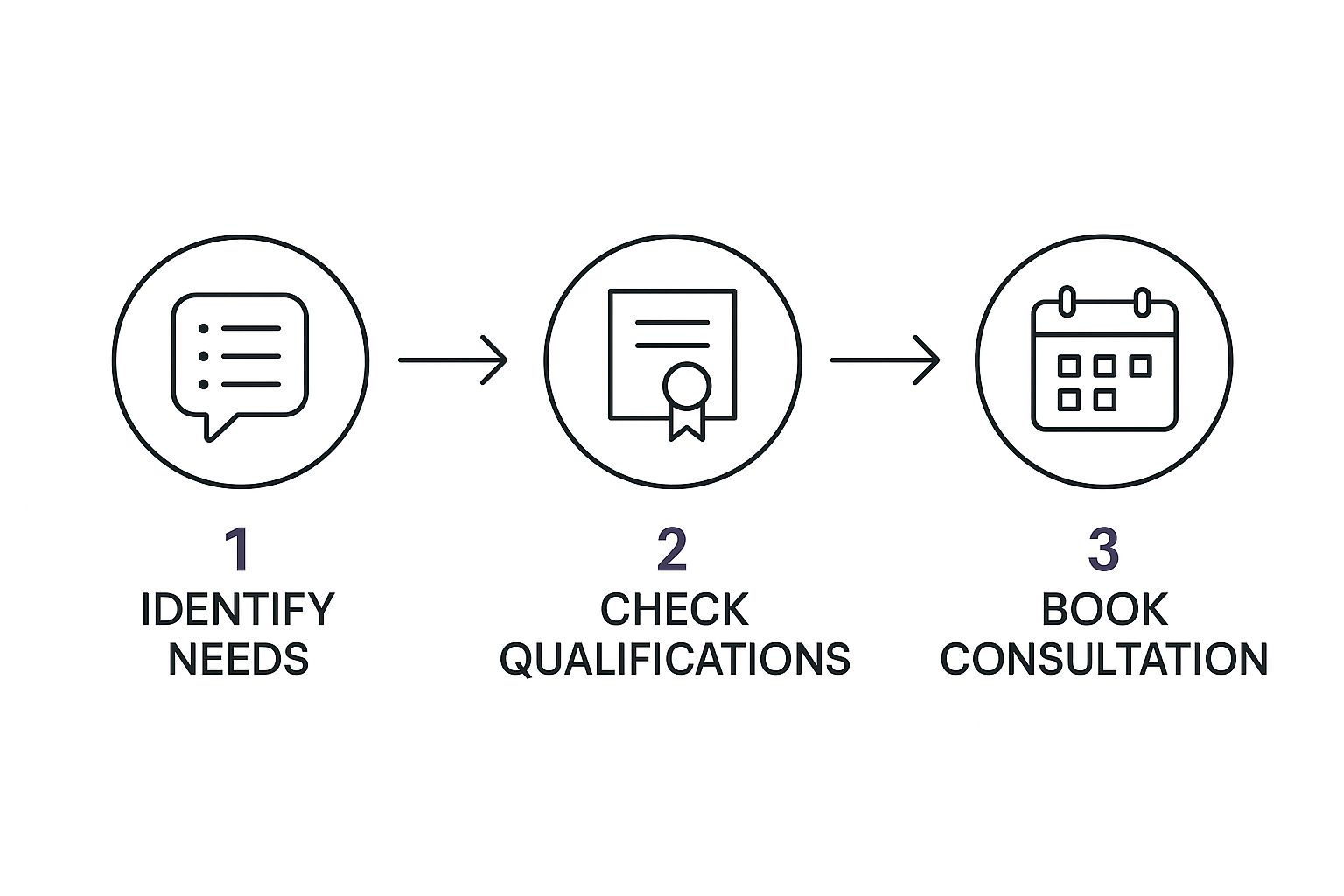
Following a structured method—identifying your needs, verifying qualifications, and then scheduling a consultation—allows you to systematically evaluate your options. This approach removes guesswork and helps you find a suitable practitioner for your health and wellness goals.
To help you stay organized, we have created a simple checklist.
Your Chiropractor Evaluation Checklist
This table serves as a quick reference to help you assess the most important factors when comparing different chiropractors.
| Evaluation Criterion | What to Look For | Why It Matters |
|---|---|---|
| Credentials & Licensing | State licensure (D.C. designation) | Confirms they meet legal and educational standards to practice. |
| Specialties & Techniques | Experience with your specific condition (e.g., sports injuries, pediatrics) | Ensures their skills align with your unique health needs. |
| Insurance & Costs | In-network status, clear pricing for out-of-pocket costs | Prevents financial surprises and maximizes your benefits. |
| Location & Hours | Convenient location, hours that fit your schedule | Makes it easier to stick with your treatment plan. |
| Patient Reviews | Consistent positive feedback on care, communication, and results | Offers real-world insight into the patient experience. |
| Personal Fit | Good communication, feeling comfortable during the consultation | A strong doctor-patient relationship is key to successful treatment. |
Using this checklist during your research will help you make a well-informed decision you feel confident about.
Don’t wait — relief is closer than you think.
Checking Credentials and Finding the Right Specialization

Once you have a shortlist of potential chiropractors, it is vital to perform a background check. This step ensures the professional you entrust with your spinal health is properly qualified and licensed.
At a minimum, look for the designation “D.C.” after their name, which stands for Doctor of Chiropractic and indicates they have completed graduate-level education. You should also confirm they hold an active license to practice in your state. Every state licensing board maintains a website where you can verify a practitioner’s status quickly.
Does Their Specialty Align With Your Needs?
Chiropractic care is not a one-size-fits-all solution. For instance, an athlete recovering from a hamstring injury has different needs than a pregnant woman experiencing sciatic pain.
While all chiropractors have a strong foundation in general spinal health, many pursue advanced training in specific areas. Finding a chiropractor whose specialty aligns with your condition can significantly improve your recovery.
“Similar to other healthcare fields, specialization matters. You wouldn’t consult a podiatrist for a cardiac issue. If you’re an athlete, you’ll receive more targeted and effective care from a chiropractor who specializes in sports medicine.”
Chiropractors may focus on various specializations, including:
- Sports Medicine: These practitioners excel at treating and preventing athletic injuries, helping you return to your activities faster and improve performance.
- Pediatrics: They use gentle techniques specifically designed for the developing bodies of infants, children, and teenagers.
- Prenatal and Postnatal Care: This specialization is beneficial for expectant mothers, focusing on the unique pelvic and spinal issues that arise during and after pregnancy.
- Neurology: These specialists address conditions related to the nervous system, such as chronic migraines or balance problems.
So, How Do You Find Out?
This information should be readily available. The chiropractor’s website is the first place to check; look for an “About Us” or “Services” page where they typically list certifications and areas of focus.
If you cannot find this information online, call the office. A reputable practice will be happy to provide details about the doctor’s background and specialties. Taking a few moments to do this can set you up for a successful treatment experience.
Why Your Initial Consultation Is So Important
After verifying credentials and confirming their specialty aligns with your needs, the next step is the initial consultation. This first meeting is your best opportunity to assess your rapport with the practitioner and their communication style.
A successful outcome often depends on the relationship you build with your provider. During the consultation, observe how they interact with you. Do they listen actively to your concerns, or do they seem to dominate the conversation? A good chiropractor will make you feel heard and respected.
Research supports this. A 2023 patient survey highlighted that effective communication between a patient and their chiropractor was a significant factor in overall satisfaction. The study demonstrated that a strong relationship built on trust and empathy consistently led to more positive patient outcomes.
Questions to Guide Your Conversation
During your first visit, ask insightful questions to understand their approach to care. This conversation is essential for finding someone you can trust with your health.
Here are a few recommended questions:
- What is your treatment philosophy? This helps determine if their overall approach to wellness aligns with yours.
- What does a typical treatment plan for my condition look like? Ask for specifics regarding duration, frequency of visits, and the techniques they plan to use.
- How do you track a patient’s progress? A reliable chiropractor will have clear methods for measuring improvement and will be prepared to adjust the plan if necessary.
- What are the potential risks and benefits of the proposed treatment? Transparency and honesty are crucial. You want a practitioner who prioritizes informed consent.
- Will you provide exercises or lifestyle advice for me to use at home? This indicates they are invested in your long-term health beyond your office visits.
Your consultation is an opportunity to begin a partnership. The right chiropractor will not only treat your symptoms but will also empower you with the knowledge to maintain your health long after your treatment concludes.
This initial meeting sets the foundation for your entire course of care. Take your time, trust your intuition, and choose a practitioner with whom you feel genuinely comfortable.
To better understand what to expect, you can learn more about what a comprehensive chiropractic consultation involves.
Using Patient Reviews to Gauge Real-World Results

Once you’ve confirmed a chiropractor’s credentials, the next step is to examine what actual patients are saying. Online reviews and testimonials offer a glimpse into the patient experience, providing insights that go beyond qualifications. While a star rating offers a quick overview, the detailed written feedback is where you will find the most valuable information.
As you read, look for patterns. Do multiple reviews mention the chiropractor’s ability to explain complex issues in simple terms? Do they praise the friendly office staff or the doctor’s attentive listening skills? These recurring themes can provide a clear picture of what you can expect.
Reading Between the Lines of Reviews
The most useful reviews are specific. Vague comments like “they’re great” offer little substance. Look for details that provide a clearer understanding of the patient’s experience.
A review stating, “My chronic lower back pain has become manageable after six weeks of treatment,” is concrete and far more informative.
Seek feedback from patients who have dealt with conditions similar to yours. If you are experiencing sciatica, reading about others who found relief for the same issue is a positive indicator. You can often find detailed success stories by reviewing the patient testimonials on a chiropractor’s website.
A useful tip is to pay close attention to recent reviews. They provide the most up-to-date perspective on the practice, from current office operations to the effectiveness of their treatment methods.
What the Numbers Say About Patient Satisfaction
This focus on recent and positive experiences is supported by data.
The Gallup-Palmer College of Chiropractic Annual Report found that 77% of adults who had seen a chiropractor in the past year described their care as “very effective.” For those whose last visit was 1–5 years ago, the satisfaction rating was 52%. This highlights that current patient experiences often receive the highest satisfaction ratings.
By analyzing both recent and detailed feedback, you can form a realistic assessment of a chiropractor’s dedication to their patients and their track record of achieving positive results.
Let’s Talk About Insurance and Treatment Costs

Navigating the financial aspects of healthcare can be stressful. The last thing you need when you are in pain is to worry about unexpected bills. It is important to get a clear understanding of the costs before beginning treatment so you can focus on your recovery.
The first step is to check your insurance coverage. A quick call to the chiropractor’s office can clarify whether they are an in-network provider for your plan. This simple action can save you significant money and prevent future complications.
What Will My Out-of-Pocket Expenses Be?
Even with insurance, you will likely have some out-of-pocket costs, such as a deductible or copay. A professional office will be transparent about these expenses. Do not hesitate to ask for a complete breakdown.
To ensure you have all the necessary information, request a cost breakdown for services like:
- The initial visit: This first appointment typically includes a comprehensive consultation and examination and may be billed differently from subsequent visits.
- Follow-up visits: Ask for the per-visit cost of standard adjustments.
- Other therapies: If additional treatments like cold laser therapy or nutritional counseling are recommended, inquire about their individual costs.
Obtaining a clear overview of all potential costs upfront is not just a sound financial practice; it is also an indicator of a trustworthy and transparent healthcare provider. It demonstrates respect for you as a partner in your care.
If you are uninsured or have a high-deductible plan, be aware that federal law provides you with certain protections. You have the right to receive a document outlining all expected costs before you consent to care. Understanding your rights regarding a Good Faith Estimate can help you budget effectively and eliminates financial guesswork.
Time to Make Your Final Choice with Confidence
You have completed your research. You have verified credentials, analyzed reviews, and conducted an initial consultation. Now it is time to synthesize this information and make a decision. This final step is often about trusting your intuition. The right chiropractor is one who makes you feel comfortable, heard, and respected.
The personal connection you felt during the initial visit is often the deciding factor. Did they listen attentively to your concerns? Were their explanations clear and reassuring? A strong practitioner-patient relationship is fundamental to effective care, so do not underestimate the importance of this personal fit.
Putting All the Pieces Together
When evaluating your final options, consider the complete picture you have assembled:
- Their Communication Style: Was their approach clear and empathetic to your situation?
- The Proposed Treatment Plan: Did they present a logical plan with clear goals and a reasonable timeline?
- The Office Vibe: Did the clinic feel professional, clean, and welcoming?
Combining these subjective impressions with your objective research on their specializations and patient feedback will enable you to make a well-rounded decision. This is how you find a chiropractor you can build a lasting professional relationship with.
Trust is built on transparency and clear communication. Patient satisfaction increases when chiropractors take the time to explain a patient’s condition and proposed treatment plan. It demonstrates a genuine concern for their overall well-being.
Research confirms this. Data analysis shows that 83% of chiropractic patients report being “satisfied” or “very satisfied” with their care. The primary reasons cited are practitioners who explain things clearly and show concern for the patient’s complete well-being—the very factors that build confidence and trust. You can learn more about these patient satisfaction findings here.
If you’re ready to take the next step toward better health, our team is ready to provide clear communication and care tailored to you.
Contact Audubon Park Chiropractic today at (509) 327-4049 to schedule an appointment, or feel free to walk in for treatment. We look forward to helping you.
Ready to Feel Better?
Our Spokane chiropractors are ready to help. Walk-ins welcome — no appointment needed.

Dr. Michelle Snyder is a Spokane chiropractor with advanced training in women’s health, hormone balancing, pregnancy, and care for infants and children. She uses gentle low-force spinal adjustments alongside specialized therapies including Webster’s breech technique, allergy desensitization, cold laser therapy, EB cellular cleanse, and Methylation/genetic nutrition — offering patients a comprehensive, whole-body approach to wellness.
A Spokane resident for over 31 years, Dr. Michelle is deeply committed to her community, contributing time and resources to organizations including Meals-on-Wheels, Second Harvest, Ronald McDonald House, and the Union Gospel Mission.
📍 2909 W. Northwest Blvd, Spokane, WA 99205 | ☎ (509) 327-4049 audubonparkchiropractic.com
Further Reading: Healthy Living
- Natural Remedies for Muscle Spasms: What Actually Works
- The Anti-Inflammatory Foods List: Foods That Calm Pain and Foods That Fuel It
- Herniated & Bulging Disc: The Exercises That Help (and the Ones to Skip)
- What Actually Happens at Your First Chiropractic Visit & And What to Expect in the First Few Weeks
- Pricing, Insurance and What Chiropractic Actually Costs at Audubon Park
→ Complete Guide: Wellness Care at Audubon Park Chiropractic