

This post is part of our complete guide to Cold Laser Therapy in Spokane, WA. Browse the guide for more in-depth information on treatments, exercises, and recovery strategies.
Cold laser therapy is a non-invasive treatment that harnesses your body’s natural healing capabilities. It operates at a cellular level by directing specific wavelengths of light energy into your tissues. This targeted light helps reduce inflammation, alleviate pain, and accelerate tissue repair, providing damaged cells with the precise energy boost they need to function correctly.
How Cold Laser Therapy Unlocks Healing
Imagine your body's cells as tiny, rechargeable batteries. When you experience an injury or chronic pain, these cellular batteries become drained, slowing down the healing process. Cold laser therapy functions like a specialized charger, delivering a focused beam of light that your cells absorb and convert into usable chemical energy.
This process is known as photobiomodulation. It is conceptually similar to how plants use sunlight for photosynthesis to generate the energy required for growth. The laser itself does not produce heat—hence the term "cold"—but it initiates a cascade of positive biological effects exactly where they are needed most.
To clarify, here is a breakdown of how the therapy functions.
Quick Guide to Cold Laser Therapy
| Component | What It Is | What It Does |
|---|---|---|
| Light Energy | Specific wavelengths of low-level light. | Penetrates tissues without generating heat or causing damage. |
| Photobiomodulation | The process where cells absorb this light energy. | Converts light into cellular energy (ATP). |
| Cellular Response | The biological reaction triggered by the energy boost. | Reduces inflammation and accelerates the repair process. |
As you can see, it is a straightforward yet highly effective process that supports your body from within.
The Core Functions of Treatment
This therapy is not about merely masking symptoms; it is about actively helping your body address the root problem. It achieves this by focusing on several key objectives simultaneously.
- Reduces Inflammation: The light energy helps to down-regulate pro-inflammatory chemicals in the affected area, which are a primary source of pain and swelling.
- Stimulates Cellular Repair: It significantly increases the production of adenosine triphosphate (ATP), the main fuel source for your cells. More energy allows your cells to rebuild and regenerate much faster.
- Improves Blood Flow: The therapy also enhances circulation to the treated area, delivering more oxygen and essential nutrients that are crucial for a swift recovery.
This targeted energy boost provides your body’s internal repair systems with the tools and energy needed to work more efficiently, speeding up recovery from conditions like sprains, arthritis, and persistent back pain.
The notable advantage of this treatment is its simplicity and non-invasive nature. There are no needles or surgery involved—just the gentle application of therapeutic light. Each session is brief, typically lasting only 5 to 15 minutes, making it a convenient option for obtaining relief.
To learn more about how this translates into real-world results, feel free to explore the main benefits of cold laser therapy in our detailed guide.
Don’t wait — relief is closer than you think.
The Science of Energizing Your Cells for Repair
How does cold laser therapy actually work on a scientific level? It all comes down to a process occurring deep within your body called photobiomodulation. While the term may sound complex, the concept is quite simple.
Your body's cells contain tiny power plants called mitochondria. When you sustain an injury or deal with chronic inflammation, the function of these mitochondria slows down significantly. This energy deficit makes it much harder for your body to heal itself.
Cold laser therapy utilizes specific wavelengths of red and near-infrared light that penetrate the skin to reach these underperforming mitochondria. This is not just any light; it is a very precise type of energy that your cells are naturally equipped to absorb.
The Spark of Cellular Energy
Once this targeted light reaches your cells, it is absorbed by a key enzyme within the mitochondria called cytochrome c oxidase. This is where the therapeutic effect begins.
This absorption acts like a switch, immediately ramping up cellular energy production. Specifically, it boosts the synthesis of adenosine triphosphate (ATP), which is the high-energy molecule that powers nearly all of your body's functions.
With an increased supply of ATP, your cells finally have the resources they need to repair damage, build new tissue, and actively combat inflammation. They can perform their functions far more effectively than they could without this energy boost.
It is analogous to jump-starting a weak car battery. Instead of struggling with low power, your cells become fully charged and ready to begin rebuilding and restoring the injured area. This leads to faster, more complete healing.
This infographic breaks down how that light energy translates directly into cellular healing.
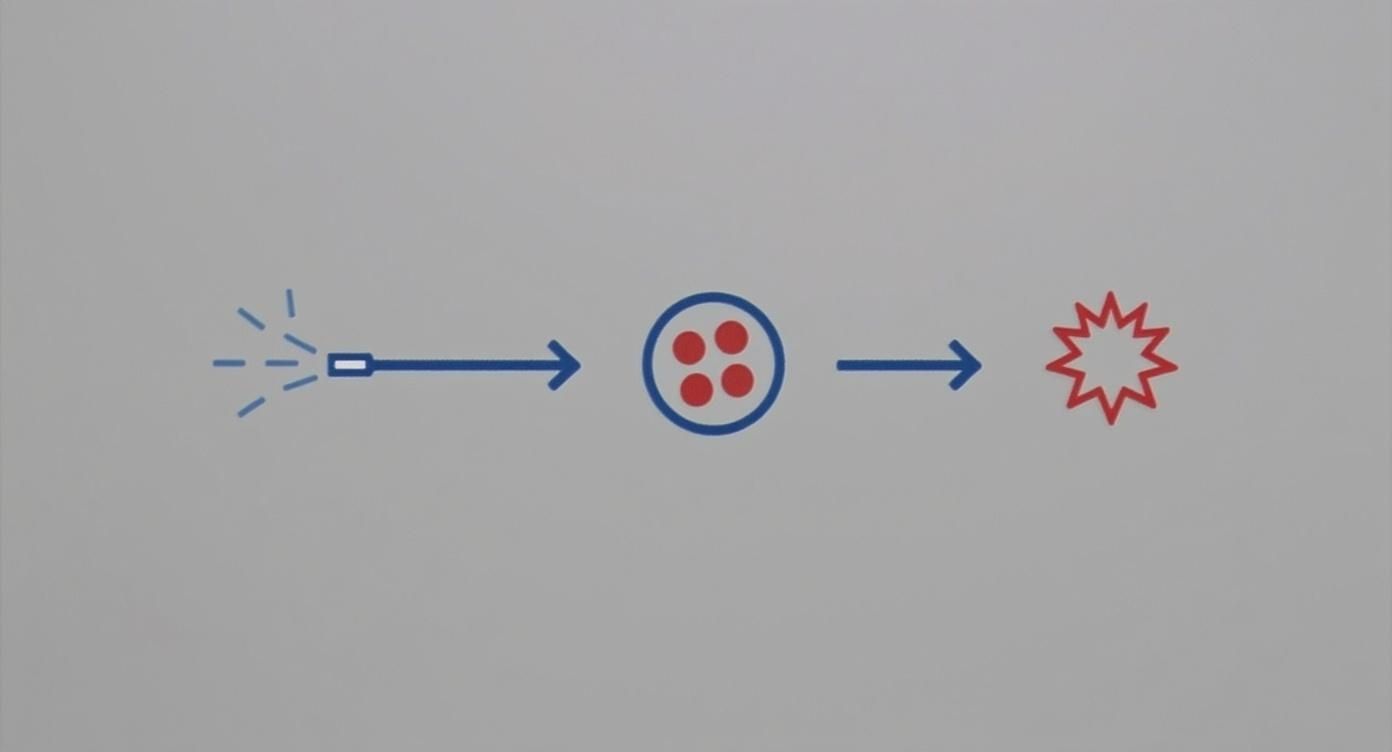
As you can see, it's a direct path from the laser's light to the cell, initiating the healing process right where it's needed most.
Fueling the Healing Process
This mechanism is the engine that makes the therapy successful. Cold laser therapy, also known as low-level laser therapy (LLLT), uses light in the 600 to 1100 nanometer wavelength range to initiate these biological changes. By increasing cytochrome c oxidase (CCO) enzyme activity, it supercharges ATP production—which is absolutely critical for demanding tasks like tendon repair and reducing inflammation. You can read the full research about LLLT and ATP synthesis to learn more.
Essentially, the therapy gives your body a significant advantage by correcting the energy shortage that so often stalls recovery. Here’s how that energy is put to use:
- Accelerated Tissue Regeneration: With more energy, cells can produce collagen and other vital proteins much faster. This speeds up the repair of muscles, ligaments, and tendons.
- Enhanced Inflammation Control: The therapy helps modulate the inflammatory process, reducing the irritation and swelling that cause so much pain.
- Improved Nerve Function: It can also support nerve cell recovery and reduce neuropathic pain by helping restore normal cellular activity.
This entire process explains why cold laser therapy isn’t just masking your symptoms. It addresses the root cause of pain and dysfunction by empowering your body to heal itself from the inside out.
How This Translates to Real Pain Relief and Healing
So, we've discussed the science, but what does all this cellular activity actually feel like? How does photobiomodulation get you out of pain and back to your life?
It comes down to a powerful dual action against discomfort. The laser energy simultaneously reduces inflammation and enhances your body's natural repair processes. It’s not about masking pain; it’s about giving your body the tools it needs to heal from the inside out.
When your cells receive that jolt of energy, one of the first things they do is manage inflammation. This is crucial for calming the swelling, stiffness, and persistent ache associated with conditions like arthritis, tendonitis, or a chronic back injury. You begin to feel genuine relief because the source of the irritation is being addressed directly.
Rebuilding From the Inside Out
But calming inflammation is only half the battle. Cold laser therapy also prompts your body to actively rebuild damaged tissue by boosting the production of collagen.
Collagen is the essential scaffolding for your muscles, ligaments, and skin. It provides strength and structure. By encouraging more collagen production at the site of an injury, the therapy helps you heal faster and stronger from sprains, strains, and other soft tissue problems. This is why truly understanding how does cold laser therapy work is so important—it’s not a temporary fix.
This dual-action effect—reducing inflammation while rebuilding tissue—is the key. It means you’re not just feeling better temporarily; your body is genuinely getting better and becoming more resilient.
Evidence-Backed Results
This isn't just a theoretical concept; we've seen the results in our clinic, and the research supports it. A major review in 2020 analyzed over 100 studies and found that low-level laser therapy significantly accelerated healing in 75% of cases involving bone and soft tissue.
Across the board, for conditions like osteoarthritis and tendonitis, the success rates hovered between a solid 60% and 80%. Patients consistently reported faster recovery times and, most importantly, less pain. You can review the full findings on laser therapy's effectiveness if you would like to see the data for yourself.
To give you a clearer picture, here’s a look at some common issues we treat with cold laser therapy and what you can typically expect.
Cold Laser Therapy Applications and Outcomes
| Condition Treated | Primary Benefit | Typical Outcome |
|---|---|---|
| Chronic Back Pain | Inflammation Reduction | Decreased daily pain, improved flexibility |
| Arthritis | Pain & Swelling Relief | Reduced joint stiffness, better range of motion |
| Tendonitis | Accelerated Repair | Faster recovery from overuse, reduced localized pain |
| Sprains & Strains | Tissue Regeneration | Quicker healing of ligaments/muscles, stronger recovery |
| Plantar Fasciitis | Pain Management | Significant reduction in foot pain, especially in the AM |
This kind of data is why we feel confident recommending cold laser therapy as a reliable way to manage persistent pain. If you're looking for more strategies, we have a helpful guide on how to manage chronic pain.
What Is a Treatment Session Actually Like?
If you're new to a therapy, it's natural to be unsure about what to expect. Let’s walk through what a cold laser therapy session looks like from start to finish. Knowing the process can help put your mind at ease. The entire experience is designed to be simple, comfortable, and quick.
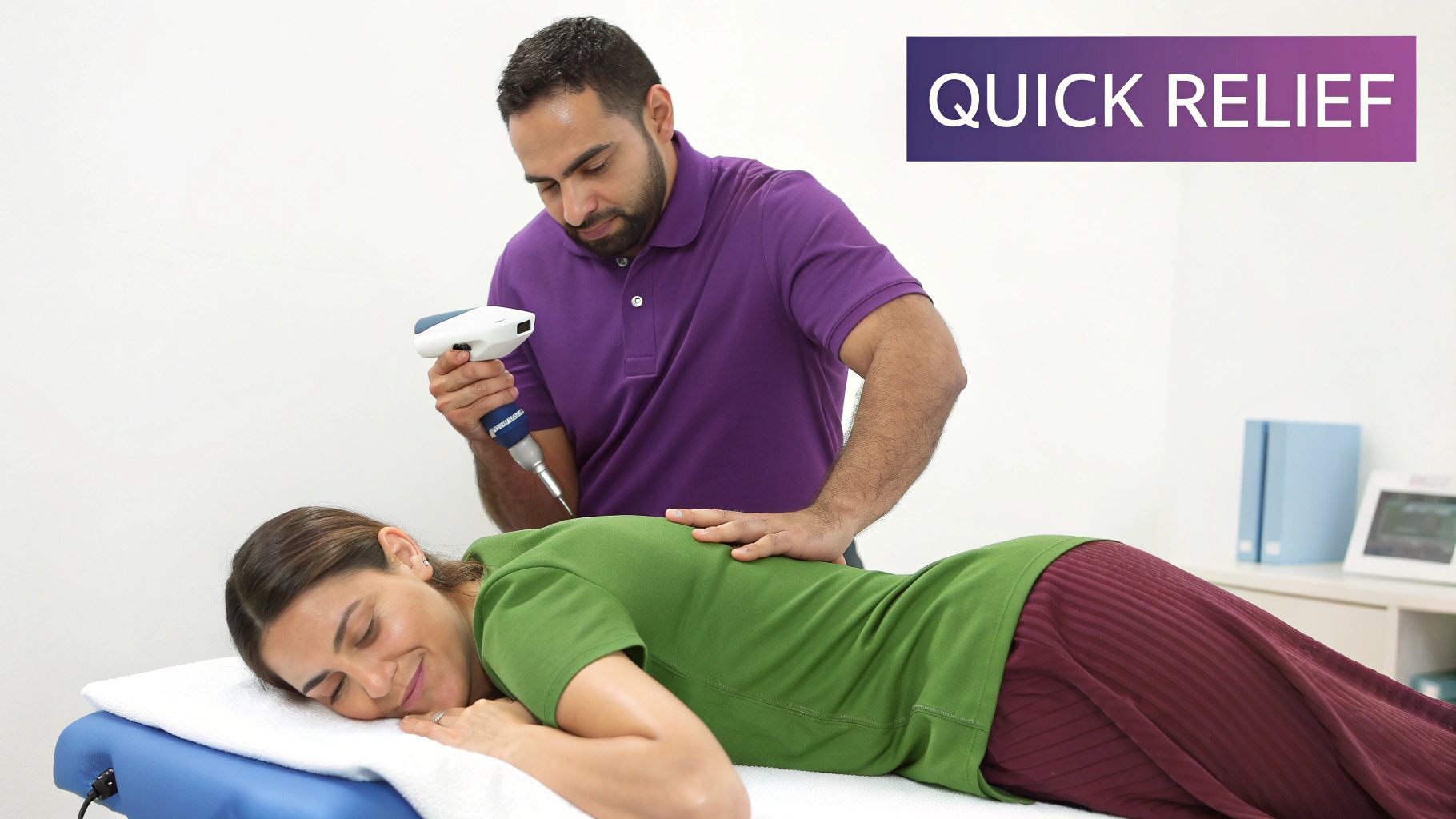
First, we'll have a conversation. Your visit begins with a straightforward consultation where we discuss your specific condition, symptoms, and health history. This allows us to identify the exact area that needs attention, ensuring the treatment is targeted precisely where it will be most effective.
The Treatment Process
Once we’ve pinpointed the location, you’ll get settled into a comfortable position. We will then place a small, handheld device directly on your skin over the affected area.
This device is what delivers the light energy deep into your tissues. There is no heat, no buzzing, and no noise. Most people report that they feel nothing at all during the session. It’s a completely painless and non-invasive experience.
Your comfort is our top priority. You simply relax while the light goes to work, stimulating your cells and kicking the natural healing process into gear.
The sessions themselves are surprisingly brief, usually lasting just 5 to 15 minutes. The exact duration depends on the size of the area being treated and the nature of your condition. It’s the kind of treatment that’s easy to fit into even the busiest schedule.
Your Personalized Treatment Plan
Cold laser therapy isn't a single-session fix; its effectiveness comes from cumulative effects. For lasting relief and true healing, a full course of treatment typically involves several sessions.
Your individual plan will be tailored to you, but a typical structure might be:
- Initial Phase: We often begin with more frequent sessions, perhaps 2-3 times per week, to get the initial pain and inflammation under control.
- Recovery Phase: As your body begins to heal and strengthen, we can space out treatments to about once a week.
- Maintenance Phase: For those with chronic conditions, occasional treatments can be an effective way to manage symptoms and prevent future flare-ups.
The total number of sessions depends on whether your issue is acute or chronic. A recent injury might resolve in just a few treatments, while a long-standing problem will naturally require a more extended plan. We will map out the frequency and duration specifically for your needs to ensure you receive the most effective care.
Is Cold Laser Therapy a Proven Treatment?
One of the first questions people ask about a new treatment is, "Does it actually work?" When it comes to cold laser therapy, you can feel confident. This is not an experimental fad; it is a therapeutic method backed by decades of scientific research and numerous clinical studies confirming its effectiveness.
Repeatedly, evidence shows that patients receiving cold laser therapy experience a significant, noticeable reduction in pain and improved mobility compared to those who receive a placebo treatment. It has become a trusted option for a wide variety of musculoskeletal problems.
In fact, major global organizations like the World Association for Laser Therapy (WALT) have established clear treatment guidelines based on this extensive research. These protocols help practitioners deliver consistent, safe, and effective results for their patients.
What the Data Shows
The proof is not just anecdotal; it's in the data. A large-scale 2017 systematic review and meta-analysis confirmed that low-level laser therapy (LLLT) is highly effective at reducing pain for adults with musculoskeletal issues.
The study found that patients experienced an average pain reduction of 35% compared to a placebo. The best outcomes occurred when treatments adhered to WALT guidelines. For instance, one study focusing on chronic low back pain found that patients reported a 49% drop in pain after only three weeks.
Furthermore, the therapy is incredibly safe. Adverse events were reported in less than 0.1% of cases, making it an extremely low-risk option for most individuals.
All this validation means cold laser therapy is a reliable and scientifically sound way to manage pain and promote healing. Its ability to provide relief, even for challenging nerve pain, makes it a valuable therapeutic tool. To see how it can be applied to specific problems, check out our guide on chiropractic treatment for sciatica.
Why This Matters for You
This solid scientific backing means you can be confident you are making an informed choice for your health. It is not just a temporary fix or a passing trend. This is a method that addresses the root cause of your pain by working at a cellular level.
The bottom line is this: cold laser therapy is built on a strong foundation of clinical evidence. It helps initiate your body's own natural healing powers, offering a safe and effective way to achieve lasting relief without drugs or surgery.
When you combine the proven results with such a high safety profile, it's easy to see why it's an excellent choice for anyone looking for a different approach to getting out of pain.
Got Questions About Cold Laser Therapy?
It’s completely normal to have questions when you're looking into new ways to deal with pain. Getting a good handle on how cold laser therapy actually works is the first step toward feeling confident in your choice. Here are some straightforward answers to the questions we hear most often.
Is Cold Laser Therapy Painful?
Not at all. The treatment is completely painless. We call it a "cold laser" for a reason—the light levels are so low they don't heat up your body's tissue.
Most people don't feel a thing during the session. Some might notice a very faint, pleasant warmth in the area as blood flow increases, but that's it. You just get to relax while the light does its work, stimulating healing deep inside your tissues without any discomfort.
How Many Treatments Will I Need?
That really depends on you. There's no single answer, because every person and every injury is different. The number of sessions you'll need is based on your specific condition, how severe it is, and how long you've been living with it.
But to give you a general idea:
- Acute Injuries: For something new, like a recent sprain, you might only need 1-6 treatments to feel a significant difference.
- Chronic Issues: For long-term problems like arthritis or persistent back pain, you’re more likely looking at 10-15 sessions to get lasting results.
We'll put together a treatment plan that’s just for you. We’ll keep an eye on your progress and adjust the plan as we go to make sure you’re getting the most effective care possible.
Are There Any Side Effects?
Cold laser therapy has an excellent safety record and is FDA-cleared for many conditions. Side effects are incredibly rare. If they do happen, they are usually very minor and don't last long, like a little bit of soreness in the area we treated.
And because the treatment is non-invasive, there is no downtime. You can get right back to your day as soon as you leave our office, which makes it a really convenient option if you have a busy schedule.
Can This Therapy Be Used with Other Treatments?
Yes, and we often recommend it! Cold laser therapy works wonderfully alongside other treatments. We frequently combine it with chiropractic adjustments, massage, and specific physical therapy exercises.
Using a few different approaches at once often makes your entire care plan more effective. It helps us tackle the problem from multiple angles, which can speed up your recovery and lead to a more complete and lasting healing.
If you're ready to try a safe, non-invasive solution that helps your body heal itself, the team at Audubon Park Chiropractic is here for you. Don't let pain dictate your life any longer. Call us today at (509) 327-4049 to schedule a consultation, or simply walk in. We are ready to help you find the relief you deserve.
Ready to Feel Better?
Our Spokane chiropractors are ready to help. Walk-ins welcome — no appointment needed.

Dr. Michelle Snyder is a Spokane chiropractor with advanced training in women’s health, hormone balancing, pregnancy, and care for infants and children. She uses gentle low-force spinal adjustments alongside specialized therapies including Webster’s breech technique, allergy desensitization, cold laser therapy, EB cellular cleanse, and Methylation/genetic nutrition — offering patients a comprehensive, whole-body approach to wellness.
A Spokane resident for over 31 years, Dr. Michelle is deeply committed to her community, contributing time and resources to organizations including Meals-on-Wheels, Second Harvest, Ronald McDonald House, and the Union Gospel Mission.
📍 2909 W. Northwest Blvd, Spokane, WA 99205 | ☎ (509) 327-4049 audubonparkchiropractic.com