

This post is part of our complete guide to Back Pain Treatment in Spokane, WA. Browse the guide for more in-depth information on treatments, exercises, and recovery strategies.
Flexion and distraction is a gentle, non-surgical chiropractic technique used to help people dealing with back, leg, and neck pain. The central idea is to use a specialized table to carefully and slowly stretch the spine. This action creates space between the vertebrae, which is critical for reducing pressure on your nerves and spinal discs. It can be thought of as a controlled, rhythmic motion designed to decompress inflamed spinal structures and improve joint movement, all without forceful adjustments.
A Gentle Approach to Spinal Decompression
Imagine your spine as a tightly coiled spring that has become stiff and lost some of its flexibility. Flexion and distraction therapy is like a skilled hand carefully and rhythmically stretching that spring, restoring its natural movement and easing the built-up tension. It is a cornerstone of non-invasive spinal care and an excellent option for individuals seeking relief from nagging, persistent pain.
This technique is performed on a specialized table that moves in a smooth, pumping-like motion. This setup allows the practitioner to apply gentle, controlled pressure precisely where it's needed. It differs significantly from a traditional chiropractic adjustment, which often involves a quicker "popping" or thrusting movement. Instead, this method is characterized by slow, repetitive, and gentle motions.
Core Principles of Flexion and Distraction Therapy
At its heart, the goal of this therapy is to decompress inflamed or bulging discs, restore mobility to stiff joints, and relieve pressure on pinched nerves. The effectiveness of this approach lies in its ability to work with the body’s natural healing capabilities. By creating a form of negative pressure within the disc, it can help gently guide herniated material back into its proper place, away from sensitive nerve endings.
To provide a clearer understanding of the therapeutic objectives, here are the fundamental goals of the technique.
Key Principles Explained
| Principle | Description |
|---|---|
| Decompression | The gentle stretching motion increases the space between vertebrae. This can lower the pressure inside your spinal discs by as much as 192 mmHg. |
| Increased Mobility | It helps restore normal, healthy movement to spinal joints that have become locked or stiff due to past injury or chronic conditions. |
| Nerve Relief | By widening the spinal canal and the foramina (the small openings where nerves exit), it directly reduces the irritation that causes pain, numbness, or tingling. |
This table provides a concise overview of how the therapy targets the root of the problem through multiple mechanisms simultaneously.
The essence of flexion and distraction is its capacity to deliver significant relief without the force associated with other manual therapies. It’s a targeted, gentle motion designed to restore function and activate the body’s healing process.
Ultimately, this therapy offers a clear path toward recovery. The focus is not on masking symptoms but on addressing the underlying causes of spinal pain, such as disc herniation and nerve compression, in a comfortable and controlled manner.
Don’t wait — relief is closer than you think.
How Gentle Movement Promotes Spinal Healing
The effectiveness of flexion and distraction therapy is centered on the use of a specialized table. This is not merely a surface to lie on; it is a key instrument that enables the practitioner to guide your spine through a series of controlled, rhythmic motions. Many patients describe the sensation as a slow, deep, and targeted stretch.
This gentle movement initiates a powerful healing response deep within the body. As the spine is carefully flexed and distracted, it creates a subtle vacuum effect—referred to as negative pressure—inside the spinal discs. This is the core mechanism that provides significant relief, particularly for specific spinal conditions.
The Power of Negative Pressure
Think of a dry, compressed sponge. When you gently pull it apart, it immediately draws water back into its pores. Flexion and distraction works in a similar way for your spinal discs. This negative pressure helps coax herniated or bulging disc material back toward the center of the disc, alleviating the painful pressure on nearby nerves.
This process unlocks several key benefits:
- Increases Intervertebral Space: The technique physically creates more room between your vertebrae.
- Widens the Spinal Canal: It can open up the spinal canal by as much as 28%, relieving direct pressure on the spinal cord.
- Boosts Circulation: The gentle pumping motion is highly effective for improving the flow of nutrients and oxygen to damaged discs, which is essential for healing.
This infographic provides a visual representation of what occurs during a session.
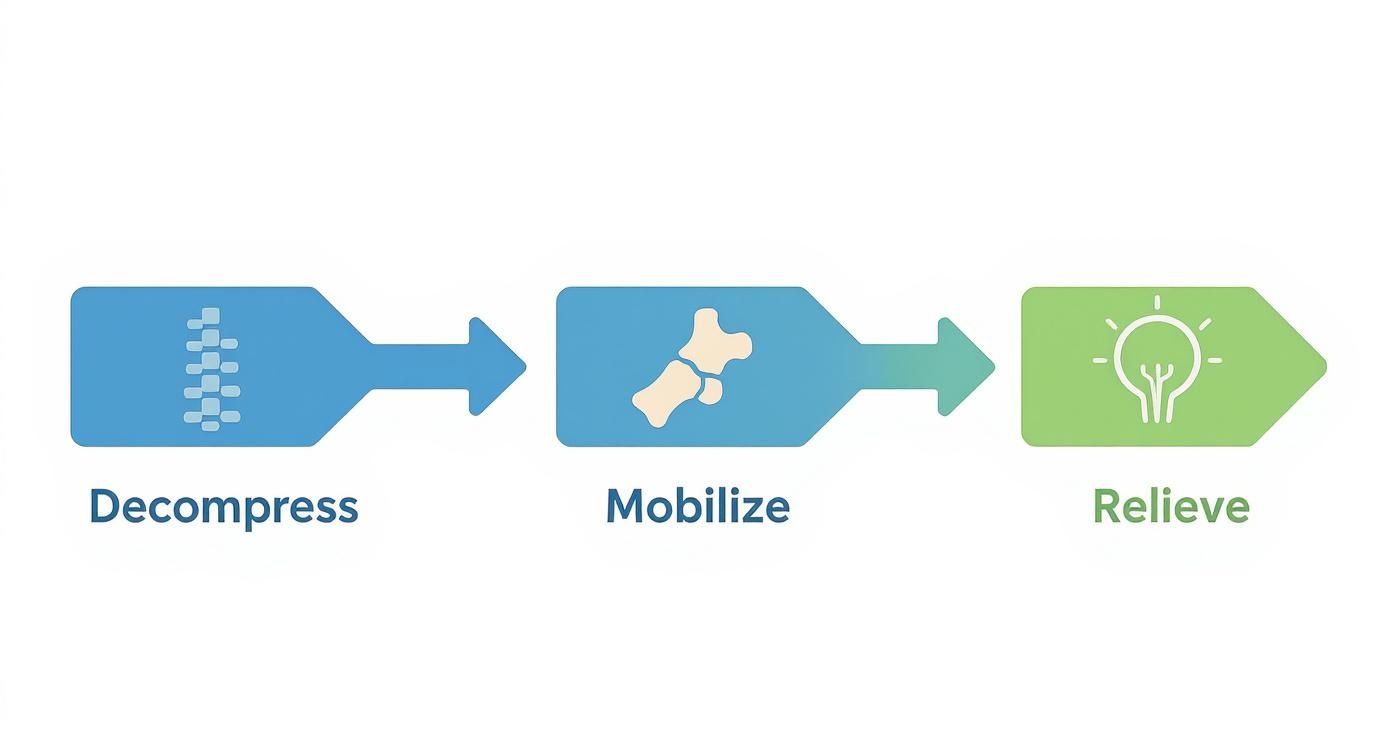
As illustrated, it's a clear progression: decompressing the spine, mobilizing the joints, and ultimately providing tangible relief for irritated nerves.
Scientific Evidence of Decompression
The scientific foundation for this gentle approach is robust. Biomechanical studies have consistently confirmed that flexion and distraction leads to significant drops in intradiscal pressure (IDP). For instance, research demonstrates that IDP in the lumbar spine can decrease substantially during a session. One study recorded pressure drops of up to 122 kPa at the L4-L5 disc—a substantial reduction.
This controlled, gentle movement is what stimulates your body's natural healing processes. By decompressing discs and freeing up nerves, we can effectively reduce pain and inflammation without forceful adjustments.
Improving your range of motion is another critical component of recovery. Following your sessions, consider exploring our guide on active range of motion exercises to maintain your progress. These simple movements complement your in-office care and help preserve the flexibility you have gained.
Flexion and distraction is more than a temporary solution. It is a method designed to address the root of mechanical problems in your spine. By restoring proper function and creating a healthier environment for your discs and nerves, it offers a pathway to lasting relief.
The Real-World Benefits of This Technique

For many individuals dealing with conditions like disc herniations, flexion and distraction therapy serves as a powerful, non-invasive alternative to surgery. It provides a means to achieve significant, lasting relief without considering more aggressive procedures. The benefits extend beyond the treatment room and into your daily life.
One of the first improvements patients often notice is a tangible reduction in their pain levels. This technique directly addresses the mechanical source of the problem by decompressing the spine. Scientific evidence supports this, with studies showing that this approach provides significant short-term relief for those with lower back pain.
In one study using the Visual Analog Scale (VAS) to measure pain, patients reported a pain reduction of approximately 20.69 mm. This figure is well above the threshold considered clinically significant for chronic back pain, indicating a real, noticeable difference in their comfort.
A Return to Comfort and Mobility
The benefits extend beyond pain relief. This therapy is highly effective for restoring flexibility in the spine and alleviating nerve-related symptoms like sciatica. Its gentle nature makes it a safe option for individuals who may not be suitable candidates for traditional adjustments, such as those with osteoporosis or those experiencing an acute pain episode.
The core benefits of choosing flexion and distraction include:
- Promotes Natural Healing: By improving circulation and nutrient flow to damaged discs, the therapy provides the body with the support it needs to repair itself.
- Reduces Reliance on Medication: As their symptoms improve, many patients find they can reduce—or even eliminate—their use of pain medication.
- Restores Daily Function: The ultimate goal is to help you return to the activities you love, whether that's gardening, playing with grandchildren, or simply taking a walk without pain.
By addressing the root cause of nerve and disc pressure, flexion and distraction offers a path to sustainable relief. It is about helping you regain control over your life and well-being.
Understanding the real-world impact of any treatment is crucial. There are many excellent strategies for getting out of pain and reducing inflammation that can complement the care you receive in our office.
Who Is a Good Candidate for This Treatment?
Flexion and distraction is a versatile treatment that is particularly beneficial for individuals with specific spinal issues. Because it is so gentle and focused on decompression, it is an incredibly effective choice for anyone needing relief without the high-velocity thrust of a traditional adjustment.
Ideal candidates are often those suffering from lumbar disc injuries. This includes conditions ranging from herniated or bulging discs that cause intense, localized back pain to radiating symptoms like sciatica. By carefully creating negative pressure within the disc, the treatment can help retract the bulging material, taking pressure off sensitive nerves. If you are dealing with this type of pain, you can learn more about what causes disc herniation in our detailed guide.
Conditions That Respond Well
Beyond common disc problems, flexion and distraction can be a game-changer for several other conditions that cause chronic pain and limited movement.
- Spinal Stenosis: For those with a narrowing spinal canal, this technique gently creates more space, which can relieve pressure on the spinal cord and nerves.
- Facet Syndrome: This therapy is effective for mobilizing stiff, painful facet joints—a common source of chronic low back pain.
- Spondylolisthesis: In stable cases, the gentle stretching motion can ease the pain caused by one vertebra slipping forward over another.
- Post-Surgical Discomfort: Patients recovering from back surgery often find this approach helps them safely manage lingering pain and stiffness.
It is also a wonderful option for expecting mothers. Exploring prenatal chiropractic care can offer tailored solutions, and the gentle nature of flexion and distraction makes it a safe, suitable method for managing pregnancy-related back pain when guided by a qualified chiropractor.
When Flexion and Distraction Outperforms Other Methods
This technique is also a valuable option for patients who have not found success with other conservative treatments. Its effectiveness is supported by solid clinical evidence.
Randomized controlled trials have shown that flexion and distraction can provide better pain relief than other methods, such as active exercise, especially for chronic lower back pain. One trial, for example, reported significantly greater pain relief for the flexion-distraction group. Patients with nerve-related pain (radiculopathy) saw the most dramatic improvements.
Flexion and distraction is an excellent choice for those seeking a proven, non-surgical solution for persistent spinal pain. Its ability to provide relief for complex conditions makes it a primary therapy when other methods have not been successful.
If your symptoms align with any of these descriptions, or if you are simply looking for a gentle yet powerful path to recovery, this treatment could be the ideal fit for you.
What to Expect During Your Treatment Session
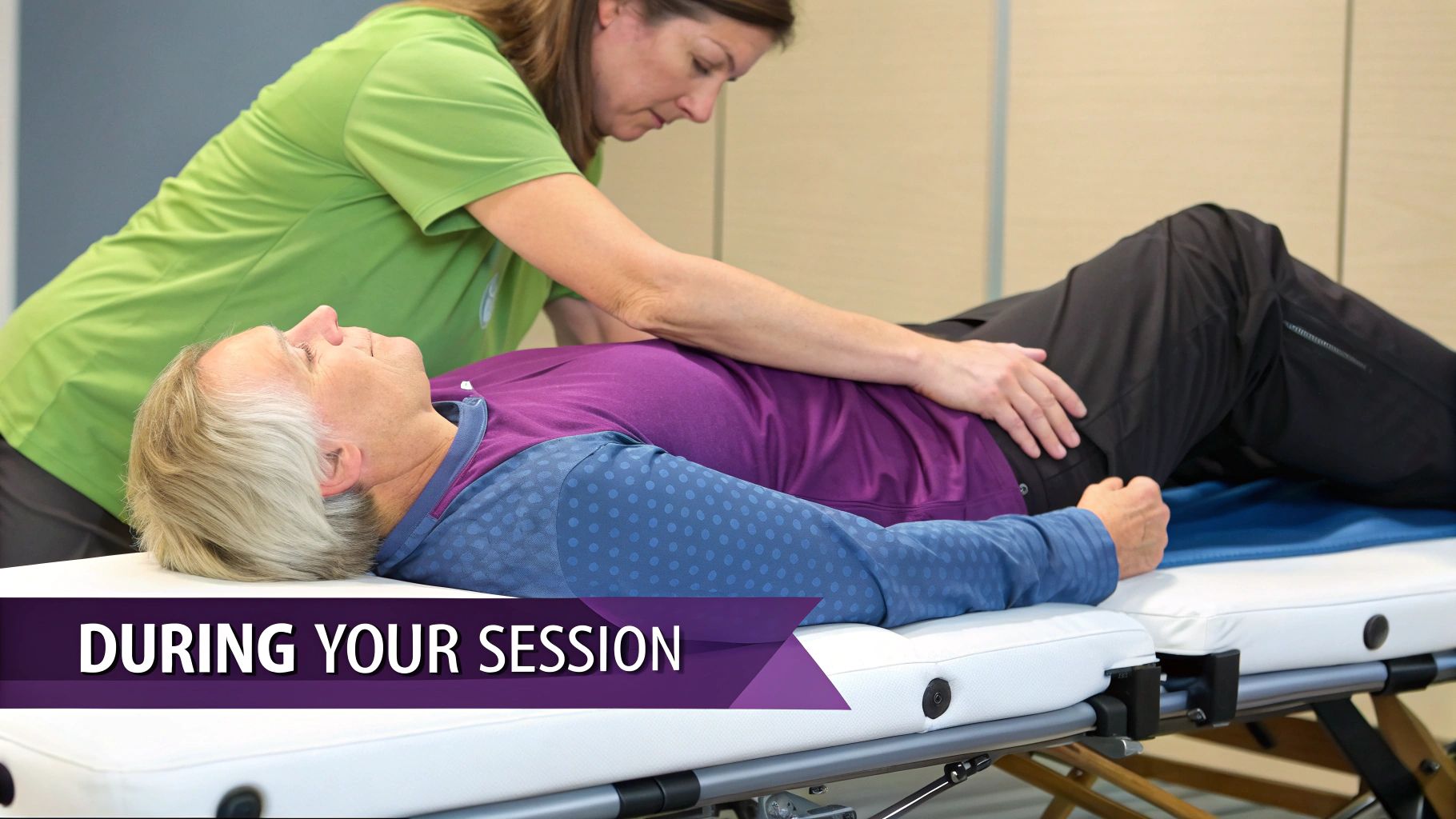
Entering a treatment room for a new therapy can feel intimidating, but a flexion and distraction session is designed to be a comfortable and calming experience. The entire process is built around gentle, controlled movements that work with your body, never against it.
First, you will lie face down on a specially designed table. This is not a flat surface; it is a sophisticated piece of equipment that moves in specific ways to benefit your spine. The table is constructed in sections, allowing the lower part to move in a smooth, rhythmic fashion while your upper body remains stationary.
The Treatment Process, Step by Step
Once you are comfortably positioned, the practitioner will place a hand on the specific area of your spine being targeted. This creates a stable contact point, ensuring the motion is directed precisely where it is needed most.
Then, the lower section of the table will begin to move your legs and pelvis through a slow, gentle pumping motion. This is the "flexion and distraction" in action. Most patients describe the sensation as a pleasant, deep stretch, not a forceful adjustment. There are no sudden twists or "cracks"—only a smooth, controlled release.
A typical flexion and distraction session is pain-free. In fact, most people feel an immediate sense of relief as pressure is gently taken off compressed spinal discs and nerves.
What You'll Feel and How Long It Takes
A single treatment is usually brief, lasting around 15 to 20 minutes. During this time, the goal is to create space in the spine (decompress) and restore healthy motion without causing discomfort. Many people report feeling a difference after their very first session.
Common immediate benefits include:
- A noticeable reduction in back or leg pain.
- A feeling of increased flexibility and freedom of movement in the lower back.
- A sense of lightness, as if a weight has been lifted from the spine.
After your session, you will typically be given simple instructions for home care to enhance the results. This might involve applying an ice pack for 15 minutes to reduce any minor inflammation or performing a few specific, gentle stretches. Following these recommendations helps support the healing process and prolongs the benefits of your treatment.
Your Questions About Flexion and Distraction Answered
Deciding to try a new treatment naturally brings up questions. It's completely normal to want to understand what is involved, and learning the specifics of flexion and distraction is the first step toward feeling confident in your care. Below are answers to some of the most common questions from patients.
The goal is to ensure you feel fully informed and comfortable as you move toward a life with less pain.
Is Flexion and Distraction Therapy Painful?
This is often the first question people ask, and the answer is simple: no, the treatment is not painful. It is designed to be gentle and, for many, quite soothing.
Most patients describe the sensation as a satisfying, deep stretch that brings a sense of relief. The table performs the work with slow, rhythmic movements guided by the chiropractor. This controlled motion helps your muscles relax rather than tense up, which is key to avoiding pain triggers. The primary purpose is to decompress your spine without the abrupt force associated with other techniques.
How Many Sessions Will I Need?
This is an excellent question, but the answer varies for each individual. The number of sessions required depends on your unique situation, including:
- The nature of your condition: A recent, acute injury is treated differently than a chronic issue you've been dealing with for years.
- The severity of your symptoms: More intense or stubborn pain may require more time to respond.
- How your body responds: Everyone heals at their own pace. We constantly monitor your progress and adjust the plan accordingly.
Some people feel a significant difference after just a few visits. For others, a typical treatment plan might involve a series of sessions over several weeks to ensure lasting change, not just a temporary fix.
The primary goal is to create sustainable improvement in your spinal health. Your treatment plan is a collaboration, and we will adjust it together as you progress.
Is This Technique Safe If I Have Had Back Surgery?
For many individuals, the answer is yes. Flexion and distraction is often a preferred technique for post-surgical patients precisely because it is so gentle and non-invasive.
It works by carefully decompressing the spine without putting direct, forceful pressure on sensitive areas, making it a safer option for those who have undergone surgery. However, a thorough evaluation is essential. We will need to carefully review your surgical history and current condition to ensure it is the right choice for you. Your safety and well-being always come first.
If you’re tired of letting pain control your life, it's time to explore a gentle and effective solution. The team at Audubon Park Chiropractic is dedicated to helping you find lasting relief and get back to the activities you enjoy.
Don't wait another day to start your journey toward a pain-free life. Contact us today to see how flexion and distraction therapy can help you. Call Audubon Park Chiropractic at (509) 327-4049 to schedule a consultation, or simply walk in for an evaluation. We are ready to help.
Ready to Feel Better?
Our Spokane chiropractors are ready to help. Walk-ins welcome — no appointment needed.

Dr. Michelle Snyder is a Spokane chiropractor with advanced training in women’s health, hormone balancing, pregnancy, and care for infants and children. She uses gentle low-force spinal adjustments alongside specialized therapies including Webster’s breech technique, allergy desensitization, cold laser therapy, EB cellular cleanse, and Methylation/genetic nutrition — offering patients a comprehensive, whole-body approach to wellness.
A Spokane resident for over 31 years, Dr. Michelle is deeply committed to her community, contributing time and resources to organizations including Meals-on-Wheels, Second Harvest, Ronald McDonald House, and the Union Gospel Mission.
📍 2909 W. Northwest Blvd, Spokane, WA 99205 | ☎ (509) 327-4049 audubonparkchiropractic.com
Further Reading: Back
- Back Pain, Sciatica, and Headaches: When Chiropractic Helps — And When It Doesn’t
- Chiropractic Without the Commitment: What No Long-Term Contracts Actually Means for Your Care
- What causes sciatic nerve pain: Symptoms and relief
- NW Spokane’s Neighborhood Chiropractor: Why Location, Parking, and Knowing Your Doctor Actually Matter
- Why Some People Are Afraid of the Chiropractor & And What We Do Differently