

This post is part of our complete guide to Auto Accident Injury Treatment in Spokane, WA. Browse the guide for more in-depth information on treatments, exercises, and recovery strategies.
Even if you feel completely fine after a car accident, one of the smartest things you can do is see a chiropractor. The rush of adrenaline you get during a collision is a powerful pain-masker, and it can hide serious underlying issues like whiplash or spinal misalignments. Symptoms might not show up for days, or even weeks.
Getting a prompt chiropractic evaluation is a crucial step to catch these hidden problems early and start a treatment plan before they develop into long-term, chronic pain. A skilled chiropractor provides a non-invasive, drug-free path to recovery, focusing on the root cause of your pain rather than just masking symptoms.
Uncovering Hidden Injuries After a Collision
You might be surprised at the damage even a minor fender-bender can do. A low-speed impact can still generate enough force to jolt your spine and neck, knocking vertebrae out of alignment. You could walk away feeling a little shaken but otherwise okay, while tiny micro-tears in your muscles and ligaments can snowball into much bigger problems down the road.
This is precisely what chiropractors are trained to identify and address.
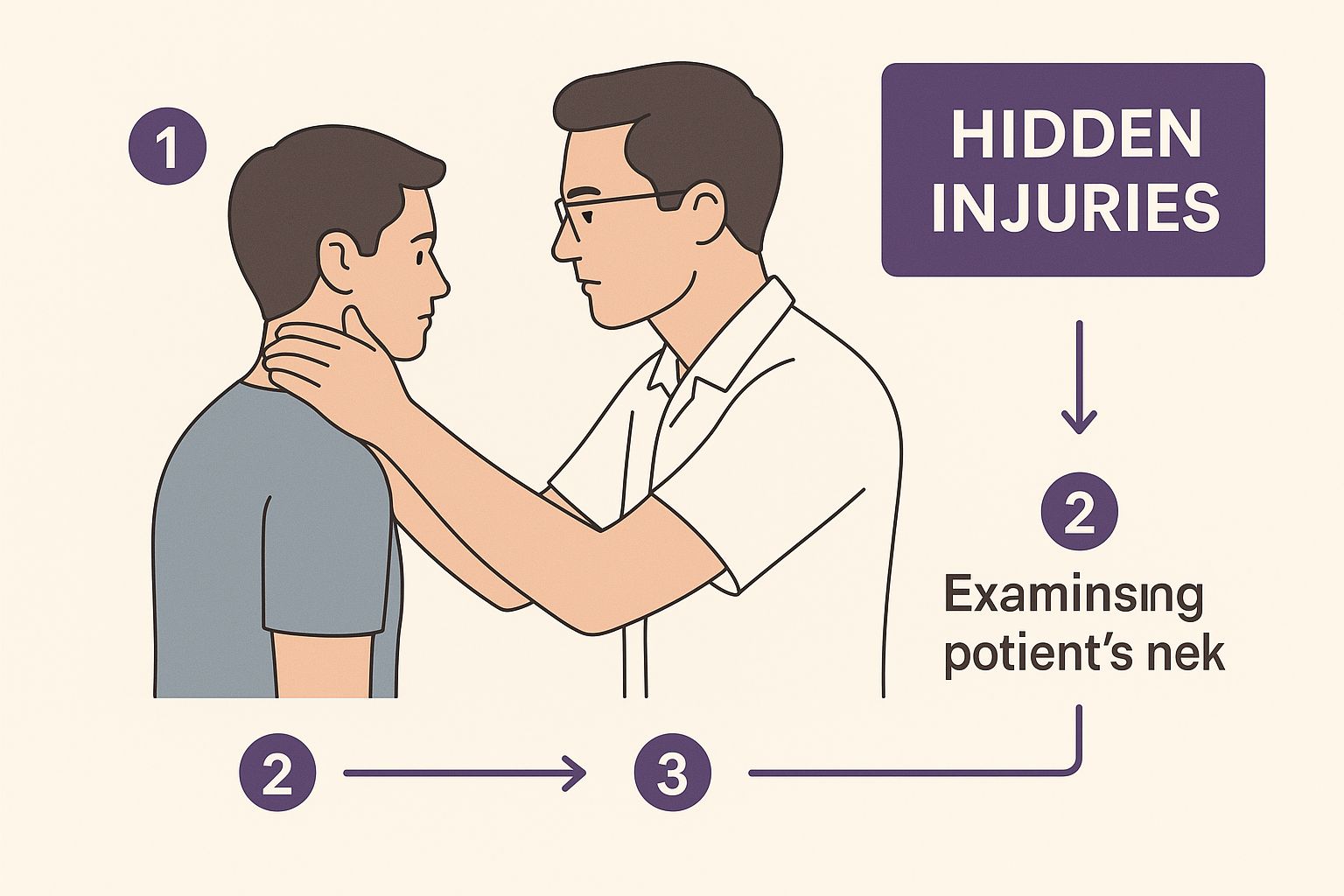
A hands-on chiropractic exam can detect the subtle spinal and soft tissue damage that is often missed in an ER or urgent care visit, stopping serious issues before they even start.
The Danger of “Waiting to See”
Just brushing off that bit of stiffness or soreness is a common mistake. Without the right care, those seemingly minor aches can evolve into much more severe, lasting conditions.
- Chronic Headaches: These often originate from untreated neck injuries like whiplash.
- Limited Mobility: When scar tissue forms improperly around an injury, it can seriously restrict your range of motion.
- Persistent Pain: A misaligned spine can put constant pressure on your nerves, leading to ongoing pain in your back, neck, or even your shoulders and limbs.
It’s easy to think “it’s not that bad,” but many common injuries from auto accidents don’t present symptoms right away.
This table shows a few of the “hidden” injuries frequently diagnosed after a car crash—the kind that might not be obvious at first glance.
Common Hidden Injuries from Car Accidents
| Hidden Injury | Potential Long-Term Issues | How a Chiropractor Diagnoses It |
|---|---|---|
| Whiplash (Cervical Sprain/Strain) | Chronic neck pain, headaches, dizziness, limited range of motion. | Through a physical exam, assessing neck movement, and identifying muscle tenderness or spasms. X-rays may be used to rule out fractures. |
| Spinal Misalignment (Subluxation) | Nerve irritation, sciatica, chronic back pain, reduced mobility. | Palpation (feeling the spine), postural analysis, and specific orthopedic tests to pinpoint misaligned vertebrae. |
| Herniated or Bulging Discs | Sciatica, radiating arm/leg pain, numbness or tingling, muscle weakness. | Neurological tests to check reflexes and muscle strength, combined with a physical exam. MRI is often used for confirmation. |
| Soft Tissue Injuries (Micro-tears) | Formation of scar tissue, chronic stiffness, and muscle spasms. | A hands-on assessment of muscles, ligaments, and tendons to locate areas of inflammation, tightness, and restricted movement. |
Looking at this, you can see why a specialized evaluation is so important. A chiropractor’s diagnostic approach gets to the root cause of your pain, providing crucial information for both your recovery and any insurance claims you might need to file.
Globally, motor vehicle accidents lead to 30 to 50 million non-fatal injuries annually, with many causing lasting musculoskeletal problems. For those suffering from chronic whiplash, chiropractic care shows significant promise. A study found that an incredible 93% of participants experienced pain relief following adjustments. You can learn more about these findings on whiplash treatment.
Ultimately, seeing a chiropractor after a car accident isn’t just about feeling better now—it’s about protecting your health for the future and ensuring a complete recovery.
Don’t wait — relief is closer than you think.
What to Expect at Your First Post-Accident Visit
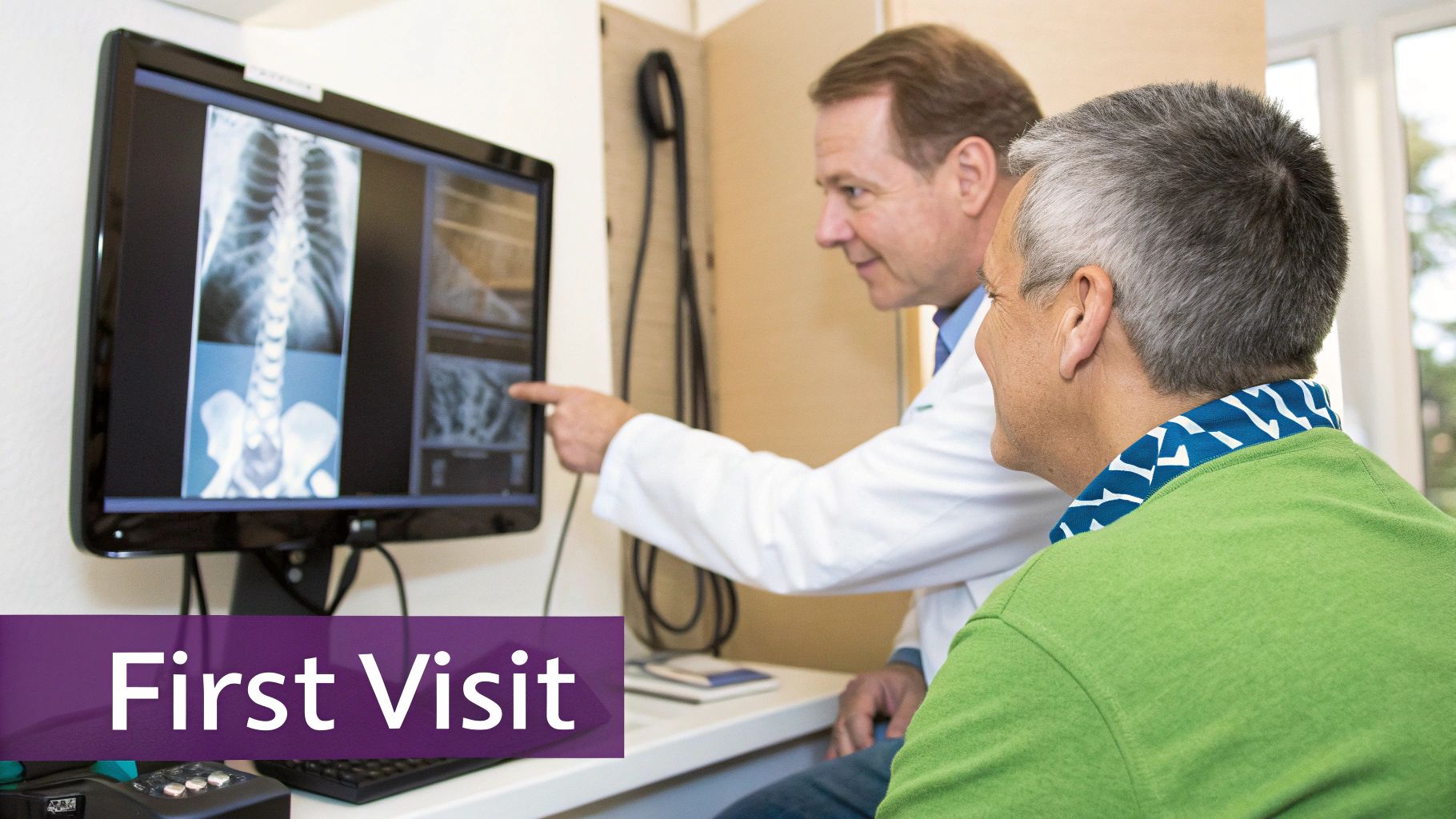
Walking into a new doctor’s office can be nerve-wracking, especially when you’re already shaken up from a car accident. But your first visit is really just a conversation and a thorough check-up. We’re not just looking for what hurts; we’re trying to figure out exactly how the crash happened to understand the forces your body went through.
It all starts with a detailed discussion about the accident itself. You’ll want to be ready to share the specifics. Details like the direction of the impact, where you were looking, and how your body was positioned are huge clues for a chiropractor. We connect those details to your symptoms to build a complete picture of your injuries.
Of course, the moments right after a collision are chaotic, and knowing the right steps to take is crucial for your health and any potential claims. It really helps to know what to do after a car accident before you even get to our office.
The Physical Examination
Next up is the hands-on physical exam. This is much more than just poking at sore spots. We’re carefully evaluating how your body is moving and functioning after the trauma of the accident.
Here’s a breakdown of what that usually involves:
- Range of Motion Tests: We’ll gently ask you to move your neck, back, arms, and legs to see if the accident has limited your movement.
- Palpation: This is the term for using our hands to feel your spine and the muscles around it. We’re looking for inflammation, muscle tightness, or joints that aren’t sitting right.
- Neurological and Orthopedic Checks: These are simple, quick tests to check your reflexes, muscle strength, and nerve responses. It’s an important step to rule out any more serious problems.
Based on what we find, we might decide that diagnostic imaging is the next logical step. An X-ray, for instance, is invaluable for checking for fractures or seeing subtle spinal misalignments that aren’t obvious from the outside.
Crafting Your Personalized Auto Injury Recovery Plan

When it comes to healing after a car crash, there’s simply no one-size-fits-all approach. Your body, your accident, and your injuries are completely unique, and your recovery plan should be too. We build your treatment strategy from the ground up, factoring in the specifics of the collision, the severity of your injuries, and your recovery goals.
This isn’t just about chasing the pain away. It’s about getting to the root of the problem, restoring proper function, and helping your body heal correctly so these issues don’t linger for years.
What Goes Into a Treatment Plan?
A truly effective recovery plan will weave together several different techniques. This ensures we’re addressing everything at once—from the structural misalignments in your spine to the damage done to muscles and ligaments.
Most plans for auto injury patients include a combination of:
- Precise Spinal Adjustments: This is the cornerstone of chiropractic. We gently restore proper alignment to take pressure off nerves and get your body functioning correctly again.
- Soft Tissue Therapies: We’ll work on the injured muscles, ligaments, and tendons to calm inflammation, break down scar tissue, and speed up healing.
- Corrective Exercises: As you start to feel better, we’ll introduce specific exercises to rebuild strength and stability where you need it most.
It’s important to understand that recovery is a process, not an event. Some people feel significant relief in a few weeks, while others need a bit more time. One study found that the average number of chiropractic visits for car accident patients was 14.2, and 40.2% of them needed ongoing care for persistent pain. You can see the full research on treatment duration for auto accident injuries.
As you heal, a big focus will be on getting your mobility back. We’ll guide you through specific movements designed to get you moving freely again. You can get a better idea of what these active range of motion exercises look like and why they’re so crucial for long-term health.
Untangling the Insurance and Legal Paperwork
Trying to sort through insurance paperwork after an accident is the last thing anyone wants to do, but getting a handle on your coverage is crucial. Most auto insurance policies in Washington include Personal Injury Protection (PIP) or Medical Payments (MedPay). This is good news.
This specific coverage is designed to pay for necessary medical treatments right away, and that almost always includes seeing a chiropractor after a car accident. You can get the care you need without having to wait for a settlement to come through.
But here’s the critical part: the documentation from your chiropractor. Every single visit, adjustment, and therapy session is meticulously recorded. This creates a detailed medical history that directly connects your injuries to the collision.
Why Every Note and Record Matters
This detailed paper trail does two incredibly important things. First, it gives your insurance company the solid proof they need to cover your treatment costs. Second, if you end up needing to pursue a legal claim, these records are the undeniable evidence of how severe your injuries were and the care you required.
This is exactly why settling a claim too soon can be a huge mistake.
A good rule of thumb is to wait until your chiropractor says you’ve reached Maximum Medical Improvement (MMI). This is the point where your condition has stabilized, and we have a clear picture of your long-term prognosis. Settling before you hit MMI could leave you footing the bill for future care yourself.
We know thinking about all the post-accident details is a lot. Our guide on what to do after a car accident injury can give you a helpful checklist to follow.
And remember, beyond your physical well-being, an accident can tank your car’s resale value. That’s a separate financial hit you can address through other types of claims, like a What is a Diminished Value Claim?.
Is Chiropractic Care Safe After a Car Accident?
It’s completely natural to be hesitant about any kind of treatment after the shock and trauma of a car accident. When you’re already sore and hurting, the last thing you want is a procedure that might make you feel worse.
That’s precisely why chiropractic care can be such a reassuring option. It is not about invasive surgeries or a long-term reliance on painkillers. Instead, chiropractic adjustments are all about helping your own body do what it does best: heal. The techniques are designed to be gentle and precise, working to restore proper alignment and function without drugs or scalpels. This approach sidesteps many of the risks that come with other medical interventions.
A Low-Risk Path to Recovery
Many patients are surprised when they learn just how safe chiropractic care really is, especially for injuries from a car wreck. The data consistently shows that serious side effects are incredibly rare.
Think about this: one study looking at Medicare patients found that seeing a chiropractor was linked to a lower risk of stroke within seven days of treatment compared to visiting a primary care doctor. Considering that over 35 million adults in the U.S. get chiropractic care every year, this really underscores it as a remarkably safe choice. If you want to dig into the numbers yourself, you can learn more about chiropractic safety facts.
Common Questions About Chiropractic Care After a Car Crash
When you’ve been in a car accident, your head is spinning with a million questions. It’s a confusing and stressful time, and we get that. We hear these same concerns from patients every day, so let’s clear up a few of the most common ones.
How Soon Should I See a Chiropractor?
The simple answer? As soon as you possibly can. We always recommend getting checked out within 72 hours of the accident.
Right after a crash, your body is flooded with adrenaline, which is nature’s way of masking pain. You might feel fine, but underlying injuries like whiplash could be lurking. Getting a prompt evaluation helps us catch these issues before they have a chance to turn into bigger problems down the road.
Will My Car Insurance Cover Chiropractic Visits?
For the vast majority of our patients, the answer is yes. Most auto insurance policies include coverage specifically for medical care after a collision.
If you have Personal Injury Protection (PIP) or MedPay, this coverage is designed to handle necessary treatments, including chiropractic care. This means you can get the help you need to heal without worrying about paying out-of-pocket.
The most important thing to remember is this: never assume you’re okay just because you don’t feel pain right away. A professional evaluation is the single best step you can take to protect your health.
What if I Feel Totally Fine After the Wreck?
Even if you walk away feeling perfectly normal, it’s still critical to get checked. That adrenaline rush we mentioned is a powerful painkiller and it can hide some serious problems.
Spinal misalignments or soft tissue damage often don’t show symptoms for hours, or even days, after the impact. A trained chiropractor knows exactly what to look for and can spot these hidden injuries before they escalate into chronic pain. It’s a proactive step for your long-term wellness.
Why Not Just Go to My Regular Doctor?
While your primary care physician plays an important role in your overall health, chiropractors have specialized training in the musculoskeletal system, particularly the spine. After a car accident, the most common injuries are things like whiplash, spinal misalignments, and soft tissue damage—the exact conditions chiropractors focus on every day. They are uniquely equipped to diagnose and treat these specific types of injuries with targeted, non-invasive techniques.
Don’t let questions and uncertainty get in the way of your recovery. A skilled chiropractor can guide you through this process. It’s important to find the right fit for your needs, and this guide on how to choose a chiropractor can provide valuable insights.
Your well-being is the top priority. If you’ve been in a car accident in the Spokane area, don’t wait for pain to become a chronic problem. Take control of your recovery today. Contact Audubon Park Chiropractic at (509) 327-4049 to schedule your evaluation, or simply walk in for care. We are ready to help you on your path to healing.
Ready to Feel Better?
Our Spokane chiropractors are ready to help. Walk-ins welcome — no appointment needed.

Dr. Michelle Snyder is a Spokane chiropractor with advanced training in women’s health, hormone balancing, pregnancy, and care for infants and children. She uses gentle low-force spinal adjustments alongside specialized therapies including Webster’s breech technique, allergy desensitization, cold laser therapy, EB cellular cleanse, and Methylation/genetic nutrition — offering patients a comprehensive, whole-body approach to wellness.
A Spokane resident for over 31 years, Dr. Michelle is deeply committed to her community, contributing time and resources to organizations including Meals-on-Wheels, Second Harvest, Ronald McDonald House, and the Union Gospel Mission.
📍 2909 W. Northwest Blvd, Spokane, WA 99205 | ☎ (509) 327-4049 audubonparkchiropractic.com
Further Reading: Accidents
- How to Treat Whiplash at Home: A Practical Guide
- Understanding Whiplash: A Comprehensive Guide to Symptoms and Treatment
- Your Guide to Auto Accident Injury Treatment
- What to Do After a Car Accident Injury: A Step-by-Step Guide
- Neck Pain After an Accident: A Guide to Causes, Symptoms, and Effective Relief
→ Complete Guide: Auto Accident Injury Treatment in Spokane, WA