

This post is part of our complete guide to Back Pain Treatment in Spokane, WA. Browse the guide for more in-depth information on treatments, exercises, and recovery strategies.
When the sharp, radiating pain of sciatica flares up, it can disrupt your entire life. This distinct pain often travels from the lower back, through the hip, and down the leg, making simple activities like sitting or walking feel like a monumental task. But what exactly is sciatica?
Sciatica is not a standalone diagnosis. It’s the term for symptoms that arise when the sciatic nerve is compressed or irritated. The sciatic nerve is the longest and thickest nerve in the body, running from the lower back all the way down to the feet. When a condition like a herniated disc, a bone spur on the spine, or even muscular tightness puts pressure on this nerve, it disrupts the signals.
This disruption is what causes the characteristic symptoms: pain, numbness, tingling, or weakness along the nerve’s path.
Addressing the Source of Sciatic Pain
Many people turn to pain medications or muscle relaxants for immediate relief. While these can temporarily mask the symptoms, they don’t address the underlying mechanical issue causing the nerve compression. It’s akin to silencing a fire alarm without addressing the fire itself.
Chiropractic care offers a different approach by focusing on identifying and correcting the source of the nerve pressure.
Sciatica is a very common issue, with research suggesting that up to 40% of the population may experience it during their lifetime. Chiropractic treatment aims to address the structural cause of this widespread problem to provide lasting relief.
Through precise, gentle spinal adjustments, chiropractors can help restore proper alignment to the vertebrae. This not only improves joint mobility in the spine but, crucially, alleviates the pressure on the sciatic nerve.
To better understand the connection between your symptoms and how chiropractic works, consider the following:
How Chiropractic Solutions Target Sciatica Symptoms
This table illustrates how common sciatica symptoms are often linked to specific structural problems that chiropractic adjustments are designed to correct.
| Common Sciatica Symptom | Potential Underlying Cause | How Chiropractic Care Addresses It |
|---|---|---|
| Sharp, shooting pain down one leg | Herniated or bulging disc pressing on a nerve root | Spinal adjustments can help reduce pressure on the disc and nerve, easing the pain. |
| Numbness or tingling (“pins and needles”) | Nerve compression from a misaligned vertebra (subluxation) | Targeted adjustments restore proper alignment, freeing the compressed nerve. |
| Weakness in the leg or foot | Sustained nerve irritation affecting muscle signals | Relieving nerve pressure helps restore normal communication between the brain and muscles. |
| Pain that worsens when sitting | Increased pressure on the lumbar discs and sciatic nerve | Correcting spinal posture and mechanics reduces the strain caused by sitting. |
By addressing the root cause—the “why” behind the pain—chiropractic care provides a pathway toward genuine, long-term healing rather than just temporary symptom management.
The Benefits of a Natural, Hands-On Approach
Choosing chiropractic care means partnering with your body’s innate ability to heal. Instead of introducing external substances, this approach focuses on removing interferences, allowing your body to function as it should.
The outcomes are often clear and tangible:
- Effective Pain Relief: By directly targeting the source of nerve compression, many patients experience significant pain reduction.
- Improved Mobility: Proper spinal alignment naturally enhances flexibility and range of motion.
- Sustainable Results: Correcting the root cause not only alleviates current pain but also helps prevent future flare-ups, supporting long-term spinal health.
Understanding these principles is the first step toward recovery.
Why Chiropractic Care Is a Well-Established Sciatica Solution
When you are dealing with the persistent, shooting pain of sciatica, finding a solution that addresses the root cause is paramount. Chiropractic care is not merely an alternative therapy; for many, it serves as a primary treatment that delivers tangible, lasting relief by focusing on the mechanical source of the problem.
The underlying principle is logical and direct. If a spinal misalignment is pinching your sciatic nerve, the most effective way to achieve relief is to correct that alignment and remove the pressure. It’s a hands-on method designed to restore proper motion and function, giving the nerve the space and environment it needs to heal.
Data-Supported Effectiveness
This approach is supported by a growing body of clinical research that validates the positive outcomes seen in chiropractic offices. When compared with other common treatments, chiropractic care often demonstrates superior results.
For example, one significant clinical trial reported a 72% success rate for chiropractic adjustments in treating sciatica symptoms. This figure is particularly noteworthy when compared to the success rates for physical therapy (20%) and corticosteroid injections (50%) within the same study. Further research indicates that patients undergoing chiropractic spinal manipulation experience improvements in pain and function scores ranging from 50% to 84%. You can read more about these powerful findings and how they compare.
For you, these statistics translate into less leg pain, a quicker return to daily activities, and an improved quality of life—often without reliance on medication or invasive procedures.
Beyond the Statistics: A Focus on the Individual
While the data is compelling, the patient experience is what truly matters. Many people find success with chiropractic care because it is a personalized approach. Treatment plans are developed based on the individual’s specific condition and the unique cause of their sciatica.
This dedicated, patient-centered focus contributes to high rates of satisfaction. People value a healthcare approach that actively involves them and provides a clear pathway to healing. When you choose chiropractic treatment for sciatica, you are selecting a method with a proven track record, supported by both scientific evidence and numerous positive patient outcomes.
Don’t wait — relief is closer than you think.
Core Chiropractic Techniques Used for Sciatica

If you are new to chiropractic care for sciatica, you might wonder what a treatment session entails. The methods used are precise, generally gentle, and aimed directly at the mechanical source of your pain. Rather than a one-size-fits-all solution, chiropractors utilize several well-established techniques to provide targeted relief.
The goal of any chiropractic treatment for sciatica is to improve spinal mobility and alleviate pressure on the irritated sciatic nerve. Each technique serves as a different tool to achieve this outcome, allowing for a customized care plan tailored to your specific needs.
Here are some of the primary methods used to help relieve sciatica.
Spinal Adjustments (Manipulation)
This is the cornerstone of chiropractic care. A spinal adjustment involves a quick, controlled thrust applied to a specific vertebra that has restricted movement. When a vertebra is misaligned, it can either directly compress a nerve root or contribute to a disc problem—both common causes of sciatica. The “popping” sound sometimes heard during an adjustment is simply a harmless release of gas from the joint fluid, similar to cracking one’s knuckles. The primary goal is to reduce nerve irritation and restore proper function.
Flexion-Distraction Therapy
This technique is particularly beneficial for sciatica caused by disc issues. It utilizes a specialized table that gently flexes and stretches the spine in a rhythmic motion. As you lie comfortably on the table, it carefully decompresses the lower back.
This gentle pumping action helps draw bulging or herniated disc material away from the nerve it is compressing. It also promotes the flow of nutrients into the disc, which accelerates the healing process.
By creating negative pressure within the disc, this therapy can help retract the problematic material, giving the sciatic nerve the space it needs to calm down. It is a non-forceful and often relaxing approach.
To provide a clearer picture, here is an overview of common techniques.
A Look at Common Chiropractic Techniques for Sciatica
| Chiropractic Technique | How It Provides Relief | Primary Benefit for Sciatica |
|---|---|---|
| Spinal Adjustment | A controlled thrust to a misaligned vertebra restores proper motion and joint function. | Directly reduces pressure on the irritated nerve root by correcting spinal alignment. |
| Flexion-Distraction | Uses a specialized table to gently stretch the lower back, creating negative pressure within the disc. | Decompresses the spine, pulling bulging disc material away from the sciatic nerve. |
| Activator Method | A handheld instrument delivers a gentle, low-force impulse to specific spinal points. | Offers a precise and controlled adjustment without the twisting or “popping.” |
| Soft Tissue Therapy | Techniques like massage or trigger point therapy release muscle tension and adhesions. | Relieves muscle spasms and tightness that can contribute to sciatic nerve compression. |
Each technique addresses the problem from a slightly different angle. Combining them allows for a comprehensive approach to achieve faster, more lasting relief.
Other Supporting Therapies
To enhance your care and speed up recovery, other therapies may be used alongside core adjustments. Modern tools can be very effective in reducing the inflammation and pain associated with an irritated nerve. For example, specialized approaches like cold laser therapy in Spokane can support the healing process and complement your primary chiropractic treatments. The goal is to create a plan that guides your body back to its natural alignment so it can heal effectively.
Your Chiropractic Journey: What to Expect
Beginning the journey to heal from sciatica can feel daunting, so understanding the process can be helpful. Let’s outline the typical steps, from your initial visit to achieving lasting relief. This is a structured path created collaboratively to help you move freely and without pain.
The process starts with a comprehensive diagnostic evaluation to identify the exact cause of your sciatic nerve irritation. This includes a detailed physical exam, specific neurological tests to assess reflexes and muscle strength, and sometimes an X-ray to get a clear view of your spinal structure.
Crafting Your Personalized Treatment Plan
Once the “why” behind your pain is identified, a personalized treatment plan is developed. This is not a generic template but a roadmap designed around your specific condition, lifestyle, and recovery goals. Your input is vital to ensure the plan is practical and effective for you.
The path to relief is typically structured in distinct phases, each with a specific objective. This phased approach ensures that we are not just addressing the pain but also correcting the underlying issues to prevent recurrence.
This image illustrates the fundamental steps of a typical chiropractic treatment plan.
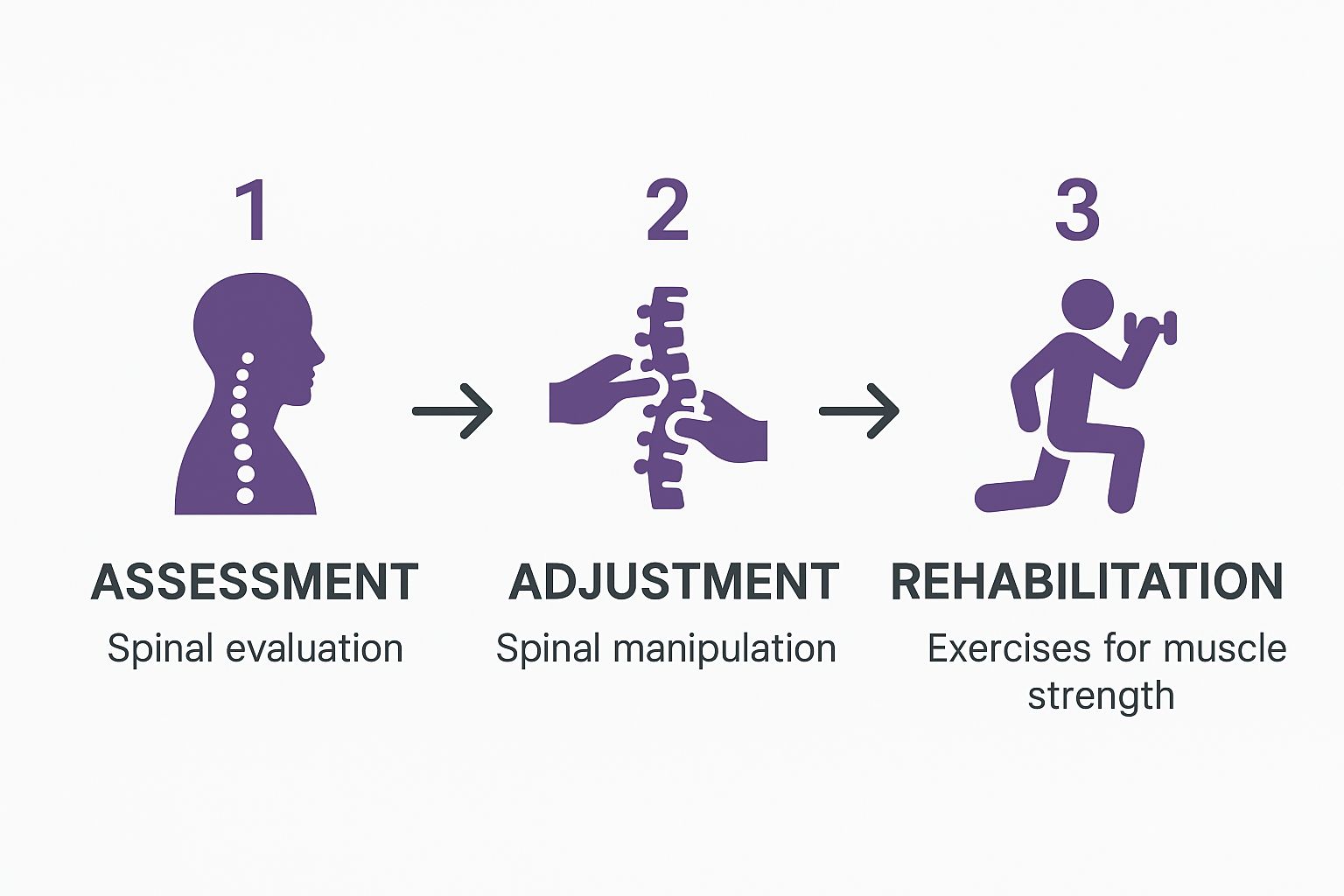
The cycle involves assessing the problem, correcting it through adjustments, and then strengthening the body to maintain the results.
The Three Phases of Sciatica Recovery
Your care will generally progress through these three stages:
- Acute Care: The initial focus is on pain relief. This phase involves more frequent visits aimed at reducing inflammation and alleviating pressure on the sciatic nerve. The primary goal is immediate symptom reduction.
- Corrective Care: Once the acute pain is under control, the focus shifts to correcting the root cause. Visit frequency may decrease as we work to improve spinal mechanics and restore long-term stability.
- Wellness Care: After the underlying issue is resolved, the final phase focuses on maintenance. Periodic check-ups help ensure your spine remains healthy and resilient, minimizing the risk of future problems.
The objective of chiropractic treatment for sciatica extends beyond silencing symptoms. It is about restoring your body’s natural ability to function correctly, leading to lasting health and stability.
Chiropractic spinal manipulation is a safe and effective starting point for sciatica. Research suggests that beginning with conservative, low-risk treatments is advisable, which is precisely what chiropractic care provides. Many of our patients begin to feel relief within about four visits, though individual responses can vary. By understanding these phases and the various Audubon Park Chiropractic treatments available, you can feel confident in your path to recovery.
Lifestyle Adjustments to Support Your Recovery
Think of your sciatica treatment as a collaborative effort. While chiropractic adjustments address the root cause, your daily habits play a crucial role in your recovery. They can either accelerate your healing or hinder it.
Your chiropractic care provides the foundation for recovery, and your daily routines build upon it. By taking an active role, you can achieve faster relief and strengthen your body’s resilience against future flare-ups. This involves making small, intelligent changes that reinforce the work being done in the clinic.
Building Strength and Flexibility
The spine is supported by a network of muscles. If these muscles are weak or tight, maintaining proper spinal alignment and keeping pressure off the sciatic nerve becomes difficult.
This is why specific exercises and stretches are so important. Gentle core-strengthening exercises, for example, create a natural brace for your spine, providing essential stability. Stretching tight hamstrings and the piriformis muscle can also offer significant relief by releasing tension that may compress the sciatic nerve. If a herniated disc is the cause of your sciatica, performing the correct exercises is critical. You can learn more about safe movements by reading about the best exercises for a herniated disc.
Ergonomics and Postural Awareness
How you sit, stand, and sleep has a significant impact on your back. It’s easy to spend hours in a poor posture without realizing it, which can continuously strain your lower back and counteract the benefits of your adjustments.
A quick review of your daily environment—your desk setup, car seat, or even your sofa—can reveal surprising sources of spinal stress. The goal is to create an environment that promotes a natural, neutral spine position throughout the day.
A few simple adjustments can make a substantial difference:
- At Your Desk: Ensure your chair allows your feet to be flat on the floor with your knees at a 90-degree angle. Your computer monitor should be at eye level to avoid hunching.
- Proper Lifting: Always bend at your knees, not your waist. Keep the object you are lifting close to your body to minimize strain on your lower back.
- Sleeping Position: Sleeping on your back with a pillow under your knees or on your side with a pillow between your knees helps maintain a neutral spine throughout the night.
These are not complex changes, but their consistent application makes them powerful tools. They work in conjunction with your chiropractic treatment for sciatica, helping you maintain a healthy, pain-free state long after your appointment.
Why More People Are Choosing Chiropractic First
There is a noticeable shift in how people are approaching back and leg pain. Increasingly, individuals are moving away from immediate reliance on medication or consideration of invasive surgery. Instead, they are seeking treatments that work in harmony with the body’s natural healing capabilities.
This growing preference for a conservative yet effective approach is a primary reason why chiropractic treatment for sciatica is becoming the first choice for so many.
This trend is reflected in global healthcare patterns. As awareness of spinal health grows, the demand for non-surgical solutions that address the root cause of pain is rising. People are seeking sustainable solutions over temporary fixes.
A Growing Demand for Effective Care
The market data supports this observation. The global sciatica treatment market was valued at $678 million in 2021 and is projected to continue growing, highlighting a significant worldwide demand for reliable solutions.
In the United States, up to 30% of patients with back pain, a large portion of whom suffer from sciatica, now seek treatments such as chiropractic spinal manipulation. You can discover more insights about this growing market and its driving factors.
This data confirms that choosing a chiropractor is a decision made by many. It is supported by a widespread and growing recognition of chiropractic’s value in modern healthcare.
By opting for chiropractic care first, patients are choosing a path that prioritizes correcting the underlying cause of their pain, which often leads to more sustainable, long-term results.
When you decide to see a chiropractor for your sciatica, you are not exploring an “alternative” treatment. You are joining millions who have found a respected, effective, and patient-focused method for returning to a life without pain.
Ready to Take Control of Your Sciatic Pain?

As this guide has shown, chiropractic treatment for sciatica offers more than just symptom management—it focuses on correcting the root cause of the problem. It is a safe, well-established path to reclaiming your life. By addressing the underlying mechanical issues that cause your pain, you can achieve lasting relief without relying on medications or more invasive procedures. The approach is centered on helping your body function as it was designed to.
If you are tired of sciatica controlling your daily activities, the next step is straightforward. Taking action to improve your health today is the most powerful move you can make toward a more active and comfortable future. You do not have to let the pain dictate your life.
Your journey to recovery begins with a single, decisive action. Investing in your health and well-being is always worthwhile.
Relief may be closer than you think.
Don’t let sciatic pain hold you back any longer. Contact Audubon Park Chiropractic today at (509) 327-4049 to schedule your consultation. We also welcome walk-ins, so you can start your journey to recovery at your convenience. We are here to help.
Ready to Feel Better?
Our Spokane chiropractors are ready to help. Walk-ins welcome — no appointment needed.

Dr. Michelle Snyder is a Spokane chiropractor with advanced training in women’s health, hormone balancing, pregnancy, and care for infants and children. She uses gentle low-force spinal adjustments alongside specialized therapies including Webster’s breech technique, allergy desensitization, cold laser therapy, EB cellular cleanse, and Methylation/genetic nutrition — offering patients a comprehensive, whole-body approach to wellness.
A Spokane resident for over 31 years, Dr. Michelle is deeply committed to her community, contributing time and resources to organizations including Meals-on-Wheels, Second Harvest, Ronald McDonald House, and the Union Gospel Mission.
📍 2909 W. Northwest Blvd, Spokane, WA 99205 | ☎ (509) 327-4049 audubonparkchiropractic.com
Further Reading: Back
- Back Pain, Sciatica, and Headaches: When Chiropractic Helps — And When It Doesn’t
- Chiropractic Without the Commitment: What No Long-Term Contracts Actually Means for Your Care
- What causes sciatic nerve pain: Symptoms and relief
- NW Spokane’s Neighborhood Chiropractor: Why Location, Parking, and Knowing Your Doctor Actually Matter
- Why Some People Are Afraid of the Chiropractor & And What We Do Differently