

This post is part of our complete guide to Neck Pain Treatment in Spokane, WA. Browse the guide for more in-depth information on treatments, exercises, and recovery strategies.
Chiropractic care for vertigo is a hands-on approach that addresses the root cause of dizziness by correcting misalignments in the upper part of your spine, especially in the neck. When your neck is out of alignment, it can interfere with the crucial nerve signals your brain needs to maintain balance. Restoring that proper alignment is often the key to feeling stable and getting back in control.
How Vertigo Can Turn Your World Upside Down
That sudden, overwhelming spinning sensation isn't just a bit of dizziness—it can completely derail your entire day. Vertigo is more than just feeling lightheaded; it's the false feeling that you or everything around you is in motion. This can make even the simplest activities feel like a monumental challenge.
It's important to remember that vertigo is a symptom, not a condition in itself. It often points to an issue with your inner ear, but frequently, the problem can also start in your neck.
When vertigo hits, it affects everything. You might lose confidence just walking across a room or feel unsafe behind the wheel of a car. Living with that constant uncertainty is frustrating and can make you feel cut off from the world.
The Real-World Impact of Vertigo
The effects of vertigo go way beyond just the spinning. It creates a ripple effect, touching almost every part of your life and well-being. Vertigo can seriously disrupt your daily routine, and it often leads to poor sleep. Beyond direct treatments, focusing on overall wellness, like improving sleep and recovery, can make a huge difference in managing these challenges.
It's a surprisingly common problem. One study found that over 35% of American adults aged 40 and older have dealt with some form of vestibular dysfunction—that's the system in charge of your balance. This just goes to show how many people are struggling with dizziness and balance issues.
Here are a few common ways vertigo can interfere with your life:
- Loss of Independence: Everyday tasks like grocery shopping or using the stairs can suddenly feel dangerous, making you rely on others for help.
- Trouble at Work: Staring at a computer screen or even just sitting at your desk can bring on symptoms, affecting your job performance.
- Emotional Strain: Constantly worrying about the next vertigo episode can lead to anxiety and stress, causing you to pull back from social events.
- Safety Risks: Driving, cooking, or using machinery can become genuinely risky, limiting what you can do each day.
To find a real, lasting solution, you have to understand that vertigo is often a sign of an underlying structural problem. When that problem is in the neck, it’s called cervicogenic dizziness. The good news? This is a condition that responds incredibly well to skilled chiropractic care.
By targeting the source of the issue, a chiro treatment for vertigo aims to restore your body’s natural sense of balance.
To help you understand this better, here's a breakdown of the most common forms of vertigo and how targeted chiropractic care can address the underlying issue.
Common Vertigo Types and How Chiropractic Care Helps
| Type of Vertigo | Primary Cause | How Chiropractic Care May Help |
|---|---|---|
| Benign Paroxysmal Positional Vertigo (BPPV) | Tiny calcium crystals (otoconia) become dislodged in the inner ear, sending false signals to the brain. | The Epley Maneuver, a specific series of head movements, can be used to guide the crystals back into place. |
| Cervicogenic Dizziness | Misalignments or dysfunction in the upper neck vertebrae (cervical spine) disrupt nerve signals related to balance. | Gentle spinal adjustments restore proper motion and alignment, calming nerve interference and improving balance signals. |
| Vestibular Neuritis / Labyrinthitis | Inflammation of the inner ear or the vestibulocochlear nerve, often caused by a viral infection. | While not a direct cure, chiropractic adjustments can improve nervous system function, reduce neck tension, and support overall healing. |
| Meniere's Disease | A buildup of fluid in the inner ear, causing episodes of vertigo, tinnitus, and hearing loss. | Upper cervical chiropractic care may help improve fluid drainage from the head and neck, potentially reducing the frequency and severity of attacks. |
Understanding what's causing your dizziness is the first step toward getting the right help.
It’s a strange feeling, isn't it? The sense that the whole world is spinning when you know you're standing still. It might seem bizarre that a problem in your neck could be the culprit, but the link between your spine and your sense of balance is surprisingly direct. Getting a handle on this connection is the first step to understanding how chiropractic care can help with vertigo.
Picture your nervous system as a complex communication highway. It's constantly sending messages between your body and your brain, giving it live updates on where you are and how you're moving. This system relies heavily on tiny sensors in the muscles and joints of your neck, called proprioceptors, which tell your brain the precise position of your head in space.
But what happens when the vertebrae in your upper neck get knocked out of alignment? It’s like a massive traffic jam on that highway. The signals from your proprioceptors get jumbled, feeding confusing information back to your brain.
How a "Kink in the Neck" Can Cause Dizziness
This signal breakdown is the very thing that triggers a condition we call cervicogenic dizziness. Essentially, your brain is getting conflicting reports. Your inner ear might be saying, "we're not moving," but the garbled messages from your neck sensors are screaming that you are. This mismatch is what creates that awful, disorienting sensation of vertigo.
Long-term habits can slowly make this problem worse over time. For instance, understanding what a chiropractor for poor posture can do sheds a lot of light on how everyday things, like slouching at a desk, contribute to the very spinal misalignments that can lead to dizziness.
Think of it this way: when your neck is out of alignment, it’s not just a bone-out-of-place issue; it’s a full-blown communication breakdown. Getting that alignment right allows the brain to receive clear, accurate signals again, restoring its natural ability to keep you balanced.
This infographic does a great job of showing how information is supposed to flow from the spine, up through the nerves, and to the brain—and what happens when something interferes with that path.
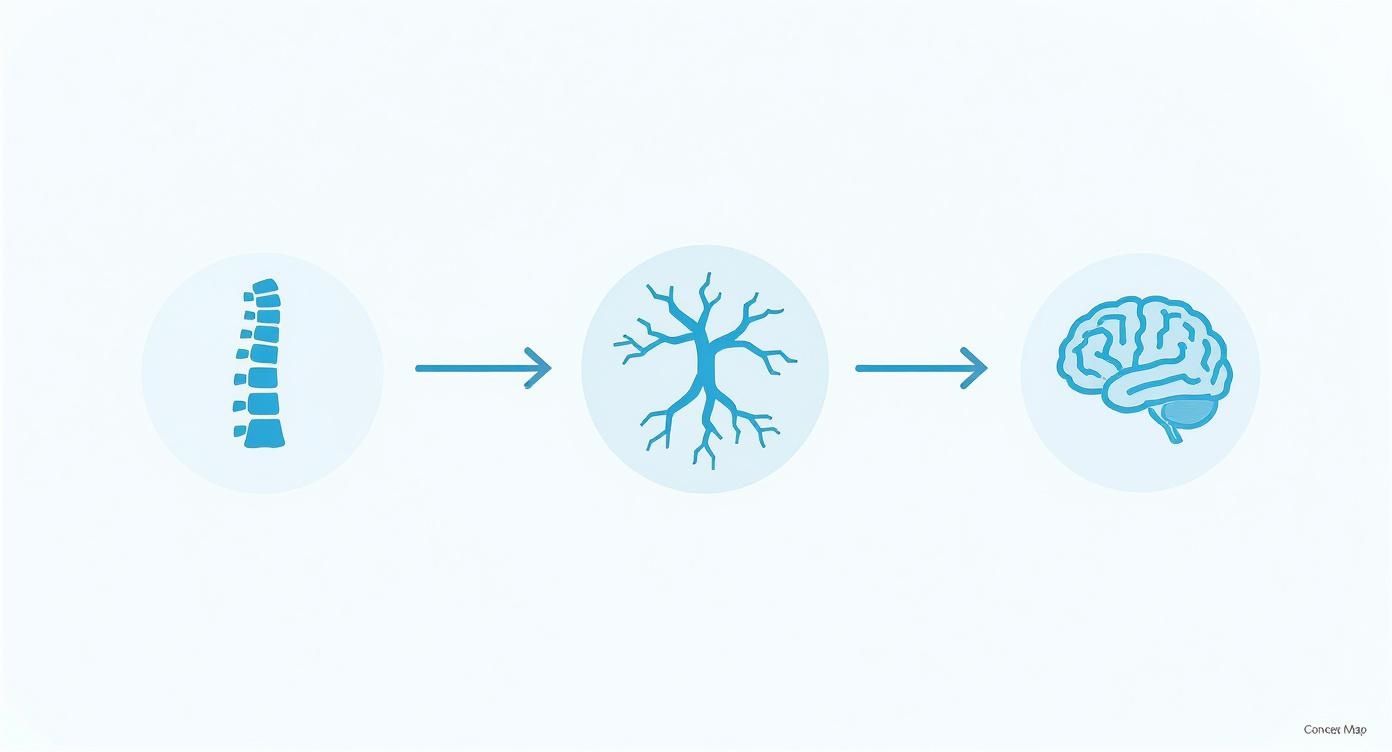
As you can see, a healthy, properly aligned spine is crucial for that clear nerve-to-brain communication you need for good balance and coordination.
This is exactly where a chiropractor comes in. We work directly with the spine and nervous system. Using precise, gentle adjustments, we can correct those misalignments in the upper neck, effectively clearing the traffic jam on your communication highway. This lets the proprioceptors do their job correctly, sending accurate signals so your brain can finally regain its sense of equilibrium. The goal isn't just to manage the dizzy spells; it's to fix the source of the miscommunication for good. It's a path toward real, lasting stability.
Don’t wait — relief is closer than you think.
Chiropractic Techniques That Restore Your Balance
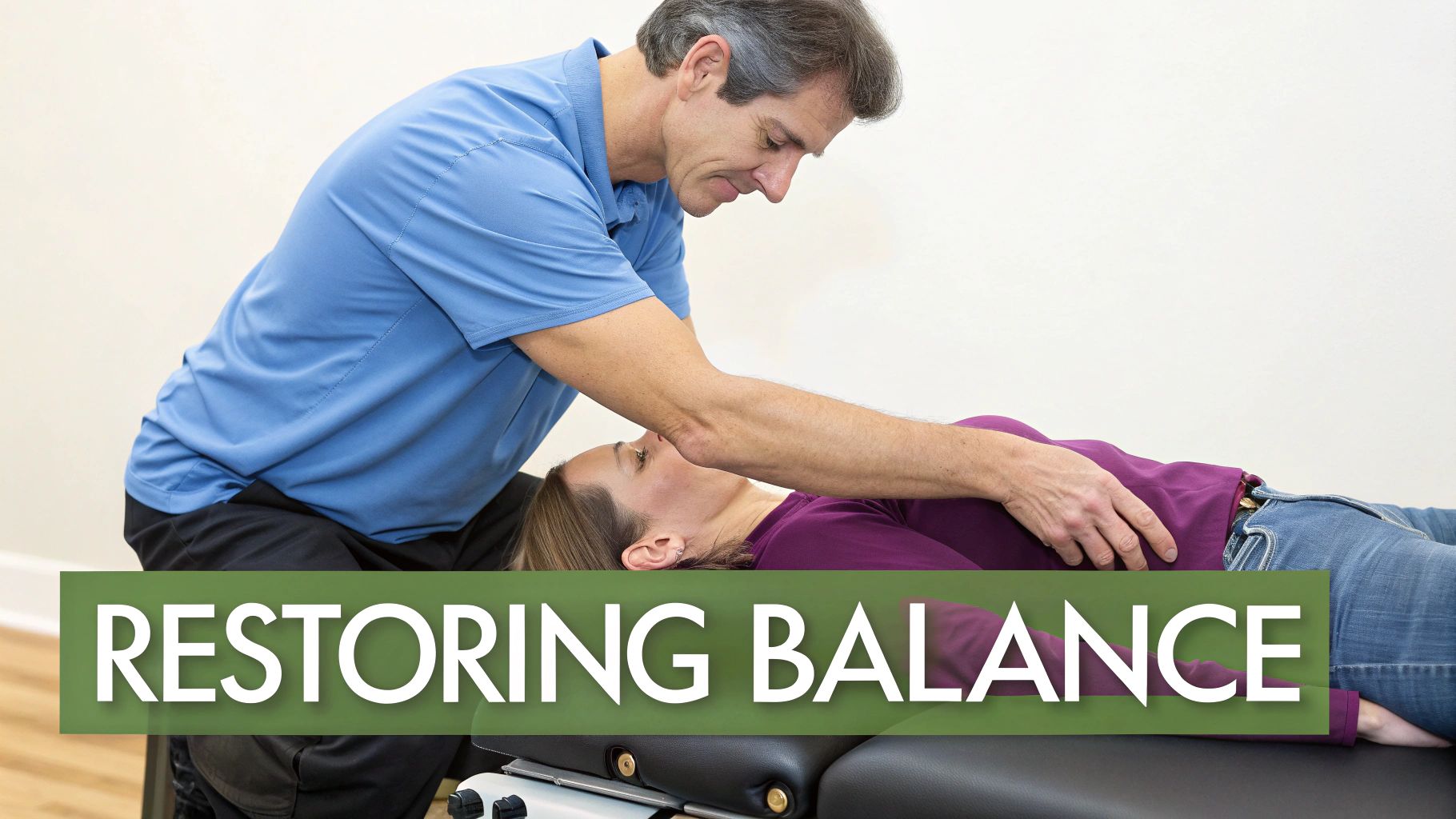
When we treat vertigo, it’s a methodical process, using targeted techniques to get to the very source of your imbalance. Instead of just trying to mask the spinning sensation, these methods are designed to correct the underlying structural and neurological issues causing it in the first place.
The foundation of care is the chiropractic adjustment, with a special focus on the cervical spine—your neck. Gentle, precise adjustments help restore proper movement to vertebrae that have gotten "stuck" or misaligned. This simple act can alleviate pressure on the surrounding nerves, clearing up the communication lines so your body and brain can get accurate balance signals again. If you're new to the idea, you can learn more about what happens during a chiropractic adjustment in our detailed guide.
Targeted Maneuvers for Inner Ear Issues
Sometimes, vertigo comes from a problem inside the inner ear, a condition called Benign Paroxysmal Positional Vertigo (BPPV). This happens when tiny calcium crystals break loose and drift into the wrong part of the inner ear, sending confusing signals to the brain that make you feel like you're spinning.
For BPPV, we use specific repositioning maneuvers. The most well-known of these is the Epley Maneuver. It involves a specific series of head and body movements we guide you through. The maneuver uses gravity to carefully shift those crystals out of the sensitive canal and into an area where they stop causing trouble.
This methodical approach highlights just how precise the diagnostic process is. By first figuring out the root cause—whether it’s a spinal misalignment or an inner ear problem—we can tailor the treatment for maximum effectiveness, ensuring you get the right care for your specific condition.
Spinal Adjustments for Cervicogenic Dizziness
When dizziness actually originates from the neck, we call it cervicogenic dizziness. In these cases, the focus shifts to Chiropractic Spinal Manipulative Treatment (CSMT). This approach has shown some truly remarkable success.
One case study, for example, followed a patient who reported immediate relief after targeted CSMT sessions. By the end of her treatment, she experienced an incredible 99% reduction in dizziness and a 78% improvement in her overall quality of life. These kinds of results show just how powerful targeted adjustments can be.
While chiropractic care is fantastic for the spine and balance, other approaches can also help. For instance, some people find great complementary support with expert physiotherapy at home for balance issues. Ultimately, these targeted techniques provide a clear path toward getting your body’s natural stability back.
Who Really Benefits from Chiropractic Vertigo Treatment?
While vertigo can make anyone’s world spin, the best way to stop it depends entirely on what’s causing it in the first place. Chiropractic care isn't a cure-all for every type of dizziness, but when the problem starts in the neck, it can be a game-changer. So, how do you know if it’s the right move for you?
The people who see the most success with chiro treatment for vertigo are almost always those whose dizziness is tied to their neck. We call this cervicogenic dizziness, which is just a technical way of saying that misalignments in your upper spine are interfering with the nerve signals that control your balance.
If your dizzy spells come with a side of neck pain, stiffness, or headaches, that’s a huge clue that a spinal issue could be the real troublemaker.
Are You an Ideal Candidate for Chiropractic Care?
Certain lifestyles or past injuries can make you much more likely to develop the kind of neck issues that lead to vertigo. See if any of these sound familiar:
- You have poor posture. All those years slouched over a desk or staring down at a phone put a ton of stress on your neck vertebrae, eventually pulling them out of place.
- You've had a head or neck injury. Even a "minor" fender bender or a fall from years ago can create subtle damage that shows up as dizziness much later.
- Your job is physically demanding. Repetitive motions and heavy lifting can strain the muscles in your neck and shoulders, pulling your spine out of its natural alignment.
Here’s the bottom line: if your vertigo gets worse with certain neck movements or when you hold your head in a specific position, getting a chiropractic evaluation is a really smart next step. Fixing the underlying structural problem is often the only way to get lasting relief.
Age and Finding Relief
We’ve also seen chiropractic care be incredibly effective for older adults struggling with vertigo. It's not just an observation; research backs it up. A study looking at data from a National Health Interview Survey found that people aged 65 and older were far more likely to say a chiropractor helped their dizziness than younger patients were.
This makes perfect sense when you think about it. The study noted that over 35% of people reporting balance issues were in this age group. Age-related posture changes and wear-and-tear can lead directly to the spinal problems that cause cervicogenic dizziness. You can read more about these findings on chiropractic care for older adults.
By getting to the root of these foundational issues, chiropractic offers a gentle, non-invasive way to get your stability back and improve your quality of life.
If your vertigo feels connected to your neck or if you see yourself in any of these descriptions, you could be a perfect candidate for care. You don't have to let dizziness run your life.
What to Expect During Your First Vertigo Consultation

Taking that first step to address your vertigo can feel a little daunting, but knowing what to expect during your first visit can make all the difference. Your initial consultation is a fact-finding mission where we work together to uncover the root cause of your dizziness.
We'll start by simply talking. It’s a comprehensive chat about your health history, when the vertigo started, what it feels like, and anything you've noticed that might trigger it. Your personal experience is the most important piece of the puzzle.
The Diagnostic Process
After we’ve talked through your history, we'll move on to a physical and neurological exam. This is a careful process designed to pinpoint where the problem is coming from. A solid diagnosis is the bedrock of any effective chiro treatment for vertigo.
Here’s what that examination usually involves:
- Spinal Assessment: We'll carefully check your neck and upper back for any misalignments, stiffness, or tenderness that could be a clue, especially in cases of cervicogenic dizziness.
- Neurological Tests: These are simple, non-invasive tests that look at your balance, coordination, and even your eye movements. They help us figure out if the issue is originating from your spine or your inner ear.
- Positional Testing: We might guide you through a few specific head and body movements. The goal is to see if we can replicate the vertigo, which is a classic way to diagnose BPPV.
The whole point of this thorough evaluation is to get an absolutely clear picture of what’s happening in your body. Once we understand the specific cause, we can build a care plan that’s actually designed for you.
You're an active partner in your own recovery. We want you to feel comfortable and in the loop every step of the way, knowing that we're on this journey back to balance together.
If dizziness is turning your world upside down, getting a clear diagnosis is the first step toward getting back on solid ground.
All the theory in the world doesn't mean much if it doesn't actually help people. The real test for any treatment is seeing how patients improve in their day-to-day lives. For people struggling with vertigo, the results of chiropractic care often speak for themselves.
When we combine precise adjustments with other tailored therapies, the goal isn't just to quiet the symptoms for a little while. It's about getting to the root of what's causing the dizziness in the first place, leading to real, lasting stability. We see people go from being debilitated by their condition to getting their lives back.
The Proof Is in the Numbers
To see just how much progress a person is making, we often use a tool called the Dizziness Handicap Inventory (DHI). It’s a simple questionnaire that gives us a score, showing us exactly how much vertigo is impacting someone's life, both physically and emotionally. A lower score means a better quality of life.
It's one thing to hear a patient say, "I feel better." It's another thing entirely to see their DHI score drop and have concrete data to back it up. That's when you know the treatment is truly working.
A case study from 2020 really drives this home. Researchers worked with eight patients who had different types of vestibular disorders, including Meniere’s disease and post-concussion syndrome. They used a combination of upper cervical chiropractic care and personalized vestibular rehab.
In just 30 days, every single patient saw major improvements. One person with Meniere’s disease watched their score drop from 34 all the way down to 12—that's a 64.71% improvement! Another patient dealing with post-concussion syndrome went from a 78 to a 32, a 58.97% reduction. You can dig into the full findings on this chiropractic vertigo treatment yourself.
These aren't just statistics; they're stories of people getting their independence and confidence back. It shows how powerful this approach can be for finding a long-term solution to dizziness.
Take Your First Step Toward a Life Without Dizziness
You don't have to put up with the constant, nagging uncertainty that vertigo brings into your life. As we've seen, many kinds of dizziness are tied directly to the health of your spine, and a focused chiro treatment for vertigo is a proven way to get lasting relief. That journey back to feeling stable all starts with one thing: a proper diagnosis.
Just waiting around for the next dizzy spell to throw your day off course isn't a plan. It’s time to get to the bottom of it and find a real solution that tackles the root cause of your imbalance. When we correct those underlying spinal issues, we can restore the clear communication pathway between your body and brain. That's how you get your balance—and your confidence—back.
Ready to Find Your Footing Again?
Taking a proactive approach makes all the difference. You can even support your recovery right at home with gentle movements designed to keep your neck flexible and strong.
Learning some simple but effective active range of motion exercises is a great way to complement the care you get in our office and empower you on your path back to feeling good. The goal here is to build a solid foundation for a stable, confident life, free from the disruption of dizziness.
The most important takeaway is this: you are not powerless against vertigo. With the right care plan, you can address the structural and neurological issues causing your symptoms and get back to living life on your own terms.
Don't let another day be defined by dizziness. Don’t wait for the world to stop spinning on its own. Take control of your health and find a lasting solution. If you’re ready to get to the root of your vertigo and reclaim your sense of balance, the team at Audubon Park Chiropractic is here to guide you.
Contact Audubon Park Chiropractic today at (509) 327-4049 to schedule your consultation, or simply walk in for treatment. Let's work together to get you back on solid ground.
Ready to Feel Better?
Our Spokane chiropractors are ready to help. Walk-ins welcome — no appointment needed.

Dr. Michelle Snyder is a Spokane chiropractor with advanced training in women’s health, hormone balancing, pregnancy, and care for infants and children. She uses gentle low-force spinal adjustments alongside specialized therapies including Webster’s breech technique, allergy desensitization, cold laser therapy, EB cellular cleanse, and Methylation/genetic nutrition — offering patients a comprehensive, whole-body approach to wellness.
A Spokane resident for over 31 years, Dr. Michelle is deeply committed to her community, contributing time and resources to organizations including Meals-on-Wheels, Second Harvest, Ronald McDonald House, and the Union Gospel Mission.
📍 2909 W. Northwest Blvd, Spokane, WA 99205 | ☎ (509) 327-4049 audubonparkchiropractic.com
Further Reading: Neck
- How to fix rounded shoulders: A Practical Guide
- Chiropractic for Seniors & Managing Back Pain, Arthritis and Age-Related Stiffness Safely
- Gentle Chiropractic for Nervous Patients & Options that Don’t Involve Cracking
- What to Do if You Wake Up with Neck or Back Pain
- Finding the Best Pillow for Neck Support