

This post is part of our complete guide to Back Pain Treatment in Spokane, WA. Browse the guide for more in-depth information on treatments, exercises, and recovery strategies.
A burning sensation in your lower back, specifically on the right side, is your body’s way of sending a specific signal. It’s distinct from a typical dull ache or muscle soreness from a workout. When this discomfort is described as a burning pain, it often points toward nerve irritation.
Decoding the Burning Sensation in Your Lower Right Back
When you have a persistent, hot, or searing pain concentrated in one spot in your lower back, it’s understandable to feel concerned. This sensation is fundamentally different from a general muscle ache. Many people describe it as feeling like it’s “on fire,” which makes sense—that sensation often follows the precise path of an aggravated nerve.
A useful analogy is to think of it like a faulty electrical wire that’s shorting out and sending sparks. When a nerve in your lower spine is compressed, pinched, or inflamed, it can send these “hot” signals that your brain interprets as burning.
The good news is that this type of discomfort, while unsettling, is usually linked to manageable conditions that respond well to appropriate care. The most critical first step is identifying what is causing this alarm signal to go off.
Why Does It Burn?
A burning sensation is nearly always a tell-tale sign of nerve involvement. Your nerves act as the body’s communication superhighway, sending sensory information back and forth. When they are under pressure or inflamed, they can start sending scrambled, faulty signals.
This nerve “misfiring” can manifest in several ways:
- Sharp, searing pain: This may feel like a sudden jolt or a constant hot poker in your back.
- Radiating discomfort: The burning might not stay in one spot. It often travels down into the buttock or even the leg.
- Tingling or “pins and needles”: This is another common sign that nerve signals are being disrupted and frequently accompanies the burning sensation.
The infographic below illustrates the primary culprits that can lead to this specific type of pain.
As you can see, whether the issue originates with a nerve, muscle, or joint, the result is irritation that your brain interprets as that distinct burning feeling.
If this experience sounds familiar, you are not alone. Back pain is a significant global issue and a leading cause of disability, affecting an estimated 619 million people in 2020. Research indicates that up to 84% of adults will experience back pain at some point in their lives, with a substantial portion of those cases involving burning or nerve-related symptoms. This underscores the importance of obtaining a proper diagnosis and care plan.
For a broader perspective on the topic, this guide on understanding lower back pain provides valuable insights. Next, we will explore the specific causes of your discomfort and outline the path toward relief.
Don’t wait — relief is closer than you think.
Decoding the Common Causes of Right-Sided Back Pain
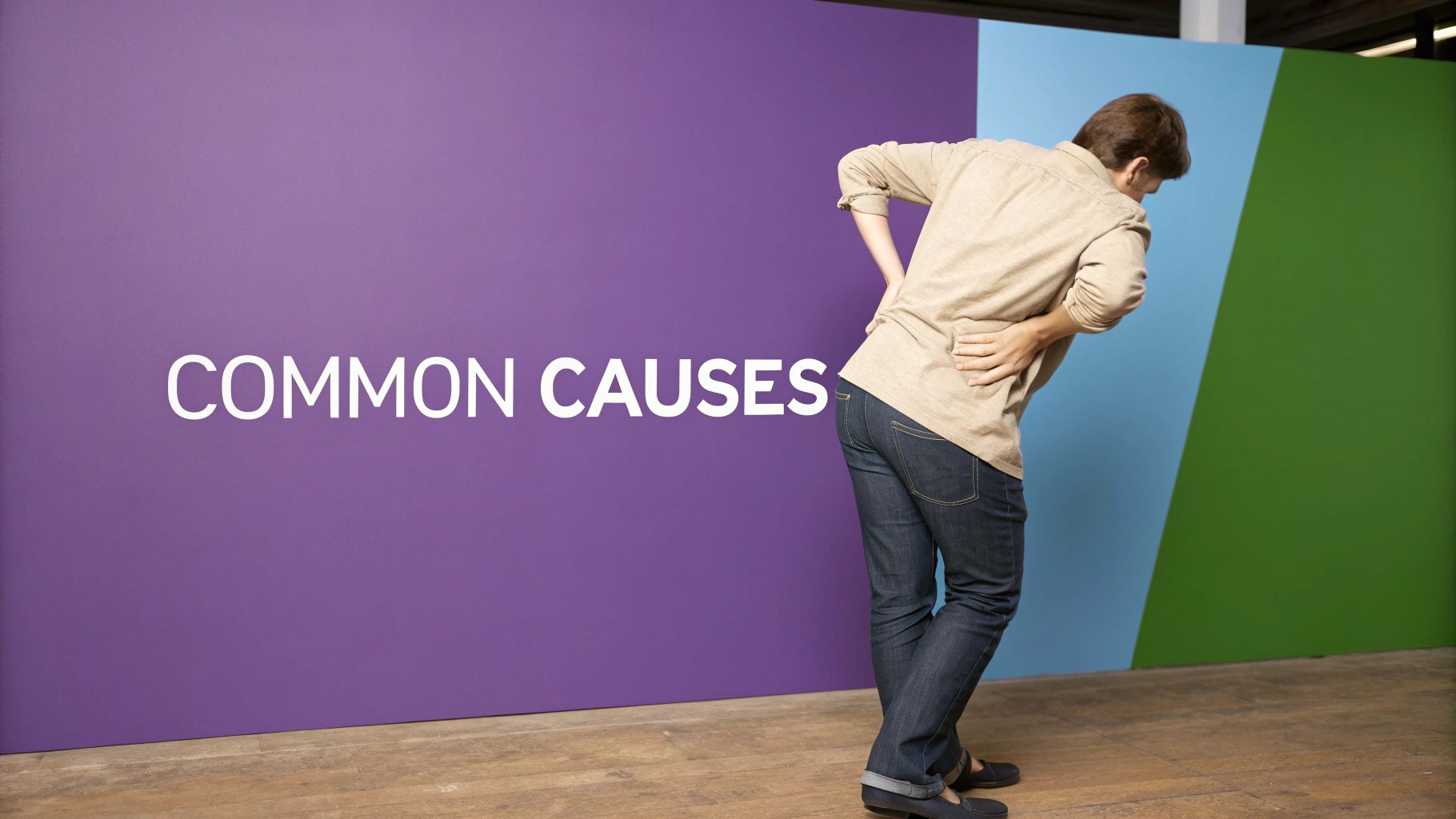
That sharp, burning sensation in your lower right back can be unsettling. However, identifying its origin is the first step toward effective relief. Frequently, this specific sensation is your body’s alarm system, signaling an irritated nerve, a strained muscle, or an inflamed joint.
Let’s examine some of the most common reasons you might be feeling that heat.
Nerve-Related Issues: The Usual Suspects
When pain feels hot or electric, nerves are almost always involved. Think of your nerves as electrical wires. If something pinches or puts pressure on that wire, it can short-circuit the signal, and your brain often interprets that interference as a burning sensation.
The most well-known culprit is sciatica. The sciatic nerve is the largest in the body, originating in the lower back and running down the entire length of your leg. If a structure on the right side of your spine—such as a bulging disc or a bone spur—presses on it, the result is that classic burning pain that travels down your leg.
It is important to understand that sciatica is not a condition itself but a symptom of an underlying problem. The pain is simply your body’s way of communicating that the nerve is under pressure.
For some, this can be a dull ache, but for others, it’s a jolt of sharp, searing pain. The tell-tale sign is that the pain radiates rather than staying in one place. If this sounds like what you are experiencing, learning more about how to treat a pinched nerve can be a beneficial starting point.
Muscular Strains and Sprains
Sometimes, the cause is simpler: a pulled muscle. Lifting a heavy object with a twist, making a sudden awkward movement, or overdoing it during physical activity can easily overstretch or tear the muscle fibers in your lower back.
When these muscles are injured, inflammation occurs. This not only creates a deep, constant ache but can also irritate the smaller nerves within the muscle tissue, leading to a localized burning feeling.
When Discs and Joints Are the Problem
Your spine is a complex structure of bones (vertebrae) cushioned by soft, gel-filled discs. When these discs encounter problems, that burning pain can manifest.
- Herniated Disc: If a disc’s tough outer layer tears, the soft inner material can bulge out and press directly on a nerve root on the right side of your spine.
- Degenerative Disc Disease: With age, our discs can wear down, losing height and their ability to absorb shock. This can lead to bone-on-bone friction or the development of bone spurs that pinch nearby nerves.
Another key factor is the sacroiliac (SI) joint, which connects your pelvis to your spine on the right side. If this joint becomes inflamed—a condition known as sacroiliitis—it can cause a sharp, burning pain felt deep in the lower back or buttock, typically on one side.
To help you distinguish between these possibilities, we’ve created a quick comparison of the most common issues.
Quick Guide to Potential Causes and Symptoms
This table breaks down what you might be feeling based on the potential underlying cause.
| Potential Cause | What It Feels Like | Where the Pain Spreads | What Makes It Worse |
|---|---|---|---|
| Sciatica | Sharp, shooting, burning, or electric shock | Radiates from the lower back, through the buttock, and down the leg | Sitting for long periods, coughing, sneezing, bending forward |
| Muscle Strain | A dull ache with a localized burning sensation | Stays in the lower right back, maybe into the buttock | Twisting, bending, standing up from a seated position |
| Herniated Disc | Sharp, stabbing, or burning pain; can also cause numbness or weakness | Can be localized or radiate down the leg (causing sciatica) | Bending forward, lifting, sitting |
| SI Joint Dysfunction | Deep, sharp, or dull ache that can feel hot or burning | Primarily in the lower back and buttock, may refer to the groin or thigh | Standing up, walking upstairs, rolling over in bed |
Remember, this guide is a starting point. The way pain is experienced can vary significantly from person to person, so obtaining a proper diagnosis is always the most effective path forward.
How Your Daily Habits Influence Back Health

More often than not, a burning sensation in your lower back right side doesn’t stem from a single, dramatic injury. It is typically the cumulative effect of daily habits, from how we sit at our desks to how we sleep. These seemingly minor actions add up, creating a chain reaction of stress that eventually manifests as persistent, nagging pain.
Think of your body as a connected system, often referred to as the kinetic chain. An issue in one area can easily create imbalances that travel up the body, and a surprisingly common starting point is your feet.
The Foundation of Your Posture
Your feet are the foundation for your entire body. When they lack proper support, the effects can ripple upward through your ankles, knees, and hips, ultimately affecting your lower back. This type of misalignment can cause your pelvis to tilt or twist, placing uneven strain on the muscles and nerves on one side.
This is particularly true for individuals with structural issues like flat feet. The absence of a proper arch alters the way you walk and move, forcing your lower back to compensate for the imbalance. Over time, this added stress can lead to inflammation and nerve irritation. Studies have demonstrated a significant link between flat feet and higher rates of low back pain, which can certainly manifest as that burning feeling. You can read the full research about these biomechanical risk factors to see just how deep the connection goes.
The Impact of Prolonged Sitting
Modern life often involves a great deal of sitting—at a desk, in a car, or on a couch. This prolonged, static posture is a major contributor to lower back problems. When you slouch, your spine loses its natural “S” curve, placing significant pressure on your lumbar discs and straining the muscles that support you.
Over time, poor seated posture weakens your core and tightens your hip flexors, pulling your pelvis forward. This anterior pelvic tilt increases the curve in your lower back, compressing the joints and nerves on the right side.
To counteract this, creating an ergonomic workspace is essential. A few simple adjustments can make a substantial difference in preventing that nagging burning sensation in your lower back right side.
- Chair Height: Your feet should rest flat on the floor with your knees at a 90-degree angle.
- Monitor Position: The top of your screen should be at or just below eye level to keep your neck in a neutral, comfortable position.
- Lumbar Support: Use a small pillow or a chair with built-in support to maintain the natural curve of your lower back.
Even with an ideal setup, remember that movement is crucial. Set a reminder to get up, stretch, and walk around for a few minutes every hour. Making these small changes can protect your spine from the cumulative stress of daily life. For a deeper dive, check out our guide on posture and how it can cause problems right here on our blog.
Effective At-Home Stretches and Care for Immediate Relief

When a burning pain flares up on the right side of your lower back, you need immediate relief. Fortunately, you can take action right away. Several simple at-home strategies can help calm the area, ease muscle tension, and get you through the acute phase. These techniques are easy to perform and can make a significant difference.
One of the first questions people often ask is whether to use ice or heat. The answer depends on the nature of your back issue.
For the first 24-48 hours after the pain starts, ice is generally recommended. Cold therapy helps constrict blood vessels, which is effective for reducing inflammation and numbing sharp, fiery pain. After a couple of days, switching to heat can help relax tight muscles and increase blood flow to the area, promoting healing.
Gentle Stretches for Lower Back Relief
Stretching is one of the most powerful tools for combating a burning sensation in the lower back right side. The objective is to gently relieve pressure on nerves and muscles without exacerbating the condition. If any movement causes sharp pain, ease off immediately.
These stretches are designed to target the key muscles that often contribute to lower back problems when they become too tight.
1. Knee-to-Chest Stretch
This is a classic for a reason. It gently lengthens the lower back muscles and can provide more space for the spinal nerves.
- Lie flat on your back with your knees bent and feet flat on the floor.
- Slowly bring your right knee toward your chest, using your hands to gently pull it closer.
- Hold for 20-30 seconds. You should feel a gentle stretch in your lower back and glute.
- Release and repeat on the left side. Aim for 3 repetitions on each side.
2. Piriformis Stretch
Deep within your glutes lies a small muscle called the piriformis. When it becomes tight, it can press on the sciatic nerve, causing significant discomfort.
- Lie on your back with both knees bent.
- Cross your right ankle over your left knee to form a “figure four” shape.
- Gently pull your left thigh toward you until you feel a comfortable stretch in your right buttock.
- Hold for 20-30 seconds, then switch legs.
3. Seated Hip Flexor Stretch
Prolonged sitting can cause the hip flexors to become incredibly tight. This can pull your pelvis forward, placing considerable strain on your lower back.
- Kneel on your right knee and place your left foot in front of you, creating a 90-degree angle with your left leg.
- Keeping your back straight, gently push your hips forward. You will feel the stretch in the front of your right hip.
- Hold for 20-30 seconds before switching to the other side.
Incorporating these movements into your daily routine can provide substantial relief. If you want to explore more ways to move safely, these active range of motion exercises can help improve your flexibility and strength as you recover.
When You Should See a Chiropractor for Back Pain
While at-home stretches and rest can sometimes provide relief, it is crucial to recognize when professional intervention is necessary for a persistent burning sensation in your lower back right side. If the pain does not improve after about a week of self-care, or if it begins to interfere with your daily life, it’s time to seek a proper evaluation.
Ignoring persistent pain can allow a minor issue to develop into something more significant. There are also clear signs that indicate you should see a chiropractor right away.
Red Flags That Signal a Deeper Issue
Certain symptoms should never be ignored. Consider these your body’s emergency signals—it’s communicating that something requires immediate attention.
- Pain that worsens or doesn’t improve: If the burning feeling persists for more than a week or intensifies even with rest, it is a strong indicator that the underlying cause is not resolving on its own.
- Numbness or weakness: Any tingling, numbness, or muscle weakness that travels from your back into your buttock or down your leg suggests nerve compression that requires a professional diagnosis.
- Pain after an accident: If your back pain began immediately after a fall, car accident, or other direct injury, an evaluation is essential to rule out fractures or serious soft tissue damage.
Although a burning sensation in the lower right back is rarely a sign of a life-threatening condition, its impact on your quality of life can be substantial. Up to 90% of adults in the United States will experience back pain at some point, and for many, these episodes can lead to recurring problems that limit their activities. You can discover more insights about the global impact of back pain to understand why timely care is so important.
The Chiropractic Approach to Back Pain
When you visit a chiropractor, the first step is a thorough diagnostic process to pinpoint the exact source of your pain. The goal is not just to treat the symptom but to identify and address the root cause. This involves a detailed physical examination to assess your posture, range of motion, and nerve function.
A chiropractor’s primary goal is to restore proper spinal alignment and relieve pressure on the nerves. This approach addresses the mechanical source of the burning sensation, rather than just masking the pain.
Based on these findings, a personalized treatment plan is developed, which may include:
- Spinal Adjustments: These are gentle, targeted manipulations to correct misalignments in your vertebrae, which can often provide immediate relief from pressure on irritated nerves.
- Soft Tissue Therapy: Specialized techniques are used to relax tight muscles, reduce inflammation, and improve blood flow to the affected area.
- Corrective Exercises: You will receive a tailored program of stretches and strengthening exercises designed to support your spine and help prevent future flare-ups.
Your Next Step Toward a Pain-Free Back
We’ve covered a significant amount of information, and it should be clear that a burning sensation in your lower right back is more than just a random ache—it’s a specific signal from your body that something needs attention.
Understanding the potential sources, from a pinched nerve to your daily habits, is a critical first step. For additional strategies, learning about the powerful benefits of massage for back pain relief can also be a valuable component of your recovery.
If the burning feeling persists or is causing you concern, the next step is to get a professional evaluation. Don’t simply hope it will resolve on its own. The last thing you want is for this discomfort to become a chronic issue that prevents you from enjoying your life.
Taking action is the key to recovery. A professional evaluation can provide a clear diagnosis and a personalized treatment plan, preventing minor issues from becoming long-term challenges.
Our team is here to determine the root cause of your pain and create a clear path toward relief. We are dedicated to helping you feel your best again.
Your Top Questions About Lower Back Pain Answered
Trying to determine the cause of that ache in your lower back can lead to many questions. Here are straightforward answers to the questions we hear most often from patients dealing with a burning sensation on the right side of their lower back.
Can Stress Cause a Burning Sensation in My Lower Back?
Yes, absolutely. When you experience stress, your body enters a “fight or flight” mode, releasing hormones like cortisol and adrenaline. This response is not just mental; it causes your muscles to physically tighten.
If you are chronically stressed, your lower back muscles can remain in this tense state. Over time, this can lead to muscle fatigue, inflammation, and even nerve irritation, which often manifests as a distinct burning feeling.
How Can I Tell if My Back Pain Is From a Muscle or a Nerve?
This is an excellent question, as distinguishing the source is key to finding relief. The sensations are typically quite different.
- Muscle Pain: This is often described as a deep, dull ache or soreness localized to one spot. It usually worsens with movement, such as bending or twisting.
- Nerve Pain: This is characterized by sharp, shooting, or burning sensations. It often travels or radiates along a nerve path, such as from your back down into your leg. Tingling and numbness are also classic signs of nerve involvement.
Why Does the Burning Pain Get Worse After Sitting?
Sitting for prolonged periods, especially with poor posture, places significant pressure on the discs in your lumbar spine. This can cause a disc to bulge and press on a nearby nerve root.
Additionally, sitting shortens the muscles at the front of your hips (your hip flexors). When you stand up, these tight muscles can pull your pelvis forward, adding further strain to your lower back. This is often when that familiar burning pain intensifies.
When Is a Burning Sensation a Sign of Something Serious?
In most cases, a burning sensation in the lower back is not a medical emergency. However, there are a few red flags that you should never ignore.
If your back pain is accompanied by a sudden loss of bowel or bladder control, severe weakness in your legs, or numbness in your groin or saddle area, you should seek emergency medical care immediately. These are potential signs of a rare but serious condition called cauda equina syndrome.
You don’t have to let persistent burning pain dictate your life. If you’re ready for a clear diagnosis and a personalized plan to get you back to feeling your best, our team at Audubon Park Chiropractic is here to help.
Take the first step towards relief. Contact Audubon Park Chiropractic today at (509) 327-4049 or simply walk in for an evaluation. We are ready to help you find the source of your pain and guide you on the path to lasting relief.
Ready to Feel Better?
Our Spokane chiropractors are ready to help. Walk-ins welcome — no appointment needed.

Dr. Michelle Snyder is a Spokane chiropractor with advanced training in women’s health, hormone balancing, pregnancy, and care for infants and children. She uses gentle low-force spinal adjustments alongside specialized therapies including Webster’s breech technique, allergy desensitization, cold laser therapy, EB cellular cleanse, and Methylation/genetic nutrition — offering patients a comprehensive, whole-body approach to wellness.
A Spokane resident for over 31 years, Dr. Michelle is deeply committed to her community, contributing time and resources to organizations including Meals-on-Wheels, Second Harvest, Ronald McDonald House, and the Union Gospel Mission.
📍 2909 W. Northwest Blvd, Spokane, WA 99205 | ☎ (509) 327-4049 audubonparkchiropractic.com
Further Reading: Back
- Back Pain, Sciatica, and Headaches: When Chiropractic Helps — And When It Doesn’t
- Chiropractic Without the Commitment: What No Long-Term Contracts Actually Means for Your Care
- What causes sciatic nerve pain: Symptoms and relief
- NW Spokane’s Neighborhood Chiropractor: Why Location, Parking, and Knowing Your Doctor Actually Matter
- Why Some People Are Afraid of the Chiropractor & And What We Do Differently