

This post is part of our complete guide to Neck Pain Treatment in Spokane, WA. Browse the guide for more in-depth information on treatments, exercises, and recovery strategies.
Finding the Best Pillow for Neck Support – A pathway to a Better Night’s Sleep
Waking up with a stiff, aching neck is a frustrating start to any day, and your pillow is a frequent cause. The best pillow for neck support isn’t a single luxury product; it’s a tool designed to keep your spine in a neutral alignment based on your body and sleep habits.
Choosing the right pillow is less about brand names and more about preventing chronic pain and improving sleep quality.
Don’t wait — relief is closer than you think.
Why Your Pillow Is Causing Your Neck Pain
If you’ve ever felt like you “slept wrong,” it’s often because your pillow forced your neck into an unnatural position for hours. A pillow that’s too high or too flat creates a poor angle between your head and spine, straining the muscles and ligaments in your neck and upper back.
Over time, this continuous misalignment can lead to significant issues:
- Chronic stiffness and soreness upon waking
- Tension headaches that originate at the base of your skull
- Reduced mobility and nagging discomfort throughout the day
- Nerve compression, which can cause tingling or numbness in your arms
The primary function of a supportive pillow is to fill the gap between your head and the mattress, keeping your spine straight. It is a tool for maintaining good posture while you sleep, which is as important as maintaining good posture during the day. This is especially critical for anyone dealing with postural issues. We explore this topic in our guide on how to fix forward head posture.
The Growing Demand for Better Support
It is not surprising that the market for specialized pillows has expanded. The global cervical pillow market, designed specifically for neck support, is projected to reach USD 7 billion by 2033.
This substantial growth indicates that people are becoming more aware of how sleep ergonomics affect their overall health, particularly as neck and back problems become more prevalent.
The “best” pillow is highly personal. It is the one that correctly fills the space between your head, neck, and shoulders, ensuring your spine remains in a straight, neutral line all night.
Finding the right fit requires looking at your own sleep habits. The guide below is a useful starting point for matching your needs with the right kind of support, helping you choose a pillow that helps alleviate pain rather than contributing to it.
Quick Guide to Choosing Your Neck Support Pillow
Choosing a pillow can be overwhelming. Breaking it down by your sleep position is the most effective way to start. This table provides a simple reference to help you find what works for you.
| Consideration | Back Sleeper | Side Sleeper | Stomach Sleeper |
|---|---|---|---|
| Pillow Loft (Height) | Low to medium loft to keep your head from tilting forward. | Medium to high loft to fill the space between your ear and shoulder. | Very low and soft, or no pillow at all for your head. |
| Firmness | Medium-firm to provide support without pushing your head up. | Firm to extra-firm to prevent your head from sinking down. | Soft to avoid pushing your neck into an unnatural upward angle. |
| Shape | Cervical pillows with a contour for the neck are effective. | Gusseted or contoured pillows that support the neck and shoulder. | Thin, flat pillows are best. A pillow under the hips can help alignment. |
| Material | Memory foam, latex, or buckwheat for contouring support. | Dense memory foam or latex offers the best support. | Down, down alternative, or shredded memory foam. |
The main goal is to maintain a straight line from your head down your spine, regardless of your sleeping position. Use this guide to narrow your options and focus on pillows built for your body’s specific needs.
How Your Sleep Position Dictates Your Pillow Choice
The single most important factor to consider when searching for a neck support pillow is your sleeping position.
A pillow that is ideal for a back sleeper can be detrimental for a side sleeper. The objective is always the same: maintain a neutral spine. This means your head and neck should form a straight, relaxed line with the rest of your body.
When you know your primary sleep position, you can select a pillow with the appropriate loft (its height) and firmness. Otherwise, you risk forcing your neck into a strained angle for hours each night.
This guide can help you identify which pillow type is most suitable for your habits.
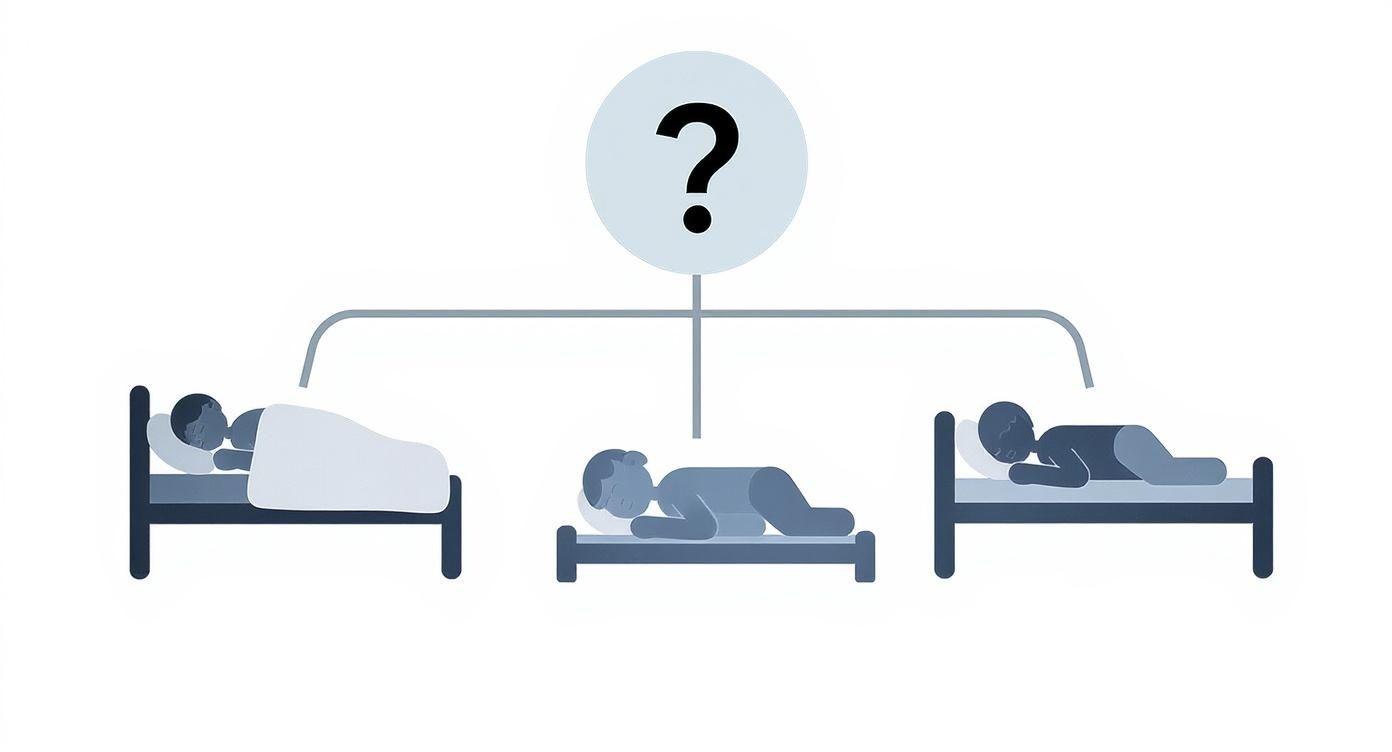
As shown, each position creates a unique space between your head and the mattress. The right pillow fills that space to keep you properly aligned.
Side Sleepers Need Height and Firmness
Side sleepers have the largest gap to fill—the space between their ear and the mattress. For this reason, a firmer, higher-loft pillow is essential.
Without sufficient height and support, your head will droop, bending your neck and placing strain on your shoulder and cervical spine. You need a pillow firm enough to support the weight of your head throughout the night without compressing. Your nose should align with the center of your body.
Back Sleepers Require Cradle Support
For back sleepers, the key is a pillow that is supportive without being excessively high. A pillow with too much loft will push your head forward, forcing your chin toward your chest. This position strains the muscles along the back of your neck.
A medium-loft pillow that gently cradles the natural curve of your neck while allowing your head to rest comfortably is a better choice. Many back sleepers prefer cervical pillows, which have a depression in the middle for the head and a raised edge to support the neck.
Tip: Ask someone to take a picture of you lying on your side in your sleeping position. Your ear, shoulder, and hip should form a relatively straight line. If there are noticeable angles, your pillow is likely the cause.
Stomach Sleepers Face the Biggest Challenge
Sleeping on your stomach is the most challenging position for your neck, as it forces your head to be twisted to one side for extended periods.
To reduce this strain, stomach sleepers need an ultra-thin, soft pillow. Many people in this group find it best to avoid using a head pillow entirely.
Using a thick pillow in this position angles your neck backward in an unhealthy way, which is a common cause of stiffness and pain. A more effective strategy is to place a thin pillow under your hips and stomach to help flatten your spine. If you experience pain from sleeping this way, our guide on how to sleep with neck pain offers more suggestions for finding a better posture.
Choosing the Right Pillow Material and Firmness
Once you have identified your sleep position, the next step is to consider the material and firmness of your pillow.
The filling provides the support your neck needs. Options range from soft down to dense memory foam, and each feels different. This choice is about finding a material that will hold your neck in the correct position throughout the night.

Unpacking Pillow Materials
The material of a pillow determines how it supports you, how well it regulates temperature, and how long it will last before becoming compressed and unsupportive.
Here is an overview of the most common pillow materials.
Pillow Material Comparison for Neck Support
This comparison of popular pillow materials can help clarify your options. Each has a unique feel and is best suited for certain types of sleepers.
| Material | Key Benefit | Best For | Potential Drawback |
|---|---|---|---|
| Memory Foam | Contouring Support | Side and back sleepers needing pressure relief. | Can trap heat; may have an initial off-gassing smell. |
| Latex | Responsive & Cooling | Hot sleepers and those who prefer a bouncier feel. | Can be more expensive than other options. |
| Down & Feathers | Soft & Malleable | Stomach sleepers or those who prefer a very soft pillow. | Lacks firm support; needs frequent fluffing. |
| Buckwheat Hulls | Customizable & Firm | Sleepers who need adjustable, breathable support. | Can be noisy and feel too firm for some. |
Ultimately, the right material allows your neck muscles to relax completely. If your current pillow is not effective, consider trying a new material.
Understanding Firmness Levels
Firmness is a critical component of the ergonomic equation. Your pillow’s firmness must complement your sleep style. A side sleeper, for example, requires a much firmer pillow than a stomach sleeper.
The correct firmness prevents your head from tilting up, down, or sideways. For side sleepers, it fills the space between your ear and the bed. For back sleepers, it cradles the natural curve of your neck without pushing your chin to your chest.
The market for specialized cervical pillows is expanding. In North America, the cervical pillow market was valued at USD 1,808.48 million in 2024 and continues to grow. This shows that people are seeking products designed for ergonomic support. You can discover more about the trends in the cervical pillow market for more information.
Finding the best pillow for neck support may require some trial and error. By understanding how different materials and firmness levels function, you can make a more informed choice that leads to better sleep and less pain.
What to Look For in a High-Quality Neck Support Pillow
The right material and firmness are important, but specific design features distinguish a good pillow from the best pillow for neck support. These details offer tangible benefits for aligning your spine and improving your sleep.
Consider these features as a checklist when shopping. They indicate that a pillow was designed with ergonomics and long-term health in mind.
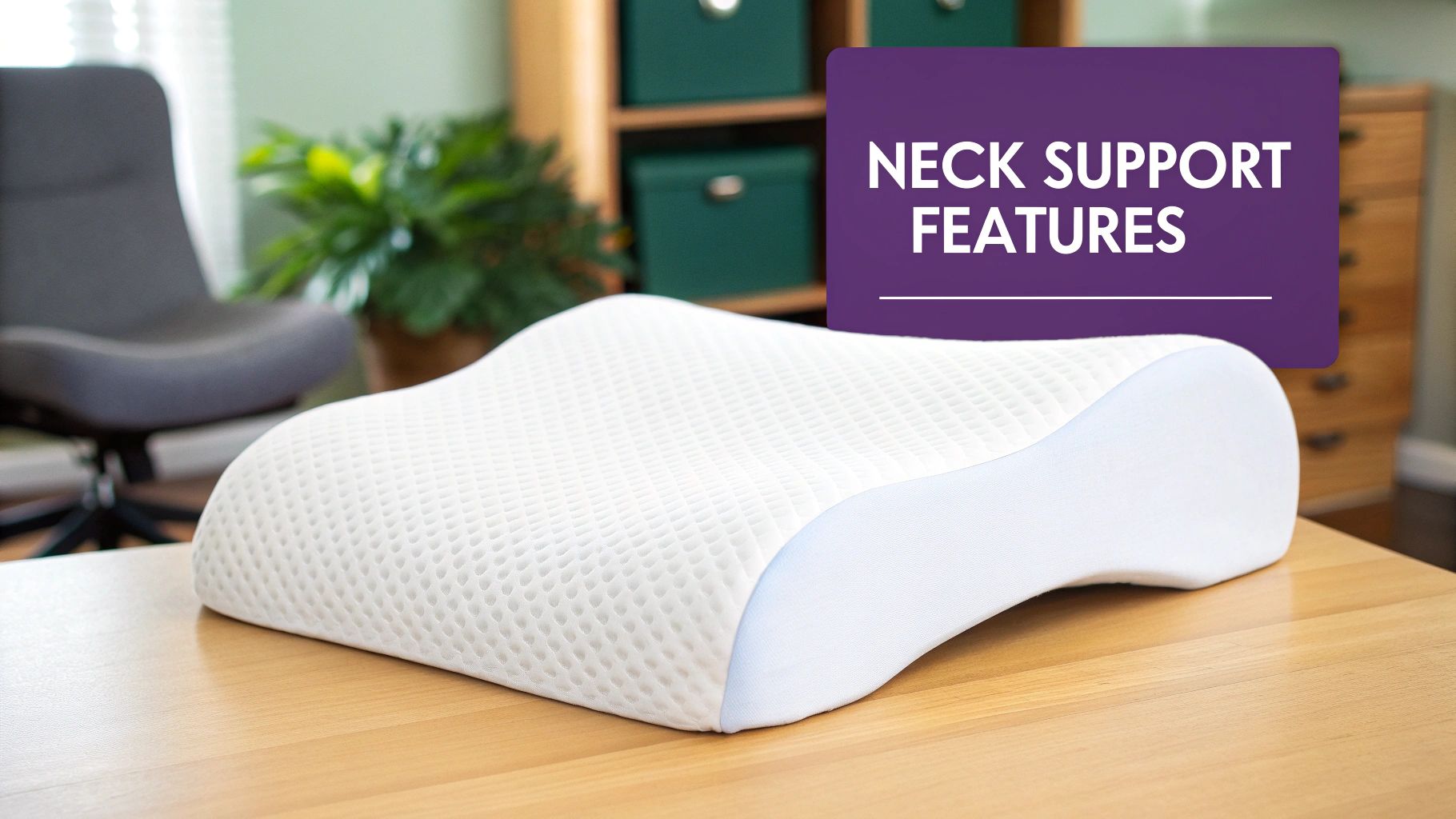
A Cervical Contour Shape
One of the most effective designs is the cervical contour pillow, which has a distinct wavy or curved shape. This design is engineered to support the natural curve of your neck.
The higher curve fits under your neck, providing support, while the lower, indented center cradles your head. This design is beneficial for back and side sleepers because it helps maintain a neutral spine, preventing your head from tilting at an awkward angle.
Adjustable Fill and Loft
Because everyone’s body is different, adjustable-fill pillows can be very effective. They allow you to add or remove filling—such as shredded memory foam or buckwheat hulls—to achieve the ideal height and firmness for your needs.
This feature allows you to customize the pillow’s loft to match your shoulder width and sleeping style without guesswork.
A pillow’s features should serve a clear purpose. Contoured shapes, adjustable fills, and cooling technologies are functional solutions to common sleep problems like overheating and poor alignment.
Features for All-Night Comfort
Beyond basic structure, other features can enhance sleep quality. Many top pillows now include elements designed for comfort throughout the night.
- Cooling Gel Infusions: Memory foam provides excellent support but can retain heat. Gel-infused foam is designed to draw heat away from your body, keeping your head cool.
- Breathable Covers: A cover made from materials like bamboo or Tencel wicks moisture away and allows air to flow, preventing you from waking up sweaty.
The demand for smarter materials and ergonomic designs is growing. The global neck pillow market was valued at approximately USD 2.20 billion in 2024 and is expected to nearly double by 2035. This growth is driven by consumers seeking products that deliver genuine support and comfort. You can read more about the growing neck pillow market and its trends.
Choosing a pillow with these key features can significantly improve your neck health.
When a New Pillow Is Not Enough for Your Neck Pain
A supportive pillow is a positive step toward better spinal alignment and waking without a stiff neck. However, it is not a universal solution.
While the right pillow can resolve many common aches, persistent neck pain may indicate a deeper, underlying issue that at-home remedies cannot address. Recognizing when to seek professional care is crucial for finding lasting relief.
If you have invested in a quality pillow for neck support and your pain has not improved after a week or two, it is time to consider other factors. Some symptoms are indicators of problems that extend beyond a simple muscle strain from a poor sleeping position.
Recognizing Deeper Issues
Your body provides signals when a more serious issue is present. These signs can point to spinal misalignments, disc issues, or chronic inflammation that a pillow alone cannot correct.
Be aware of these specific symptoms:
- Radiating Pain: Discomfort that travels from your neck down into your shoulders, arms, or hands.
- Numbness or Tingling: A “pins-and-needles” sensation, weakness, or numbness in your hands or fingers often suggests nerve compression.
- Recurring Headaches: Headaches that seem to start at the base of your skull and move upward are frequently linked to issues in your cervical spine.
- Pain from Minor Movements: Sharp pain when turning your head to check a blind spot or performing other everyday movements.
If you are experiencing any of these, a professional evaluation is advisable. Our guide on how to relieve neck pain offers more tips for managing discomfort while you determine your next steps.
When to Seek Professional Chiropractic Care
A chiropractor can perform a thorough examination to identify the root cause of your pain. We assess the structural integrity of your spine to find misalignments (subluxations) or other issues contributing to the problem.
A new pillow helps support proper posture while you sleep, but chiropractic adjustments correct the foundational misalignments that are causing the pain. The pillow is daily maintenance; chiropractic care is the essential repair work.
Other elements of your sleep environment, such as your mattress, can also significantly impact neck pain and overall sleep quality. For a broader look at sleep hygiene, consider this article on How Mattress Cleaning Can Improve Your Sleep Quality and Health.
Do not let persistent neck pain control your life. If a new pillow has not resolved the issue, it is time to take the next step.
A Few Common Questions About Neck Support Pillows
Choosing the right pillow for neck support can raise several questions. Here are answers to some of the most common ones we hear.
How Long Does It Take To Get Used To A New Cervical Pillow?
It is normal to have an adjustment period, typically lasting from a few days to two weeks. A new pillow designed for support, especially a contoured one, will feel different at first.
This is because it is actively working to correct your sleep posture, and your neck muscles need time to adapt.
A helpful tip is to use the new pillow for just a few hours on the first few nights, gradually increasing the duration until you are comfortable using it for the entire night.
How Do I Know If My Pillow Is The Right Height?
Correct pillow height is crucial for keeping your spine aligned. Here is a simple way to check:
- For Side Sleepers: Your head and neck should form a straight line with the rest of your spine. If your head is tilting up, the pillow is too high. If it is drooping down, it is too low.
- For Back Sleepers: Your chin should not be tucked into your chest (too high) or angled backward (too low). Your ears should be roughly level with your shoulders.
Here’s a simple trick: have someone take a photo of you lying in your usual sleeping position. A picture can make it clear if your spine is straight or bent at an angle due to the wrong pillow height.
How Often Should I Replace My Neck Support Pillow?
As a general rule, you should replace your pillow every one to two years. Over time, even high-quality materials like memory foam begin to break down and lose their supportive properties. Natural fills also compress and become less effective.
You can perform a simple test: fold your pillow in half. If it does not spring back to its original shape, its supportive life is over, and it is time for a replacement.
Beyond the Pillow: Getting to the Root of Your Neck Pain
Finding the best pillow for neck support is an excellent step for improving sleep, but if chronic pain persists, it is a sign that a deeper issue may be present. A good pillow supports your neck during the night, but chiropractic care can correct the spinal misalignments that may be causing the pain. For more general advice, a comprehensive guide on how to choose the perfect pillow can be a helpful resource.
Do not resign yourself to living with neck pain.
Think of it this way: a supportive pillow is your daily maintenance, but chiropractic care is the essential repair work your body may need for lasting relief.
At Audubon Park Chiropractic, we work to identify the true source of your discomfort. We then create a personalized treatment plan to help you wake up refreshed and live without constant pain.
Ready to address your neck pain and improve your quality of life? Contact Audubon Park Chiropractic today at (509) 327-4049 to schedule a consultation. Walk-ins are also welcome. We are here to help you find lasting relief. Having the best pillow for neck support is just part of the equation. We need to improve with quality care too, so come in and see us.
Ready to Feel Better?
Our Spokane chiropractors are ready to help. Walk-ins welcome — no appointment needed.

Dr. Michelle Snyder is a Spokane chiropractor with advanced training in women’s health, hormone balancing, pregnancy, and care for infants and children. She uses gentle low-force spinal adjustments alongside specialized therapies including Webster’s breech technique, allergy desensitization, cold laser therapy, EB cellular cleanse, and Methylation/genetic nutrition — offering patients a comprehensive, whole-body approach to wellness.
A Spokane resident for over 31 years, Dr. Michelle is deeply committed to her community, contributing time and resources to organizations including Meals-on-Wheels, Second Harvest, Ronald McDonald House, and the Union Gospel Mission.
📍 2909 W. Northwest Blvd, Spokane, WA 99205 | ☎ (509) 327-4049 audubonparkchiropractic.com
Further Reading: Neck
- How to fix rounded shoulders: A Practical Guide
- Chiro Treatment for Vertigo to Find Balance
- Chiropractic for Seniors & Managing Back Pain, Arthritis and Age-Related Stiffness Safely
- Gentle Chiropractic for Nervous Patients & Options that Don’t Involve Cracking
- What to Do if You Wake Up with Neck or Back Pain