

This post is part of our complete guide to Back Pain Treatment in Spokane, WA. Browse the guide for more in-depth information on treatments, exercises, and recovery strategies.
If you're waking up with a sore back, your mattress is often the first place to look. A medium-firm model typically provides an ideal balance, offering enough support for your spine while relieving pressure points. A suitable surface should prevent your hips from sinking too deeply—a common cause of spinal misalignment—yet still have enough give to cushion your shoulders and lower back. Hybrid and memory foam mattresses often achieve this balance effectively.
Understanding Your Mattress Options for Back Pain
Choosing a mattress is a significant decision. It’s a long-term investment in your health and overall well-being. The wrong mattress can force your spine into an unnatural position all night, leading to strained muscles and persistent aches.
This is a widespread issue. Studies indicate that approximately 80% of adults experience back pain at some point, and a worn-out or unsupportive mattress is frequently a major contributor. The positive news is that a change can make a substantial difference. Nearly 40% of people with chronic back pain reported significant improvement after switching to a mattress designed for proper spinal alignment.
The primary objective is to find a mattress that maintains a neutral spine position, which is a straight line from your head down to your hips. Let's explore the main types of mattresses you will encounter.
Quick Mattress Selection Guide for Back Pain
To help you begin, here is a summary of the most common mattress types and their suitability for alleviating back pain.
| Mattress Type | Best For | Key Feature | Firmness Recommendation |
|---|---|---|---|
| Memory Foam | Side sleepers and those needing deep pressure relief | Contours closely to the body to cradle joints | Medium to Medium-Firm |
| Latex | Sleepers wanting responsive support and cooling | Natural buoyancy and breathability | Medium-Firm |
| Hybrid | Most sleeper types, especially back and combination | Combines coil support with foam or latex comfort | Medium-Firm to Firm |
| Innerspring | Budget-conscious shoppers who prefer a firm feel | Traditional coil support with a bouncy feel | Firm |
This table can help narrow your options, but understanding why each type functions differently is crucial.
Why Mattress Type Matters
Each material offers unique benefits. Memory foam excels at pressure relief because it molds to your body's shape, which is invaluable for side sleepers who need extra cushioning for their hips and shoulders. In contrast, latex provides a more buoyant, "floating" sensation that keeps you on top of the mattress rather than sinking into it.
Hybrid mattresses aim to deliver the best of both worlds. They combine the robust support of innerspring coils with the comfortable, body-conforming feel of foam or latex on top. Traditional innerspring mattresses are known for being firm and affordable, but they sometimes lack the advanced contouring needed to effectively soothe a sore back.
For a more detailed look, consider this guide on Finding the Best Mattress for Back Pain.
Ultimately, your sleeping position, body weight, and the specific location of your pain will guide you to the right mattress. There is no single solution that fits everyone with back pain.
Don’t wait — relief is closer than you think.
How Your Mattress Impacts Spinal Health
Your mattress is more than just a place to sleep; it's a critical tool for your body's nightly recovery. A supportive mattress allows your back muscles to relax and your spine to decompress from the daily stresses it endures. This rest period is vital for healing and maintaining spinal health.
When your mattress provides the right support, it helps preserve the natural 'S' curve of your spine. A good mattress is designed to maintain this shape, regardless of your sleeping position. Without adequate support, the surface you sleep on can cause more harm than good.
A sagging or unsupportive mattress forces your spine into unnatural positions. This misalignment can lead to persistent muscle strain, nerve irritation, and inflammation. Over time, what begins as minor morning stiffness can develop into chronic back pain that impacts your entire day.
The Biomechanics of Sleep Support
Your sleep posture is just as important as your daytime posture. A mattress that is too soft allows heavier areas, such as your hips and shoulders, to sink too deeply. This creates a "hammock" effect that places significant strain on your lower back. If you wish to learn more about how sleep affects physical health, you can find valuable information by exploring various sleep research and studies.
Conversely, a mattress that is too firm will not cushion your body’s natural contours and can create painful pressure points. This can easily push your spine out of alignment and leave your joints feeling sore. Finding the best mattress for back pain involves striking the right balance between solid support and pressure-relieving comfort.
A supportive mattress acts as a foundation for your spine, allowing the intricate system of muscles, ligaments, and discs to rest and rejuvenate. Without it, your back is forced to work overtime, even while you sleep.
Understanding the direct link between your mattress and back health is a game-changer. A new mattress becomes a long-term investment in your wellness. This growing awareness is reflected in market trends; the global market for mattresses designed for back pain relief was valued at approximately $8.5 billion in 2023 and is projected to reach around $14.3 billion by 2030, indicating a strong demand for better sleep solutions.
Aligning Your Sleep and Daily Posture
The benefits of a good mattress extend beyond the night. By promoting proper spinal alignment during sleep, you set the stage for better posture throughout the day. When your back is properly rested, your muscles are less fatigued and better equipped to maintain a healthy posture while sitting, standing, and moving. For a closer look at this connection, you can learn more from our article on posture and how it can cause problems. Understanding this context helps you look past marketing claims and focus on features that genuinely contribute to a pain-free life.
Comparing Mattress Materials for Back Support
When seeking relief from back pain, selecting the right mattress material is one of the most critical decisions. The material dictates how the bed contours to your body, supports your spine, and eases pressure on sensitive areas. Let's compare the four main options—memory foam, latex, hybrid, and innerspring—to see how they perform.
Each material provides a different feel, and what works for one person may not work for another. The goal is to find the ideal balance between soft comfort and firm support to keep your spine in a healthy, neutral alignment all night.
A poor mattress can negatively affect your entire body, leading to a misaligned spine, strained muscles, and even inflammation.
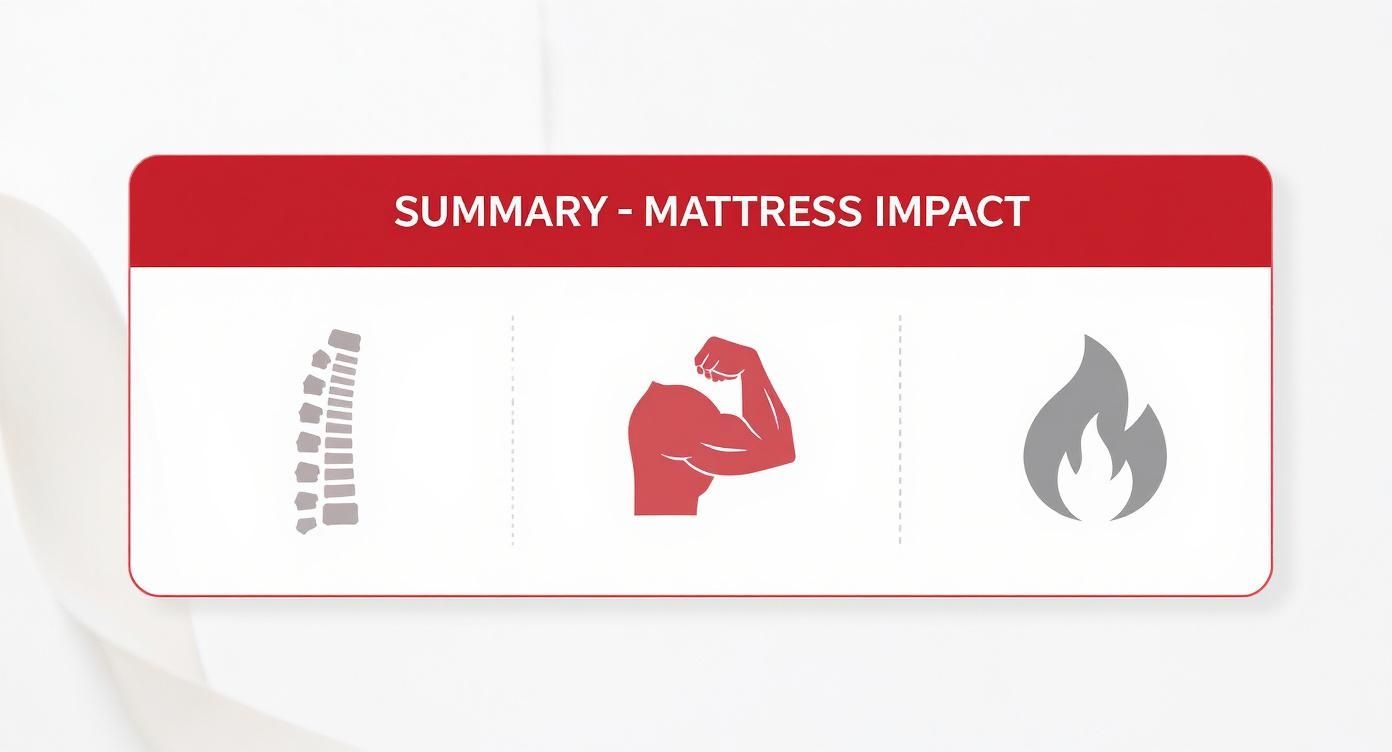
As illustrated, a mattress that fails to provide proper support night after night can easily contribute to chronic pain and discomfort.
Memory Foam Mattresses
Memory foam is renowned for its exceptional pressure relief. It responds to your body heat, softening and molding to your unique shape. This creates a cradling sensation that distributes your weight evenly. This is a significant advantage for side sleepers, as it provides the necessary cushioning for shoulders and hips to prevent spinal curvature.
For individuals with sharp lower back pain, the deep contouring can feel like a gentle hug, easing tension precisely where it's needed. The downside is that this slow-response foam can sometimes make you feel "stuck," which may be inconvenient for combination sleepers who change positions frequently.
Market data from sources like Grand View Research confirms the popularity of memory foam for back pain, showing the market was valued at around $46 billion in 2024 and is projected to exceed $67 billion by 2030.
Latex Mattresses
Latex offers a completely different feel. It contours and relieves pressure similarly to memory foam but with a much more responsive, buoyant sensation. You feel as though you are sleeping on the mattress rather than sinking into it.
This responsiveness is ideal for those who need firm support without sacrificing ease of movement. For back or combination sleepers, a latex mattress provides a firm yet cushioning surface that keeps the spine straight without making you feel trapped.
A key benefit of natural latex is its inherent breathability. Its open-cell structure allows air to circulate freely, making it sleep much cooler than traditional memory foam, which can trap heat.
Hybrid Mattresses
Hybrid mattresses are designed to offer the "best of both worlds." They feature a supportive base of innerspring coils topped with comfort layers of memory foam, latex, or other cushioning materials. This construction provides the durable support of coils combined with the targeted pressure relief of foam.
A hybrid can be an excellent fit for someone with fluctuating back pain. The coil system prevents heavy areas like the hips from sinking too deeply, while the foam layers cushion sensitive pressure points. Many modern hybrids also feature zoned support, with stronger coils in the middle third of the mattress to provide extra reinforcement for the lower back.
Innerspring Mattresses
The traditional innerspring mattress is the most conventional—and often most affordable—option. It is built around a core of interconnected steel coils that create a firm, bouncy surface. While they offer solid support, they often lack the sophisticated contouring required to address serious back pain.
Without thick comfort layers, the coils can press into hips and shoulders, creating new pressure points. An innerspring may be suitable for a stomach sleeper who needs a very firm surface to prevent their hips from sagging, but most people with chronic back pain will find better relief from a hybrid, latex, or memory foam model.
Mattress Material Comparison for Back Pain Relief
To simplify the decision-making process, here is a side-by-side comparison of how each material performs on key factors for back pain.
| Feature | Memory Foam | Latex | Hybrid | Innerspring |
|---|---|---|---|---|
| Spinal Alignment | Excellent, especially for side sleepers | Very Good, offers buoyant support | Excellent, often with zoned support | Fair to Good, can lack contouring |
| Pressure Relief | Excellent, deep contouring | Good, responsive cushioning | Very Good, balances comfort and support | Fair, can create pressure points |
| Responsiveness | Low, slow-moving feel | High, bouncy and easy to move on | High, combines bounce with comfort | Very High, traditional bouncy feel |
| Durability | Good to Very Good | Excellent, very resilient | Very Good, quality varies | Fair to Good, prone to sagging |
Ultimately, choosing the best mattress depends on your individual needs. Understanding the differences between these materials is the first step toward finding a bed that will properly support your spine and help you wake up feeling refreshed and pain-free.
Matching Firmness to Your Sleep Position
A common misconception is that an extra-firm mattress is the only solution for back pain. In reality, the ideal firmness is highly personal and depends on your sleeping position and body weight.
The primary goal is to maintain a neutral spine—a straight line from your neck to your tailbone. Your preferred sleep style determines which parts of your body require more support and which need more cushioning. A mattress that is perfect for a back sleeper could be uncomfortable for a side sleeper.
Side Sleepers: Softer Support for Pressure Points
For side sleepers, the shoulders and hips bear most of the body weight. These pressure points need proper cushioning to keep the spine aligned. A mattress that is too hard will push against these joints, forcing the spine into an uncomfortable curve.
For this reason, side sleepers typically benefit from a soft to medium-firm mattress. This firmness level allows the shoulders and hips to sink in just enough to relieve pressure while the rest of the mattress supports the torso. Memory foam or plush hybrid mattresses are often excellent choices for side sleepers.
Back Sleepers: Balanced Firmness for Spinal Neutrality
Sleeping on your back is often considered the healthiest position because it naturally facilitates spinal alignment. However, the right mattress is still essential. The main challenge for back sleepers is preventing the lower back from arching, which can occur if the hips sink too far.
A medium-firm mattress usually provides the perfect balance. It is supportive enough to uphold the natural curve of the lower back yet soft enough to contour to the body. Latex and hybrid mattresses are particularly effective here due to their responsiveness and ability to prevent excessive sinking. Pairing a suitable mattress with the right pillow is also crucial. For guidance, see our article on the best pillow for back sleepers.
A medium-firm surface acts as a solid foundation for back sleepers, distributing body weight evenly and preventing the pelvis from tilting, which is a common cause of lower back strain.
Stomach Sleepers: Firmer Support to Prevent Arching
Sleeping on your stomach places the most strain on your spine, making your mattress choice critical. This position often causes the midsection to dip into the mattress, forcing the spine to arch and putting significant stress on the lower back and neck.
To counteract this, stomach sleepers require a firm to extra-firm mattress. This solid support keeps the hips elevated and aligned with the shoulders, promoting a flatter, more natural spinal position. Denser innerspring or firm hybrid models are typically recommended for this purpose.
The Influence of Body Weight
Your body weight also affects how a mattress feels. What feels medium-firm to a person weighing 150 lbs might feel too soft for a heavier individual or too hard for a lighter one.
Here is a general guideline:
- Lighter Individuals (under 130 lbs) often need a softer mattress for adequate pressure relief, as they do not sink in as much.
- Average-Weight Individuals (130-230 lbs) can usually rely on the manufacturer's firmness rating (e.g., medium-firm) to be accurate for them.
- Heavier Individuals (over 230 lbs) typically require a firmer, more durable mattress that can provide proper support and resist sagging over time.
By considering both your sleep position and body weight, you can find a mattress that is truly tailored to your body's needs and begin to experience genuine, pain-free sleep.
The Mattress Features That Actually Help With Pain
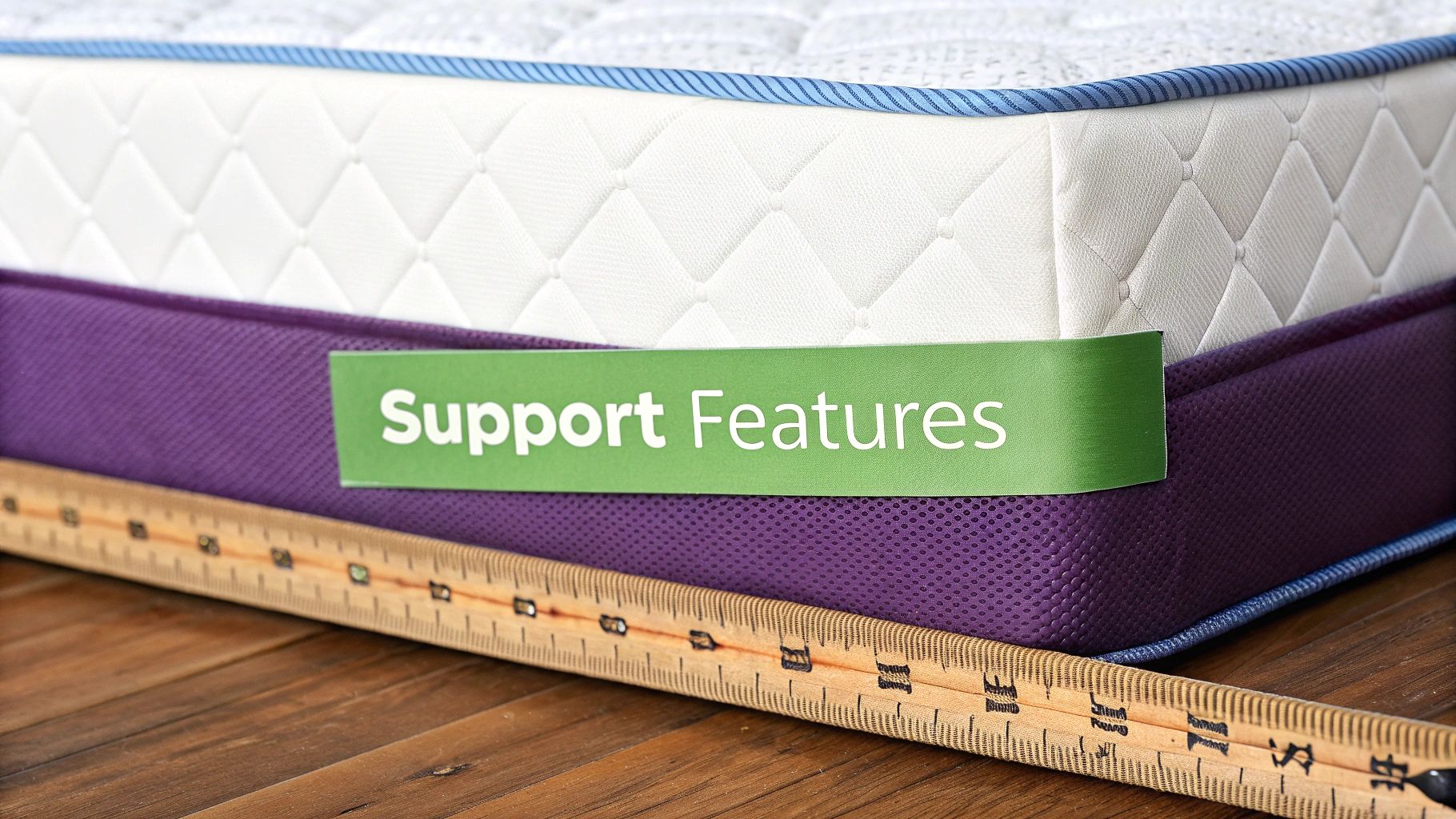
Once you have determined the right material and firmness, it's time to examine the specific features that distinguish a good mattress from the best mattress for back pain. These are the enhancements that transform a standard bed into a tool for targeted, lasting relief. Looking beyond the basics will help you find a sleep surface that actively contributes to your spinal health.
These features are not mere marketing tactics; they are engineered to solve real sleep issues, from poor alignment to overheating. Understanding them enables you to choose a mattress that addresses the root causes of your pain.
Targeted Zoned Support Systems
One of the most significant innovations for back pain relief is zoned support. The human body is not uniformly weighted; your hips and shoulders require different support than your head or legs. A zoned mattress is designed with varying firmness levels across its surface to meet these different needs.
Typically, you will find firmer support under the hips and lower back. This is crucial as it prevents this heavier area from sinking too deeply and misaligning the spine. Simultaneously, the areas under the shoulders and knees are softer to provide necessary pressure relief. This intelligent design helps maintain a healthy, neutral spine throughout the night.
Zoned support systems provide a custom-fit feel by distributing weight more effectively. The extra reinforcement in the middle third of the mattress offers essential stability for the lower back—a common site of chronic pain.
This type of dynamic support allows your muscles to fully relax, which is essential for healing and recovery during sleep.
Why Edge Support Matters
Edge support refers to the sturdiness of the mattress perimeter. While it may seem like a minor detail, it is very important for anyone with back pain or mobility issues, affecting comfort, safety, and mattress longevity.
A bed with strong edges provides a stable surface for getting in and out, reducing the risk of slips or falls. It also allows you to use the entire surface of the bed, right up to the edge, without feeling like you might roll off.
Other reasons to prioritize edge support include:
- Easier Mornings: It makes sitting on the edge of the bed safer and more comfortable.
- Prevents Sagging: Strong edges help the mattress maintain its shape over time, combating premature sagging and extending its lifespan.
- More Usable Space: It increases the functional sleeping area, which is beneficial for couples or those who like to spread out.
Cooling Tech for Deeper, More Restorative Sleep
Waking up overheated can disrupt your sleep and worsen back pain by causing you to toss and turn. Many modern mattresses incorporate cooling technologies designed to regulate your temperature for uninterrupted rest.
These features may include:
- Gel-Infused Foams: Gel particles mixed into foam draw heat away from the body.
- Breathable Covers: Fabrics like Tencel or organic cotton wick away moisture and promote airflow.
- Open-Cell Foams: Materials like latex are naturally breathable due to their structure.
- Coil Systems: The space between coils in hybrid and innerspring beds allows for natural ventilation.
Deeper sleep allows your body more time to repair muscles and decompress the spine, making temperature control an important aspect of pain relief.
Look for Certifications You Can Trust
Finally, pay attention to health and safety certifications. For example, CertiPUR-US® certified foam is made without harmful chemicals like ozone depleters, heavy metals, or formaldehyde, ensuring the air you breathe is clean.
Other labels, such as GOTS (Global Organic Textile Standard) for cotton, guarantee that materials are sourced ethically and sustainably. These certifications provide peace of mind that your mattress is safe for you, your home, and the environment.
Got Questions About Mattresses? We've Got Answers.
Shopping for a new mattress can be overwhelming, especially when you are trying to resolve persistent back pain. Let's address some of the most common questions to provide clarity and help you achieve a better night's sleep.
Can a Mattress Topper Actually Fix My Back Pain?
A mattress topper can seem like a cost-effective solution. While a quality topper can add a layer of cushioning to a mattress that feels too firm, it is not a cure-all.
Think of it as a temporary fix. If your mattress is already sagging or unsupportive, a topper cannot repair the faulty foundation. It may provide temporary comfort but will not give your spine the underlying support it needs for proper alignment.
A mattress topper can enhance comfort, but it cannot fix a failing support system, much like you cannot build a sturdy house on a crumbling foundation.
How Long Does It Take to Get Used to a New Mattress?
It is normal to need time to adjust to a new bed, particularly if your old one was contributing to poor posture. Your body has likely grown accustomed to sleeping in a less-than-ideal position, and a new, supportive mattress is essentially retraining your muscles and spine.
This break-in period typically lasts about 30 days. You might even experience some initial soreness as your body adapts—this is often a sign that the mattress is finally providing the correct support.
For Sciatica, Should I Go Firm or Soft?
Sciatica, a radiating nerve pain, can be exacerbated by the wrong mattress. The key is to find a surface that relieves pressure on the lower back and hips without allowing excessive sinking.
For this reason, a medium-firm mattress is almost always the best option for sciatica sufferers. It offers enough give to cushion sensitive areas while remaining firm enough to prevent the spine from bowing out of alignment. A mattress that is too firm can create more pressure point pain, while one that is too soft allows the hips to sink too low, straining the lower back and aggravating the sciatic nerve.
If you've invested in a quality mattress but continue to struggle with back pain, a professional evaluation can make a significant difference. A new mattress can improve sleep posture, but long-term wellness requires addressing the underlying spinal health issues causing your pain. A proper diagnosis and treatment plan are the most effective ways to solve the root problem.
The team at Audubon Park Chiropractic is ready to help you identify the source of your discomfort with a personalized treatment plan.
For lasting relief, call us at (509) 327-4049 to schedule a consultation, or simply walk in for an assessment. We are here to help you get back to feeling your best.
Ready to Feel Better?
Our Spokane chiropractors are ready to help. Walk-ins welcome — no appointment needed.

Dr. Michelle Snyder is a Spokane chiropractor with advanced training in women’s health, hormone balancing, pregnancy, and care for infants and children. She uses gentle low-force spinal adjustments alongside specialized therapies including Webster’s breech technique, allergy desensitization, cold laser therapy, EB cellular cleanse, and Methylation/genetic nutrition — offering patients a comprehensive, whole-body approach to wellness.
A Spokane resident for over 31 years, Dr. Michelle is deeply committed to her community, contributing time and resources to organizations including Meals-on-Wheels, Second Harvest, Ronald McDonald House, and the Union Gospel Mission.
📍 2909 W. Northwest Blvd, Spokane, WA 99205 | ☎ (509) 327-4049 audubonparkchiropractic.com
Further Reading: Back
- Back Pain, Sciatica, and Headaches: When Chiropractic Helps — And When It Doesn’t
- Chiropractic Without the Commitment: What No Long-Term Contracts Actually Means for Your Care
- What causes sciatic nerve pain: Symptoms and relief
- NW Spokane’s Neighborhood Chiropractor: Why Location, Parking, and Knowing Your Doctor Actually Matter
- Why Some People Are Afraid of the Chiropractor & And What We Do Differently