

This post is part of our complete guide to Back Pain Treatment in Spokane, WA. Browse the guide for more in-depth information on treatments, exercises, and recovery strategies.
Back Injuries From Falls
A sudden slip, a missed step, and a hard landing—it’s a scenario most of us have experienced or witnessed. More often than not, the jolt from a fall sends a shockwave directly through the spine. Even a seemingly minor tumble can result in lingering back pain and stiffness, disrupting daily life.
Don’t wait — relief is closer than you think.
How a Simple Fall Can Lead to Serious Back Injuries
When you fall, your body braces for an abrupt, uncontrolled impact. Imagine a delicate instrument being dropped—even if there’s no visible external damage, the sensitive internal mechanisms can easily be knocked out of alignment. Your spine, an intricate network of bones, nerves, and muscles, is incredibly susceptible to this type of trauma.
The moment you hit the ground, that force travels through your entire musculoskeletal system. Your back muscles instinctively contract to shield the spinal column, but this sudden, violent clenching is often what causes immediate muscle strains or sprains. This is the source of the soreness you feel right away.
However, the problem can extend far deeper than just your muscles. The vertebrae—the individual bones that form your spine—can be jolted from their correct position. This misalignment, known as a subluxation, disrupts the vital communication lines of your nervous system and can quickly become the source of chronic, nagging pain.
A fall can throw your spine out of alignment in much the same way a minor fender-bender can bend a car’s frame. The car might still run, but it won’t drive straight or perform properly until a mechanic realigns the frame. Your body is no different.
To better understand what might be happening, let’s explore some of the most common injuries seen after a fall.
Common Types of Back Injuries After a Fall
After a fall, the pain you feel can stem from several different types of injuries. Identifying the source is the first step toward effective treatment. Here is a summary of what is typically encountered.
| Injury Type | Common Symptoms | Potential Impact on Mobility |
|---|---|---|
| Spinal Misalignment (Subluxation) | Chronic ache, sharp pain with movement, stiffness, reduced range of motion. | Can make bending, twisting, or even sitting for long periods difficult. |
| Herniated or Bulging Disc | Sharp, shooting pain (sciatica), numbness or tingling in legs/arms. | Often limits the ability to stand or walk for long; can cause weakness. |
| Muscle Strains/Ligament Sprains | Localized pain, swelling, muscle spasms, tenderness to the touch. | Causes stiffness and pain with specific movements like lifting or turning. |
| Compression Fractures | Sudden, severe back pain that worsens with standing or walking. | Can lead to a stooped posture and significant loss of mobility. |
| Coccyx (Tailbone) Injury | Intense, sharp pain at the base of the spine, especially when sitting. | Makes sitting down incredibly painful and uncomfortable. |
While this table offers a general overview, only a proper evaluation can determine the exact cause of your discomfort.
The Connection to Chiropractic Care
Understanding how a fall impacts your spine is key to finding real, lasting relief. While pain medication might mask the symptoms temporarily, it does not address the root of the problem. This is where chiropractic care offers a solution.
The focus is on correcting the underlying structural issues. Using gentle, precise adjustments, a chiropractor can carefully guide your vertebrae back into their proper alignment. This process relieves pressure on your nerves, reduces inflammation, and allows your body to heal as it was designed to.
This approach is non-invasive and drug-free, making it a safe and effective way to recover. If you have experienced a fall—even a small one—it is always a good idea to get evaluated. To find out more about how we help people after various incidents, you can learn about our approach to accident-related injuries.
Recognizing the Warning Signs After a Fall

After a fall, it’s common to try and brush it off, assuming a few bruises and a day or two of soreness will be the extent of it. While some general soreness is normal, certain symptoms are your body’s way of signaling more significant back injuries from falls. Differentiating between being slightly banged up and having a real problem is crucial for long-term health.
Pain is the most obvious sign, but the type of pain is what matters. A dull, widespread ache might just be strained muscles. However, a sharp, stabbing pain that can be pinpointed to a specific spot on your spine could indicate a more serious issue, like a displaced vertebra or a disc problem. Pay very close attention to how your body responds when you move.
Beyond Simple Soreness
Significant stiffness that restricts your movement is another major warning sign. If you suddenly find it difficult to bend over, twist, or even stand up straight without considerable pain, your body is communicating that something is wrong. This isn’t just feeling stiff; it’s a signal that the core structures of your spine may have been compromised.
Another critical group of symptoms to watch for involves your nerves. These sensations are very different from muscle pain and often include:
- Numbness: A strange loss of feeling in your back, buttocks, or down your legs.
- Tingling: The “pins and needles” sensation that travels from your back into your limbs.
- Radiating Pain: A sharp, electric-like pain that starts in your lower back and shoots down one or both legs, commonly known as sciatica.
The nerves extending from your spine are like electrical wires sending signals throughout your body. A fall can cause a bone or disc to shift just enough to pinch one of these wires. This pressure disrupts the signal, leading to unusual sensations like numbness or tingling far from the actual injury site.
One of the deceptive aspects of back injuries from falls is that the pain doesn’t always appear immediately. The adrenaline rush from the shock of falling can mask the pain for hours, or sometimes even a day or two. You might feel fine right after it happens, only to wake up the next morning unable to move.
Why Monitoring Symptoms Is Essential
Because of this potential delay, it is vital to monitor how you’re feeling in the hours and days following any fall. What seems like a minor ache can evolve into something much more serious. Ignoring these warning signs risks allowing the problem to develop into a chronic issue that becomes much harder to resolve later on.
If you experience any sharp, shooting, or persistent pain after a fall, that’s your cue to seek a professional evaluation. Don’t simply wait and hope it subsides.
A prompt and accurate diagnosis is the first real step toward recovery. If you’ve had a fall and any of these signs sound familiar, don’t delay.
Understanding the Damage to Your Spine

To fully grasp what happens to your back during a fall, it helps to visualize the spine as an incredibly complex piece of natural engineering. It is not a single, solid bone but a column of vertebrae cushioned by discs and held together by a web of ligaments and muscles.
When you take a hard fall, the sudden impact sends a shockwave through this system, knocking its delicate balance out of alignment. This can lead to specific and painful types of damage.
The violent force from a fall can literally compress your spine, squeezing the soft, gel-like discs that sit between each vertebra. This creates the perfect conditions for one of the most common injuries: a herniated disc.
The Jelly Donut Analogy
A spinal disc can be compared to a tiny jelly donut. It has a tough, fibrous outer layer with a soft, gel-like center. When a fall places excessive pressure on it, the outer wall can tear, allowing the “jelly” inside to squeeze or bulge out.
This escaped material can then put direct pressure on the highly sensitive nerves running along the spinal column. That pressure is what causes the sharp, shooting pain, numbness, or weakness associated with a herniated disc. It is a physical problem that requires a physical solution.
Another common consequence of a bad fall is spinal misalignment. Your vertebrae are designed to be stacked perfectly, one on top of the other. The jolt from an impact can easily knock one or more of them out of their proper place.
A spinal misalignment, or subluxation, is like having one link in a chain twisted sideways. The entire chain loses its strength and cannot move smoothly, placing significant stress on all the other links.
When your spine is misaligned, it puts unnatural stress on your joints and nerves. This is often the root cause of chronic pain, stiffness, and the feeling that you can no longer move as you once could.
Damage to Soft Tissues
The damage isn’t limited to bones and discs. The muscles and ligaments that support your entire spinal structure are also vulnerable. During a fall, these soft tissues can be stretched far beyond their normal limits, leading to painful sprains and strains.
- Sprains: This occurs when ligaments—the tough bands connecting your bones—are torn or overstretched. A fall can easily injure the small ligaments holding your vertebrae in place.
- Strains: This is an injury to a muscle or a tendon (which connects muscle to bone). The sudden clenching of your back muscles to brace for impact is a classic cause of a back strain.
These soft tissue injuries trigger a cycle of inflammation, tenderness, and muscle spasms that can make every movement a painful effort.
Because a fall can damage multiple parts of your back simultaneously, obtaining an accurate diagnosis is absolutely key. The first step is a thorough examination, which may be supplemented by diagnostic tools like chiropractic X-rays to get a clear picture of the injury. This helps pinpoint the problem and build an effective treatment plan. Seeing the damage is the first real step toward recovery.
If you are hurting from a fall, it’s easy to feel isolated. But the truth is, back injuries from falls are a major health issue, and it’s a problem that is growing. These aren’t just isolated accidents; they are part of a larger trend affecting millions. Understanding how common this is can help you realize why seeking the right care is so critical.
The numbers are climbing globally. Over the last three decades, serious spinal injuries from falls have increased significantly. For instance, traumatic vertebral fractures caused by falls went from 38.4% of cases in 1990 to 52.2% in 2021. In that same period, spinal cord injuries from falls grew from 51.6% to 63.0%. This trend is often linked to an aging population and changes in lifestyle. You can dive deeper into the full research on fall-related spinal injuries to learn more.
This infographic provides a quick breakdown of what typically happens immediately after someone is injured in a fall.
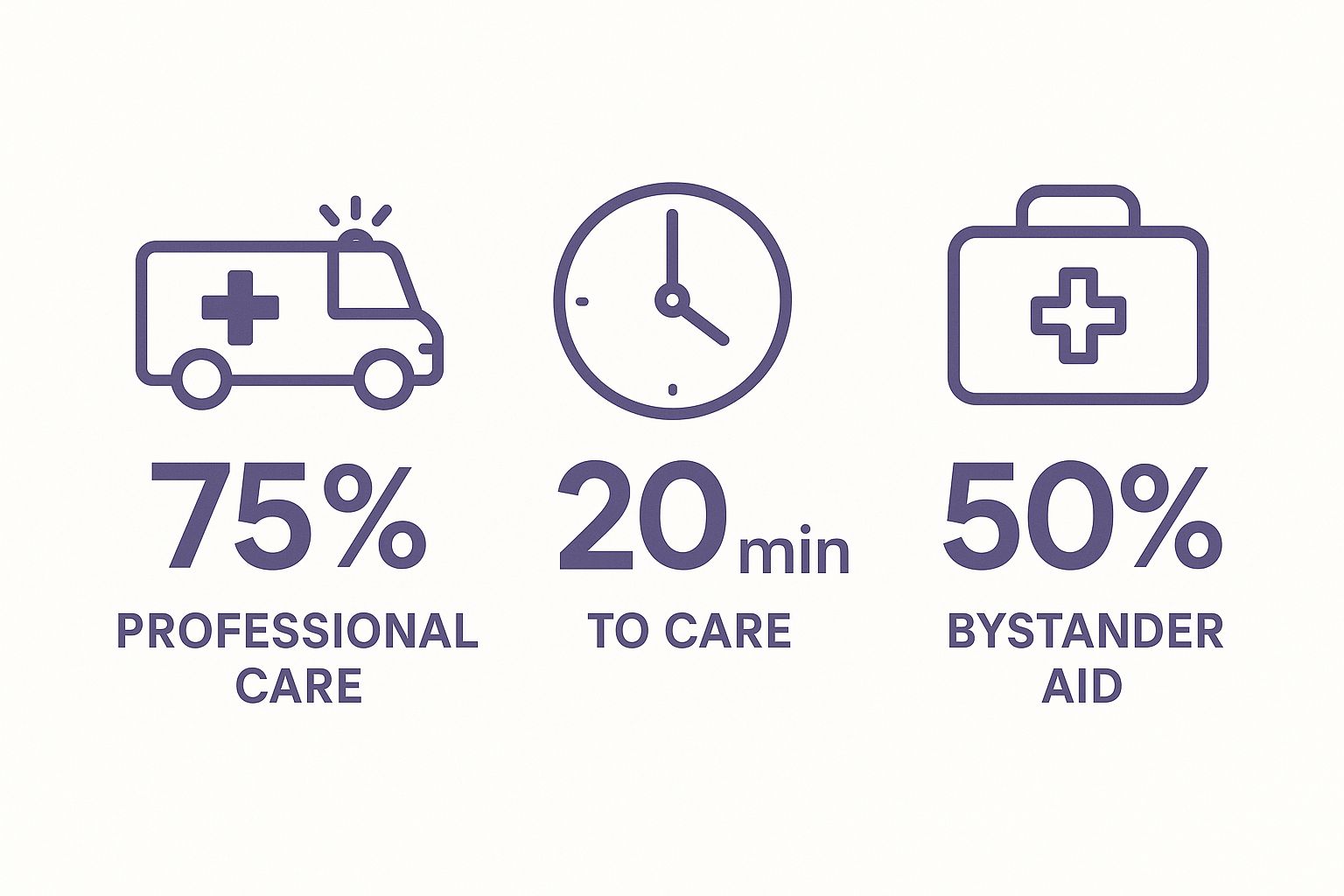
As you can see, most people do seek professional help, but there’s often a crucial window of time where the right immediate care can make a significant difference.
A Problem That Cannot Be Ignored
By 2021, there were approximately 4.73 million new cases of vertebral fractures from falls reported worldwide. In addition, there were about 0.3 million new fall-related spinal cord injuries. These aren’t just abstract figures; they represent millions of people whose lives have been disrupted by pain and mobility issues.
This growing trend underscores a critical need for both effective treatment and proactive prevention. As more people become susceptible to falls, understanding how to properly care for the spine after an injury is more vital than ever.
The data makes one thing crystal clear: if you’ve injured your back in a fall, you are far from alone. This shared experience highlights the importance of not dismissing the pain. Getting prompt, proper care is the key to ensuring a temporary injury does not become a chronic, long-term problem.
How We Help You Recover With Chiropractic Care
When you have injured your back in a fall, a temporary fix is not the goal. The objective is to address the root of the problem, not just mask the symptoms. This is the central principle of chiropractic care. We function like mechanics for your body’s framework, fine-tuning your spine so it can function correctly and, most importantly, heal itself.
The process begins with a conversation and a careful examination. We will discuss how the fall occurred and review your health history to get a complete picture. A physical exam then helps us pinpoint exactly where movement is restricted, which areas are tender, and what is out of alignment. This is not a one-size-fits-all approach—this detailed evaluation allows us to create a treatment plan tailored specifically for you.
Restoring Your Spine’s Alignment and Function
The core of our approach is the chiropractic adjustment. Using a gentle, controlled force, we work on the specific vertebrae that were jolted out of place by the fall. The goal is simple yet powerful: restore proper alignment.
Once your spine is correctly aligned, you may be surprised at how quickly things can begin to improve.
- Pressure is removed from your nerves. This is crucial for reducing sharp, shooting pain and any numbness or tingling you might be feeling.
- Inflammation starts to decrease. Restoring proper joint movement helps flush out inflammatory chemicals that cause swelling and pain.
- Your body’s natural healing processes are enhanced. When the nervous system can communicate without interference, your body is much more efficient at managing the repair process.
A chiropractic adjustment is like resetting a tripped circuit breaker. Once the switch is flipped back, power flows freely again, and everything starts working as it should. We are restoring that vital connection between your brain and your body.
A Full Plan for a Lasting Recovery
Chiropractic care extends beyond the adjustments themselves. A complete recovery plan often includes other therapies and practical advice to strengthen your back and prevent future incidents. We might provide tips on posture, how to set up your workspace ergonomically, or which movements to avoid while you are healing.
We also find that incorporating effective back stretch exercises is highly beneficial for lower back pain. These gentle movements improve flexibility, ease muscle tension, and support the work being done in the office. It all works together to help you get back on your feet faster and with greater stability.
By addressing the actual structural damage from the fall, we can help you find lasting relief and build a stronger, healthier spine for the long term.
How to Prevent Future Falls and Protect Your Back
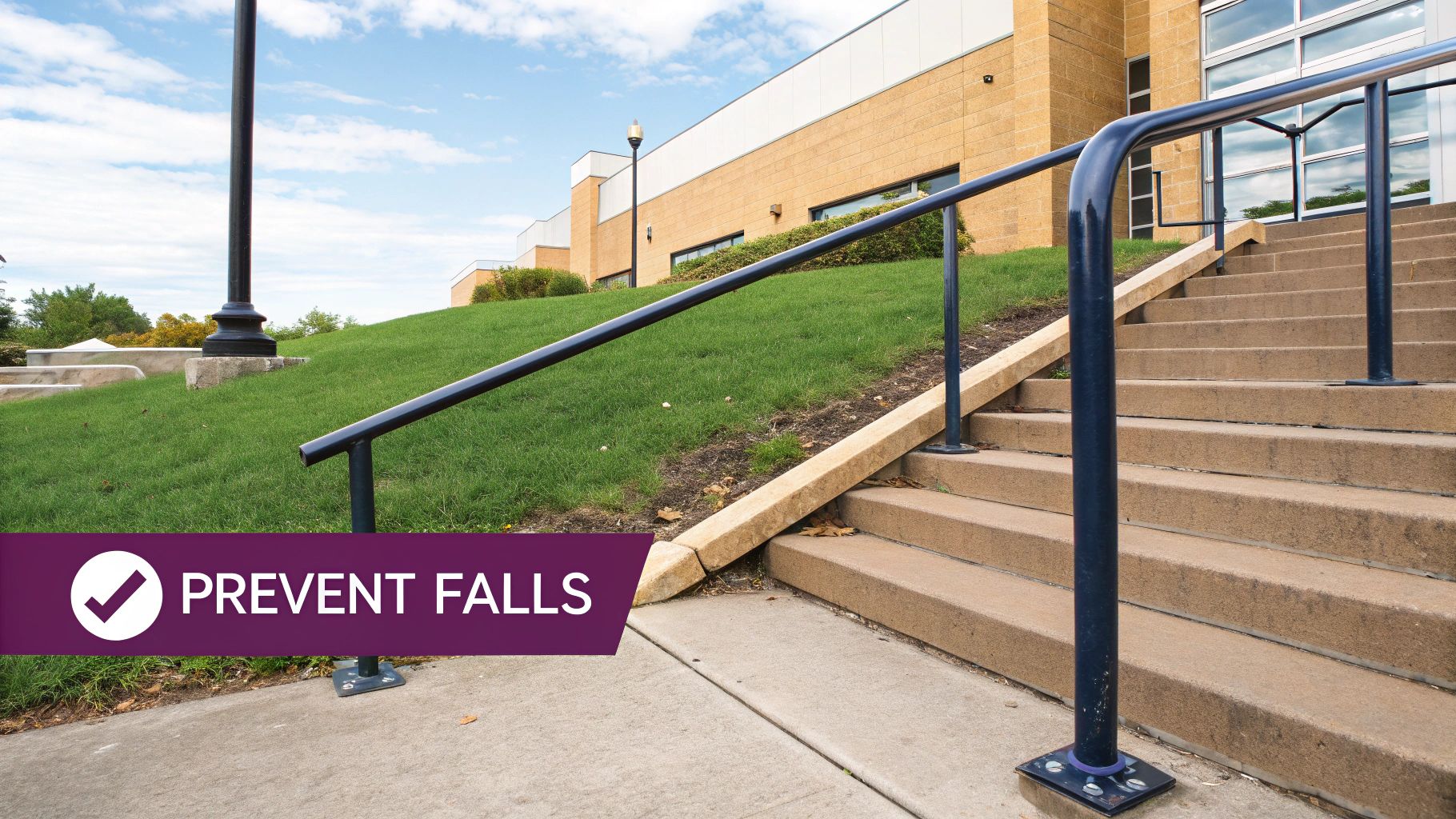
Recovering from an injury is only half the battle. The other half is taking steps to ensure it doesn’t happen again.
By implementing a few proactive strategies to prevent future back injuries from falls, you can protect your long-term health and stay active. Many of these strategies involve simple adjustments to your home and daily routines.
One of the most effective actions you can take is to make your living space safer. It is often the small, overlooked hazards that lead to a fall.
Creating a Safer Home Environment
Minor changes around your house can make a significant difference. Floors and lighting are two of the most common culprits, making them a great place to start.
- Secure Rugs and Runners: Use double-sided tape or a non-slip backing to anchor area rugs securely to the floor.
- Improve Lighting: Place nightlights in hallways, bathrooms, and bedrooms. Ensure stairways are well-lit from top to bottom.
- Clear Pathways: Keep floors clear of clutter. Cords, shoes, and boxes are all tripping hazards.
In addition to fall-proofing your home, strengthening your body is equally important. Working on your balance and core stability provides the physical tools to catch yourself before a fall occurs. Gentle exercises like Tai Chi, yoga, or simple balance drills can be incredibly effective.
If you want more ideas, check out our guide on ways to prevent an accident in Spokane.
Chronic low back pain can create a dangerous cycle. The pain makes you less steady on your feet, which increases your risk of falling. A subsequent fall can then worsen the original back injury, and the cycle continues. Proactive care is the only way to break free.
This cycle is a major reason why back pain is such a significant global issue. As of 2020, an estimated 619 million people worldwide were living with low back pain. That number is projected to increase to 843 million by 2050, with falls being a major contributor.
As you recover, it is also wise to consider ergonomics in your daily life. For example, you can explore the health benefits of standing desks for reducing back pain to provide better support for your spine while you work.
Don’t Let a Fall Dictate Your Future
Living with the nagging, persistent ache that follows a fall does not have to be your new reality. We’ve explored just how serious back injuries from falls can be, but the good news is that effective, gentle care is available to help you heal properly.
The single most important action you can take for yourself is to seek professional help, and to do so quickly. A proper diagnosis is paramount—it is the first and most critical step toward a genuine recovery and preventing the injury from becoming a long-term issue. Please do not simply wait and hope it goes away, allowing the pain to become a permanent fixture in your life.
If you are struggling after a fall, you can take that first step toward lasting relief today.
If you are dealing with back pain from a fall, don’t wait for it to become a chronic problem. Take control of your recovery now. Contact Audubon Park Chiropractic today at (509) 327-4049 to schedule a consultation, or feel free to walk in for an assessment. We are here to help you get back to a life free from pain.
Ready to Feel Better?
Our Spokane chiropractors are ready to help. Walk-ins welcome — no appointment needed.

Dr. Michelle Snyder is a Spokane chiropractor with advanced training in women’s health, hormone balancing, pregnancy, and care for infants and children. She uses gentle low-force spinal adjustments alongside specialized therapies including Webster’s breech technique, allergy desensitization, cold laser therapy, EB cellular cleanse, and Methylation/genetic nutrition — offering patients a comprehensive, whole-body approach to wellness.
A Spokane resident for over 31 years, Dr. Michelle is deeply committed to her community, contributing time and resources to organizations including Meals-on-Wheels, Second Harvest, Ronald McDonald House, and the Union Gospel Mission.
📍 2909 W. Northwest Blvd, Spokane, WA 99205 | ☎ (509) 327-4049 audubonparkchiropractic.com
Further Reading: Back
- Back Pain, Sciatica, and Headaches: When Chiropractic Helps — And When It Doesn’t
- Chiropractic Without the Commitment: What No Long-Term Contracts Actually Means for Your Care
- What causes sciatic nerve pain: Symptoms and relief
- NW Spokane’s Neighborhood Chiropractor: Why Location, Parking, and Knowing Your Doctor Actually Matter
- Why Some People Are Afraid of the Chiropractor & And What We Do Differently