

This post is part of our complete guide to Wellness Care at Audubon Park Chiropractic. Browse the guide for more in-depth information on treatments, exercises, and recovery strategies.
Exercises for Pain Relief
If you’re grappling with persistent neck and back pain, stiffness, or limited mobility, the key to relief often lies in reintroducing your body to its natural patterns of movement. Active range of motion exercises are a primary tool for this journey. These are gentle, self-initiated movements designed to take your joints through their full, comfortable range without external assistance.
Unlike passive stretching where an external force is applied, these exercises empower you to control every aspect of the movement. This self-guided approach is crucial for reducing stiffness, improving flexibility, and enhancing circulation to sore areas without overstretching or straining sensitive tissues. For anyone seeking to manage discomfort, improve daily function, or prevent future injuries, mastering these foundational movements is a critical first step.
This guide provides a detailed roundup of seven simple yet powerful active range of motion exercises that target the most common sources of discomfort. We will break down each movement with step-by-step instructions, clear benefits, and practical tips for safe execution. By incorporating these into your daily routine, you can begin to regain control over your body and find sustainable relief from persistent neck and back pain.
Don’t wait — relief is closer than you think.
1. Shoulder Circles
Shoulder Circles are a fundamental active range of motion exercise designed to improve mobility and reduce stiffness in the shoulder complex. This gentle, controlled movement involves rotating the shoulders in a circular pattern, targeting the glenohumeral joint, scapula, and surrounding muscles. By engaging the joint through its full available path of motion (circumduction), this exercise helps lubricate the joint capsule, enhance flexibility, and alleviate tension that often radiates into the neck and upper back.
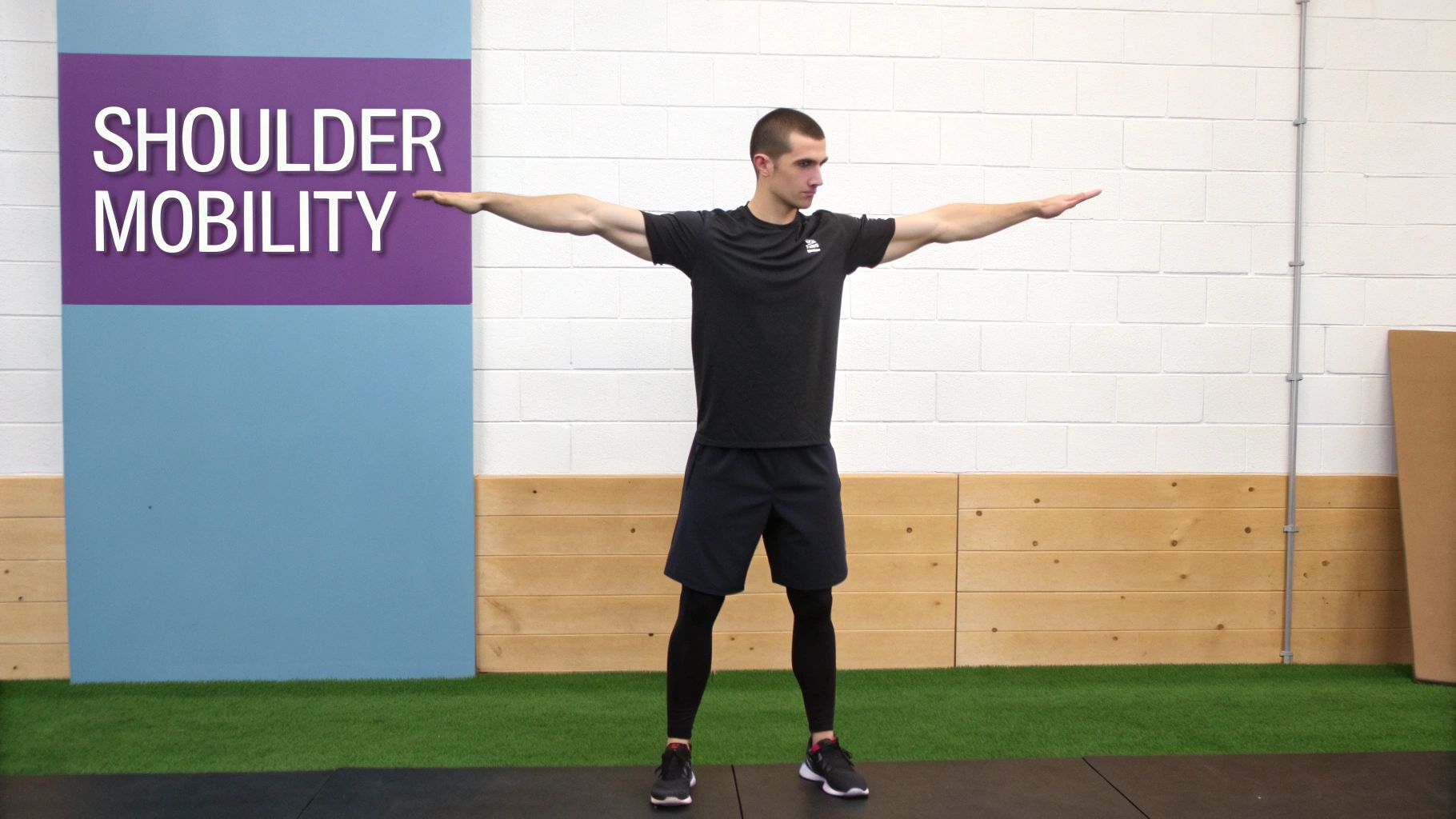
This simple yet effective exercise is a cornerstone of various wellness and rehabilitation programs. For example, it’s a standard warm-up for swimmers and baseball players to prepare their shoulders for intense activity. It is also frequently prescribed in physical therapy to restore movement after surgery and is a key component of workplace wellness initiatives to counteract the effects of prolonged sitting.
How to Perform Shoulder Circles
Executing this exercise correctly is crucial for maximizing its benefits as one of the most accessible active range of motion exercises.
- Starting Position: Sit or stand tall with your feet shoulder-width apart, maintaining a neutral spine. Allow your arms to hang relaxed at your sides.
- Forward Circles: Slowly lift your shoulders up toward your ears, then roll them forward, down, and back to the starting position. Focus on creating a smooth, circular motion.
- Backward Circles: Reverse the movement. Lift your shoulders up, then roll them backward, down, and forward to complete the circle. This direction is particularly beneficial for correcting rounded, “slumped” posture.
- Repetitions: Aim for 10-15 circles in each direction.
Key Insight: The primary goal is controlled movement, not speed. Focus on feeling the shoulder blades glide and the muscles gently stretch. This mindful approach transforms a simple motion into a powerful therapeutic exercise.
Tips for Effective Shoulder Circles
- Start Small: If you have significant stiffness or pain, begin with very small circles and gradually increase their diameter as your mobility improves.
- Breathe: Coordinate your breathing with the movement. Inhale as you lift your shoulders and exhale as you lower them to promote relaxation.
- Maintain Posture: Avoid arching your back or jutting your head forward. Keep your core engaged and your neck aligned with your spine throughout the exercise.
2. Neck Flexion and Extension
Neck Flexion and Extension are foundational active range of motion exercises that target the cervical spine. This controlled sequence involves gently nodding the head forward (flexion) and tilting it backward (extension), guiding the neck through its primary vertical plane of movement. These motions are crucial for maintaining mobility, lubricating the seven cervical vertebrae, and alleviating stiffness often caused by poor posture, stress, or injury. By moving the neck through its intended range, this exercise helps restore function and reduce pain.
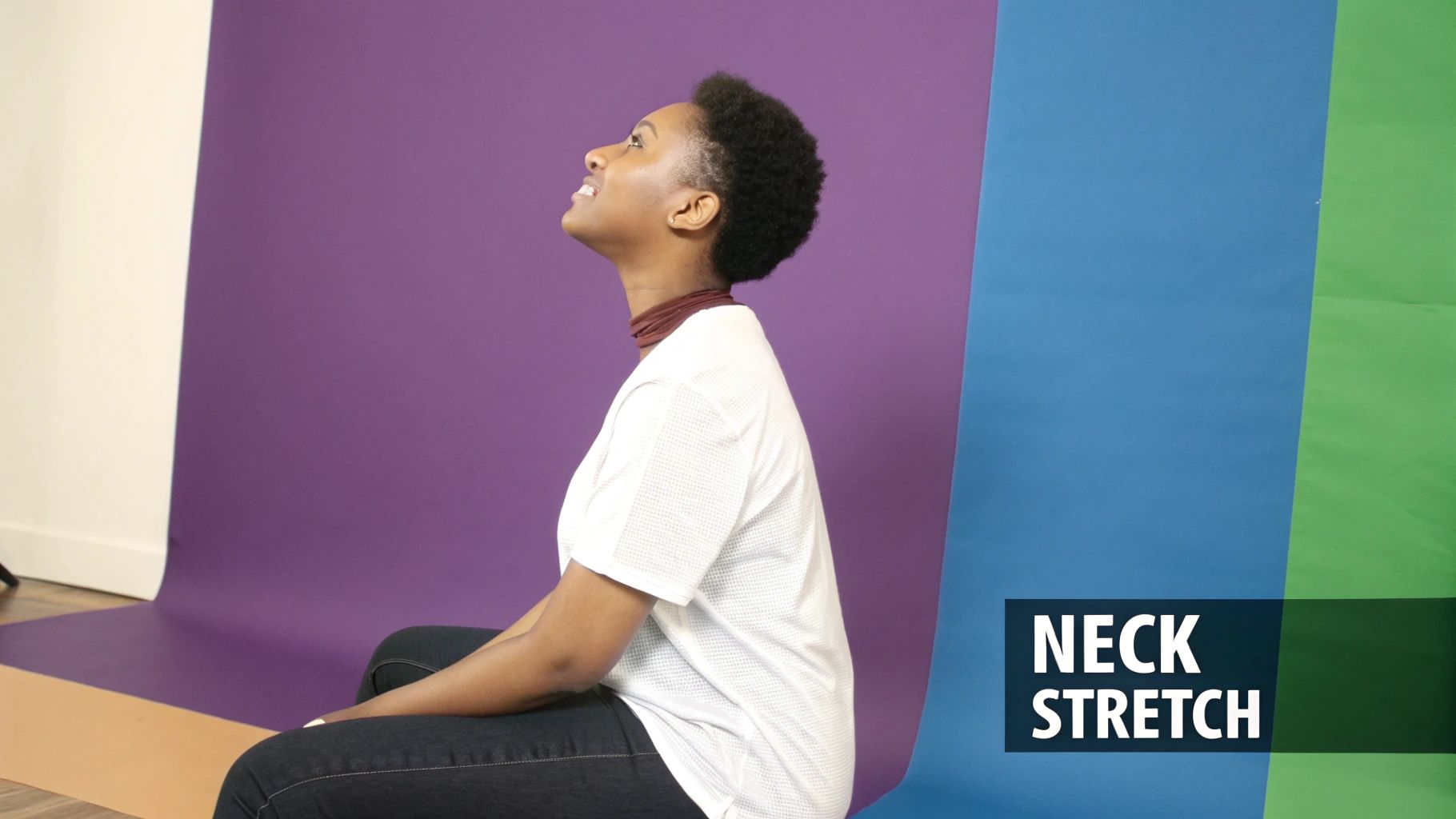
This exercise is a staple in both preventative care and rehabilitation. It is frequently prescribed in physical therapy to address “tech neck” syndrome and is a key part of protocols for recovering from whiplash injuries. Corporate wellness and ergonomic training programs often incorporate Neck Flexion and Extension to help office workers counteract the strain of prolonged screen time. The gentle nature of the movement also makes it a safe and effective way to manage neck tension, which can be a primary trigger for certain types of headaches. For more information, you can learn more about relieving tension headaches on audubonparkchiropractic.com.
How to Perform Neck Flexion and Extension
Correct form is essential for safely performing these active range of motion exercises and achieving the desired therapeutic benefits.
- Starting Position: Sit or stand with a tall, straight spine. Your shoulders should be relaxed and down, away from your ears.
- Flexion (Forward Bend): Slowly and gently lower your chin toward your chest, feeling a light stretch along the back of your neck.
- Extension (Backward Tilt): Return to the neutral starting position, then carefully tilt your head backward, looking up toward the ceiling. Move only as far as is comfortable.
- Repetitions: Aim for 5-10 repetitions of the complete movement (flexion and extension), performing the set 2-3 times daily.
Key Insight: The movement should originate from the neck, not the upper back. Isolating the cervical spine ensures that you are targeting the correct joints and muscles without creating strain elsewhere.
Tips for Effective Neck Flexion and Extension
- Move Slowly: Avoid any quick, jerky, or bouncing motions. The entire exercise should be performed with slow, deliberate control.
- Keep Shoulders Relaxed: Actively keep your shoulders down and back. Tense shoulders can restrict movement and defeat the purpose of the exercise.
- Don’t Force It: Never push the movement into a range that causes sharp pain. The goal is a gentle stretch, not a strain.
- Hold the Stretch: Briefly hold the end positions of both flexion and extension for 2-3 seconds to deepen the stretch and enhance mobility.
3. Hip Flexion in Supine
Hip Flexion in Supine is a foundational active range of motion exercise performed while lying on your back. It involves gently bringing one knee toward the chest, specifically targeting the hip joint’s ability to flex. This controlled movement is crucial for maintaining the mobility required for everyday activities like walking, climbing stairs, and standing up from a seated position. By isolating the hip flexors and encouraging movement through their natural path, this exercise helps lubricate the hip joint, reduce lower back strain, and improve functional strength.
This exercise is a staple in various clinical and wellness settings due to its safety and effectiveness. It is a standard component of post-operative protocols for total hip replacement to safely restore movement. You’ll also find it in geriatric rehabilitation programs to maintain independence, in prenatal fitness to alleviate pelvic discomfort, and in care routines for bed-bound patients to prevent joint contractures. For those experiencing tightness, understanding how to stretch tight hip flexors can complement this mobility work.
How to Perform Hip Flexion in Supine
Proper execution is key to making this one of the most beneficial active range of motion exercises for hip health and lower back comfort.
- Starting Position: Lie flat on your back on a comfortable, firm surface. Keep both legs extended straight, or you can bend your knees with your feet flat on the floor for more lower back support.
- Knee to Chest: Slowly bend one knee and draw it in toward your chest as far as you can comfortably go, using your hip flexor and abdominal muscles.
- Hold and Return: Hold the position for a moment, then slowly and with control, lower your leg back to the starting position.
- Repetitions: Perform 10-15 repetitions on one leg before switching to the other side.
Key Insight: The movement should be driven by the muscles of the hip and thigh. Avoid using momentum or arching your lower back off the floor to ensure the exercise effectively targets the hip joint.
Tips for Effective Hip Flexion in Supine
- Maintain Stability: Keep your non-moving leg and your pelvis stable on the floor. Do not let your lower back arch or your hips rock side to side.
- Use Assistance if Needed: If your range of motion is limited, gently use your hands behind your thigh to help guide the knee closer to your chest. This turns it into an active-assistive exercise.
- Breathe: Exhale as you bring your knee toward your chest and inhale as you return to the starting position. This promotes muscle relaxation and control.
4. Ankle Pumps and Circles
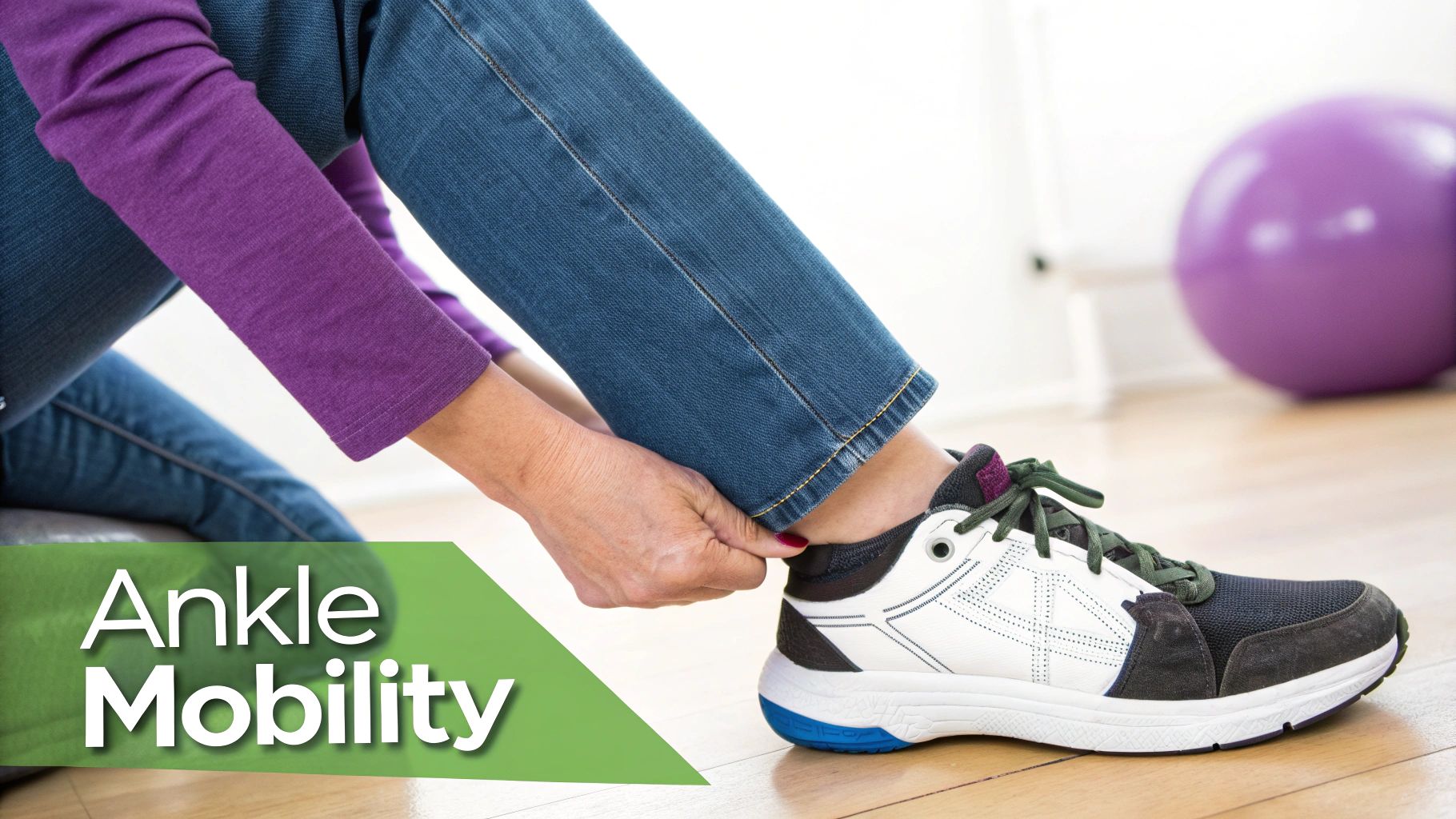
Ankle Pumps and Circles are foundational active range of motion exercises designed to improve mobility, enhance circulation, and maintain the health of the lower legs. This two-part movement involves flexing the foot up and down (pumping) and rotating it in a circular pattern, targeting the talocrural and subtalar joints. By guiding the ankle through its full available path of motion, these exercises help lubricate the joint, reduce swelling, and prevent stiffness, which is crucial for overall lower-body function.

This simple yet critical exercise is a standard protocol in many medical and wellness settings. For instance, it is a primary tool in post-surgical recovery to prevent blood clots (deep vein thrombosis). Aviation health guidelines recommend it during long flights to promote blood flow, and it is a key component of diabetic foot care programs to maintain healthy circulation.
How to Perform Ankle Pumps and Circles
Proper execution is key to unlocking the full benefits of these simple yet effective active range of motion exercises.
- Starting Position: Sit or lie down with your legs extended in front of you. You can perform this with one leg at a time or both simultaneously.
- Ankle Pumps: Gently point your toes away from you as far as is comfortable (plantarflexion), holding for a moment. Then, pull your toes back up toward your shin (dorsiflexion), feeling a gentle stretch in your calf.
- Ankle Circles: From a neutral position, slowly rotate your ankle clockwise, making the largest circle you can without pain. Then, reverse the movement and rotate your ankle counter-clockwise.
- Repetitions: Aim for 10-20 pumps and 10-15 circles in each direction. If sedentary, try to perform a set every hour.
Key Insight: The goal is to promote fluid movement and circulation, not to force a stretch. The “pumping” action of the calf muscles acts as a secondary heart, helping to push blood back up the legs and toward the heart.
Tips for Effective Ankle Pumps and Circles
- Focus on Full Motion: Try to move through the entire range of motion, from fully pointing your toes to fully flexing them back.
- Isolate the Ankle: Keep your leg still and ensure the movement originates from your ankle, not from your hip or knee.
- Be Consistent: When sitting for long periods, such as at a desk or while traveling, perform these exercises regularly to prevent stiffness and reduce swelling.
- Use with Compression: If recommended by a healthcare professional, these exercises can be performed while wearing compression stockings to further enhance circulatory benefits.
5. Elbow Flexion and Extension
Elbow Flexion and Extension is a foundational active range of motion exercise that focuses on the basic hinge movement of the elbow joint. This exercise involves purposefully bending (flexion) and straightening (extension) the arm, targeting the biceps, triceps, and brachialis muscles, along with the ligaments and capsule of the elbow joint itself. This fundamental movement is critical for countless activities of daily living, such as feeding, dressing, grooming, and reaching for objects.
This simple yet vital exercise is a staple in many therapeutic settings. For instance, it’s a key part of post-fracture elbow rehabilitation to regain function and prevent stiffness. It is also used extensively in stroke rehabilitation programs to help retrain neural pathways and restore arm control. Additionally, it serves as a gentle component in conservative treatment plans for conditions like tennis elbow and is often recommended for managing joint mobility in rheumatoid arthritis.
How to Perform Elbow Flexion and Extension
Correctly performing this movement is essential for it to be an effective part of a routine of active range of motion exercises.
- Starting Position: Sit or stand comfortably. You can rest your upper arm on a table for support, allowing your forearm to hang freely. Your palm should be facing upward.
- Flexion (Bending): Slowly bend your elbow, bringing your hand up toward your shoulder. Move only as far as you can without experiencing sharp pain. Focus on contracting the bicep muscle.
- Extension (Straightening): Gently lower your hand back down, straightening the elbow to the starting position. Concentrate on a controlled, smooth motion.
- Repetitions: Aim for 10-15 repetitions. This can be performed 2-3 times daily, or as advised by a healthcare professional.
Key Insight: The focus should be on the quality of the movement, not the quantity or speed. Isolating the elbow joint and moving through its full, pain-free range is crucial for restoring function and preventing compensatory movements from the shoulder.
Tips for Effective Elbow Flexion and Extension
- Support the Arm: If your arm feels heavy or fatigued, support your forearm with your other hand or rest it on a surface to isolate the elbow joint more effectively.
- Move Through Full Range: Gently push the motion to the end of your available range, but do not force it into pain. The goal is to gradually increase this range over time.
- Perform Slowly: Avoid quick, jerky movements. A slow and smooth pace ensures you are using muscle control rather than momentum, which maximizes the therapeutic benefit.
- Use Gravity Assistance: If straightening the arm is difficult, you can perform the exercise while lying on your back, allowing gravity to assist with the extension phase.
6. Wrist Flexion and Extension
Wrist Flexion and Extension are crucial active range of motion exercises designed to maintain and improve the mobility of the wrist joint. These movements involve bending the wrist forward (flexion) and backward (extension), targeting the radiocarpal joint and the numerous muscles and tendons that cross it. By guiding the wrist through this fundamental plane of motion, the exercise helps lubricate the joint, enhance flexibility, and alleviate stiffness often caused by repetitive tasks.
This foundational exercise is a staple in both preventative care and rehabilitation. For instance, it is a core component of ergonomic programs for office workers to prevent conditions like carpal tunnel syndrome. Physical therapists frequently prescribe it to restore function after wrist injuries, such as a Colles fracture, and it is used by musicians and athletes to maintain dexterity and prevent overuse injuries.
How to Perform Wrist Flexion and Extension
Proper execution is key to making this one of the most effective active range of motion exercises for hand and forearm health.
- Starting Position: Sit at a table and rest your forearm on its surface, with your hand and wrist extending over the edge, palm facing down. You can also support your forearm on your thigh.
- Extension (Bending Up): Slowly bend your wrist upward, raising your fingers toward the ceiling until you feel a gentle stretch in your forearm.
- Flexion (Bending Down): Slowly lower your hand back down past the starting position, allowing your fingers to point toward the floor until you feel a mild stretch on the top of your wrist.
- Repetitions: Aim for 10-15 repetitions, moving smoothly between flexion and extension.
Key Insight: The movement should originate from the wrist, not the fingers. Keeping your fingers relaxed allows you to isolate the wrist joint, ensuring a more targeted and effective stretch and strengthening motion.
Tips for Effective Wrist Flexion and Extension
- Support Your Forearm: Keeping your forearm stable on a table or pillow prevents unwanted movement and helps isolate the wrist joint.
- Move Gently: Avoid any sharp or painful motions. The goal is a pain-free, controlled movement through your available range.
- Hold the Stretch: For an added flexibility benefit, hold the end positions of both flexion and extension for 2-3 seconds before moving in the opposite direction.
- Stay Relaxed: Ensure your fingers, elbow, and shoulder remain relaxed throughout the exercise to focus the effort entirely on the wrist.
7. Knee Flexion in Sitting
Knee Flexion in Sitting is a controlled active range of motion exercise that focuses on bending the knee joint. This movement is foundational for knee health, targeting the tibiofemoral joint to improve flexibility, reduce stiffness, and maintain the ability to perform everyday tasks. By actively sliding the foot backward, you engage the hamstring muscles and gently stretch the quadriceps, promoting joint lubrication and restoring essential mobility without placing weight on the joint.
This exercise is a critical component of many therapeutic protocols. It is a standard practice in post-operative rehabilitation for total knee replacements and ACL reconstruction to safely reintroduce movement. Furthermore, it is frequently included in arthritis management programs to preserve joint function and is a staple in senior fitness classes to help maintain independence with activities like getting in and out of chairs. Proper foot and ankle alignment can also play a role in knee health; you can discover more about the connection between knee pain and foot alignment.
How to Perform Knee Flexion in Sitting
Correct execution is key to making this one of the most beneficial active range of motion exercises for knee rehabilitation and maintenance.
- Starting Position: Sit upright in a sturdy chair with your back supported and your feet flat on the floor, knees bent at a 90-degree angle.
- Flex the Knee: Slowly slide the heel of the affected leg backward, pulling your foot underneath the chair as far as you can comfortably go. You should feel a gentle stretch in the front of the knee and thigh.
- Hold and Return: Hold the flexed position for 2-5 seconds, focusing on the end range of the motion.
- Extend: Smoothly slide your foot forward to return to the starting position.
- Repetitions: Perform 10-15 repetitions on one leg before switching to the other. Aim to complete this multiple times throughout the day as advised by your healthcare provider.
Key Insight: The movement should be driven by the muscles around your knee, not by momentum. A slow, deliberate pace ensures the joint and surrounding tissues are engaged safely and effectively, maximizing the therapeutic benefit.
Tips for Effective Knee Flexion
- Reduce Friction: Place a small towel or a paper plate under your foot to help it slide more easily across the floor.
- Listen to Your Body: Do not force the movement into a range that causes sharp pain. Work within your current comfortable limits.
- Maintain Upright Posture: Avoid leaning forward or slouching. Keep your hips firmly planted in the chair to isolate the knee movement.
Active Range of Motion Exercises Comparison
| Exercise | Implementation Complexity 🔄 | Resource Requirements ⚡ | Expected Outcomes 📊 | Ideal Use Cases 💡 | Key Advantages ⭐ |
|---|---|---|---|---|---|
| Shoulder Circles | Low – simple circular motions | None | Improves shoulder mobility, reduces stiffness | Warm-up, shoulder rehab, office wellness | Easy to perform, no equipment needed |
| Neck Flexion and Extension | Low – slow controlled motion | None | Reduces neck stiffness, prevents degeneration | Rehab (whiplash), posture correction, daily use | Relieves headaches, easy to incorporate |
| Hip Flexion in Supine | Moderate – performed lying down | Requires space to lie down | Maintains hip mobility, prevents contractures | Post-op hip rehab, geriatric, prenatal programs | Safe for balance issues, gravity minimized |
| Ankle Pumps and Circles | Low – simple pumping/circular moves | None | Promotes circulation, maintains ankle mobility | Post-surgical care, DVT prevention, travel | Excellent for circulation, minimal effort |
| Elbow Flexion and Extension | Low – hinge joint bending | None | Maintains mobility, prevents contractures | Stroke rehab, arthritis management, daily use | Functional independence, easy to monitor |
| Wrist Flexion and Extension | Low – forward/backward wrist bends | None | Prevents contractures, improves grip indirectly | Carpal tunnel, ergonomic breaks, musician care | Maintains hand dexterity, easy to perform |
| Knee Flexion in Sitting | Moderate – sliding foot back under chair | Requires stable chair/space | Maintains knee mobility, supports rehab | Post-op knee replacement, arthritis, seniors | Safe, stable, easy to progress |
Take the Next Step Towards a Pain-Free Life
You have now explored a foundational set of active range of motion exercises designed to gently restore mobility, reduce stiffness, and alleviate common neck and back pain. From the simple rotations of shoulder circles and ankle pumps to the targeted movements of neck flexion and supine hip flexion, each exercise serves a distinct purpose. By intentionally moving your joints through their natural planes of motion, you actively combat the sedentary patterns that often lead to chronic discomfort and restricted movement.
The true power of these exercises lies in their consistency and mindful execution. Remember, the goal is not to push through sharp pain but to listen to your body and gradually expand your comfortable range. Integrating these movements into your daily routine, whether as a morning warm-up, a midday break from sitting, or an evening wind-down, is a proactive step toward regaining control over your physical well-being. This consistent effort helps lubricate your joints, improve circulation to surrounding tissues, and retrain your neuromuscular system for healthier movement patterns.
Key Takeaways for Sustainable Relief
Mastering these active range of motion exercises is more than just a temporary fix; it’s about building a sustainable habit for long-term health. Here are the most critical takeaways to remember:
- Consistency Over Intensity: Performing these gentle movements daily yields far greater benefits than infrequent, aggressive stretching. Aim for short, regular sessions.
- Pain-Free is the Goal: Never force a movement that causes sharp, radiating, or intense pain. The objective is to work within your current comfortable range and slowly expand it over time.
- Listen to Your Body: Pay close attention to how you feel during and after each exercise. This feedback is crucial for adjusting your routine and preventing injury.
- Mindful Movement Matters: Focus on slow, controlled motions. Rushing through the exercises diminishes their effectiveness and can increase the risk of strain.
When to Seek Professional Guidance
While these exercises are a powerful tool for self-care, they are one piece of a larger wellness puzzle. If your pain persists, worsens, or is the result of an injury or accident, it is vital to seek a professional assessment. Chronic stiffness or a limited range of motion can be symptoms of underlying structural or alignment issues that self-directed exercises alone may not resolve. A thorough evaluation can pinpoint the root cause of your discomfort, ensuring you receive the most appropriate and effective care.
For those in Spokane, WA, who are dealing with persistent pain from an accident, pregnancy-related discomfort, or chronic stiffness, a personalized treatment plan is the most direct path to relief. Don’t let pain dictate your life’s activities. Taking the step to get a professional evaluation is an investment in your long-term health and mobility, empowering you to return to the life you love, pain-free.
If you’re ready to address the root cause of your neck and back pain, the team at Audubon Park Chiropractic & Wellness is here to create a personalized care plan for you. We integrate an understanding of active range of motion exercises with targeted chiropractic care to help you achieve lasting relief and improved function. For a direct path to feeling better, call our office at (509) 327-4049 or walk in for a consultation. We are ready to help you on your journey toward a healthier, more active life.
Ready to Feel Better?
Our Spokane chiropractors are ready to help. Walk-ins welcome — no appointment needed.

Dr. Michelle Snyder is a Spokane chiropractor with advanced training in women’s health, hormone balancing, pregnancy, and care for infants and children. She uses gentle low-force spinal adjustments alongside specialized therapies including Webster’s breech technique, allergy desensitization, cold laser therapy, EB cellular cleanse, and Methylation/genetic nutrition — offering patients a comprehensive, whole-body approach to wellness.
A Spokane resident for over 31 years, Dr. Michelle is deeply committed to her community, contributing time and resources to organizations including Meals-on-Wheels, Second Harvest, Ronald McDonald House, and the Union Gospel Mission.
📍 2909 W. Northwest Blvd, Spokane, WA 99205 | ☎ (509) 327-4049 audubonparkchiropractic.com
Further Reading: Healthy Living
- Natural Remedies for Muscle Spasms: What Actually Works
- The Anti-Inflammatory Foods List: Foods That Calm Pain and Foods That Fuel It
- Herniated & Bulging Disc: The Exercises That Help (and the Ones to Skip)
- What Actually Happens at Your First Chiropractic Visit & And What to Expect in the First Few Weeks
- Pricing, Insurance and What Chiropractic Actually Costs at Audubon Park
→ Complete Guide: Wellness Care at Audubon Park Chiropractic